Kirjojen hintavertailu. Mukana 12 595 353 kirjaa ja 12 kauppaa.

Kirjailija

Gabriel Said Reynolds

Kirjat ja teokset yhdessä paikassa: 7 kirjaa, julkaisuja vuosilta 2010-2026, suosituimpien joukossa Islamic Lessons for Christians. Vertaile teosten hintoja ja tarkista saatavuus suomalaisista kirjakaupoista.

7 kirjaa

Kirjojen julkaisuhaarukka 2010-2026.

Islamic Lessons for Christians

Islamic Lessons for Christians

Gabriel Said Reynolds

Oneworld Publications
2026
nidottu
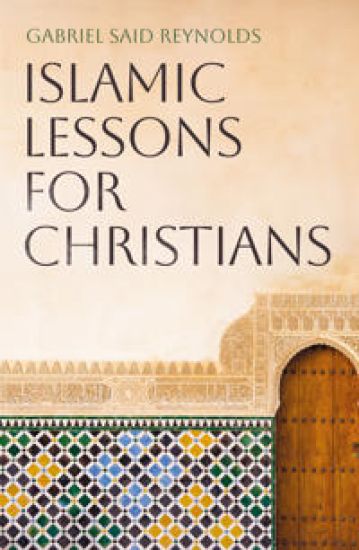
What, if anything, can Christians learn from Islam? The Christian view of Islam is marred by misunderstanding what Islam is. On one extreme, Islam appears as a separate civilisation, irreconcilably opposed to Christianity, and a constant threat. On the other, Islam is nothing more than a failed version of Christianity, agreeing with the Bible in all the essentials. Gabriel Said Reynolds argues for a new way forward in interfaith dialogue: for Christians to appreciate Islam precisely for its differences. In a thoughtful examination of both Islamic belief and Muslim practice, Islamic Lessons for Christians illuminates the beauty of Allah, the sharia and the ummah, rectifying misconceptions and engaging with Islam on its own terms.
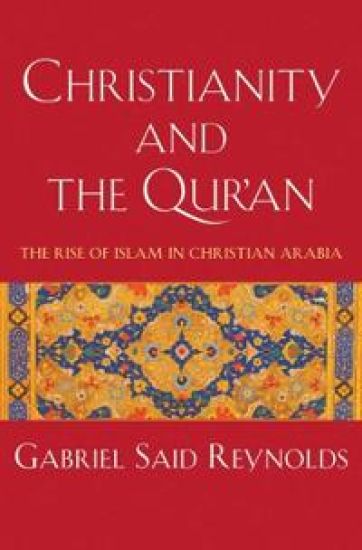
Christianity and the Qur'an

Christianity and the Qur'an

Gabriel Said Reynolds

YALE UNIVERSITY PRESS
2025
sidottu
A leading Qur’anic scholar’s revisionary account of how Islam emerged in dialogue with Christian traditions Challenging the dominant narrative about the history of the Qur’an and the emergence of Islam in a predominantly pagan context, Gabriel Said Reynolds presents the Qur’an as a text born within a largely Christian culture. As he examines the ways the Qur’an engages with Christian traditions—not only those of the New Testament but also those of late antique Christian literature—and with Christians themselves, Reynolds also draws on recent scholarship on pre-Islamic Arabic inscriptions suggesting that monotheism, Christianity in particular, was a significant presence in the pre-Islamic Hijaz, the region in which Muhammad preached. This study re-situates the Qur’an as a text thoroughly concerned with Christianity, not just the longer narratives of individuals such as Mary and Jesus but also passages that do not mention Christians explicitly. The Qur’an’s stance toward Christianity is on occasion controversial, aiming to advance Islamic theology and undermine Christian apologetical arguments, yet the Qur’an is not always polemical. At times, the text makes use of the audience’s knowledge of the Bible to advance its own vision of God and God’s relationship with humanity.
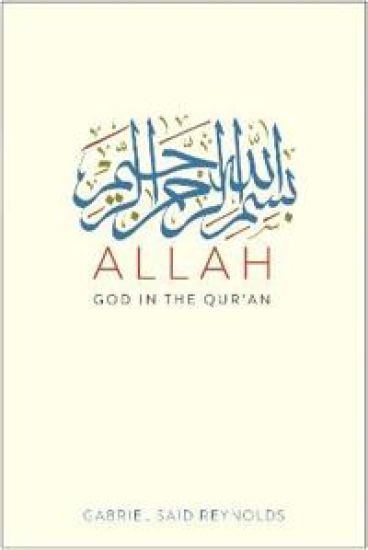
Allah

Allah

Gabriel Said Reynolds

Yale University Press
2020
sidottu
A concise and illuminating portrait of Allah from one of the world’s leading Qur’anic scholars The central figure of the Qur’an is not Muhammad but Allah. The Qur’an, Islam’s sacred scripture, is marked above all by its call to worship Allah, and Allah alone. Yet who is the God of the Qur’an? What distinguishes the qur’anic presentation of God from that of the Bible? In this illuminating study, Gabriel Said Reynolds depicts a god of both mercy and vengeance, one who transcends simple classification. He is personal and mysterious; no limits can be placed on his mercy. Remarkably, the Qur’an is open to God’s salvation of both sinners and unbelievers. At the same time, Allah can lead humans astray, so all are called to a disposition of piety and fear. Allah, in other words, is a dynamic and personal God. This eye-opening book provides a unique portrait of the God of the Qur’an.
The Qur'an and the Bible

The Qur'an and the Bible

Gabriel Said Reynolds

Yale University Press
2018
sidottu
A groundbreaking comparative study that illuminates the connections between the Qur'an and the Bible “Enormously helpful as a way not just into an unknown text but into another religious tradition.”—Adam Gopnik, New Yorker While the Hebrew Bible and the New Testament are understood to be related texts, the sacred scripture of Islam, the third Abrahamic faith, has generally been considered separately. Noted religious scholar Gabriel Said Reynolds draws on centuries of Qur’anic and Biblical studies to offer rigorous and revelatory commentary on how these holy books are intrinsically connected. Reynolds demonstrates how Jewish and Christian characters, imagery, and literary devices feature prominently in the Qur’an, including stories of angels bowing before Adam and of Jesus speaking as an infant. This important contribution to religious studies features a full translation of the Qur’an along with excerpts from the Jewish and Christian texts. It offers a clear analysis of the debates within the communities of religious scholars concerning the relationship of these scriptures, providing a new lens through which to view the powerful links that bond these three major religions.
The Qur'an and its Biblical Subtext

The Qur'an and its Biblical Subtext

Gabriel Said Reynolds

Routledge
2012
nidottu
This book challenges the dominant scholarly notion that the Qur’an must be interpreted through the medieval commentaries shaped by the biography of the prophet Muhammad, arguing instead that the text is best read in light of Christian and Jewish scripture. The Qur’an, in its use of allusions, depends on the Biblical knowledge of its audience. However, medieval Muslim commentators, working in a context of religious rivalry, developed stories that separate Qur’an and Bible, which this book brings back together.In a series of studies involving the devil, Adam, Abraham, Jonah, Mary, and Muhammad among others, Reynolds shows how modern translators of the Qur’an have followed medieval Muslim commentary and demonstrates how an appreciation of the Qur’an’s Biblical subtext uncovers the richness of the Qur’an’s discourse. Presenting unique interpretations of 13 different sections of the Qur’an based on studies of earlier Jewish and Christian literature, the author substantially re-evaluates Muslim exegetical literature. Thus The Qur’an and Its Biblical Subtext, a work based on a profound regard for the Qur’an’s literary structure and rhetorical strategy, poses a substantial challenge to the standard scholarship of Qur’anic Studies. With an approach that bridges early Christian history and Islamic origins, the book will appeal not only to students of the Qur’an but of the Bible, religious studies and Islamic history.
The Qur'an and its Biblical Subtext

The Qur'an and its Biblical Subtext

Gabriel Said Reynolds

Routledge
2010
sidottu
This book challenges the dominant scholarly notion that the Qur’an must be interpreted through the medieval commentaries shaped by the biography of the prophet Muhammad, arguing instead that the text is best read in light of Christian and Jewish scripture. The Qur’an, in its use of allusions, depends on the Biblical knowledge of its audience. However, medieval Muslim commentators, working in a context of religious rivalry, developed stories that separate Qur’an and Bible, which this book brings back together.In a series of studies involving the devil, Adam, Abraham, Jonah, Mary, and Muhammad among others, Reynolds shows how modern translators of the Qur’an have followed medieval Muslim commentary and demonstrates how an appreciation of the Qur’an’s Biblical subtext uncovers the richness of the Qur’an’s discourse. Presenting unique interpretations of 13 different sections of the Qur’an based on studies of earlier Jewish and Christian literature, the author substantially re-evaluates Muslim exegetical literature. Thus The Qur’an and Its Biblical Subtext, a work based on a profound regard for the Qur’an’s literary structure and rhetorical strategy, poses a substantial challenge to the standard scholarship of Qur’anic Studies. With an approach that bridges early Christian history and Islamic origins, the book will appeal not only to students of the Qur’an but of the Bible, religious studies and Islamic history.