Kirjojen hintavertailu. Mukana 12 595 353 kirjaa ja 12 kauppaa.

Kirjailija

Gabriele Gava

Kirjat ja teokset yhdessä paikassa: 5 kirjaa, julkaisuja vuosilta 2014-2025, suosituimpien joukossa Kants Philosophie. Vertaile teosten hintoja ja tarkista saatavuus suomalaisista kirjakaupoista.

5 kirjaa

Kirjojen julkaisuhaarukka 2014-2025.

Kant's Critique of Pure Reason and the Method of Metaphysics
In two often neglected passages of the Critique of Pure Reason, Kant submits that the Critique is a 'treatise' or a 'doctrine of method'. These passages are puzzling because the Critique is only cursorily concerned with identifying adequate procedures of argument for philosophy. In this book, Gabriele Gava argues that these passages point out that the Critique is the doctrine of method of metaphysics. Doctrines of method have the task of showing that a given science is indeed a science because it possesses 'architectonic unity' – which happens when it realizes the 'idea' of a science. According to Gava's novel approach, the Critique establishes that metaphysics is capable of this unity, and his reading of the Critique from this perspective not only illuminates the central role of the Transcendental Doctrine of Method within it, but also clarifies the relationship between the different parts of the work.
Kant's Critique of Pure Reason and the Method of Metaphysics
In two often neglected passages of the Critique of Pure Reason, Kant submits that the Critique is a 'treatise' or a 'doctrine of method'. These passages are puzzling because the Critique is only cursorily concerned with identifying adequate procedures of argument for philosophy. In this book, Gabriele Gava argues that these passages point out that the Critique is the doctrine of method of metaphysics. Doctrines of method have the task of showing that a given science is indeed a science because it possesses 'architectonic unity' – which happens when it realizes the 'idea' of a science. According to Gava's novel approach, the Critique establishes that metaphysics is capable of this unity, and his reading of the Critique from this perspective not only illuminates the central role of the Transcendental Doctrine of Method within it, but also clarifies the relationship between the different parts of the work.
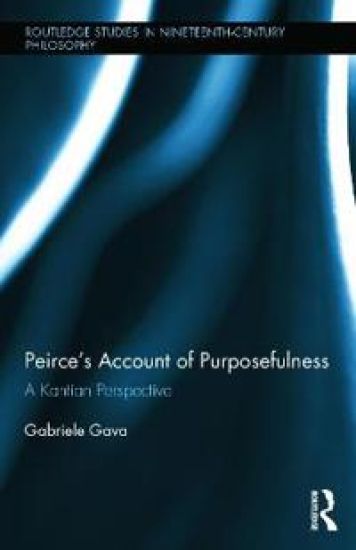
Peirce's Account of Purposefulness

Peirce's Account of Purposefulness

Gabriele Gava

Routledge
2018
nidottu
This book presents a systematic interpretation of Charles S. Peirce’s work based on a Kantian understanding of his teleological account of thought and inquiry. Departing from readings that contrast Peirce’s treatment of purpose, end, and teleology with his early studies of Kant, Gabriele Gava instead argues that focusing on Peirce’s purposefulness as a necessary regulative (in the Kantian sense) condition for inquiry and semiotic processes allows for a transcendental interpretation of Peirce’s philosophical project. The author advances this interpretation through presenting original views on aspects of Peirce’s thought, including: a detailed analysis of Peirce’s ‘methodeutic’ and ‘speculative rhetoric,’ as well as his ‘critical common-sensism’; a comparison between Peirce’s and James’ pragmatisms in view of the account of purposefulness Gava puts forth; and an examination of the logical relationships that order Peirce’s architectonic classification of the sciences.
Peirce's Account of Purposefulness

Peirce's Account of Purposefulness

Gabriele Gava

Routledge
2014
sidottu
This book presents a systematic interpretation of Charles S. Peirce’s work based on a Kantian understanding of his teleological account of thought and inquiry. Departing from readings that contrast Peirce’s treatment of purpose, end, and teleology with his early studies of Kant, Gabriele Gava instead argues that focusing on Peirce’s purposefulness as a necessary regulative (in the Kantian sense) condition for inquiry and semiotic processes allows for a transcendental interpretation of Peirce’s philosophical project. The author advances this interpretation through presenting original views on aspects of Peirce’s thought, including: a detailed analysis of Peirce’s ‘methodeutic’ and ‘speculative rhetoric,’ as well as his ‘critical common-sensism’; a comparison between Peirce’s and James’ pragmatisms in view of the account of purposefulness Gava puts forth; and an examination of the logical relationships that order Peirce’s architectonic classification of the sciences.