Kirjojen hintavertailu. Mukana 12 595 353 kirjaa ja 12 kauppaa.

Kirjailija

Gabrielle Daoust

Kirjat ja teokset yhdessä paikassa: 3 kirjaa, julkaisuja vuosilta 2022-2026, suosituimpien joukossa Humanitarianism in the Home. Vertaile teosten hintoja ja tarkista saatavuus suomalaisista kirjakaupoista.

3 kirjaa

Kirjojen julkaisuhaarukka 2022-2026.

Humanitarianism in the Home

Humanitarianism in the Home

Gabrielle Daoust; Synne L. Dyvik

TAYLOR FRANCIS LTD
2026
sidottu
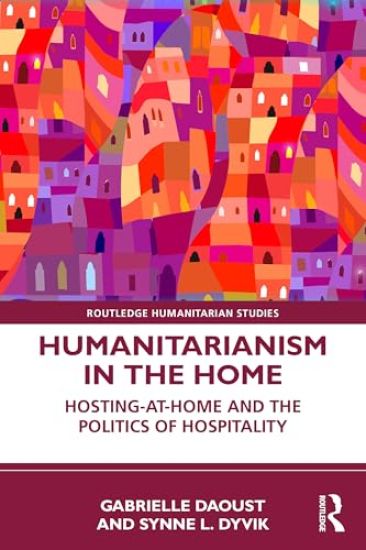
Who is a humanitarian, and where does humanitarianism take place? Focusing on humanitarian responses within the Global South and North, Humanitarianism in the Home critically examines hosting-at-home – that is, people providing shelter in their own home to displaced people – as a widespread yet underexamined and underappreciated response to large-scale displacement. This book situates hosting-at-home practices and initiatives within a current expansion of private expressions of humanitarian actions across a range of global contexts. It situates the home as a key site of humanitarian hospitality and considers the implications of hosting-at-home for humanitarian politics writ large and its relationship to wider dynamics and structures of international relations and global politics. Drawing on feminist and decolonial literature, it grounds this analysis in a theorisation of the interconnections between humanitarianism, home, and hospitality, informing a critical understanding of hosting-at-home as a simultaneously every day and global practice, in its spatial, temporal, and relational dimensions. Overall, the book sees hosting-at-home as neither a straightforward alternative to the dominant international humanitarian system and attendant structures of power, nor a simple continuation of this. Instead, given the multiplicity of its various expressions, hosting-at-home occupies an ambivalent position within tensions between care and control, and complicity and solidarity. This book will be of interest to students and scholars of humanitarianism, international relations and politics, and refugee and migration studies. It will be of particular interest no doubt to those curious about how humanitarian responses have changed over time, how international organisations as well as ‘ordinary people’ have responded to humanitarian crises historically and in the present, and the politics of welcoming and caring for people displaced within and across borders.
Divided Environments

Divided Environments

Jan Selby; Gabrielle Daoust; Clemens Hoffmann

Cambridge University Press
2022
sidottu
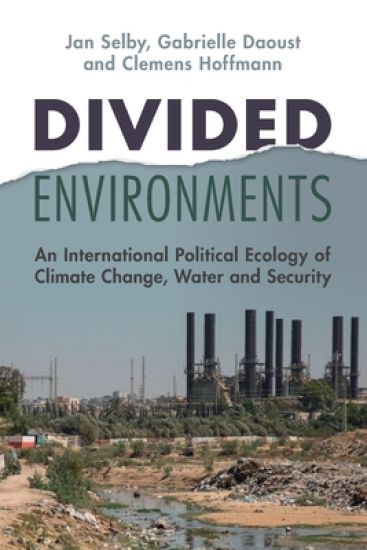
What are the implications of climate change for twenty-first-century conflict and security? Rising temperatures, it is often said, will bring increased drought, more famine, heightened social vulnerability, and large-scale political and violent conflict; indeed, many claim that this future is already with us. Divided Environments, however, shows that this is mistaken. Focusing especially on the links between climate change, water and security, and drawing on detailed evidence from Israel-Palestine, Syria, Sudan and elsewhere, it shows both that mainstream environmental security narratives are misleading, and that the actual security implications of climate change are very different from how they are often imagined. Addressing themes as wide-ranging as the politics of droughts, the contradictions of capitalist development and the role of racism in environmental change, while simultaneously articulating an original 'international political ecology' approach to the study of socio-environmental conflicts, Divided Environments offers a new and important interpretation of our planetary future.
Divided Environments

Divided Environments

Jan Selby; Gabrielle Daoust; Clemens Hoffmann

Cambridge University Press
2022
pokkari
What are the implications of climate change for twenty-first-century conflict and security? Rising temperatures, it is often said, will bring increased drought, more famine, heightened social vulnerability, and large-scale political and violent conflict; indeed, many claim that this future is already with us. Divided Environments, however, shows that this is mistaken. Focusing especially on the links between climate change, water and security, and drawing on detailed evidence from Israel-Palestine, Syria, Sudan and elsewhere, it shows both that mainstream environmental security narratives are misleading, and that the actual security implications of climate change are very different from how they are often imagined. Addressing themes as wide-ranging as the politics of droughts, the contradictions of capitalist development and the role of racism in environmental change, while simultaneously articulating an original 'international political ecology' approach to the study of socio-environmental conflicts, Divided Environments offers a new and important interpretation of our planetary future.