Kirjojen hintavertailu. Mukana 12 390 323 kirjaa ja 12 kauppaa.

Kirjailija

Gabrielle Hecht

Kirjat ja teokset yhdessä paikassa: 4 kirjaa, julkaisuja vuosilta 2009-2023, suosituimpien joukossa Residual Governance. Vertaile teosten hintoja ja tarkista saatavuus suomalaisista kirjakaupoista.

4 kirjaa

Kirjojen julkaisuhaarukka 2009-2023.

Residual Governance

Residual Governance

Gabrielle Hecht

DUKE UNIVERSITY PRESS
2023
pokkari
In Residual Governance, Gabrielle Hecht dives into the wastes of gold and uranium mining in South Africa to explore how communities, experts, and artists fight for infrastructural and environmental justice. Hecht outlines how mining in South Africa is a prime example of what she theorizes as residual governance-the governance of waste and discard, governance that is purposefully inefficient, and governance that treats people and places as waste and wastelands. She centers the voices of people who resist residual governance and the harms of toxic mining waste to highlight how mining’s centrality to South African history reveals the links between race, capitalism, the state, and the environment. In this way, Hecht shows how the history of mining in South Africa and the resistance to residual governance and environmental degradation is a planetary story: the underlying logic of residual governance lies at the heart of contemporary global racial capitalism and is a major accelerant of the Anthropocene.
Residual Governance

Residual Governance

Gabrielle Hecht

DUKE UNIVERSITY PRESS
2023
sidottu
In Residual Governance, Gabrielle Hecht dives into the wastes of gold and uranium mining in South Africa to explore how communities, experts, and artists fight for infrastructural and environmental justice. Hecht outlines how mining in South Africa is a prime example of what she theorizes as residual governance-the governance of waste and discard, governance that is purposefully inefficient, and governance that treats people and places as waste and wastelands. She centers the voices of people who resist residual governance and the harms of toxic mining waste to highlight how mining’s centrality to South African history reveals the links between race, capitalism, the state, and the environment. In this way, Hecht shows how the history of mining in South Africa and the resistance to residual governance and environmental degradation is a planetary story: the underlying logic of residual governance lies at the heart of contemporary global racial capitalism and is a major accelerant of the Anthropocene.
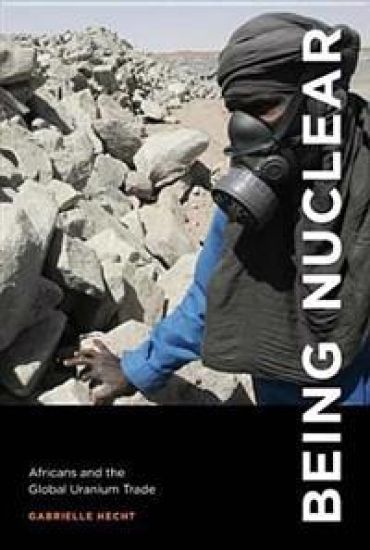
Being Nuclear

Being Nuclear

Gabrielle Hecht

MIT Press
2014
pokkari
The hidden history of African uranium and what it means-for a state, an object, an industry, a workplace-to be "nuclear."Uranium from Africa has long been a major source of fuel for nuclear power and atomic weapons, including the bomb dropped on Hiroshima. In 2003, after the infamous "yellow cake from Niger," Africa suddenly became notorious as a source of uranium, a component of nuclear weapons. But did that admit Niger, or any of Africa's other uranium-producing countries, to the select society of nuclear states? Does uranium itself count as a nuclear thing? In this book, Gabrielle Hecht lucidly probes the question of what it means for something-a state, an object, an industry, a workplace-to be "nuclear." Hecht shows that questions about being nuclear-a state that she calls "nuclearity"-lie at the heart of today's global nuclear order and the relationships between "developing nations" (often former colonies) and "nuclear powers" (often former colonizers). Hecht enters African nuclear worlds, focusing on miners and the occupational hazard of radiation exposure. Could a mine be a nuclear workplace if (as in some South African mines) its radiation levels went undetected and unmeasured? With this book, Hecht is the first to put Africa in the nuclear world, and the nuclear world in Africa. By doing so, she remakes our understanding of the nuclear age.
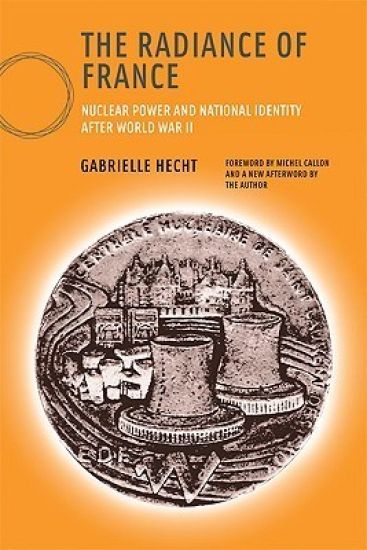
The Radiance of France

The Radiance of France

Gabrielle Hecht; Michel Callon

MIT Press
2009
pokkari
How it happened that technological prowess and national glory (or "radiance," which also means "radiation" in French) became synonymous in France as nowhere else.In the aftermath of World War II, as France sought a distinctive role for itself in the modern, postcolonial world, the nation and its leaders enthusiastically embraced large technological projects in general and nuclear power in particular. The Radiance of France asks how it happened that technological prowess and national glory (or "radiance," which also means "radiation" in French) became synonymous in France as nowhere else.To answer this question, Gabrielle Hecht has forged an innovative combination of technology studies and cultural and political history in a book that, as Michel Callon writes in the new foreword to this edition, "not only sheds new light on the role of technology in the construction of national identities" but is also "a seminal contribution to the history of contemporary France." Proposing the concept of technopolitical regime as a way to analyze the social, political, cultural, and technological dynamics among engineering elites, unionized workers, and rural communities, Hecht shows how the history of France's first generation of nuclear reactors is also a history of the multiple meanings of nationalism, from the postwar period (and France's desire for post-Vichy redemption) to 1969 and the adoption of a "Frenchified" American design.This paperback edition of Hecht's groundbreaking book includes both Callon's foreword and an afterword by the author in which she brings the story up to date, and reflects on such recent developments as the 2007 French presidential election, the promotion of nuclear power as the solution to climate change, and France's aggressive exporting of nuclear technology.