Kirjojen hintavertailu. Mukana 12 390 323 kirjaa ja 12 kauppaa.

Kirjailija

Gail Marshall

Kirjat ja teokset yhdessä paikassa: 26 kirjaa, julkaisuja vuosilta 1998-2026, suosituimpien joukossa Shakespeare and Victorian Women. Vertaile teosten hintoja ja tarkista saatavuus suomalaisista kirjakaupoista.

26 kirjaa

Kirjojen julkaisuhaarukka 1998-2026.

Victorian Shakespeare

Victorian Shakespeare

Gail Marshall; Adrian Poole

Palgrave Macmillan
2003
sidottu
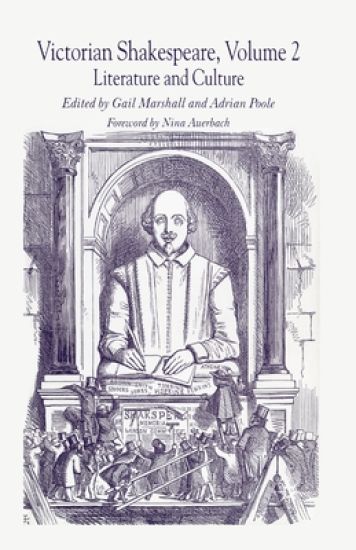
What did the Victorians think of Shakespeare? The twelve essays gathered here offer some answers, through close examination of works by leading nineteenth-century novelists, poets and critics including Dickens, Trollope, Eliot, Tennyson, Browning and Ruskin. Shakespeare provided the Victorians with ways of thinking about the authority of the past, about the emergence of a new mass culture, about the relations between artistic and industrial production, about the nature of creativity, about racial and sexual difference, and about individual and national identity.
Victorian Shakespeare

Victorian Shakespeare

Gail Marshall; Adrian Poole

Palgrave Macmillan
2003
nidottu
What did the Victorians think of Shakespeare? The twelve essays gathered here offer some answers, through close examination of works by leading nineteenth-century novelists, poets and critics including Dickens, Trollope, Eliot, Tennyson, Browning and Ruskin. Shakespeare provided the Victorians with ways of thinking about the authority of the past, about the emergence of a new mass culture, about the relations between artistic and industrial production, about the nature of creativity, about racial and sexual difference, and about individual and national identity.
Actresses on the Victorian Stage

Actresses on the Victorian Stage

Gail Marshall

Cambridge University Press
1998
sidottu
Gail Marshall argues that the professional and personal history of the Victorian actress was largely defined by her negotiation with the sculptural metaphor, and that this was authorized and determined by the Ovidian myth of Pygmalion and Galatea. Drawing on evidence of theatrical fictions, visual representations and popular culture's assimilation of the sculptural image, as well as theatrical productions, she examines some of the manifestations of the sculptural metaphor on the legitimate English stage, and its implications for the actress in the later nineteenth century. Within the legitimate theatre, the 'Galatea-aesthetic' positioned actresses as predominantly visual and sexual commodities whose opportunities for interpretative engagement with their plays were minimal. This dominant aesthetic was effectively challenged only at the end of the century, with the advent of the 'New' drama, and the emergence of a body of autobiographical writings by actresses.