Kirjojen hintavertailu. Mukana 12 571 960 kirjaa ja 12 kauppaa.

Kirjailija

Gail Stavitsky

Kirjat ja teokset yhdessä paikassa: 2 kirjaa, julkaisuja vuosilta 2002-2005, suosituimpien joukossa Montclair Art Museum. Vertaile teosten hintoja ja tarkista saatavuus suomalaisista kirjakaupoista.

2 kirjaa

Kirjojen julkaisuhaarukka 2002-2005.

Roy Lichtenstein

Roy Lichtenstein

Gail Stavitsky

Rutgers University Press
2005
nidottu
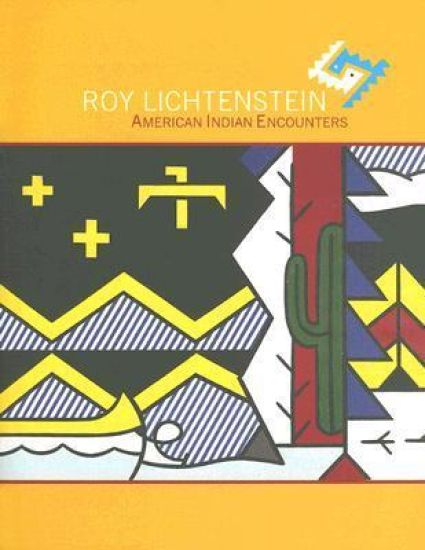
One of America’s leading Pop artists, Roy Lichtenstein was a master of stereotype. Bringing sophisticated analyses to visual conventions, he had a distinct flair for using irony to exploit past and existing styles. Today, his name is typically associated with whimsical renderings of comic strips and advertisements—paintings marked by their bold colors, prominent black outlines, and patterns of Ben Day dots.Beyond his fascination for icons of popular culture, however, Lichtenstein had a little-known, but deep appreciation for the objects and images of American Indian culture. This book explores in detail and fully illustrates a virtually unknown collection of his paintings and works on paper that were influenced by his encounters with Native American subjects.Lichtenstein’s cubist abstractions from the early 1950s reflect his interest in European modernism, specifically the work of artists such as Pablo Picasso, Joan Miró, and Paul Klee. The Native American subjects of these works also suggest the artist’s interest in nineteenth-century sources such as George Catlin, the Swiss painter Karl Bodmer, the German artist Charles Wimar, and the American artist John Vanderlyn. Lichtenstein himself characterized the paintings from this period as “reinterpretations of those artists concerned with the opening of the west . . . with the subject matter of cowboys, Indians, treaty signings—a sort of Western official art in a style broadly influenced by modern European painting.”The themes and compositions of these often-ignored early works are revisited in Lichtenstein’s 1979 “Amerindian” paintings and related drawings and prints. His paintings from this period were primarily inspired by his extensive collection of catalogues of Native American design motifs. Lichtenstein also attended powwows at the nearby Shinnecock Indian reservation in Southhampton, Long Island. For Lichtenstein, Native American art provided a historical base for American art, reminiscent of African art’s relationship to early European modernism. This catalogue, including forty color illustrations, is the first to examine the compelling details of this foundation.
Montclair Art Museum

Montclair Art Museum

Gail Stavitsky; Diane P. Fischer; Twig Johnson; Mary Birmingham

Montclair Art Museum,US
2002
nidottu
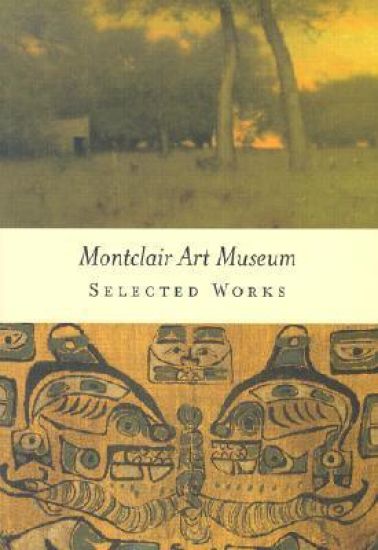
The Montclair Art Museum - heralded by Art and Antiques as “ . . . a model of the best that America’s regional museums have to offer today” - has been a significant visual arts center for more than eighty-five years. Established in 1914 as the Garden State’s first public art museum with the vision and generosity of community leaders and pioneering collectors of American and native American Art, the Museum’s holdings have become an important cultural repository both for New Jersey and the nation. Many devotees of American art have enjoyed the Museum’s individual works at different exhibits around the country.This beautiful volume offers an illustrated cross section of a collection of 15,000 works. The more than 200 paintings, sculptures, drawings, prints, and photographs featured here reveal the museum collection’s breadth and many recent acquisitions. A special section covers the Museum’s important concentration of works by America’s greatest landscape painter George Inness, whose presence in Montclair may be said to have inspired the founding of the Museum. Another significant section features works of the Morgan Russell Collection and Archive, a collection of more than 9,000 works on paper that record the complexities of the artist’s aesthetic and intellectual adventures, especially his development as part of the first declared American modern art movement, Synchromism, from 1912 to 1914.The Montclair Art Museum is one of a surprisingly small number of U.S. museums dedicated solely to art produced in this country, and it is remarkable for its shared focus on native American art produced by the many indigenous culture groups of North America and on works produced by European and other settlers in the post-colonial period. This volume combines Native and other American art within a range of artistic media in provocative and insightful ways, and its commentaries reflect the careful scholarship and commitment to public education for which the Museum is well known.