Kirjailija
Gail Steketee
Kirjat ja teokset yhdessä paikassa: 10 kirjaa, julkaisuja vuosilta 2011-2020, suosituimpien joukossa Group Treatment for Hoarding Disorder. Vertaile teosten hintoja ja tarkista saatavuus suomalaisista kirjakaupoista.
10 kirjaa
Kirjojen julkaisuhaarukka 2011-2020.
Hoarding disorder is the excessive saving of objects and difficulty parting with them to a point that interferes with one's ability to properly use rooms and furnishings in the home. Hoarding can become dangerous, sometimes resulting in structural problems and fires, or in hazardous sanitary conditions. Studies indicate that around one in every 25 people suffers from hoarding. This means that almost all of us know someone who hoards. Hoarding: What Everyone Needs to Know demystifies this complex problem, what it looks like and why it may develop, and how it can be treated. With their combined expertise in psychological treatments for hoarding and community interventions, Drs. Steketee and Bratiotis explain how to understand hoarding as a mental illness, describing the disorder in layman's terms and explaining the various facets and manifestations of the behavior. Chapters focus on one or more common questions regarding diagnosis, features, how to assess severity, and treatment. The book will dispel myths and help readers identify hoarding that touches their own lives. As such it will be of great value not only to those who suspect a loved one may be hoarding, but also to first responders, such as firefighters, public health officials, and housing and social service personnel, who will find here an essential resource for use in the field.
Group Treatment for Hoarding Disorder
Jordana Muroff; Patty Underwood; Gail Steketee
Oxford University Press Inc
2014
nidottu
For the first time, Hoarding Disorder (HD) is now recognized as a distinct disorder in the fifth edition of the Diagnostic and Statistical Manual of Mental Disorders (DSM-5), separate from OCD. HD has also received much more attention and exposure in recent years. Consequently, more people will be recommended for treatment, increasing the demand and need for clinicians who deliver this specialized intervention. Group Treatment for Hoarding Disorder: Therapist Guide outlines a cognitive-behavioral therapy program for HD using a group model. Clinicians deliver group therapy over 20 weekly sessions of 1.5 to 2 hours each. A single experienced clinician can lead the group or a co-therapy model can be used with two clinicians, one experienced and one in training. Groups of 6 to 8 participants: DT receive education about HD and about the CBT model DT discuss therapy goals and personal values DT practice motivational enhancement methods including identifying barriers to progress DT receive training in organizing and problem-solving about hoarding problems DT learn cognitive therapy strategies to reduce problematic hoarding beliefs and to replace acquiring with more adaptive behaviors DT practice sorting, removing clutter, and not acquiring, beginning with easier tasks DT and identify in-home supports. Final sessions focus on reviewing the most effective therapy methods, coping with change, and highlighting strategies for maintaining gains. Group members use the Treatment for Hoarding Disorder: Workbook, Second Edition to assist with practice exercises. All of the necessary forms and worksheets are provided in the books and online. Treatment proceeds in a flexible session-by-session fashion with attention to group process. Written for psychologists, social workers, psychiatrists, counselors, and psychiatric nurses, this Therapist Guide will promote effective group treatment of people with hoarding disorder.
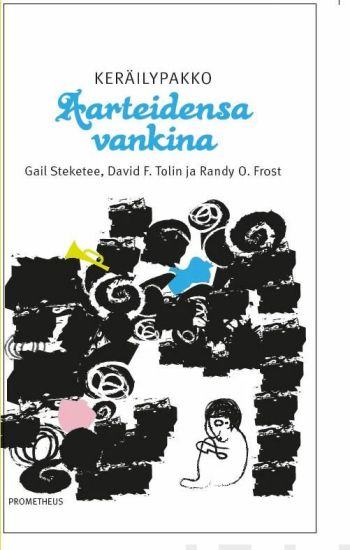
Kenen tulisi käyttää tätä kirjaa ja miten? Kirja soveltuu enemmistölle keräilyongelmasta kärsivistä ihmisistä, jotka haluavat vapautua keräilypakostaan. He haluavat muutoksen mutta eivät tiedä mistä ja miten aloittaa. Lukija voi tarpeittensa mukaan käyttää tätä kirjaa eri tavoin. Kirjaa ja sen harjoituksia voi aivan hyvin käyttää yksin keräilyongelman voittamiseksi. Jos tämä ei kuitenkaan toimi tarpeeksi hyvin, kannattaa harkita voisiko kirjaa ja sen lukuja käyttää "Aarteidensa vankina"-pienryhmässä. Hyvä vaihtoehto on käydä lisäksi mielenterveyden ammattilaisen vastaanotolla. Tämä kirja voi auttaa myös keräilypakosta kärsivien läheisiä tai ystäviä. On vaikea katsoa sivusta läheisen kärsimystä voimatta auttaa häntä. "Kuinka voin vakuuttaa hänelle, että asialle pitää tehdä jotain?" Kirjan sivuilla on tietolaatikoita, jotka on otsikoitu "Tietopaketti perheenjäsenille ja ystäville". kirjassa on paljon itse täytettäviä tehtäviä ja harjoituksia joko yksin, ryhmässä tai terapeutin seurassa tehtäviksi.
Treatment for Hoarding Disorder
Gail Steketee; Randy O. Frost
Oxford University Press Inc
2013
nidottu
The relationship people have with their possessions ranges from purely utilitarian to intensely emotional. For most people, their personal possessions provide them with a sense of security, comfort, and pleasure. However, if someone loses the ability to distinguish useful or important possessions from those that make life overly complicated, the objects can become a prison. For people who suffer from Hoarding Disorder (HD), the process of getting rid of unneeded objects is not easy. For them, possessions never "feel" unneeded and trying to get rid of them is an excruciating emotional ordeal. This Second Edition of Treatment for Hoarding Disorder is the culmination of more than 20 years of research on understanding hoarding and building an effective intervention to address its myriad components. Thoroughly updated and reflective of changes made to the Fifth Edition of the Diagnostic and Statistical Manual for Mental Disorders (DSM-5), this second edition of the Therapist Guide and accompanying client Workbook outlines an empirically supported and effective CBT program for treating hoarding disorder. This Therapist Guide is written for mental health clinicians-psychologists, social workers, psychiatrists, counsellors, and psychiatric nurses-to guide effective treatment of people with hoarding disorder. It provides numerous assessment and intervention forms to help clients use the methods described in the intervention. A major goal of the treatment is to recapture the positive role of possessions in the lives of people with hoarding problems, and strategies are outlined for sustaining gains and making further progress, as well as for managing stressful life events that can provoke problematic acquiring and difficulty discarding.
Buried in Treasures
David Tolin; Randy O. Frost; Gail Steketee
Oxford University Press Inc
2013
nidottu
While most people find it relatively easy to manage their possessions, some find it extremely difficult. If you have a problem resisting the urge to acquire and you find your home cluttered and filled to capacity with items many people would find useless and unnecessary, you may suffer from a condition known as hoarding disorder. Hoarding is a behavioral problem consisting of clutter, difficulty discarding items, and excessive buying or acquiring. Hoarding is often associated with significant reduction in quality of life, and in extreme cases, it can pose serious health risks. If you or a loved one has hoarding disorder, this book can help. This fully updated Second Edition of Buried in Treasures outlines a scientifically based, effective program for helping those with hoarding disorder dig their way out of the clutter and chaos of their homes. Written by scientists and practioners who are leaders in studying and treating hoarding disorder, this book outlines a program of skill-building, learning to think about possessions in a different way, and gradual challenges to help people manage their clutter and their lives. It also provides useful information for family and friends of people who hoard, as they struggle to understand and help. Discover the reasons for your problems with acquiring, saving, and hoarding, and learn new ways of thinking about your possessions so you can decide what you really need and what you can do without. Learn to identify the "bad guys" that cause and maintain your hoarding behavior and meet the "good guys" who can help motivate you and put you on the path to change. Useful self-assessments will help you determine the severity of your problem. Training exercises, case examples, organizing tips, and motivation boosters help change the way you think and behave toward your possessions. This book provides easy-to-understand strategies and techniques that anyone can use.
Treatment for Hoarding Disorder
Gail Steketee; Randy O. Frost
Oxford University Press Inc
2013
nidottu
The relationship people have with their possessions ranges from purely utilitarian to intensely emotional. For most people, their personal possessions provide them with a sense of security, comfort, and pleasure. However, if someone loses the ability to distinguish useful or important possessions from those that make life overly complicated, the objects can become a prison. For people who suffer from Hoarding Disorder (HD), the process of getting rid of unneeded objects is not easy. For them, possessions never "feel" unneeded and trying to get rid of them is an excruciating emotional ordeal. This Second Edition of Treatment for Hoarding Disorder is the culmination of more than 20 years of research on understanding hoarding and building an effective intervention to address its myriad components. Thoroughly updated and reflective of changes made to the Fifth Edition of the Diagnostic and Statistical Manual for Mental Disorders (DSM-5), this second edition of the client Workbook and accompanying Therapist Guide outlines an empirically supported and effective CBT program for treating hoarding disorder. This Workbook is meant to guide clients through their treatment for hoarding disorder with their clinician. It includes homework, forms, exercises, and behavioral experiments for clients to test their personal beliefs about possessions, develop an organization plan and filing system, and sort and organize items room by room. A major goal of the treatment is to recapture the positive role of possessions in the lives of people with hoarding problems, and strategies are outlined for sustaining gains and making further progress, as well as for managing stressful life events that can provoke problematic acquiring and difficulty discarding.
Cognitive-Behavioral Therapy for Body Dysmorphic Disorder
Sabine Wilhelm; Katharine A. Phillips; Gail Steketee
Guilford Press
2013
nidottu
Presenting an effective treatment approach specifically tailored to the unique challenges of body dysmorphic disorder (BDD), this book is grounded in state-of-the-art research. The authors are experts on BDD and related conditions. They describe ways to engage patients who believe they have defects or flaws in their appearance. Provided are clear-cut strategies for helping patients overcome the self-defeating thoughts, impairments in functioning, and sometimes dangerous ritualistic behaviors that characterize BDD. Clinician-friendly features include step-by-step instructions for conducting each session and more than 50 reproducible handouts and forms; the large-size format facilitates photocopying.See also the related self-help guide by Dr. Wilhelm, Feeling Good about the Way You Look, an ideal recommendation for clients with BDD or less severe body image problems.
The Hoarding Handbook
Christiana Bratiotis; Cristina Sorrentino Schmalisch; Gail Steketee
Oxford University Press Inc
2011
nidottu
Hoarding is a serious, time-consuming, and expensive problem for virtually every community across the United States. First responders often encounter hoarding unexpectedly and are confused about how to resolve the wide range of problems, from public health and fire safety violations, to housing violations, to concern for the welfare of children, elders and animals. Sometimes solutions must be coordinated across several human service disciplines. The first of its kind, this handy guide is a nuts and bolts resource filled with case studies, tips and strategies, and easy-to-use suggestions for professionals responding to hoarding situations. Organized around the common ways hoarding captures the attention of social service providers, this user-friendly guide provides tools to assess the problem, to coordinate and delegate tasks among helping professionals, and to work directly with reluctant hoarders and those affected by the hoarding. Chapters give hands-on guidance and decision trees for who should be involved and what strategies are needed for each case. This book is compassionate and comprehensive, an invaluable reference for social workers and human service providers in a broad range of fields.
Stuff: Compulsive Hoarding and the Meaning of Things
Gail Steketee; Randy Frost
HarperOne
2011
nidottu
A New York Times BestsellerAcclaimed psychologists Randy Frost and Gail Sketetee's groundbreaking study on the compulsion of hoarding, "Stuff invites readers to reevaluate their desire for things" (Boston Globe).What possesses someone to save every scrap of paper that's ever come into his home? What compulsions drive a woman like Irene, whose hoarding cost her her marriage? Or Ralph, whose imagined uses for castoff items like leaky old buckets almost lost him his house? Or Jerry and Alvin, wealthy twin bachelors who filled up matching luxury apartments with countless pieces of fine art, not even leaving themselves room to sleep?When Frost and Steketee became the first scientists to study hoarding, they expected to find a few sufferers. Instead, they uncovered an epidemic, treating hundreds of patients and fielding thousands of calls from the families of others, exploring the compulsion through a series of compelling case studies in the vein of Oliver Sacks. With vivid portraits that show us the traits by which you can identify a hoarder--piles on sofas and beds that make the furniture useless, houses that can be navigated only by following small paths called goat trails, vast piles of paper that the hoarders "churn" but never discard, even collections of animals and garbage--Frost and Steketee explain the causes and outline the often ineffective treatments for the disorder.They also illuminate the pull that possessions exert on all of us. Whether we're savers, collectors, or compulsive cleaners, none of us is free of the impulses that drive hoarders to the extremes in which they live. For the six million sufferers, their relatives and friends, and all the rest of us with complicated relationships to our things, Stuff answers the question of what happens when our stuff starts to own us.