Kirjojen hintavertailu. Mukana 12 459 402 kirjaa ja 12 kauppaa.

Kirjailija

Galia Patt-Shamir

Kirjat ja teokset yhdessä paikassa: 3 kirjaa, julkaisuja vuosilta 2006-2022, suosituimpien joukossa Persons Emerging. Vertaile teosten hintoja ja tarkista saatavuus suomalaisista kirjakaupoista.

3 kirjaa

Kirjojen julkaisuhaarukka 2006-2022.

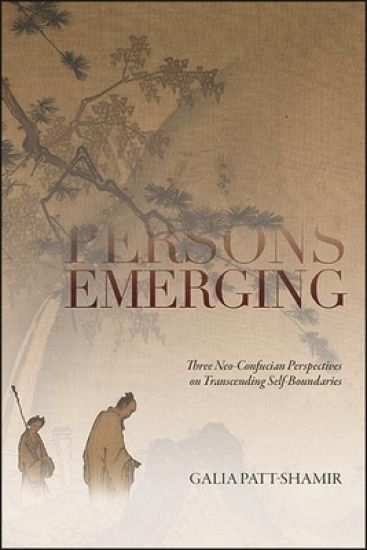
Persons Emerging

Persons Emerging

Galia Patt-Shamir

STATE UNIVERSITY OF NEW YORK PRESS
2022
pokkari
Offers three neo-Confucian understandings of broadening the Way as broadening oneself, through an ongoing process of removing self-boundaries.Persons Emerging explores the renewed idea of the Confucian person in the eleventh-century philosophies of Zhou Dunyi, Shao Yong, and Zhang Zai. Galia Patt-Shamir discusses their responses to the Confucian challenge that the Way, as perfection, can be broadened by the person who travels it. Suggesting that the three neo-Confucian philosophers undertake the classical Confucian task of "broadening the way," each proposes to deal with it from a different angle: Zhou Dunyi offers a metaphysical emerging out of the infinitude-finitude boundary, Shao Yong emerges out of the epistemological boundary between in and out, and Zhang Zai offers a pragmatic emerging out of the boundary between life and death.Through the lens of these three Song-period China philosophers, the idea of "transcending self-boundaries" places neo-Confucian philosophies within the global philosophical context. Patt-Shamir questions the Confucian notions of person, Way, and how they relate to human flourishing to highlight how the emergence of personhood demands transcending metaphysical, epistemological, and moral self-boundaries.
Persons Emerging

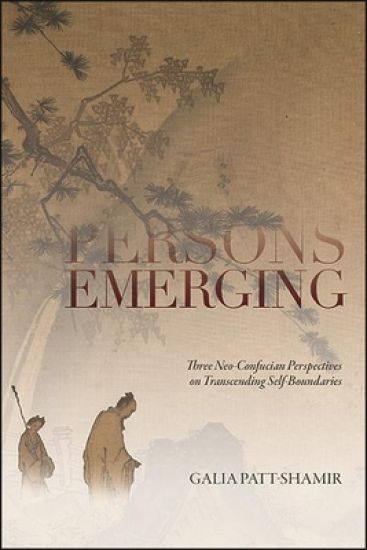
Persons Emerging

Galia Patt-Shamir

State University of New York Press
2021
sidottu
Offers three neo-Confucian understandings of broadening the Way as broadening oneself, through an ongoing process of removing self-boundaries.Persons Emerging explores the renewed idea of the Confucian person in the eleventh-century philosophies of Zhou Dunyi, Shao Yong, and Zhang Zai. Galia Patt-Shamir discusses their responses to the Confucian challenge that the Way, as perfection, can be broadened by the person who travels it. Suggesting that the three neo-Confucian philosophers undertake the classical Confucian task of "broadening the way," each proposes to deal with it from a different angle: Zhou Dunyi offers a metaphysical emerging out of the infinitude-finitude boundary, Shao Yong emerges out of the epistemological boundary between in and out, and Zhang Zai offers a pragmatic emerging out of the boundary between life and death.Through the lens of these three Song-period China philosophers, the idea of "transcending self-boundaries" places neo-Confucian philosophies within the global philosophical context. Patt-Shamir questions the Confucian notions of person, Way, and how they relate to human flourishing to highlight how the emergence of personhood demands transcending metaphysical, epistemological, and moral self-boundaries.
To Broaden the Way

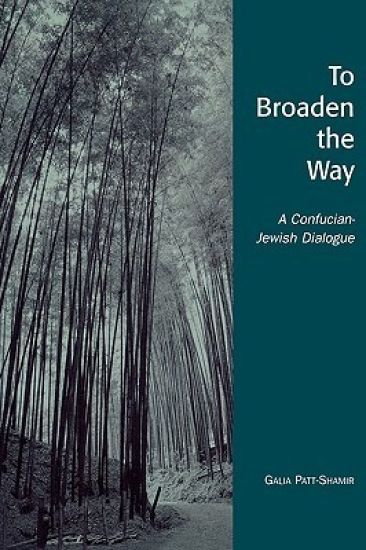
To Broaden the Way

Galia Patt-Shamir

Lexington Books
2006
nidottu
To Broaden the Way suggests that the texts of both the Jewish and Confucian tradition talk in riddles of a special kind: riddles, which are introduced - and answered - by religious forms of life. Using a 'dialogue of riddles,' Galia Patt-Shamir presents a comparative perspective of Confucianism and Judaism regarding the relatedness between contradictory expressions in texts and living conflicts. The Confucian riddle is characterized here as a mystery to be deciphered by self-reflection, under the assumptions of a harmonious community, and a unity of being. The Jewish riddle is characterized as a test to be responded to, under the assumption of a disharmonious community, and a necessary rapture in reality. This book expands the dialogue between traditions, and offers both a method and an implication of the question, 'what is religion about?'