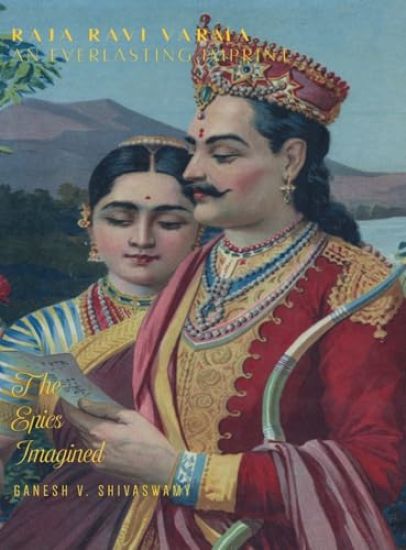
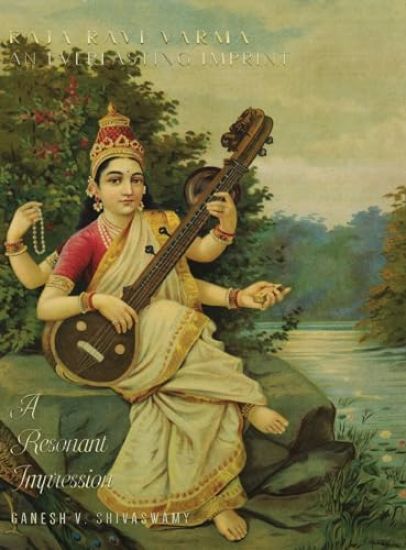
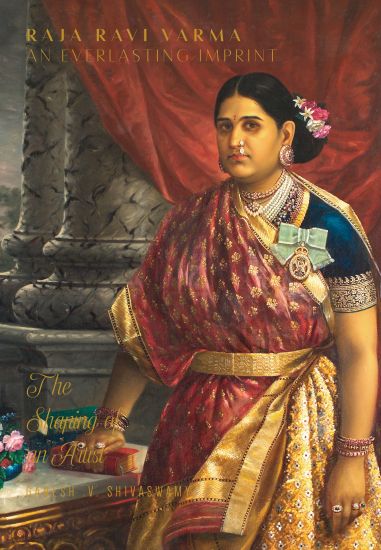
About the Series: The six-volume series, Raja Ravi Varma: An Everlasting Imprint, explores the democratization of art in India through the country's foremost modern artist, Raja Ravi Varma (1848-1906) and the Ravi Varma Press. Ravi Varma is the central point in this narrative. Although instrumental in popularizing fine art and prints in India, he was not the only person working in this field. Biographies, hitherto, have mainly focused his life and contributions; but this series also studies the role of the many others who participated in this movement. His relatives, tutors, mentors, models, and societal and cultural influences are brought in. The functioning of the Ravi Varma Press is another focus of attention-it is intriguing to note that the establishment was at no point in time ever owned by Raja Ravi Varma, even though it was named after him. Those who carried forward the baton, borrowing and keeping alive the artist's style and icons in the world of cinema, theatre, fashion, design, fine art, are all documented. Along with the creators of this kind of art, the books also consider the opinions shared by viewers. After all, any amount of public fame and recognition entailed not only adulation and praise but also criticism, disapproval, evaluation.The first volume looks at the life and times of Raja Ravi Varma and how he created images which found widespread acceptance and appreciation among common men and women. The second volume describes the setting up of the Ravi Varma Press and the transformative effects of its visual legacy. The remaining volumes look at specific themes depicted in the works of the artist and the Press. The third volume explores visuals and iconography of the divine, while the fourth volume deals with the epics of the Ramayana and Mahabharata. The fifth volume discusses images from the Shrimad Bhagavatam, classical dramas and other Hindu texts, while the sixth and concluding volume turns to imagery of power and the allure of the feminine.About the second volume: The second volume consists of two chapters. The first deals with the history of the Ravi Varma Press. The chapter commences with the history of lithography in India and also refers to the other Presses such as the Mysuru Mudrakshara Shala, Calcutta Art Studio, Chitrashala Press, etc. The work of the Ravi Varma Press is dealt with in detail exploring the material printed by it such as picture postcards, advertisements, textile and match labels as also India's famous Aamr Chitra Katha. The artists who also contributed to the Press are documented. The second chapter analyses the impact of the image on various aspects of life such as the democratization of art, access to religious imagery, nationalism, law and policy and the later artists. The volume also contains two appendices: the price lists issued by the dealers. These price lists serve as catalogues of the work from the Ravi Varma Press in 1913 and 1928 and would therefore be an invaluable resource for collectors of the chromolithographs from the Press.