Kirjailija
Garet Garrett
Kirjat ja teokset yhdessä paikassa: 22 kirjaa, julkaisuja vuosilta 1998-2025, suosituimpien joukossa Cinder Buggy: Historical Novel. Vertaile teosten hintoja ja tarkista saatavuus suomalaisista kirjakaupoista.
22 kirjaa
Kirjojen julkaisuhaarukka 1998-2025.





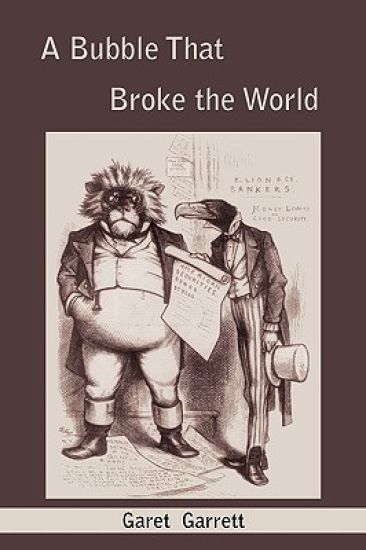
A Bubble That Broke the World is a collection of articles by American journalist and author Garet Garrett. The work seeks to answer the question: "What truly caused the stock market crash of 1929, and the ensuing depression?" Garet Garrett (1878-1954) began his journalism career at age 20, writing for the Cleveland Recorder in Chicago. Soon he was reporting on the McKinley administration from Washington, D.C. for the Washington Times. In 1900, he moved to New York where he would eventually write for the New York Sun, New York Times, Wall Street Journal, New York Evening Post, and Saturday Evening Post. Rather than simply report dry facts, as most other business reporters did at the time, Garrett was unique for the way he brought life to these events. He infused his pieces with drama and personality, making his non-fiction and later fiction works so popular.Through his books and his novels, it was clear that Garrett was a proponent of the free market. His novel Harangue: The Trees Said to the Bramble Come Reign Over Us depicts a failed socialist experiment and decries the tendency of the wealthy to fund the socialism that will be their downfall.In 1932, Garrett published A Bubble That Broke the World, his explanation for the stock market crash of 1929 and the depression that followed-still gripping the country at the time of the book's release. The book is a collection of seven articles originally published in the Saturday Evening Post. Edited and compiled into one work, the articles are included in reverse order from when they were originally published. Garrett argues that the crash of '29 was caused primarily by the American government's policy of over-issuing credit to foreign countries during and after World War I. In this contemporary account, written while the effects of the Great Depression were still being felt, Garrett explains that it is not capitalism that caused the trouble, but issuing credit to foreign powers that used it for non-wealth-building activities like public works and supporting inflated currencies. To make matters worse, a great deal of the credit issued went to Germany, which had been decimated by the war. Germany borrowed to pay its exorbitant debts to the rest of the European nations. And the European powers used that money to repay their debts to the United States. In effect, the American Treasury was repaying itself. Private debt followed, with investors clamoring to buy guaranteed foreign government bonds. With so much credit issued to European countries both publicly and privately, investment in domestic growth dwindled. And with so little money invested in wealth building and manufacture, a collapse was inevitable. Garrett's opinion held that a market correction was needed, and that an unfettered free market was the best tool to make that correction. This was a far cry from the accepted wisdom of President Franklin D. Roosevelt, whose New Deal relied on public works and financial reforms to encourage economic growth. A Bubble That Broke the World is a fascinating contemporary account of the economic crisis of the 1930s. Modern-day scholarship about that era focuses heavily on the New Deal, but is less vocal about the other viewpoints at the time. By studying the writing of Garet Garrett, we get a helpful reminder that history is more complicated than neat retellings would imply. Unflinchingly steadfast in what he believed, Garrett would today be called a libertarian. He believed that free markets and minimal government intervention were the solution to the problems of the 1930s, and he would believe the same today.
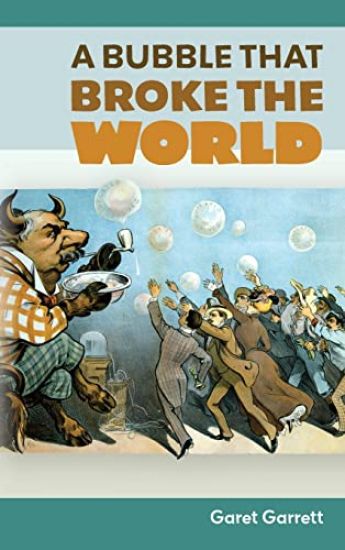
A Bubble That Broke the World is a collection of articles by American journalist and author Garet Garrett. The work seeks to answer the question: "What truly caused the stock market crash of 1929, and the ensuing depression?" Garet Garrett (1878-1954) began his journalism career at age 20, writing for the Cleveland Recorder in Chicago. Soon he was reporting on the McKinley administration from Washington, D.C. for the Washington Times. In 1900, he moved to New York where he would eventually write for the New York Sun, New York Times, Wall Street Journal, New York Evening Post, and Saturday Evening Post. Rather than simply report dry facts, as most other business reporters did at the time, Garrett was unique for the way he brought life to these events. He infused his pieces with drama and personality, making his non-fiction and later fiction works so popular.Through his books and his novels, it was clear that Garrett was a proponent of the free market. His novel Harangue: The Trees Said to the Bramble Come Reign Over Us depicts a failed socialist experiment and decries the tendency of the wealthy to fund the socialism that will be their downfall.In 1932, Garrett published A Bubble That Broke the World, his explanation for the stock market crash of 1929 and the depression that followed-still gripping the country at the time of the book's release. The book is a collection of seven articles originally published in the Saturday Evening Post. Edited and compiled into one work, the articles are included in reverse order from when they were originally published. Garrett argues that the crash of '29 was caused primarily by the American government's policy of over-issuing credit to foreign countries during and after World War I. In this contemporary account, written while the effects of the Great Depression were still being felt, Garrett explains that it is not capitalism that caused the trouble, but issuing credit to foreign powers that used it for non-wealth-building activities like public works and supporting inflated currencies. To make matters worse, a great deal of the credit issued went to Germany, which had been decimated by the war. Germany borrowed to pay its exorbitant debts to the rest of the European nations. And the European powers used that money to repay their debts to the United States. In effect, the American Treasury was repaying itself. Private debt followed, with investors clamoring to buy guaranteed foreign government bonds. With so much credit issued to European countries both publicly and privately, investment in domestic growth dwindled. And with so little money invested in wealth building and manufacture, a collapse was inevitable. Garrett's opinion held that a market correction was needed, and that an unfettered free market was the best tool to make that correction. This was a far cry from the accepted wisdom of President Franklin D. Roosevelt, whose New Deal relied on public works and financial reforms to encourage economic growth. A Bubble That Broke the World is a fascinating contemporary account of the economic crisis of the 1930s. Modern-day scholarship about that era focuses heavily on the New Deal, but is less vocal about the other viewpoints at the time. By studying the writing of Garet Garrett, we get a helpful reminder that history is more complicated than neat retellings would imply. Unflinchingly steadfast in what he believed, Garrett would today be called a libertarian. He believed that free markets and minimal government intervention were the solution to the problems of the 1930s, and he would believe the same today.
Near the end of the 19th century railroad industry in America was making a turn from iron rails to steel rails. The Cinder Buggy tells the tale about two families from Pittsburg, Pennsylvania and their involvement in the iron and steel industries. They must bring to perfections the manufacture of steel rails in order to survive cruel and merciless steel age that was coming.

The book "" The Cinder Buggy; A Fable in Iron and Steel, has been considered important throughout the human history, and so that this work is never forgotten we have made efforts in its preservation by republishing this book in a modern format for present and future generations. This whole book has been reformatted, retyped and designed. These books are not made of scanned copies and hence the text is clear and readable.

The book "" The Driver, has been considered important throughout the human history, and so that this work is never forgotten we have made efforts in its preservation by republishing this book in a modern format for present and future generations. This whole book has been reformatted, retyped and designed. These books are not made of scanned copies and hence the text is clear and readable.
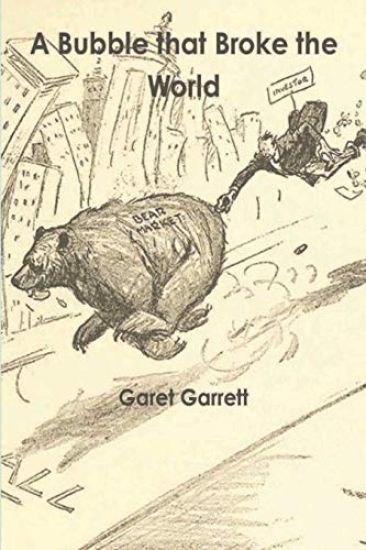
This book, originally published in 1932, is a brilliant explanation of the 1920s bubble and the '30s Great Depression. Garet Garrett knew his economics like few professional economists at the time, and he explained and summarized the core problem as unchecked debt accumulation made possible by the Federal Reserve System of central banking.

""A Bubble That Broke The World"" is a historical account of the Wall Street crash of 1929 and the subsequent Great Depression that followed. Written by Garet Garrett, an American journalist and author, the book explores the events leading up to the stock market crash and the economic and social consequences that followed. The book begins by examining the economic boom of the 1920s, fueled by a surge in consumer spending and speculation in the stock market. Garrett describes the rise of ""easy credit"" and the creation of an artificial economy, built on a foundation of debt and speculation. As the bubble grew, stock prices soared to unprecedented heights, creating a false sense of wealth and prosperity. However, in October of 1929, the bubble burst, triggering a panic on Wall Street and a wave of bank failures and business closures across the country. Garrett goes on to explore the political and social fallout of the Great Depression, including the rise of fascism and communism, the New Deal reforms of President Franklin D. Roosevelt, and the impact on American society as a whole. Overall, ""A Bubble That Broke The World"" provides a compelling and insightful look at one of the most significant events in American history and its lasting impact on the world.This is a new release of the original 1932 edition.This scarce antiquarian book is a facsimile reprint of the old original and may contain some imperfections such as library marks and notations. Because we believe this work is culturally important, we have made it available as part of our commitment for protecting, preserving, and promoting the world's literature in affordable, high quality, modern editions, that are true to their original work.