Kirjojen hintavertailu. Mukana 12 390 323 kirjaa ja 12 kauppaa.

Kirjailija

Gareth Dale

Kirjat ja teokset yhdessä paikassa: 11 kirjaa, julkaisuja vuosilta 2004-2017, suosituimpien joukossa Popular Protest in East Germany. Vertaile teosten hintoja ja tarkista saatavuus suomalaisista kirjakaupoista.

11 kirjaa

Kirjojen julkaisuhaarukka 2004-2017.

Karl Polanyi

Karl Polanyi

Gareth Dale

Columbia University Press
2017
pokkari
Karl Polanyi (1886-1964) was one of the twentieth century's most original interpreters of the market economy. His penetrating analysis of globalization's disruptions and the Great Depression's underlying causes still serves as an effective counterargument to free market fundamentalism. This biography shows how the major personal and historical events of his life transformed him from a bourgeois radical into a Christian socialist but also informed his ambivalent stance on social democracy, communism, the New Deal, and the shifting intellectual scene of postwar America. The book begins with Polanyi's childhood in the Habsburg Empire and his involvement with the Great War and Hungary's postwar revolution. It connects Polanyi's idealistic radicalism to the political promise and intellectual ferment of Red Vienna and the horror of fascism. The narrative revisits Polanyi's oeuvre in English, German, and Hungarian, includes exhaustive research in five archives, and features interviews with Polanyi's daughter, students, and colleagues, clarifying the contradictory aspects of the thinker's work. These personal accounts also shed light on Polanyi's connections to scholars, Christians, atheists, journalists, hot and cold warriors, and socialists of all stripes. Karl Polanyi: A Life on the Left engages with Polanyi's biography as a reflection and condensation of extraordinary times. It highlights the historical ruptures, tensions, and upheavals that the thinker sought to capture and comprehend and, in telling his story, engages with the intellectual and political history of a turbulent epoch.
Reconstructing Karl Polanyi

Reconstructing Karl Polanyi

Gareth Dale

Pluto Press
2016
sidottu
*Shortlisted for the Deutscher Memorial Prize 2017* Karl Polanyi's contribution to political economy and social science is immeasurable. In Reconstructing Karl Polanyi, Gareth Dale, foremost scholar and biographer of Polanyi, provides a sweeping survey of his contributions to the social sciences. An opponent of traditional economics and a believer in economics' contingency to society and culture, Polanyi's work has a cross-disciplinary appeal, finding popularity in anthropology, economic history, economic sociology and political science. Paradoxical formulations, such as 'liberal socialist' and 'cosmopolitan patriot', are often used to describe Polanyi's intellectual and political vision. In exploring these paradoxes, Dale draws upon original writings and transcripts to reconstruct Polanyi's views on a range of topics long neglected in critical literature; including the history of antiquity, the evolution and dynamics of Stalin's Russia, McCarthyism and Polanyi's critical dialogue with Marxism. Accompanying the reconstruction of his work is Dale's analysis of Polanyi's relevance to current issues, notably the 'clash' between democracy and capitalism, and the nature and trajectory of European unification. This proves an indispensable critical guide to Polanyian thought.
Reconstructing Karl Polanyi

Reconstructing Karl Polanyi

Gareth Dale

Pluto Press
2016
pokkari
*Shortlisted for the Deutscher Memorial Prize 2017* Karl Polanyi's contribution to political economy and social science is immeasurable. In Reconstructing Karl Polanyi, Gareth Dale, foremost scholar and biographer of Polanyi, provides a sweeping survey of his contributions to the social sciences. An opponent of traditional economics and a believer in economics' contingency to society and culture, Polanyi's work has a cross-disciplinary appeal, finding popularity in anthropology, economic history, economic sociology and political science. Paradoxical formulations, such as 'liberal socialist' and 'cosmopolitan patriot', are often used to describe Polanyi's intellectual and political vision. In exploring these paradoxes, Dale draws upon original writings and transcripts to reconstruct Polanyi's views on a range of topics long neglected in critical literature; including the history of antiquity, the evolution and dynamics of Stalin's Russia, McCarthyism and Polanyi's critical dialogue with Marxism. Accompanying the reconstruction of his work is Dale's analysis of Polanyi's relevance to current issues, notably the 'clash' between democracy and capitalism, and the nature and trajectory of European unification. This proves an indispensable critical guide to Polanyian thought.
Popular Protest in East Germany

Popular Protest in East Germany

Gareth Dale

Routledge
2016
nidottu
An incisive new study of dissent and protest in the German Democratic Republic, focusing on the upheaval of 1989-1990. The author, an active participant both in the 'Citizens' Movement' and in the street protests of that year, draws upon a vast array of sources including interviews, documents from the archives of the old regime and the Citizens' Movement and his own diary entries, to explore the causes and processes of the East German revolution. The book is at once a lucid and vibrant narrative history and a pioneering contribution to research in this field.
Karl Polanyi

Karl Polanyi

Gareth Dale

Columbia University Press
2016
sidottu
Karl Polanyi (1886-1964) was one of the twentieth century's most original interpreters of the market economy. His penetrating analysis of globalization's disruptions and the Great Depression's underlying causes still serves as an effective counterargument to free market fundamentalism. This biography shows how the major personal and historical events of his life transformed him from a bourgeois radical into a Christian socialist but also informed his ambivalent stance on social democracy, communism, the New Deal, and the shifting intellectual scene of postwar America. The book begins with Polanyi's childhood in the Habsburg Empire and his involvement with the Great War and Hungary's postwar revolution. It connects Polanyi's idealistic radicalism to the political promise and intellectual ferment of Red Vienna and the horror of fascism. The narrative revisits Polanyi's oeuvre in English, German, and Hungarian, includes exhaustive research in five archives, and features interviews with Polanyi's daughter, students, and colleagues, clarifying the contradictory aspects of the thinker's work. These personal accounts also shed light on Polanyi's connections to scholars, Christians, atheists, journalists, hot and cold warriors, and socialists of all stripes. Karl Polanyi: A Life on the Left engages with Polanyi's biography as a reflection and condensation of extraordinary times. It highlights the historical ruptures, tensions, and upheavals that the thinker sought to capture and comprehend and, in telling his story, engages with the intellectual and political history of a turbulent epoch.
Karl Polanyi

Karl Polanyi

Gareth Dale

Polity Press
2010
sidottu
Karl Polanyi's The Great Transformation is generally acclaimed as being among the most influential works of economic history in the twentieth century, and remains as vital in the current historical conjuncture as it was in his own. In its critique of nineteenth-century "market fundamentalism" it reads as a warning to our own neoliberal age, and is widely touted as a prophetic guidebook for those who aspire to understand the causes and dynamics of global economic turbulence at the end of the 2000s. Karl Polanyi: The Limits of the Market is the first comprehensive introduction to Polanyi's ideas and legacy. It assesses not only the texts for which he is famous – prepared during his spells in American academia – but also his journalistic articles written in his first exile in Vienna, and lectures and pamphlets from his second exile, in Britain. It provides a detailed critical analysis of The Great Transformation, but also surveys Polanyi’s seminal writings in economic anthropology, the economic history of ancient and archaic societies, and political and economic theory. Its primary source base includes interviews with Polanyi's daughter, Kari Polanyi-Levitt, as well as the entire compass of his own published and unpublished writings in English and German. This engaging and accessible introduction to Polanyi's thinking will appeal to students and scholars across the social sciences, providing a refreshing perspective on the roots of our current economic crisis.
Karl Polanyi

Karl Polanyi

Gareth Dale

Polity Press
2010
nidottu
Karl Polanyi's The Great Transformation is generally acclaimed as being among the most influential works of economic history in the twentieth century, and remains as vital in the current historical conjuncture as it was in his own. In its critique of nineteenth-century "market fundamentalism" it reads as a warning to our own neoliberal age, and is widely touted as a prophetic guidebook for those who aspire to understand the causes and dynamics of global economic turbulence at the end of the 2000s. Karl Polanyi: The Limits of the Market is the first comprehensive introduction to Polanyi's ideas and legacy. It assesses not only the texts for which he is famous – prepared during his spells in American academia – but also his journalistic articles written in his first exile in Vienna, and lectures and pamphlets from his second exile, in Britain. It provides a detailed critical analysis of The Great Transformation, but also surveys Polanyi’s seminal writings in economic anthropology, the economic history of ancient and archaic societies, and political and economic theory. Its primary source base includes interviews with Polanyi's daughter, Kari Polanyi-Levitt, as well as the entire compass of his own published and unpublished writings in English and German. This engaging and accessible introduction to Polanyi's thinking will appeal to students and scholars across the social sciences, providing a refreshing perspective on the roots of our current economic crisis.
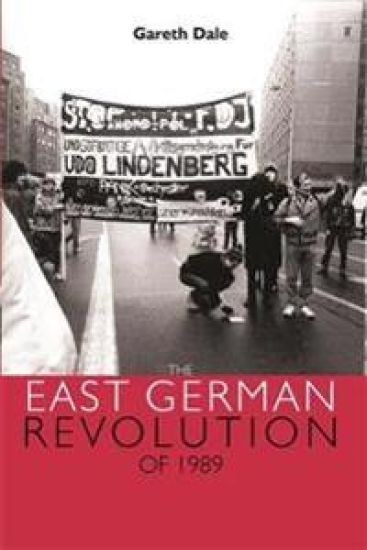
The East German Revolution of 1989

The East German Revolution of 1989

Gareth Dale

Manchester University Press
2007
nidottu
This book offers a new account of the East German Revolution of 1989 and uncovers hitherto neglected events and phases of this tumultuous period. It draws upon published and unpublished primary sources, including twenty-five interviews with oppositionists, movement participants and state officials, as well as archive materials from the Stasi, police, SED and civic groups. It brings to prominence previously unexplored events, including the ‘battle of Dresden station,’ the ‘December uprising’ and the strike wave of January 1990. In addition, as a resident of East Germany in the late 1980s and an active participant in the civic groups and street protests of 1989, Gareth Dale succeeds in bringing an immediacy and vividness to the narrative.This is the most comprehensive account in English of East Germany’s ‘peaceful’ revolution. As a piece of sustained original research, this book will be an indispensable reference for historians of Germany and Eastern Europe. As an accessible narrative history, written in a fluent style and with an eye for the telling anecdote, it is keyed to the needs of students and lay readers.
Popular Protest in East Germany

Popular Protest in East Germany

Gareth Dale

Routledge
2005
sidottu
An incisive new study of dissent and protest in the German Democratic Republic, focusing on the upheaval of 1989-1990. The author, an active participant both in the 'Citizens' Movement' and in the street protests of that year, draws upon a vast array of sources including interviews, documents from the archives of the old regime and the Citizens' Movement and his own diary entries, to explore the causes and processes of the East German revolution. The book is at once a lucid and vibrant narrative history and a pioneering contribution to research in this field.
Between State Capitalism and Globalisation

Between State Capitalism and Globalisation

Gareth Dale

Verlag Peter Lang
2004
nidottu
This book is an exploration of the economic history of the German Democratic Republic, with an emphasis upon its confrontation by and contribution towards economic and military competition on the world stage. Beginning with an analysis of the Soviet bloc as a state-capitalist formation, the GDR's economic history is charted, with detailed examinations of the challenges to Soviet-style autarky that were posed by the globalising world market, as well as of GDR policymakers' attempts to use Western imports and credits as a 'whip' to spur growth. The book's central section consists of an exploration of the ambivalent attitudes of East German policymakers and industrialists towards their West German counterparts in the 1980s, as the whip was transformed into an ever-tightening noose of debt. Here, a prodigious range of secondary sources as well as hitherto unpublished documents from the archives of the old regime are drawn upon to document the means by which relative economic decline and dependency upon Western institutions came to constrain the options available to the East German "nomenklatura." Finally, this study analyses the political economy of the 1989 revolution and unification and of post-unification Eastern Germany.