Kirjojen hintavertailu. Mukana 12 595 353 kirjaa ja 12 kauppaa.

Kirjailija

Garry Whannel

Kirjat ja teokset yhdessä paikassa: 12 kirjaa, julkaisuja vuosilta 1992-2020, suosituimpien joukossa Understanding the Olympics. Vertaile teosten hintoja ja tarkista saatavuus suomalaisista kirjakaupoista.

12 kirjaa

Kirjojen julkaisuhaarukka 1992-2020.

Understanding the Olympics

Understanding the Olympics

John Horne; Garry Whannel

Routledge
2020
sidottu
How did the Olympics evolve into a multi-national phenomenon? How can the Olympics help us to understand the relationship between sport and society? What will be the impact and legacy of the Olympics after Tokyo in 2020? Understanding the Olympics answers all these questions by exploring the social, cultural, political, historical, and economic context of the Games. This thoroughly revised and updated edition discusses recent attempts at future proofing by the International Olympic Committee (IOC) in the face of growing global anti-Olympic activism, the changing geo-political context within which the Olympics take place, and the Olympic histories of the next three cities to host the Games – Tokyo (2020), Paris (2024), and Los Angeles (2028) – as well as the legacy of the London (2012) Olympics. For the first time, this new edition introduces the reader to the emergence of ‘other Games’ associated with the IOC – the Winter Olympics, the Paralympics, and the Youth Olympics. It also features a full Olympic history timeline, many new photographs, refreshed suggestions for further reading, and revised illustrations. The most up-to-date and authoritative textbook available on the Olympic Games, Understanding the Olympics is essential reading for anybody with an interest in the Olympics or the wider relationship between sport and society.

Understanding the Olympics

Understanding the Olympics

John Horne; Garry Whannel

Routledge
2020
nidottu
How did the Olympics evolve into a multi-national phenomenon? How can the Olympics help us to understand the relationship between sport and society? What will be the impact and legacy of the Olympics after Tokyo in 2020? Understanding the Olympics answers all these questions by exploring the social, cultural, political, historical, and economic context of the Games. This thoroughly revised and updated edition discusses recent attempts at future proofing by the International Olympic Committee (IOC) in the face of growing global anti-Olympic activism, the changing geo-political context within which the Olympics take place, and the Olympic histories of the next three cities to host the Games – Tokyo (2020), Paris (2024), and Los Angeles (2028) – as well as the legacy of the London (2012) Olympics. For the first time, this new edition introduces the reader to the emergence of ‘other Games’ associated with the IOC – the Winter Olympics, the Paralympics, and the Youth Olympics. It also features a full Olympic history timeline, many new photographs, refreshed suggestions for further reading, and revised illustrations. The most up-to-date and authoritative textbook available on the Olympic Games, Understanding the Olympics is essential reading for anybody with an interest in the Olympics or the wider relationship between sport and society.

The Trojan Horse

The Trojan Horse

Deborah Philips; Garry Whannel

Bloomsbury Academic
2015
nidottu
This book is available as open access through the Bloomsbury Open Access programme and is available on www.bloomsburycollections.com.The Trojan Horse traces the growth of commercial sponsorship in the public sphere since the 1960s, its growing importance for the arts since 1980 and its spread into areas such as education and health. The authors’ central argument is that the image of sponsorship as corporate benevolence has served to routinize and legitimate the presence of commerce within the public sector. The central metaphor is of such sponsorship as a Trojan Horse helping to facilitate the hollowing out of the public sector by private agencies and private finance.The authors place the study in the context of the more general colonization of the state by private capital and the challenge posed to the dominance of neo-liberal economics by the recent global financial crisis. After considering the passage from patronage to sponsorship and outlining the context of the post-war public sector since 1945, it analyses sponsorship in relation to Thatcherism, enterprise culture and the restructuring of public provision during the 1980s. It goes on to examine the New Labour years, and the ways in which sponsorship has paved the way for the increased use of private-public partnerships and private finance initiatives within the public sector in the UK.
The Trojan Horse

The Trojan Horse

Deborah Philips; Garry Whannel

Bloomsbury Academic
2013
sidottu
This book is available as open access through the Bloomsbury Open Access programme and is available on www.bloomsburycollections.com.The Trojan Horse traces the growth of commercial sponsorship in the public sphere since the 1960s, its growing importance for the arts since 1980 and its spread into areas such as education and health. The authors’ central argument is that the image of sponsorship as corporate benevolence has served to routinize and legitimate the presence of commerce within the public sector. The central metaphor is of such sponsorship as a Trojan Horse helping to facilitate the hollowing out of the public sector by private agencies and private finance.The authors place the study in the context of the more general colonization of the state by private capital and the challenge posed to the dominance of neo-liberal economics by the recent global financial crisis. After considering the passage from patronage to sponsorship and outlining the context of the post-war public sector since 1945, it analyses sponsorship in relation to Thatcherism, enterprise culture and the restructuring of public provision during the 1980s. It goes on to examine the New Labour years, and the ways in which sponsorship has paved the way for the increased use of private-public partnerships and private finance initiatives within the public sector in the UK.
Understanding Sport

Understanding Sport

John Horne; Alan Tomlinson; Garry Whannel; Kath Woodward

Routledge
2012
nidottu
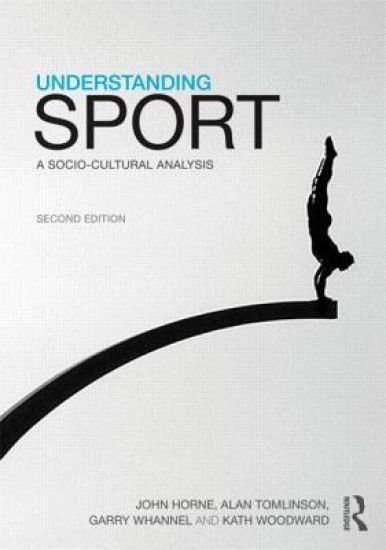
In the decade or more since publication of the first edition of Understanding Sport, both sport and wider global society have undergone profound change. In this fully updated, revised and expanded edition of their classic textbook, John Horne, Alan Tomlinson, Garry Whannel and Kath Woodward offer a critical and reflective introduction to the relationship between sport and contemporary society and explain how sport remains an important agent and symptom of socio-cultural change.Fully integrating historical, sociological, political and cultural analysis, the book covers every key topic in the study of sport and society, including:debate, interpretation and theory sport and the media sport and the body sport and politics commercialization globalization.Retaining the accessibility and scholarly rigour for which Understanding Sport has always been renowned, this new edition includes entirely new chapters on global transformations, sports mega-events and sites, sporting bodies and governance, as well as a succinct guide to researching sport. With review and seminar questions included in every chapter, plus concise, helpful guides to further reading, Understanding Sport remains an essential textbook for all courses on sport and society, the sociology of sport, sport and social theory, or social issues in sport.
Understanding Sport

Understanding Sport

John Horne; Alan Tomlinson; Garry Whannel; Kath Woodward

Routledge
2012
sidottu
In the decade or more since publication of the first edition of Understanding Sport, both sport and wider global society have undergone profound change. In this fully updated, revised and expanded edition of their classic textbook, John Horne, Alan Tomlinson, Garry Whannel and Kath Woodward offer a critical and reflective introduction to the relationship between sport and contemporary society and explain how sport remains an important agent and symptom of socio-cultural change.Fully integrating historical, sociological, political and cultural analysis, the book covers every key topic in the study of sport and society, including:debate, interpretation and theory sport and the media sport and the body sport and politics commercialization globalization.Retaining the accessibility and scholarly rigour for which Understanding Sport has always been renowned, this new edition includes entirely new chapters on global transformations, sports mega-events and sites, sporting bodies and governance, as well as a succinct guide to researching sport. With review and seminar questions included in every chapter, plus concise, helpful guides to further reading, Understanding Sport remains an essential textbook for all courses on sport and society, the sociology of sport, sport and social theory, or social issues in sport.
Culture, Politics and Sport

Culture, Politics and Sport

Garry Whannel

Routledge
2008
sidottu
'Whannel is a foundational figure in the study of sports and the media. …For 20 years his writing has set a high standard …and it remains an inspiration to many' - Toby Miller, Professor of Cultural Studies, New York University, USAGarry Whannel’s text Blowing the Whistle: The Politics of Sport broke new ground when it was first published in 1983. Its polemical discussion brought sports as cultural politics into the academic arena and set the agenda for a new wave of researchers. Since the 1980s sport studies has matured both as an academic discipline and as a focus for mainstream political and public policy debate. In Culture, Politics and Sport: Blowing the Whistle, Revisited, Garry Whannel revisits the themes that led his first edition, assessing their 1980s context from our new millennium perspective, and exploring their continued relevance for contemporary sports academics. This revisited volume will appeal to undergraduate students and researchers in sports and cultural studies.Garry Whannel is Professor of Media Cultures and Director of the Centre for International Media Analysis at the University of Bedfordshire. His previous books include Media Sports Stars: Masculinities and Moralities, Fields in Vision: Television Sport and Cultural Transformation, Understanding Sport (co-authored with John Horne and Alan Tomlinson) and Understanding Television (co-edited with Andrew Goodwin), all published by Routledge.
Culture, Politics and Sport

Culture, Politics and Sport

Garry Whannel

Routledge
2008
nidottu
'Whannel is a foundational figure in the study of sports and the media. …For 20 years his writing has set a high standard …and it remains an inspiration to many' - Toby Miller, Professor of Cultural Studies, New York University, USAGarry Whannel’s text Blowing the Whistle: The Politics of Sport broke new ground when it was first published in 1983. Its polemical discussion brought sports as cultural politics into the academic arena and set the agenda for a new wave of researchers. Since the 1980s sport studies has matured both as an academic discipline and as a focus for mainstream political and public policy debate. In Culture, Politics and Sport: Blowing the Whistle, Revisited, Garry Whannel revisits the themes that led his first edition, assessing their 1980s context from our new millennium perspective, and exploring their continued relevance for contemporary sports academics. This revisited volume will appeal to undergraduate students and researchers in sports and cultural studies.Garry Whannel is Professor of Media Cultures and Director of the Centre for International Media Analysis at the University of Bedfordshire. His previous books include Media Sports Stars: Masculinities and Moralities, Fields in Vision: Television Sport and Cultural Transformation, Understanding Sport (co-authored with John Horne and Alan Tomlinson) and Understanding Television (co-edited with Andrew Goodwin), all published by Routledge.
Media Sport Stars

Media Sport Stars

Garry Whannel

Routledge
2001
nidottu
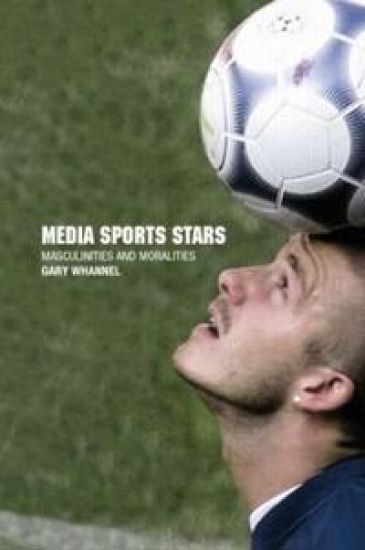
Media Sport Stars considers how masculinity and male identity are represented through images of sport and sport stars. From the pre-radio era to today's specialist TV channels, newspaper supplements and websites, Whannel traces the growing cultural importance of sport and sportmen, showing how the very practices of sport are still bound up with the production of masculinities.Through a series of case studies of British and American sportsmen, Whannel traces the emergence of of the sporting 'hero' and 'star' , and considers the ways in which the lives of sport stars are narrated through the media. Focusing on figures like Muhammad Ali and David Beckham, whose fame has spread well beyond the world of sport, he shows how growing media coverage has helped produced a sporting system, and examines how modern celebrity addresses the issues of race and nation, performance and identity, morality and violence.From Babe Ruth to Mike Tyson, Media Sport Stars demonstrates that, in an era in which both morality and masculinity are percieved to be 'in crisis', sport holds a central place in contemporary culture, and sport stars become the focal point for discourses of masculinity and morality.
Media Sport Stars

Media Sport Stars

Garry Whannel

Routledge
2001
sidottu
Media Sport Stars considers how masculinity and male identity are represented through images of sport and sport stars. From the pre-radio era to today's specialist TV channels, newspaper supplements and websites, Whannel traces the growing cultural importance of sport and sportmen, showing how the very practices of sport are still bound up with the production of masculinities.Through a series of case studies of British and American sportsmen, Whannel traces the emergence of of the sporting 'hero' and 'star' , and considers the ways in which the lives of sport stars are narrated through the media. Focusing on figures like Muhammad Ali and David Beckham, whose fame has spread well beyond the world of sport, he shows how growing media coverage has helped produced a sporting system, and examines how modern celebrity addresses the issues of race and nation, performance and identity, morality and violence.From Babe Ruth to Mike Tyson, Media Sport Stars demonstrates that, in an era in which both morality and masculinity are percieved to be 'in crisis', sport holds a central place in contemporary culture, and sport stars become the focal point for discourses of masculinity and morality.
Fields in Vision

Fields in Vision

Garry Whannel

Routledge
1992
nidottu
Fields in Vision offers a comprehensive and analytical study of the international phenomenon of television sports coverage. Garry Whannel considers the historical development of sport on television, the growth of sponsorship and the way that television and sponsorship have re-shaped sport in the context of the enterprise culture. Drawing on archival research, Whannel first charts the development of the BBC Outside Broadcast department, and the growing battle for dominance between BBC and ITV, showing how sponsorship and the rising power of sports agents began to transform sport - not only in the UK but across the world - in the 1960s. He goes on to examine the implications of this vast and escalating global network during the 1980s by analysing the central role that stars and narratives began to play in television sport, presenting case studies of major contests such as Coe versus Ovett and Decker versus Budd. His study also takes into account one of the more indirect, but no less significant results of international televised sport - the rise of popular fitness chic and the American monopoly of the workout boom of the 1980s.Fields in Vision explains the development of television sport by linking its economic transformation with the cultural forms through which it is represented, offering a study encompassing not simply the sports world, but our relationship with television and the media industries as a whole.
Fields in Vision

Fields in Vision

Garry Whannel

Routledge
1992
sidottu
Fields in Vision offers a comprehensive and analytical study of the international phenomenon of television sports coverage. Garry Whannel considers the historical development of sport on television, the growth of sponsorship and the way that television and sponsorship have re-shaped sport in the context of the enterprise culture. Drawing on archival research, Whannel first charts the development of the BBC Outside Broadcast department, and the growing battle for dominance between BBC and ITV, showing how sponsorship and the rising power of sports agents began to transform sport - not only in the UK but across the world - in the 1960s. He goes on to examine the implications of this vast and escalating global network during the 1980s by analysing the central role that stars and narratives began to play in television sport, presenting case studies of major contests such as Coe versus Ovett and Decker versus Budd. His study also takes into account one of the more indirect, but no less significant results of international televised sport - the rise of popular fitness chic and the American monopoly of the workout boom of the 1980s.Fields in Vision explains the development of television sport by linking its economic transformation with the cultural forms through which it is represented, offering a study encompassing not simply the sports world, but our relationship with television and the media industries as a whole.