Kirjojen hintavertailu. Mukana 12 595 353 kirjaa ja 12 kauppaa.

Kirjailija

Gary A. Olson

Kirjat ja teokset yhdessä paikassa: 7 kirjaa, julkaisuja vuosilta 1991-2016, suosituimpien joukossa Future of Higher Education. Vertaile teosten hintoja ja tarkista saatavuus suomalaisista kirjakaupoista.

7 kirjaa

Kirjojen julkaisuhaarukka 1991-2016.

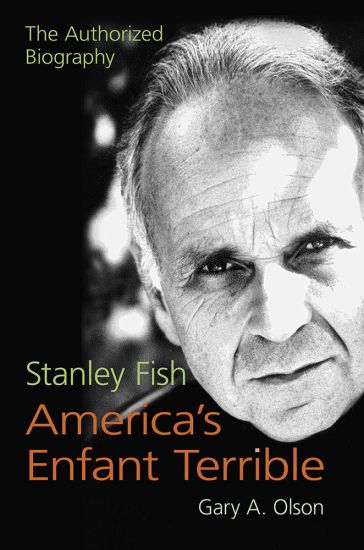
Stanley Fish, America’s Enfant Terrible

Stanley Fish, America’s Enfant Terrible

Gary A. Olson

Southern Illinois University Press
2016
sidottu
One of the twentieth century’s most original and influential literary theorists, Stanley Fish is also known as a fascinatingly atypical, polarizing public intellectual; a loud, cigar-smoking contrarian; and a lightning rod for both the political right and left. The truth and the limitations of this reputation are explored in Stanley Fish, America’s Enfant Terrible by Gary A. Olson. At once a literary biography and a traditional life story, this engrossing volume details Fish’s vibrant personal life and his remarkably versatile career.Born into a tumultuous family, Fish survived life with an emotionally absent father and a headstrong mother through street sports and troublemaking as much as through his success at a rigorous prep school. As Olson shows, Fish’s escape from the working-class neighborhoods of 1940s and 1950s Providence, Rhode Island, came with his departure for the university life at Penn and then Yale. His meteoric rise through the academic ranks at a troubled Vietnam-era UC-Berkeley was complemented by a 1966 romp through Europe that included drag racing through the streets of Seville in his Alfa Romeo. He went on to become an internationally prominent scholar at Johns Hopkins before moving to Duke, where he built a star-studded academic department that became a key site in the culture and theory wars of the 1980s and 1990s. Olson discusses Fish’s tenure as a highly visible dean at the University of Illinois at Chicago who clashed publicly with the state legislature. He also covers Fish’s most remarkable and controversial books, including Fish’s masterpiece, Surprised by Sin: The Reader in Paradise Lost, which was a critical sensation and forever changed the craft of literary criticism, as well as Professional Correctness and Save the World on Your Own Time, two books that alienated Fish from most liberal-minded professors in English studies.Olson concludes his biography of Fish with an in-depth analysis of the contradictions between Fish’s public persona and his private personality, examining how impulses and events from Fish’s childhood shaped his lifelong practices and personality traits. Also included are a chronology of the major events of Fish’s life and never-before-published photos.Based on hundreds of hours of recorded interviews with friends, enemies, colleagues, former students, family members, and Fish himself, along with material from the Stanley Fish archive, Stanley Fish, America’s Enfant Terrible is a clearly written narrative of the life of an important and controversial scholar.
Future of Higher Education

Future of Higher Education

Gary A. Olson; John W. Presley

Paradigm
2010
nidottu
Written by leading education experts and by university presidents, provosts, and other leaders nationally recognized for their innovations, the 22 original and provocative chapters in this new book comprise a wide-ranging examination of the many challenges faced in fashioning the university of tomorrow. Authors offer their research, predictions, concerns, and advice on topics ranging from university finances, student access, changing technologies, and the philosophical underpinnings of college education. They address the multiple challenges facing higher education today, offering ideas and solutions. Contributors include Warren Arbogast, Gretchen Bataille, Lee Benson, Rita Bornstein , Sally Clausen , Reed Way Dasenbrock, John A. Dossey, Jean Dowdall, James L. Fisher, Judy L. Genshaft , Henry A. Giroux, Ira Harkavy , Michael Hoad, Freeman A. Hrabowski, Stephen K. Klasko, James V. Koch, George Mehaffy , J. Hillis Miller, Gary A. Olson , John W. Presley, John Puckett , Michael Rao, Charles B. Reed, Rollin C. Richmond, Roseann Runte, Neil J. Smelser , Sheila M. Stearns, and Randy L. Swing.
Future of Higher Education

Future of Higher Education

Gary A. Olson; John W. Presley

Paradigm
2009
sidottu
Written by leading education experts and by university presidents, provosts, and other leaders nationally recognized for their innovations, the 22 original and provocative chapters in this new book comprise a wide-ranging examination of the many challenges faced in fashioning the university of tomorrow. Authors offer their research, predictions, concerns, and advice on topics ranging from university finances, student access, changing technologies, and the philosophical underpinnings of college education. They address the multiple challenges facing higher education today, offering ideas and solutions. Contributors include Warren Arbogast, Gretchen Bataille, Lee Benson, Rita Bornstein , Sally Clausen , Reed Way Dasenbrock, John A. Dossey, Jean Dowdall, James L. Fisher, Judy L. Genshaft , Henry A. Giroux, Ira Harkavy , Michael Hoad, Freeman A. Hrabowski, Stephen K. Klasko, James V. Koch, George Mehaffy , J. Hillis Miller, Gary A. Olson , John W. Presley, John Puckett , Michael Rao, Charles B. Reed, Rollin C. Richmond, Roseann Runte, Neil J. Smelser , Sheila M. Stearns, and Randy L. Swing.
Politics of Possibility

Politics of Possibility

Gary A. Olson; Lynn Worsham; Henry A. Giroux

Paradigm
2008
nidottu
In the probing interviews in this vibrant new book, eminent scholars struggle with some of the most crucial issues facing contemporary intellectuals. Poststructuralist philosopher Judith Butler discusses the pain of rigorous intellectual work, saying that it is necessarily extremely hard labor, as she examines the intersection of discourse and political action. Award-winning filmmaker, philosopher, and social theorist David Theo Goldberg reviews his life s work, especially on issues of racism. Literary critic and feminist philosopher Avital Ronell sets out to disrupt the standard logic of signification, to force readers into fresh ways of perceiving a subject at hand. Postcolonial theorist Homi Bhabha discusses how critical literacy is intimately connected to the question of democratic representation, and he elaborates on how cultural difference can lead to a politics of discrimination. And neo-Marxist cultural critic Slavoj i ek takes readers on an exhilarating journey through a wide range of critical subjects."
Politics of Possibility

Politics of Possibility

Gary A. Olson; Lynn Worsham; Henry A. Giroux

Paradigm
2007
sidottu
In the probing interviews in this vibrant new book, eminent scholars struggle with some of the most crucial issues facing contemporary intellectuals. Poststructuralist philosopher Judith Butler discusses the pain of rigorous intellectual work, saying that it is necessarily extremely hard labor, as she examines the intersection of discourse and political action. Award-winning filmmaker, philosopher, and social theorist David Theo Goldberg reviews his life s work, especially on issues of racism. Literary critic and feminist philosopher Avital Ronell sets out to disrupt the standard logic of signification, to force readers into fresh ways of perceiving a subject at hand. Postcolonial theorist Homi Bhabha discusses how critical literacy is intimately connected to the question of democratic representation, and he elaborates on how cultural difference can lead to a politics of discrimination. And neo-Marxist cultural critic Slavoj i ek takes readers on an exhilarating journey through a wide range of critical subjects."
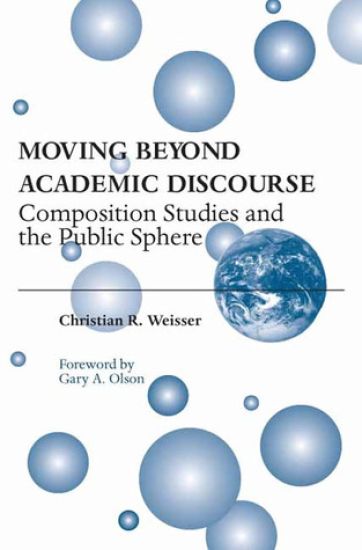
Moving Beyond Academic Discourse

Moving Beyond Academic Discourse

Christian R. Weisser; Gary A. Olson

Southern Illinois University Press
2002
nidottu
Moving student writing beyond academic discourse and into larger public spheres is a difficult task, but Christian R. Weisser's study challenges composition instructors to do just that. This highly accessible book does what no other study has attempted to do: place the most current, cutting-edge theories and pedagogies in rhetoric and composition in their intellectual and historical contexts, while at the same time offering a unique, practical theory and pedagogy of public writing for use both inside and outside of the classroom. By positing a theory of the public for composition studies, one which envisions the public sphere as a highly contested, historically textured, multilayered, and sometimes contradictory site, Weisser offers a new approach to the roles that compositionists might assume in their attempts to initiate progressive political and social change. After first providing a historical context that situates composition's recent interest in public writing, Weisser next examines recent theories in composition studies that consider writing an act of social engagement before outlining a more complex theory of the public based on the work of Jurgen Habermas. The resulting re-envisioning of the public sphere expands current conversations in rhetoric and composition concerning the public.