Kirjojen hintavertailu. Mukana 12 390 323 kirjaa ja 12 kauppaa.

Kirjailija

Gary Clayton Anderson

Kirjat ja teokset yhdessä paikassa: 11 kirjaa, julkaisuja vuosilta 1986-2024, suosituimpien joukossa Will Rogers and His America. Vertaile teosten hintoja ja tarkista saatavuus suomalaisista kirjakaupoista.

11 kirjaa

Kirjojen julkaisuhaarukka 1986-2024.

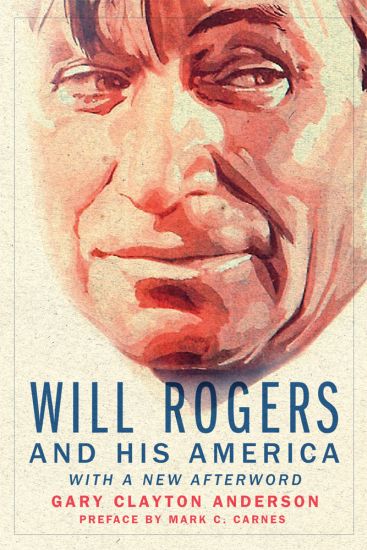
Will Rogers and His America

Will Rogers and His America

Gary Clayton Anderson

UNIVERSITY OF OKLAHOMA PRESS
2023
nidottu
Born on a farm in the Cherokee Nation near present Oologah, Oklahoma, in 1879, Will Rogers shared his rural, agricultural beginnings with many Americans at the turn of the century. But Rogers brought his small-town talents to a national audience, becoming a mainstay of early American mass culture. Although Rogers is remembered today for his success in vaudeville and the nascent American film industry, history has largely forgotten his considerable influence as a political commentator, an aspect of Rogers’s life that Gary Clayton Anderson explores at length in this brief but complete biography. Rogers’s contributions to early American mass culture, the catalog of powerful personages that he counted among his friends, and his extensive writings about the political issues of the day make Rogers an ideal figure through which to explore the American interwar period. High school and college students will relate well to Rogers, whose political opinions evolved as he gained exposure to people, places, organizations, and ideas beyond rural Oklahoma. Rogers’s conflicted relationship with his indigenous American heritage also provides a window on the history of race relations in America. This paperback edition includes a new afterword by the author, along with study and discussion questions for every chapter.
A Reservation Undiminished

A Reservation Undiminished

Todd Adams; Gary Clayton Anderson; R. David Edmunds

UNIVERSITY OF OKLAHOMA PRESS
2024
sidottu
It took more than one hundred years for federal, state, and local governments to recognize the Saginaw Chippewa Tribe’s claim to its Isabella Reservation in central Michigan. This book tells the story of how the tribe persevered and eventually succeeded in having the reservation recognized. It is the story of widespread fraud and oppression perpetrated by non–Native Americans seeking to clearcut the rich Chippewa forest for quick profits, despite the federal government’s solemn promises of protection made to the Saginaw Chippewa nation in treaties. In its account of the legal battle over the Isabella Reservation, Reservation Undiminished explores what Native sovereignty actually means. The authors, three key participants in the case, give an inside view of the case and its historical context. When it began to take shape in 2005, lawyers for five different jurisdictions hired historians and anthropologists to evaluate the Saginaws’ claim and serve as expert witnesses. Two of those historians, Gary C. Anderson and R. David Edmunds, reveal the importance of archival research in demonstrating governments’ continual references to the Saginaw Chippewas’ reservation long after 1875, when the state claimed it ceased to exist. Attorney Todd Adams, who represented the state of Michigan in the case, explores what happened after the state settled with the Saginaw in 2010. He recounts the unlikely collaboration of all parties in resolving the conflict.Reservation Undiminished presents a cohesive narrative of a legal case that testifies to Native persistence in asserting territorial sovereignty in the twenty-first century—and that highlights the potential for conflict resolution in seemingly intractable legal struggles between state, local, and tribal governments.
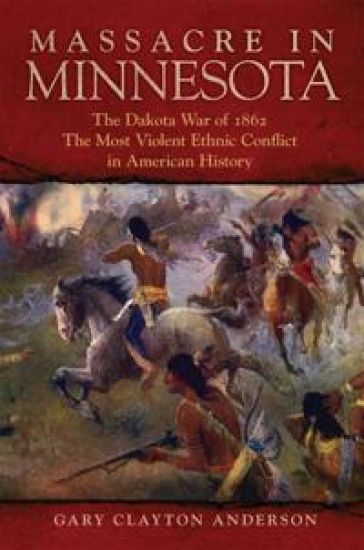
Massacre in Minnesota

Massacre in Minnesota

Gary Clayton Anderson

UNIVERSITY OF OKLAHOMA PRESS
2023
nidottu
In August 1862 the worst massacre in U.S. history unfolded on the Minnesota prairie, launching what has come to be known as the Dakota War, the most violent ethnic conflict ever to roil the nation. When it was over, between six and seven hundred white settlers had been murdered in their homes, and thirty to forty thousand had fled the frontier of Minnesota. But the devastation was not all on one side. More than five hundred Indians, many of them women and children, perished in the aftermath of the conflict; and thirty-eight Dakota warriors were executed on one gallows, the largest mass execution ever in North America. The horror of such wholesale violence has long obscured what really happened in Minnesota in 1862—from its complicated origins to the consequences that reverberate to this day. A sweeping work of narrative history, the result of forty years’ research, Massacre in Minnesota provides the most complete account of this dark moment in U.S. history. Focusing on key figures caught up in the conflict—Indian, American, and Franco- and Anglo-Dakota—Gary Clayton Anderson gives these long-ago events a striking immediacy, capturing the fears of the fleeing settlers, the animosity of newspaper editors and soldiers, the violent dedication of Dakota warriors, and the terrible struggles of seized women and children. Through rarely seen journal entries, newspaper accounts, and military records, integrated with biographical detail, Anderson documents the vast corruption within the Bureau of Indian Affairs, the crisis that arose as pioneers overran Indian lands, the failures of tribal leadership and institutions, and the systemic strains caused by the Civil War. Anderson also gives due attention to Indian cultural viewpoints, offering insight into the relationship between Native warfare, religion, and life after death—a nexus critical to understanding the conflict. Ultimately, what emerges most clearly from Anderson’s account is the outsize suffering of innocents on both sides of the Dakota War—and, identified unequivocally for the first time, the role of white duplicity in bringing about this unprecedented and needless calamity.
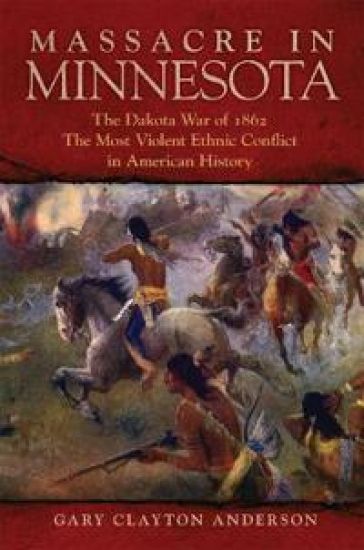
Massacre in Minnesota

Massacre in Minnesota

Gary Clayton Anderson

University of Oklahoma Press
2019
sidottu
In August 1862 the worst massacre in U.S. history unfolded on the Minnesota prairie, launching what has come to be known as the Dakota War, the most violent ethnic conflict ever to roil the nation. When it was over, between six and seven hundred white settlers had been murdered in their homes, and thirty to forty thousand had fled the frontier of Minnesota. But the devastation was not all on one side. More than five hundred Indians, many of them women and children, perished in the aftermath of the conflict; and thirty-eight Dakota warriors were executed on one gallows, the largest mass execution ever in North America. The horror of such wholesale violence has long obscured what really happened in Minnesota in 1862 - from its complicated origins to the consequences that reverberate to this day. A sweeping work of narrative history, the result of forty years' research, Massacre in Minnesota provides the most complete account of this dark moment in U.S. history. Focusing on key figures caught up in the conflict - Indian, American, and Franco- and Anglo-Dakota - Gary Clayton Anderson gives these long-ago events a striking immediacy, capturing the fears of the fleeing settlers, the animosity of newspaper editors and soldiers, the violent dedication of Dakota warriors, and the terrible struggles of seized women and children. Through rarely seen journal entries, newspaper accounts, and military records, integrated with biographical detail, Anderson documents the vast corruption within the Bureau of Indian Affairs, the crisis that arose as pioneers overran Indian lands, the failures of tribal leadership and institutions, and the systemic strains caused by the Civil War. Anderson also gives due attention to Indian cultural viewpoints, offering insight into the relationship between Native warfare, religion, and life after death - a nexus critical to understanding the conflict. Ultimately, what emerges most clearly from Anderson's account is the outsize suffering of innocents on both sides of the Dakota War - and, identified unequivocally for the first time, the role of white duplicity in bringing about this unprecedented and needless calamity.
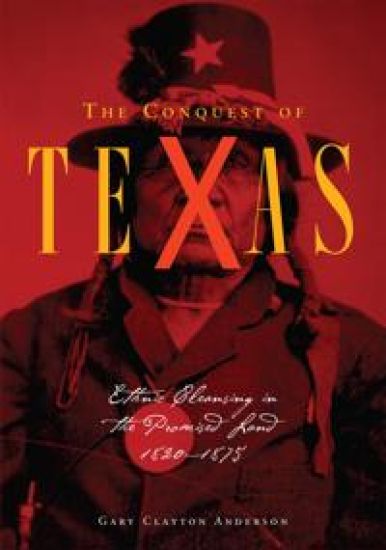
The Conquest of Texas

The Conquest of Texas

Gary Clayton Anderson

University of Oklahoma Press
2019
nidottu
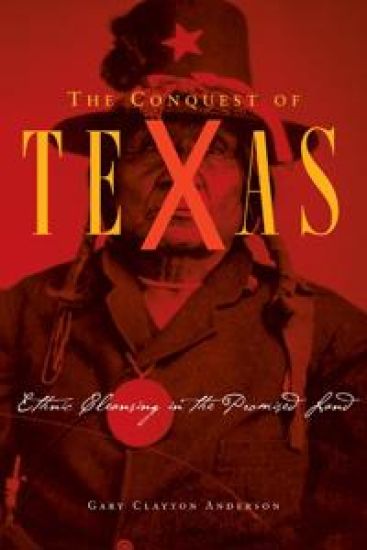
This is not your grandfather's history of Texas. Portraying nineteenth-century Texas as a cauldron of racist violence, Gary Clayton Anderson shows that the ethnic warfare dominating the Texas frontier can best be described as ethnic cleansing.The Conquest of Texas is the story of the struggle between Anglos and Indians for land. Anderson tells how Scotch-Irish settlers clashed with farming tribes and then challenged the Comanches and Kiowas for their hunting grounds. Next, the decade-long conflict with Mexico merged with war against Indians. For fifty years Texas remained in a virtual state of war.Piercing the very heart of Lone Star mythology, Anderson tells how the Texas government encouraged the Texas Rangers to annihilate Indian villages, including women and children. This policy of terror succeeded: by the 1870s, Indians had been driven from central and western Texas.By confronting head-on the romanticized version of Texas history that made heroes out of Houston, Lamar, and Baylor, Anderson helps us understand that the history of the Lone Star state is darker and more complex than the mythmakers allowed.
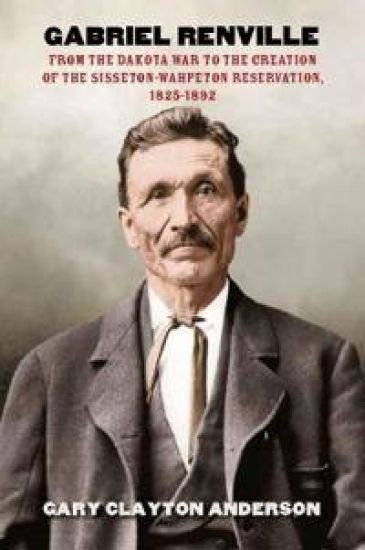
Gabriel Renville

Gabriel Renville

Gary Clayton Anderson

South Dakota State Historical Society
2018
sidottu
Born on the shores of Big Stone Lake in modern-day South Dakota, Gabriel Renville (1825–1892) was a Sisseton-Wahpeton leader who opposed conflict with the United States during the Dakota War of 1862. He worked tirelessly to create and maintain a space for his people throughout his life.Credited with the creation of the Lake Traverse Indian Reservation in 1867, Renville was a man of contrasts. Of European and Dakota descent, he adopted Christianity yet refused to abandon the Dakota Medicine Society. He held fast to kinship obligations even as he courted capitalism. He won favor among white missionaries and Indian agents for promoting their ideas about hard work even as he frustrated them with his love of dancing and feasting. He clung to traditional lifeways while also committing to the economic progress that made the Sisseton-Wahpeton reservation a prime example of what the Bureau of Indian Affairs called its 'Civilization Program'.Whether scouting under General Henry Sibley or serving as head chief of his people, Renville remained committed to traditional Dakota ethics even as he embraced the change he and others believed was needed to survive in the coming twentieth century. In the first-ever biography of Gabriel Renville, Gary Clayton Anderson scrutinizes primary sources to illuminate the life and motivations of the Sisseton-Wahpeton chief as he navigated a world in flux.
Ethnic Cleansing and the Indian

Ethnic Cleansing and the Indian

Gary Clayton Anderson

University of Oklahoma Press
2015
nidottu
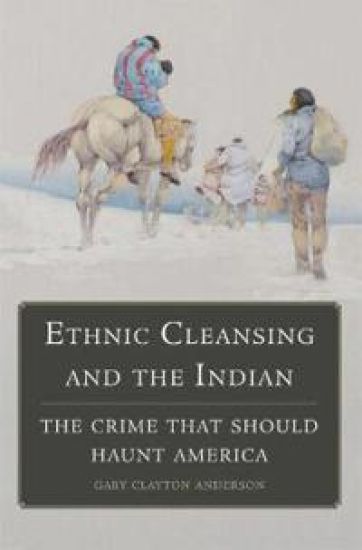
Mention ""ethnic cleansing"" and most Americans are likely to think of ""sectarian"" or ""tribal"" conflict in some far-off locale plagued by unstable or corrupt government. According to historian Gary Clayton Anderson, however, the United States has its own legacy of ethnic cleansing, and it involves American Indians. In Ethnic Cleansing and the Indian, Anderson uses ethnic cleansing as an analytical tool to challenge the alluring idea that Anglo-American colonialism in the New World constituted genocide. Beginning with the era of European conquest, Anderson employs definitions of ethnic cleansing developed by the United Nations and the International Criminal Court to reassess key moments in the Anglo-American dispossession of American Indians. Euro-Americans' extensive use of violence against Native peoples is well documented. Yet Anderson argues that the inevitable goal of colonialism and U.S. Indian policy was not to exterminate a population, but to obtain land and resources from the Native peoples recognized as having legitimate possession. The clashes between Indians, settlers, and colonial and U.S. governments, and subsequent dispossession and forcible migration of Natives, fit the modern definition of ethnic cleansing. To support the case for ethnic cleansing over genocide, Anderson begins with English conquerors' desire to push Native peoples to the margin of settlement, a violent project restrained by the Enlightenment belief that all humans possess a ""natural right"" to life. Ethnic cleansing comes into greater analytical focus as Anderson engages every major period of British and U.S. Indian policy, especially armed conflict on the American frontier where government soldiers and citizen militias alike committed acts that would be considered war crimes today. Drawing on a lifetime of research and thought about U.S.-Indian relations, Anderson analyzes the Jacksonian ""Removal"" policy, the gold rush in California, the dispossession of Oregon Natives, boarding schools and other ""benevolent"" forms of ethnic cleansing, and land allotment. Although not amounting to genocide, ethnic cleansing nevertheless encompassed a host of actions that would be deemed criminal today, all of which had long-lasting consequences for Native peoples.
The Indian Southwest, 1580-1830

The Indian Southwest, 1580-1830

Gary Clayton Anderson

University of Oklahoma Press
2009
nidottu
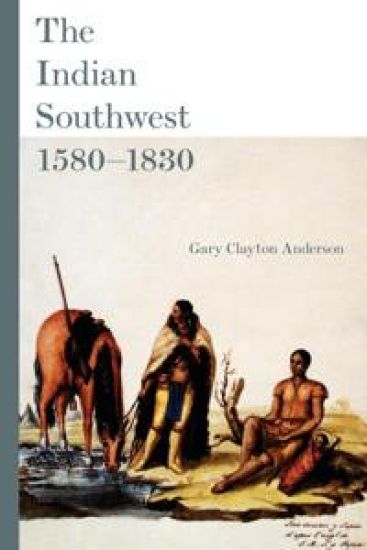
The Indian Southwest, 1580-1830 demonstrates that, in the face of European conquest, severe drought, and disease, Indians in the Southwest proved remarkably adaptable and dynamic, remaining independent actors and even prospering. Some tribes temporarily joined Spanish missions or assimilated into other tribes. Others survived by remaining on the fringe of Spanish settlement, migrating, and expanding exchange relationships with other tribes. Still others incorporated remnant bands and individuals and strengthened their economic systems. The vibrancy of southwestern Indian societies today is due in part to the exchange-based political economies their ancestors created almost three centuries ago.
The Conquest of Texas

The Conquest of Texas

Gary Clayton Anderson

University of Oklahoma Press
2005
sidottu
This is not your grandfather's history of Texas. Portraying nineteenth-century Texas as a cauldron of racist violence, Gary Clayton Anderson shows that the ethnic warfare dominating the Texas frontier can best be described as ethnic cleansing.The Conquest of Texas is the story of the struggle between Anglos and Indians for land. Anderson tells how Scotch-Irish settlers clashed with farming tribes and then challenged the Comanches and Kiowas for their hunting grounds. Next, the decade-long conflict with Mexico merged with war against Indians. For fifty years Texas remained in a virtual state of war.Piercing the very heart of Lone Star mythology, Anderson tells how the Texas government encouraged the Texas Rangers to annihilate Indian villages, including women and children. This policy of terror succeeded: by the 1870s, Indians had been driven from central and western Texas.By confronting head-on the romanticized version of Texas history that made heroes out of Houston, Lamar, and Baylor, Anderson helps us understand that the history of the Lone Star state is darker and more complex than the mythmakers allowed.
Kinsmen of Another Kind

Kinsmen of Another Kind

Gary Clayton Anderson

Minnesota Historical Society Press,U.S.
1997
pokkari
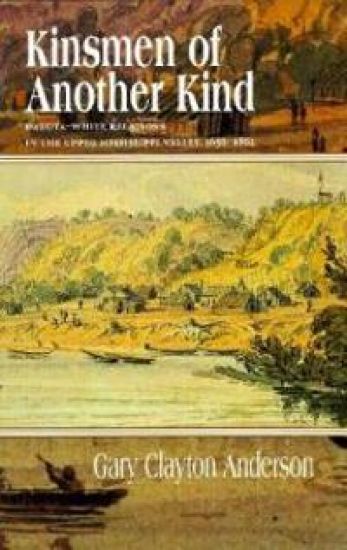
In August 1862 the Dakota of Eastern Sioux resorted to armed conflict against the white settlers of southern Minnesota. This study uses an ethnohistorical approach to explain why the bonds of peace between the Dakota and the whites were suddenly broken. It shows how the Dakota concept of kinsmen affected the tribe's complex relationships with the whites. The Dakota were obliged to help their relatives by any means possible. Traders who were adopted or married into the tribe gained from this relationship, but had reciprocal responsibilities. After the 1820s, the trade in furs declined, more whites moved into the territory, and the Dakota became more economically dependent on the whites. When American officials and traders failed to fulfil their obligations, many Dakotas finally saw the whites as enemies to be driven from Minnesota.; This edition includes a new introduction by the author, who comments on scholarly developments in the field of ethnohistory in the 19th century.
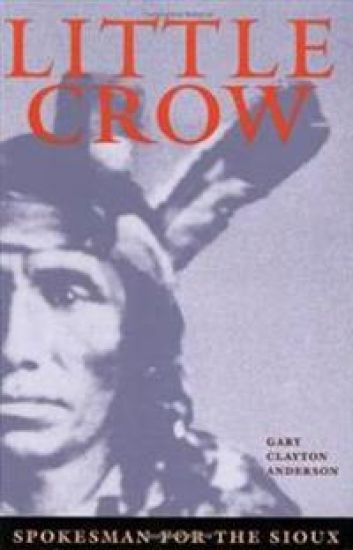
Little Crow

Little Crow

Gary Clayton Anderson

Minnesota Historical Society Press,U.S.
1986
nidottu
Little Crow" makes a major contribution to our understanding of an Indian tribe that profoundly influenced the course of history in the upper Mississippi Valley, partly at least through the personal role played by its most famous leader.