Kirjojen hintavertailu. Mukana 12 595 353 kirjaa ja 12 kauppaa.

Kirjailija

Gary G. Hamilton

Kirjat ja teokset yhdessä paikassa: 8 kirjaa, julkaisuja vuosilta 2006-2017, suosituimpien joukossa Emergent Economies, Divergent Paths. Vertaile teosten hintoja ja tarkista saatavuus suomalaisista kirjakaupoista.

8 kirjaa

Kirjojen julkaisuhaarukka 2006-2017.

Emergent Economies, Divergent Paths

Emergent Economies, Divergent Paths

Robert C. Feenstra; Gary G. Hamilton

Cambridge University Press
2014
pokkari
The economies of South Korea and Taiwan in the second half of the twentieth century are to scholars of economic development what the economy of Britain in the late eighteenth and early nineteeth centuries is to economic historians. This book, first published in 2006, is a collaboration between a leading trade economist and a leading economic sociologist specializing in East Asia, and offers an explanation of the development paths of post-World War II Korea and Taiwan. The ambitions of the authors go beyond this, however. They use these cases to reshape the way economists, sociologists, and political scientists will think about economic organization in the future. They offer nothing less than a theory of, and extended evidence for, how capitalist economies become organized. One of the principal empirical findings is that a primary cause for the industrialization of East Asia is the retail revolution in the United States and the demand-responsiveness of Asian manufacturers.
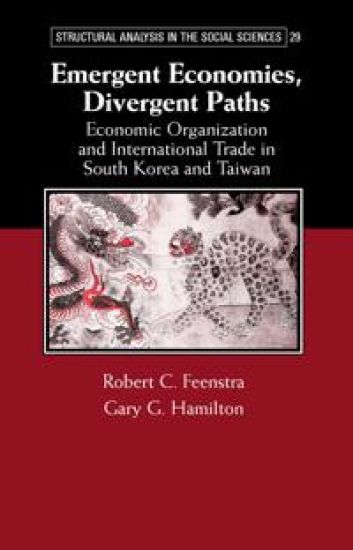
Emergent Economies, Divergent Paths

Emergent Economies, Divergent Paths

Robert C. Feenstra; Gary G. Hamilton

Cambridge University Press
2006
sidottu
The economies of South Korea and Taiwan in the second half of the twentieth century are to scholars of economic development what the economy of Britain in the late eighteenth and early nineteeth centuries is to economic historians. This book, first published in 2006, is a collaboration between a leading trade economist and a leading economic sociologist specializing in East Asia, and offers an explanation of the development paths of post-World War II Korea and Taiwan. The ambitions of the authors go beyond this, however. They use these cases to reshape the way economists, sociologists, and political scientists will think about economic organization in the future. They offer nothing less than a theory of, and extended evidence for, how capitalist economies become organized. One of the principal empirical findings is that a primary cause for the industrialization of East Asia is the retail revolution in the United States and the demand-responsiveness of Asian manufacturers.
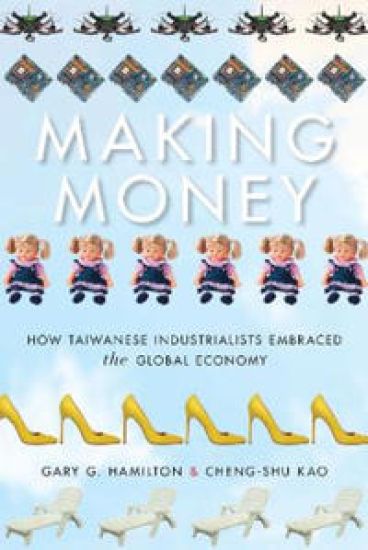
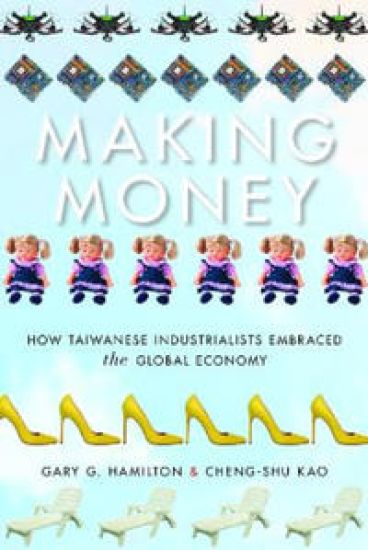
Making Money

Making Money

Gary G. Hamilton; Kao Cheng-Shu

Stanford University Press
2017
pokkari
Beginning in the 1950s, Taiwan rapidly industrialized, becoming a tributary to an increasingly "borderless" East Asian economy. And though President Trump has called for the end of "American carnage"—the loss of U.S. manufacturing jobs—domestic retailers and merchandisers still willingly ship production overseas, primarily to Taiwan. In this book, Gary G. Hamilton and Cheng-shu Kao show how Taiwanese businesspeople have played a tremendous, unsung role in their nation's continuing ascent. From prominent names like Pou Chen and Hon Hai to the owners of small and midsize firms, Taiwan's contract manufacturers have become the world's most sophisticated suppliers of consumer products the world over. Drawing on over 30 years of research and more than 800 interviews, Hamilton and Kao tell these industrialists' stories. The picture that emerges is one of agile neo-capitalists, caught in the flux of a rapidly changing landscape, who tirelessly endeavor to profit on it. Making Money reveals its subjects to be at once producers of economic globalization and its byproducts. While the future of Taiwanese business is uncertain, the durability of demand-led capitalism is not.
Making Money

Making Money

Gary G. Hamilton; Kao Cheng-Shu

STANFORD UNIVERSITY PRESS
2017
sidottu
Beginning in the 1950s, Taiwan rapidly industrialized, becoming a tributary to an increasingly "borderless" East Asian economy. And though President Trump has called for the end of "American carnage"—the loss of U.S. manufacturing jobs—domestic retailers and merchandisers still willingly ship production overseas, primarily to Taiwan. In this book, Gary G. Hamilton and Cheng-shu Kao show how Taiwanese businesspeople have played a tremendous, unsung role in their nation's continuing ascent. From prominent names like Pou Chen and Hon Hai to the owners of small and midsize firms, Taiwan's contract manufacturers have become the world's most sophisticated suppliers of consumer products the world over. Drawing on over 30 years of research and more than 800 interviews, Hamilton and Kao tell these industrialists' stories. The picture that emerges is one of agile neo-capitalists, caught in the flux of a rapidly changing landscape, who tirelessly endeavor to profit on it. Making Money reveals its subjects to be at once producers of economic globalization and its byproducts. While the future of Taiwanese business is uncertain, the durability of demand-led capitalism is not.
The Market Makers

The Market Makers

Gary G. Hamilton; Benjamin Senauer; Misha Petrovic

Oxford University Press
2012
nidottu
The huge expansion of new marketplaces and new retailers over the last fifty years has created a retail revolution. These large and globally sophisticated retailers have harnessed the new technologies in communications and logistics to build consumer markets around the world and to create suppliers, new types of manufacturers, that provide consumers with whatever goods they want to buy. These global retailers are at the hub of the new global economy. They are the new Market Makers, and they have changed the way the global economy works. Despite the fact that this retail revolution unfolded right before our eyes, this book is the first to describe the market-making capabilities of these retailers. In eleven chapters by leading scholars, The Market Makers provides a detailed and highly readable analysis of how retailers have become the leading drivers of the new global economy.
The Market Makers

The Market Makers

Gary G. Hamilton; Benjamin Senauer; Misha Petrovic

Oxford University Press
2011
sidottu
The huge expansion of new marketplaces and new retailers over the last fifty years has created a retail revolution.These large and globally sophisticated retailers have harnessed the new technologies in communications and logistics to build consumer markets around the world and to create suppliers, new types of manufacturers, that provide consumers with whatever goods they want to buy. These global retailers are at the hub of the new global economy. They are the new Market Makers, and they have changed the way the global economy works. Despite the fact that this retail revolution unfolded right before our eyes, this book is the first to describe the market-making capabilities of these retailers. In eleven chapters by leading scholars, The Market Makers provides a detailed and highly readable analysis of how retailers have become the leading drivers of the new global economy.
Commerce and Capitalism in Chinese Societies
This informative book discusses the effects of the rise of Chinese capitalism on both China itself, and on its neighbours. Incorporating empirical data collated from interviews in several Asian societies and from historical Chinese sources, this renowned author analyzes, discusses and applies an institutional approach derived from the writings of Max Weber to explore the various aspects of Chinese economic practice. Consisting of sixteen articles that come together to provide historical, comparative and theoretically informed perspectives on the spread of Chinese capitalism, this collection emphasizes the difference between Western and Chinese forms of capitalism. Including sections on China's pre-industrial economy as well as the growth of modern Chinese capitalism, this collection will be a valuable resource for students of Asian and Chinese studies as well as those concerned with the economics of Chinese societies.
Commerce and Capitalism in Chinese Societies
This informative book discusses the effects of the rise of Chinese capitalism on both China itself, and on its neighbours. Incorporating empirical data collated from interviews in several Asian societies and from historical Chinese sources, this renowned author analyzes, discusses and applies an institutional approach derived from the writings of Max Weber to explore the various aspects of Chinese economic practice. Consisting of sixteen articles that come together to provide historical, comparative and theoretically informed perspectives on the spread of Chinese capitalism, this collection emphasizes the difference between Western and Chinese forms of capitalism. Including sections on China's pre-industrial economy as well as the growth of modern Chinese capitalism, this collection will be a valuable resource for students of Asian and Chinese studies as well as those concerned with the economics of Chinese societies.