Kirjojen hintavertailu. Mukana 12 592 940 kirjaa ja 12 kauppaa.

Kirjailija

Gary Gerstle

Kirjat ja teokset yhdessä paikassa: 14 kirjaa, julkaisuja vuosilta 2002-2023, suosituimpien joukossa Liberty, Equality, Power. Vertaile teosten hintoja ja tarkista saatavuus suomalaisista kirjakaupoista.

14 kirjaa

Kirjojen julkaisuhaarukka 2002-2023.

Liberty, Equality, Power

Liberty, Equality, Power

John Murrin; Pekka Hämäläinen; Paul Johnson; Denver Brunsman; James McPherson; Alice Fahs; Gary Gerstle; Emily Rosenberg; Norman Rosenberg

Wadsworth Publishing Co Inc
2019
sidottu
History isn't about memorizing names and dates. Understanding the past can help you navigate the present and future--and LIBERTY, EQUALITY, POWER, Enhanced 7th Edition is the book to guide you. It teaches you about American history, in part by introducing you to movies (really!) and other forms of popular culture that tell the stories of the nation's past. It shows you how the United States was transformed from a land inhabited by hunter-gatherer and agricultural Native American societies into the most powerful industrial nation on Earth. You'll learn about the impact of the notions of liberty and equality as well as about how dominant and subordinate groups have fared in the ever-shifting balance of power. Learning aids help you get through the material, retain the most important concepts and prep for exams (whew)!
Cengage Advantage Books: Liberty, Equality, Power

Cengage Advantage Books: Liberty, Equality, Power

John Murrin; Pekka Hämäläinen; Paul Johnson; Denver Brunsman; James McPherson; Alice Fahs; Gary Gerstle; Emily Rosenberg; Norman Rosenberg

Wadsworth Publishing Co Inc
2015
nidottu
Developed to meet the demand for a low-cost, high-quality history book, this economically priced version of LIBERTY, EQUALITY, POWER, 7th Edition offers the complete narrative while limiting the number of features, photos, and maps. All volumes feature a paperback, two-color format that appeals to those seeking a comprehensive, trade-sized history text. A highly respected, balanced, and thoroughly modern approach to U.S. History, LIBERTY, EQUALITY, POWER uses these three themes in a unique approach to show how the United States was transformed, in a relatively short time, from a land inhabited by hunter-gatherer and agricultural Native American societies into the most powerful industrial nation on earth. This approach helps readers understand not only the impact of the notions of liberty and equality, which are often associated with the American story, but also how dominant and subordinate groups have affected and been affected by the ever-shifting balance of power. The text integrates the best of recent social and cultural scholarship into a political story, offering readers a comprehensive and complete understanding of American history.
Cengage Advantage Books: Liberty, Equality, Power

Cengage Advantage Books: Liberty, Equality, Power

John Murrin; Pekka Hämäläinen; Paul Johnson; Denver Brunsman; James McPherson; Alice Fahs; Gary Gerstle; Emily Rosenberg; Norman Rosenberg

Wadsworth Publishing Co Inc
2015
nidottu
Developed to meet the demand for a low-cost, high-quality history book, this economically priced version of LIBERTY, EQUALITY, POWER, 7th Edition offers the complete narrative while limiting the number of features, photos, and maps. All volumes feature a paperback, two-color format that appeals to those seeking a comprehensive, trade-sized history text. A highly respected, balanced, and thoroughly modern approach to U.S. History, LIBERTY, EQUALITY, POWER uses these three themes in a unique approach to show how the United States was transformed, in a relatively short time, from a land inhabited by hunter-gatherer and agricultural Native American societies into the most powerful industrial nation on earth. This approach helps readers understand not only the impact of the notions of liberty and equality, which are often associated with the American story, but also how dominant and subordinate groups have affected and been affected by the ever-shifting balance of power. The text integrates the best of recent social and cultural scholarship into a political story, offering readers a comprehensive and complete understanding of American history.
Liberty, Equality, Power

Liberty, Equality, Power

John Murrin; Pekka Hämäläinen; Paul Johnson; Denver Brunsman; James McPherson; Alice Fahs; Gary Gerstle; Emily Rosenberg; Norman Rosenberg

Wadsworth Publishing Co Inc
2015
nidottu
Understanding the past helps us navigate the present and future. This book teaches readers about American history and exposes them to movies and other forms of popular culture that tell the stories of the nation's past. A highly respected and thoroughly modern approach to U.S. history, LIBERTY, EQUALITY, POWER, Seventh Edition, shows how the United States was transformed, in a relatively short time, from a land inhabited by hunter-gatherer and agricultural Native American societies into the most powerful industrial nation on Earth. This approach helps readers understand the impact of the notions of liberty and equality, which are often associated with the American story, and recognize how dominant and subordinate groups have affected and been affected by the ever-shifting balance of power.
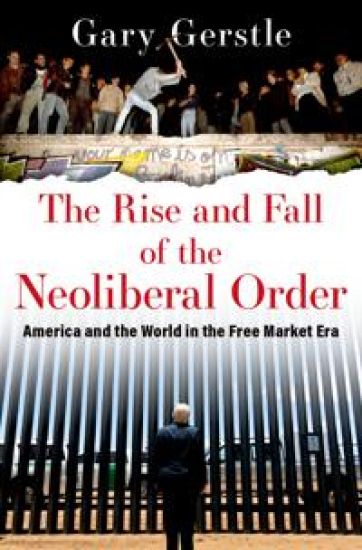
The Rise and Fall of the Neoliberal Order

The Rise and Fall of the Neoliberal Order

Gary Gerstle

OXFORD UNIVERSITY PRESS INC
2023
nidottu
The most sweeping account of how neoliberalism came to dominate American politics for nearly a half century before crashing against the forces of Trumpism on the right and a new progressivism on the left. The epochal shift toward neoliberalism--a web of related policies that, broadly speaking, reduced the footprint of government in society and reassigned economic power to private market forces--that began in the United States and Great Britain in the late 1970s fundamentally changed the world. Today, the word "neoliberal" is often used to condemn a broad swath of policies, from prizing free market principles over people to advancing privatization programs in developing nations around the world. To be sure, neoliberalism has contributed to a number of alarming trends, not least of which has been a massive growth in income inequality. Yet as the eminent historian Gary Gerstle argues in The Rise and Fall of the Neoliberal Order, these indictments fail to reckon with the full contours of what neoliberalism was and why its worldview had such persuasive hold on both the right and the left for three decades. As he shows, the neoliberal order that emerged in America in the 1970s fused ideas of deregulation with personal freedoms, open borders with cosmopolitanism, and globalization with the promise of increased prosperity for all. Along with tracing how this worldview emerged in America and grew to dominate the world, Gerstle explores the previously unrecognized extent to which its triumph was facilitated by the collapse of the Soviet Union and its communist allies. He is also the first to chart the story of the neoliberal order's fall, originating in the failed reconstruction of Iraq and Great Recession of the Bush years and culminating in the rise of Trump and a reinvigorated Bernie Sanders-led American left in the 2010s. An indispensable and sweeping re-interpretation of the last fifty years, this book illuminates how the ideology of neoliberalism became so infused in the daily life of an era, while probing what remains of that ideology and its political programs as America enters an uncertain future.
The Rise and Fall of the Neoliberal Order

The Rise and Fall of the Neoliberal Order

Gary Gerstle

OXFORD UNIVERSITY PRESS INC
2022
sidottu
Best Books of 2022: Financial Times Best Non-Fiction Books of 2022: De Tijd Shortlisted for Financial Times Best Business Book of the Year The most sweeping account of how neoliberalism came to dominate American politics for nearly a half century before crashing against the forces of Trumpism on the right and a new progressivism on the left. The epochal shift toward neoliberalism-a web of related policies that, broadly speaking, reduced the footprint of government in society and reassigned economic power to private market forces-that began in the United States and Great Britain in the late 1970s fundamentally changed the world. Today, the word "neoliberal" is often used to condemn a broad swath of policies, from prizing free market principles over people to advancing privatization programs in developing nations around the world. To be sure, neoliberalism has contributed to a number of alarming trends, not least of which has been a massive growth in income inequality. Yet as the eminent historian Gary Gerstle argues in The Rise and Fall of the Neoliberal Order, these indictments fail to reckon with the full contours of what neoliberalism was and why its worldview had such persuasive hold on both the right and the left for three decades. As he shows, the neoliberal order that emerged in America in the 1970s fused ideas of deregulation with personal freedoms, open borders with cosmopolitanism, and globalization with the promise of increased prosperity for all. Along with tracing how this worldview emerged in America and grew to dominate the world, Gerstle explores the previously unrecognized extent to which its triumph was facilitated by the collapse of the Soviet Union and its communist allies. He is also the first to chart the story of the neoliberal order's fall, originating in the failed reconstruction of Iraq and Great Recession of the Bush years and culminating in the rise of Trump and a reinvigorated Bernie Sanders-led American left in the 2010s. An indispensable and sweeping re-interpretation of the last fifty years, this book illuminates how the ideology of neoliberalism became so infused in the daily life of an era, while probing what remains of that ideology and its political programs as America enters an uncertain future.
Liberty, Equality, Power

Liberty, Equality, Power

John Murrin; Pekka Hämäläinen; Paul Johnson; Denver Brunsman; James McPherson; Alice Fahs; Gary Gerstle; Emily Rosenberg; Norman Rosenberg

Wadsworth Publishing Co Inc
2019
nidottu
History isn't about memorizing names and dates. Understanding the past can help you navigate the present and future--and LIBERTY, EQUALITY, POWER, Enhanced 7th Edition is the book to guide you. It teaches you about American history, in part by introducing you to movies (really!) and other forms of popular culture that tell the stories of the nation's past. It shows you how the United States was transformed from a land inhabited by hunter-gatherer and agricultural Native American societies into the most powerful industrial nation on Earth. You'll learn about the impact of the notions of liberty and equality as well as about how dominant and subordinate groups have fared in the ever-shifting balance of power. Learning aids help you get through the material, retain the most important concepts and prep for exams (whew)!
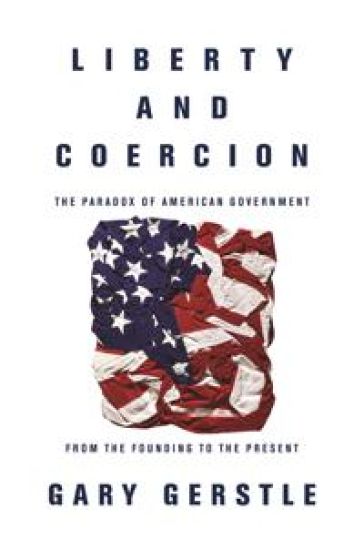
Liberty and Coercion

Liberty and Coercion

Gary Gerstle

Princeton University Press
2017
pokkari
American governance is burdened by a paradox. On the one hand, Americans don't want "big government" meddling in their lives; on the other hand, they have repeatedly enlisted governmental help to impose their views regarding marriage, abortion, religion, and schooling on their neighbors. These contradictory stances on the role of public power have paralyzed policymaking and generated rancorous disputes about government's legitimate scope. How did we reach this political impasse? Historian Gary Gerstle, looking at two hundred years of U.S. history, argues that the roots of the current crisis lie in two contrasting theories of power that the Framers inscribed in the Constitution. One theory shaped the federal government, setting limits on its power in order to protect personal liberty. Another theory molded the states, authorizing them to go to extraordinary lengths, even to the point of violating individual rights, to advance the "good and welfare of the commonwealth." The Framers believed these theories could coexist comfortably, but conflict between the two has largely defined American history. Gerstle shows how national political leaders improvised brilliantly to stretch the power of the federal government beyond where it was meant to go--but at the cost of giving private interests and state governments too much sway over public policy. The states could be innovative, too. More impressive was their staying power. Only in the 1960s did the federal government, impelled by the Cold War and civil rights movement, definitively assert its primacy. But as the power of the central state expanded, its constitutional authority did not keep pace. Conservatives rebelled, making the battle over government's proper dominion the defining issue of our time. From the Revolution to the Tea Party, and the Bill of Rights to the national security state, Liberty and Coercion is a revelatory account of the making and unmaking of government in America.
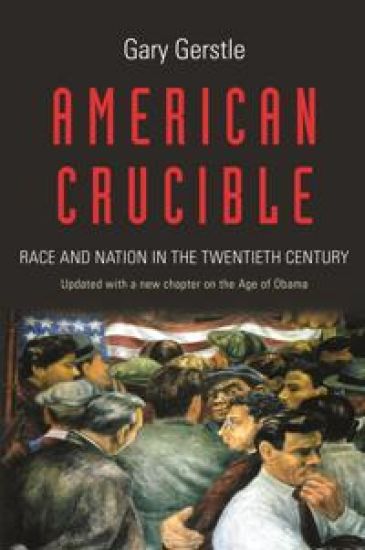
American Crucible

American Crucible

Gary Gerstle

Princeton University Press
2017
pokkari
This sweeping history of twentieth-century America follows the changing and often conflicting ideas about the fundamental nature of American society: Is the United States a social melting pot, as our civic creed warrants, or is full citizenship somehow reserved for those who are white and of the "right" ancestry? Gary Gerstle traces the forces of civic and racial nationalism, arguing that both profoundly shaped our society. After Theodore Roosevelt led his Rough Riders to victory during the Spanish American War, he boasted of the diversity of his men's origins- from the Kentucky backwoods to the Irish, Italian, and Jewish neighborhoods of northeastern cities. Roosevelt's vision of a hybrid and superior "American race," strengthened by war, would inspire the social, diplomatic, and economic policies of American liberals for decades. And yet, for all of its appeal to the civic principles of inclusion, this liberal legacy was grounded in "Anglo-Saxon" culture, making it difficult in particular for Jews and Italians and especially for Asians and African Americans to gain acceptance. Gerstle weaves a compelling story of events, institutions, and ideas that played on perceptions of ethnic/racial difference, from the world wars and the labor movement to the New Deal and Hollywood to the Cold War and the civil rights movement. We witness the remnants of racial thinking among such liberals as FDR and LBJ; we see how Italians and Jews from Frank Capra to the creators of Superman perpetuated the New Deal philosophy while suppressing their own ethnicity; we feel the frustrations of African-American servicemen denied the opportunity to fight for their country and the moral outrage of more recent black activists, including Martin Luther King, Jr., Fannie Lou Hamer, and Malcolm X. Gerstle argues that the civil rights movement and Vietnam broke the liberal nation apart, and his analysis of this upheaval leads him to assess Reagan's and Clinton's attempts to resurrect nationalism. Can the United States ever live up to its civic creed? For anyone who views racism as an aberration from the liberal premises of the republic, this book is must reading. Containing a new chapter that reconstructs and dissects the major struggles over race and nation in an era defined by the War on Terror and by the presidency of Barack Obama, American Crucible is a must-read for anyone who views racism as an aberration from the liberal premises of the republic.
Liberty and Coercion

Liberty and Coercion

Gary Gerstle

PRINCETON UNIVERSITY PRESS
2015
sidottu
American governance is burdened by a paradox. On the one hand, Americans don't want "big government" meddling in their lives; on the other hand, they have repeatedly enlisted governmental help to impose their views regarding marriage, abortion, religion, and schooling on their neighbors. These contradictory stances on the role of public power have paralyzed policymaking and generated rancorous disputes about government's legitimate scope. How did we reach this political impasse? Historian Gary Gerstle, looking at two hundred years of U.S. history, argues that the roots of the current crisis lie in two contrasting theories of power that the Framers inscribed in the Constitution. One theory shaped the federal government, setting limits on its power in order to protect personal liberty. Another theory molded the states, authorizing them to go to extraordinary lengths, even to the point of violating individual rights, to advance the "good and welfare of the commonwealth." The Framers believed these theories could coexist comfortably, but conflict between the two has largely defined American history. Gerstle shows how national political leaders improvised brilliantly to stretch the power of the federal government beyond where it was meant to go--but at the cost of giving private interests and state governments too much sway over public policy. The states could be innovative, too. More impressive was their staying power. Only in the 1960s did the federal government, impelled by the Cold War and civil rights movement, definitively assert its primacy. But as the power of the central state expanded, its constitutional authority did not keep pace. Conservatives rebelled, making the battle over government's proper dominion the defining issue of our time. From the Revolution to the Tea Party, and the Bill of Rights to the national security state, Liberty and Coercion is a revelatory account of the making and unmaking of government in America.
Cengage Advantage Books: Liberty, Equality, Power

Cengage Advantage Books: Liberty, Equality, Power

Norman Rosenberg; Paul Johnson; James McPherson; John Murrin; Gary Gerstle; Alice Fahs; Denver Brunsman; Pekka H?m?l?inen

Wadsworth Publishing Co Inc
2015
nidottu
Developed to meet the demand for a low-cost, high-quality history book, this economically priced version of LIBERTY, EQUALITY, POWER, 7th Edition offers the complete narrative while limiting the number of features, photos, and maps. All volumes feature a paperback, two-color format that appeals to those seeking a comprehensive, trade-sized history text. A highly respected, balanced, and thoroughly modern approach to U.S. History, LIBERTY, EQUALITY, POWER uses these three themes in a unique approach to show how the United States was transformed, in a relatively short time, from a land inhabited by hunter-gatherer and agricultural Native American societies into the most powerful industrial nation on earth. This approach helps readers understand not only the impact of the notions of liberty and equality, which are often associated with the American story, but also how dominant and subordinate groups have affected and been affected by the ever-shifting balance of power. The text integrates the best of recent social and cultural scholarship into a political story, offering readers a comprehensive and complete understanding of American history.
Liberty, Equality, Power

Liberty, Equality, Power

Norman Rosenberg; Paul Johnson; James McPherson; John Murrin; Gary Gerstle; Emily Rosenberg; Alice Fahs

Wadsworth Publishing Co Inc
2013
nidottu
How did America transform itself, in a relatively short time, from a land inhabited by hunter-gatherer and agricultural Native American societies into the most powerful industrial nation on earth? You'll find out in LIBERTY, EQUALITY, POWER: A HISTORY OF THE AMERICAN PEOPLE, CONCISE Sixth Edition. The authors tell this story through the lens of three major themes: liberty, equality, and power. You'll learn not only the impact of the notions of liberty and equality but also how dominant and subordinate groups have affected and been affected by the ever-shifting balance of power.
Liberty, Equality, and Power

Liberty, Equality, and Power

Rosenberg Norman; Paul Johnson; Fahs Alice; Gary Gerstle; Emily Rosenberg

Wadsworth Publishing Co Inc
2007
nidottu
Understanding the past helps us navigate the present and future. When you read this text, you will not only learn about American History, you will be exposed to movies and music that tell the stories of American History in addition to the reading material you expect in a college level history book. A highly respected, balanced, and thoroughly modern approach to US History, LIBERTY, EQUALITY, POWER, uses themes in a unique approach to show how the United States was transformed, in a relatively short time, from a land inhabited by hunter-gatherer and agricultural Native American societies into the most powerful industrial nation on earth. This approach helps you understand not only the impact of the notions of liberty and equality, which are often associated with the American story, but also how dominant and subordinate groups have affected and been affected by the ever-shifting balance of power.
Working-Class Americanism

Working-Class Americanism

Gary Gerstle

Princeton University Press
2002
pokkari
In this classic interpretation of the 1930s rise of industrial unionism, Gary Gerstle challenges the popular historical notion that American workers' embrace of "Americanism" and other patriotic sentiments in the post-World War I years indicated their fundamental political conservatism. He argues that Americanism was a complex, even contradictory, language of nationalism that lent itself to a wide variety of ideological constructions in the years between World War I and the onset of the Cold War. Using the rich and textured material left behind by New England's most powerful textile union--the Independent Textile Union of Woonsocket, Rhode Island--Gerstle uncovers for the first time a more varied and more radical working-class discourse.