Kirjojen hintavertailu. Mukana 12 530 820 kirjaa ja 12 kauppaa.

Kirjailija

Gary Gutting

Kirjat ja teokset yhdessä paikassa: 13 kirjaa, julkaisuja vuosilta 1989-2022, suosituimpien joukossa Michel Foucault's Archaeology of Scientific Reason. Vertaile teosten hintoja ja tarkista saatavuus suomalaisista kirjakaupoista.

13 kirjaa

Kirjojen julkaisuhaarukka 1989-2022.

Michel Foucault's Archaeology of Scientific Reason

Michel Foucault's Archaeology of Scientific Reason

Gary Gutting

Cambridge University Press
1989
sidottu
This book is an important introduction to the critical interpretation of the work of the major French thinker Michel Foucault. Through comprehensive and detailed analyses of such important texts as The History of Madness in the Age of Reason, The Birth of the Clinic, The Order of Things, and The Archaeology of Knowledge, Professor Gutting provides a lucid exposition of Foucault’s ‘archaeological’ approach to the history of thought - a method for uncovering the ‘unconscious’ structures that set boundaries on the thinking of a given epoch. The book also casts Foucault in a new light, relating his work to two major but neglected influences: Gaston Bachelard’s philosophy of science and Georges Canguilhem’s history of science. This perspective yields a new and valuable understanding of science, balancing and complementing the more common view that he was primarily a social critic and theorist. An excellent guide for those first approaching Foucault’s work, the book will also be a challenging interpretation and evaluation for those already familiar with his writings.
Michel Foucault's Archaeology of Scientific Reason

Michel Foucault's Archaeology of Scientific Reason

Gary Gutting

Cambridge University Press
1989
pokkari
This book is an important introduction to the critical interpretation of the work of the major French thinker Michel Foucault. Through comprehensive and detailed analyses of such important texts as The History of Madness in the Age of Reason, The Birth of the Clinic, The Order of Things, and The Archaeology of Knowledge, Professor Gutting provides a lucid exposition of Foucault’s ‘archaeological’ approach to the history of thought - a method for uncovering the ‘unconscious’ structures that set boundaries on the thinking of a given epoch. The book also casts Foucault in a new light, relating his work to two major but neglected influences: Gaston Bachelard’s philosophy of science and Georges Canguilhem’s history of science. This perspective yields a new and valuable understanding of science, balancing and complementing the more common view that he was primarily a social critic and theorist. An excellent guide for those first approaching Foucault’s work, the book will also be a challenging interpretation and evaluation for those already familiar with his writings.
En meget kort introduktion til Foucault

En meget kort introduktion til Foucault

Gary Gutting

Forlaget Frydenlund
2022
nidottu
Michel Foucault (1926-1984) er en af det 20. århundredes største filosoffer – og kultfigurer. Sit liv brugte han blandt meget andet på at tage stoffer, deltage i det parisiske SM-miljø og blande sig i politik og samfundsforhold, samtidig med at han forsøgte at forstå de dybere lag i begreber som identitet, viden og magt.En meget kort introduktion til Foucault fortæller om filosoffens liv og værker og om deres betydning for filosofien, idehistorien og andre samfundsvidenskabelige og humanistiske videnskaber. Bogen henvender sig til studerende, elever og alle andre med interesse for Foucault og hans forskning. Den har kapitler om:Liv og værkerLitteraturPolitikArkæologiGenealogiDen maskerede filosofGalskabKriminalitet og strafModerne seksualitetAntikkens seksualitetFoucault efter FoucaultGary Gutting (1942-2019) var amerikansk filosof, ph.d. og professor i filosofi ved University of Notre Dame, USA. Han beskæftigede sig bl.a. med fransk filosofi og Foucault i særdeleshed. Han har skrevet en lang række bøger, været redaktør på Notre Dame Philosophical Review samt skrevet klummer til The New York Times.
Foucault

Foucault

Gary Gutting

Oxford University Press
2019
nidottu
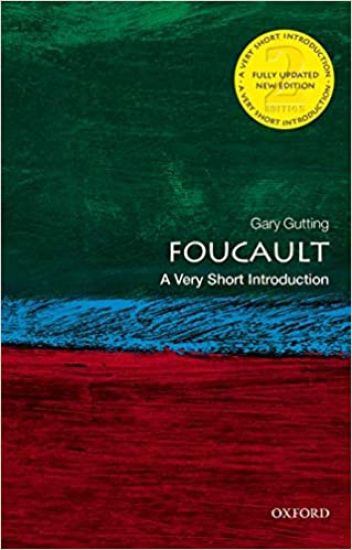
Born in 1926 in France, Foucault is one of those rare philosophers who has become a cult figure. Over the course of his life he dabbled in drugs, politics, and the Paris SM scene, all whilst striving to understand the deep concepts of identity, knowledge, and power. From aesthetics to the penal system; from madness and civilisation to avant-garde literature, Foucault was happy to reject old models of thinking and replace them with versions that are still widely debated today. A major influence on Queer Theory and gender studies (he was openly gay and died of an AIDS-related illness in 1984), he also wrote on architecture, history, law, medicine, literature, politics, and of course philosophy. In this Very Short Introduction Gary Gutting presents a wide-ranging but non-systematic exploration of some highlights of Foucault's life and thought. Beginning with a brief biography to set the social and political stage, he then tackles Foucault's thoughts on literature, in particular the avant-garde scene; his philosophical and historical work; his treatment of knowledge and power in modern society; and his thoughts on sexuality. This new edition includes feminist criticisms of Foucault's apparently sexist treatment of the Jouy case, as well as a new chapter offering a unified overview of the Collège de France lectures, now a major focus of interest in Foucault. ABOUT THE SERIES: The Very Short Introductions series from Oxford University Press contains hundreds of titles in almost every subject area. These pocket-sized books are the perfect way to get ahead in a new subject quickly. Our expert authors combine facts, analysis, perspective, new ideas, and enthusiasm to make interesting and challenging topics highly readable.
What Philosophy Can Do

What Philosophy Can Do

Gary Gutting

WW Norton Co
2017
nidottu
In What Philosophy Can Do, Gary Gutting leaves the ivory tower to tackle difficult questions in everyday life and shows how philosophy can be used as a method for interrogating our world—and one another. He looks at why today’s political debates are so polarised, why scientific research on happiness does not make us happier and whether there are convincing reasons to believe—or not believe—in God. Gutting takes the most powerful—and divisive—forces in our society: politics, science, religion, art and capitalism—and applies a philosopher’s scalpel to reveal thoughtful ways to look at vexing issues. He introduces readers to analytical tools, from inductive and deductive logic to the principle of charity, that they can apply to news events and policy debates. Gutting underlines philosophy’s great promise for enriching public discussions about the most important issues in human life.
Talking God

Talking God

Gary Gutting

WW Norton Co
2017
nidottu
The question of faith today is more urgent than ever. Gary Gutting interviews prominent philosophers of religion to discuss the place of God and faith in modern society. Expanding on interviews originally published on The New York Times philosophy blog The Stone, Gutting asks incisive questions as he discusses the philosophical challenges religion faces today.
What Philosophy Can Do

What Philosophy Can Do

Gary Gutting

WW Norton Co
2015
sidottu
In What Philosophy Can Do, Gary Gutting leaves the ivory tower to tackle difficult questions in everyday life and shows how philosophy can be used as a method for interrogating our world—and one another. He looks at why today’s political debates are so polarised, why scientific research on happiness does not make us happier and whether there are convincing reasons to believe—or not believe—in God. Gutting takes the most powerful—and divisive—forces in our society: politics, science, religion, art and capitalism—and applies a philosopher’s scalpel to reveal thoughtful ways to look at vexing issues. He introduces readers to analytical tools, from inductive and deductive logic to the principle of charity, that they can apply to news events and policy debates. Gutting underlines philosophy’s great promise for enriching public discussions about the most important issues in human life.
Thinking the Impossible

Thinking the Impossible

Gary Gutting

Oxford University Press
2013
nidottu
The late 20th century saw a remarkable flourishing of philosophy in France. The work of French philosophers is wide ranging, historically informed, often reaching out beyond the boundaries of philosophy; they are public intellectuals, taken seriously as contributors to debates outside the academy. Gary Gutting tells the story of the development of a distinctively French philosophy in the last four decades of the 20th century. His aim is to arrive at an account of what it was to 'do philosophy' in France, what this sort of philosophizing was able to achieve, and how it differs from the analytic philosophy dominant in Anglophone countries. His initial focus is on the three most important philosophers who came to prominence in the 1960s: Michel Foucault, Gilles Deleuze, and Jacques Derrida. He sets out the educational and cultural context of their work, as a basis for a detailed treatment of how they formulated and began to carry out their philosophical projects in the 1960s and 1970s. He gives a fresh assessment of their responses to the key influences of Hegel and Heidegger, and the fraught relationship of the new generation to their father-figure Sartre. He concludes that Foucault, Derrida, and Deleuze can all be seen as developing their fundamental philosophical stances out of distinctive readings of Nietzsche. The second part of the book considers topics and philosophers that became prominent in the 1980s and 1990s, such as the revival of ethics in Levinas, Derrida, and Foucault, the return to phenomenology and its use to revive religious experience as a philosophical topic, and Alain Badiou's new ontology of the event. Finally Gutting brings to the fore the meta-philosophical theme of the book, that French philosophy since the 1960s has been primarily concerned with thinking the impossible.
Thinking the Impossible

Thinking the Impossible

Gary Gutting

Oxford University Press
2011
sidottu
The late 20th century saw a remarkable flourishing of philosophy in France. The work of French philosophers is wide ranging, historically informed, often reaching out beyond the boundaries of philosophy; they are public intellectuals, taken seriously as contributors to debates outside the academy. Gary Gutting tells the story of the development of a distinctively French philosophy in the last four decades of the 20th century. His aim is to arrive at an account of what it was to 'do philosophy' in France, what this sort of philosophizing was able to achieve, and how it differs from the analytic philosophy dominant in Anglophone countries. His initial focus is on the three most important philosophers who came to prominence in the 1960s: Michel Foucault, Gilles Deleuze, and Jacques Derrida. He sets out the educational and cultural context of their work, as a basis for a detailed treatment of how they formulated and began to carry out their philosophical projects in the 1960s and 1970s. He gives a fresh assessment of their responses to the key influences of Hegel and Heidegger, and the fraught relationship of the new generation to their father-figure Sartre. He concludes that Foucault, Derrida, and Deleuze can all be seen as developing their fundamental philosophical stances out of distinctive readings of Nietzsche. The second part of the book considers topics and philosophers that became prominent in the 1980s and 1990s, such as the revival of ethics in Levinas, Derrida, and Foucault, the return to phenomenology and its use to revive religious experience as a philosophical topic, and Alain Badiou's new ontology of the event. Finally Gutting brings to the fore the meta-philosophical theme of the book, that French philosophy since the 1960s has been primarily concerned with thinking the impossible.
What Philosophers Know

What Philosophers Know

Gary Gutting

Cambridge University Press
2009
pokkari
Philosophy has never delivered on its promise to settle the great moral and religious questions of human existence, and even most philosophers conclude that it does not offer an established body of disciplinary knowledge. Gary Gutting challenges this view by examining detailed case studies of recent achievements by analytic philosophers such as Quine, Kripke, Gettier, Lewis, Chalmers, Plantinga, Kuhn, Rawls, and Rorty. He shows that these philosophers have indeed produced a substantial body of disciplinary knowledge, but he challenges many common views about what philosophers have achieved. Topics discussed include the role of argument in philosophy, naturalist and experimentalist challenges to the status of philosophical intuitions, the importance of pre-philosophical convictions, Rawls' method of reflective equilibrium, and Rorty's challenge to the idea of objective philosophical truth. The book offers a lucid survey of recent analytic work and presents a new understanding of philosophy as an important source of knowledge.
French Philosophy in the Twentieth Century

French Philosophy in the Twentieth Century

Gary Gutting

Cambridge University Press
2001
sidottu
In this book Gary Gutting tells, clearly and comprehensively, the story of French philosophy from 1890 to 1990. He examines the often neglected background of spiritualism, university idealism, and early philosophy of science, and also discusses the privileged role of philosophy in the French education system. Taking account of this background, together with the influences of avant-garde literature and German philosophy, he develops a rich account of existential phenomenology, which he argues is the central achievement of French thought during the century, and of subsequent structuralist and poststructuralist developments. His discussion includes chapters on Bergson, Sartre, Beauvoir, Merleau-Ponty, Foucault, and Derrida, with sections on other major thinkers including Lyotard, Deleuze, Irigaray, Levinas, and Ricoeur. He offers challenging analyses of the often misunderstood relationship between existential phenomenology and structuralism and of the emergence of poststructuralism. Finally, he sketches the major current trends of French philosophy.
Pragmatic Liberalism and the Critique of Modernity

Pragmatic Liberalism and the Critique of Modernity

Gary Gutting

Cambridge University Press
1999
pokkari
In this book Gary Gutting offers a powerful account of the nature of human reason in modern times. The fundamental question addressed by the book is what authority human reason can still claim once it is acknowledged that our fundamental metaphysical and religious pictures of the world no longer command allegiance. If ethics and science remain sources of authority what is the basis of that authority? Gutting develops answers to these questions through critical analysis of the work of three dominant philosophical voices in our time: Richard Rorty, Alasdair MacIntyre, and Charles Taylor. His own position is defined as 'pragmatic liberalism'.
Pragmatic Liberalism and the Critique of Modernity

Pragmatic Liberalism and the Critique of Modernity

Gary Gutting

Cambridge University Press
1999
sidottu
In this book Gary Gutting offers a powerful account of the nature of human reason in modern times. The fundamental question addressed by the book is what authority human reason can still claim once it is acknowledged that our fundamental metaphysical and religious pictures of the world no longer command allegiance. If ethics and science remain sources of authority what is the basis of that authority? Gutting develops answers to these questions through critical analysis of the work of three dominant philosophical voices in our time: Richard Rorty, Alasdair MacIntyre, and Charles Taylor. His own position is defined as 'pragmatic liberalism'.