Kirjojen hintavertailu. Mukana 12 303 872 kirjaa ja 12 kauppaa.
Kirjailija
Gary Lachman
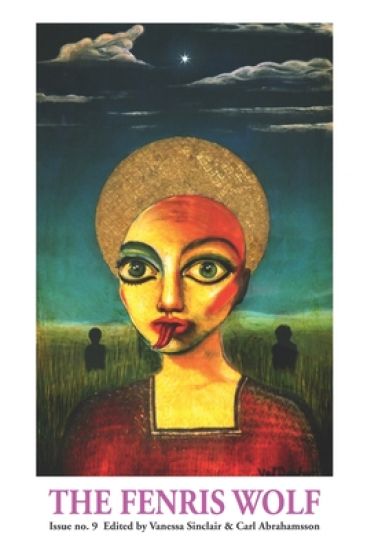
Kirjat ja teokset yhdessä paikassa: 39 kirjaa, julkaisuja vuosilta 2003-2026, suosituimpien joukossa The Fenris Wolf 9. Vertaile teosten hintoja ja tarkista saatavuus suomalaisista kirjakaupoista.
Carl Abrahamsson; Vanessa Sinclair; Gary Lachman; Katelan Foisy; Sharron Kraus; Demetrius Lacroix; Graham Duff; Ken Henson; Peter Grey; Val Denham; Claire-Madeline Culkin; Steven Reisner; Katy Bohinc; Olga Cox Cameron; Ingo Lambrecht; Elliott Edge; Charlotte Rodgers; Alkistis Dimech; Fred Yee; Robert Ansell; Ray O Neill; Derek Elmore; Julio Mendes Rodrigo; Eve Watson
This volume contains material from the conference Psychoanalysis, Art & the Occult (London, 2016), with contributions from Gary Lachman, Vanessa Sinclair, Katelan Foisy, Sharron Kraus, Demetrius Lacroix, Graham Duff, Ken Henson, Peter Grey, Val Denham, Claire-Madeline Culkin, Steven Reisner, Katy Bohinc, Olga Cox Cameron, Ingo Lambrecht, Elliott Edge, Charlotte Rodgers, Alkistis Dimech, Fred Yee, Robert Ansell, Ray O Neill, Derek M Elmore, Julio Mendes Rodrigo, Eve Watson, and Carl Abrahamsson. Topics include Sigmund Freud and the Occult, Art as Alchemy, the art of John Balance, Cut-Ups as a magical and psychoanalytic tool, Maori shamanism within therapy, Animistic art, Dance as ritual, Androgynous aspects in Austin Osman Spare’s art, Salvador Dali’s meeting with Jacques Lacan, Rebis: the Double Being, David Bowie’s Non-Human Effect, similarities between ritual magic and psychoanalysis, and much more.
Janne Haaland Matlary; Daniel T. Potts; Julius J. Lipner; Robin Osborne; John Scheid; Martin Goodman; Diarmaid Macculloch; Elaine Pagels; Reza Aslan; Wouter J. Hanegraaff; Gary Lachman; Malise Ruthven; Marco Pasi; William O’Reilly; Ariel Glucklich; Wolfgang Palaver; Mona Siddiqui; Candida R. Moss; Esther Benbassa; Richard Miles; A.N. Wilson; Jessica Frazier; Simon May; Armin W. Geertz; Harvey Whitehouse; Pär Stenbäck; Benedetta Berti; Göran Rosenberg; Jayne Svenungsson; Adrian Wooldridge; Chakravarthi Ram-Prasad
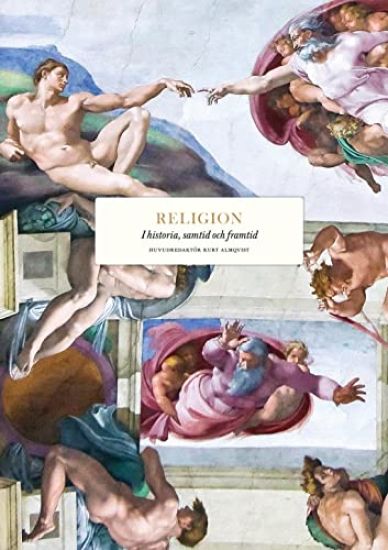
Tron på en styrande, övergripande, himmelsk princip har följt människan genom historien. Mer än 80 procent av världens befolkning har idag en religiös tillhörighet och även i sekulära stater fortsätter religionen att spela en viktig roll. Det går inte att förstå politik och internationella relationer idag utan att inkludera religionen som en aspekt av det kulturella sammanhanget. Essäerna i denna antologi, som härrör från Engelsbergsseminariet 2014, spänner över en mångfald ämnen i dagens såväl som gårdagens samhällen. De utforskar religionen i relation till människans villkor och skildrar hur den manifesterar sig i individens egna upplevelser. För att förstå oss själva behöver vi också förstå religionen.
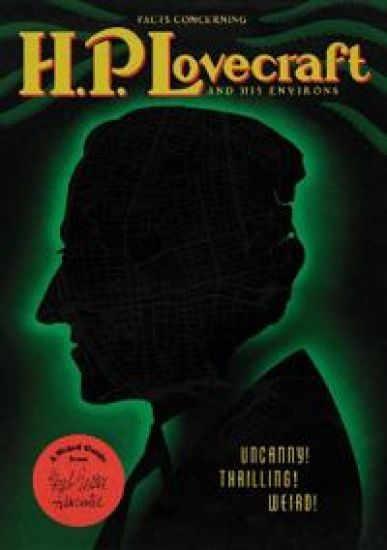
At the time of his death at the age of 46 from intestinal cancer, the horror fiction writer H. P. Lovecraft (1890-1937) was practically unknown. Nearly a century later, he has millions of readers, bestselling authors including Stephen King sing his praises, and fantasy filmmakers such as Guillermo del Toro echo them. Lovecraft is now a recognised 'classic', a not infrequent destiny for writers whose genius only becomes apparent after their death. In this guide, we document the real worls places that were inspiration for his fictional towns Arkham, Innsmouth, Dunwich and Kingsport; his own residences and his restless wanderings along the Eastern seaboard. As some of his protagonists do, Lovecraft engaged in a kind of time travel, seeking out the remnants of the pre-Revolutionary War, colonial America that he felt was his true homeland.
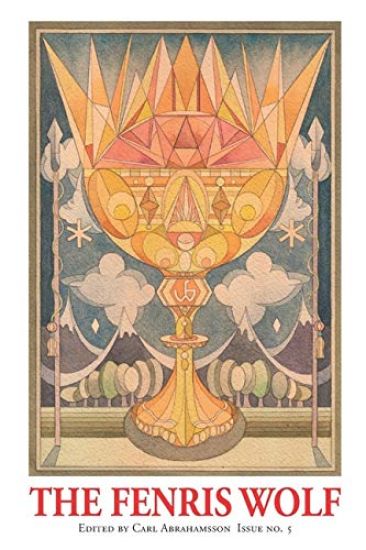
The Fenris Wolf is a research journal focussed on the human mind, developments in comparative magico-anthropology, and on the occultural implications and applications of these fields of study.This volume, the fifth, contains material by Jason Louv, Patrick Lundborg, Gary Lachman, Timothy O'Neill, Dianus del Bosco Sacro, David Griffin, Philip Farber, Aki Cederberg, Renata Wieczorek, Genesis Breyer P-Orridge, Ezra Pound, Gary Dickinson, Robert Podgurski, Stephen Ellis, Mel Lyman, Hiram Corso, Frater Nagasiva, Peter Grey, Vera Mladenovska Nikolich, Kevin Slaughter, Lionel Snell, Phanes Apollonius, Lana Krieg and Carl Abrahamsson, on topics as diverse as the psychedelic William Shakespeare, secret societies, Rosicrucians, Illuminati, neurological interpretations of magic, the esoteric gardens of Quinta da Regaleira in Portugal, Italian witchcraft, Pierre Molinier, Derek Jarman, the I Ching, Geomancy, the logic of evil and vice versa, Remy de Gourmont, Aleister Crowley, Liber AL vel Legis, Macedonian vampires, Satanism, Goethe's Faust, and the creation of a "mega Golem" within the context of developing a contemporary yet timeless terminology of magic.Trapart Books 2020, 6x9" paperback, 330 pages
A memoir of magic, rock and roll, and becoming who you are • Traces the author’s journey from bassist and founding member of Blondie to writer on consciousness and the esoteric tradition • Explores his involvement in Gurdjieff’s Fourth Way, Crowley’s Thelema, and his relationship with the bestselling author Colin Wilson • Reveals how an early love of comic books, science fiction, and fantasy led him to the esoteric tradition Not many members of the Rock and Roll Hall of Fame are also recognized authorities on the Western inner tradition. Gary Lachman is. In 1978, Blondie released the top-ten hit “(I am Always Touched by Your) Presence, Dear.” Gary Lachman (then Gary Valentine) had written the song for his girlfriend after the series of shared dreams and telepathic experiences they had. Thus started his lifelong obsession with the potentials of consciousness. In this memoir, Lachman recounts how he went from being a successful rock and roller to a writer on consciousness and the Western inner tradition. He shares encounters with rockers such as the Ramones, New York Dolls, Patti Smith, the Rolling Stones, David Bowie, and Iggy Pop and also his time with Timothy Leary, William Burroughs, and Allen Ginsberg. Living with Blondie’s Debbie Harry and Chris Stein on New York’s Bowery, a block from CBGB, the birthplace of punk rock, Lachman discovered occultism via a follower of Aleister Crowley. Post rock and roll, Lachman’s occult studies brought him to the Golden Dawn, Manly P. Hall, Gnosticism, and a stint in Crowley’s O.T.O. He details his time in the Fourth Way, including a visit to the site of Gurdjieff ’s Institute for the Harmonious Development of Man in France, and his years studying philosophy and literature and working as a science writer while managing a famous metaphysical bookshop at the height of the New Age movement. Excursions to Stonehenge, Avebury, and Glastonbury in search of ley lines and pilgrimages to Colin Wilson’s home in Cornwall are a few of the highlights of this introspective, often humorous account of a nascent writer’s struggle from rock and roll to individuation.
A biography of the influential teacher of the Fourth Way In 1922, Maurice Nicoll (1884-1953) abandoned his successful London psychiatry practice and his direct studies with Carl Jung to move his family just outside of Paris to the Institute for the Harmonious Development of Man, a center recently opened by philosopher, mystic, and spiritual guru G.I. Gurdjieff, the founder of the esoteric system that became known as the “Fourth Way.” Nicoll went on to become one of the most passionate teachers of the Fourth Way, committing the final three decades of his life to teaching “The Work” in his own unorthodox style. In this revealing biography, Gary Lachman draws on recently uncovered diaries to explore the unusual, syncretic approach Nicoll brought to his teaching of the Fourth Way. He shows how Nicoll is unique in having Jung, Gurdjieff, and Ouspensky as teachers and to have known each of these important figures in esoteric history personally, yet—as Lachman reveals—Nicoll was not a blind devotee by any stretch. The author shows how he incorporated elements of Jungian psychology and Emanuel Swedenborg-inspired mysticism into his exploration and teaching of both Gurdjieff’s and Ouspensky’s ideas, as well as into his best-known work, Psychological Commentaries on the Teaching of Gurdjieff and Ouspensky. Lachman reveals the unorthodox side of Nicoll in fuller detail than ever before through excerpts from recently shared diaries, in which Nicoll included detailed accounts of his own solitary “self-sex” erotic experimentations to reach visionary states, along with recordings of his dreams and other personal and mystical reflections. The social details of Nicoll’s life are also examined, including vivid portraits of the occult scene in the early-to-mid-20th century and the communal living situations in which Nicoll sometimes resided. Drawing on his familiarity with hermetic practices and his own experiences with “The Work,” Lachman comprehensively explores the significance of Nicoll and the novelty of his thought, offering a profound, needed, and sympathetic but critical study of this man so instrumental to the development and legacy of the Fourth Way.
A fully illustrated biography of mystic, artist, and explorer Nicholas Roerich. Nicholas Roerich (1874–1947) was a Russian artist, writer, archaeologist, explorer, mystic, theosophist, and peacemaker who left a rich legacy of nearly 7,000 visionary paintings and 30 books on the mystic East. Twice nominated for the Nobel Peace Prize due to the Roerich Peace Pact—a remarkable treaty signed by President Roosevelt that sought to preserve cultural monuments during times of war—Roerich had a profound love for folk traditions of Russia, India, and Tibet, especially legends of lost cities and paradise. Together with his wife and two sons, from the 1890s into the 1950s, Roerich embarked on a number of spiritual quests through India, the Gobi Desert, the Altai and Kunlun Mountains, Mongolia, and Tibet, crisscrossing the Himalayan Mountains many times before settling in Kullu, India in the shadows of the great mountain range. Through his explorations throughout the world and the immersive art he created during those travels, he was seeking the grains of spiritual truth behind the legends of paradise lost, including during his pilgrimages in search of Shambala. Revealing the mystical world of Nicholas Roerich in stunning full color, Jacqueline Decter invites us to witness Roerich’s far-reaching vision and dedication to beauty across the full scope of his inspiring life and artistic career. This new hardcover edition features Decter’s translations of many Russian texts into English as well as 88 color plates showcasing the variety of Roerich’s artistic talent, from breathtaking Himalayan landscapes and spiritual themes to set and costume designs, most notably for Stravinsky’s The Rite of Spring. A celebration of Roerich as both visionary artist and visionary explorer, this fully illustrated biography illuminates a man whose life and work significantly influenced the development of modern art and culture.
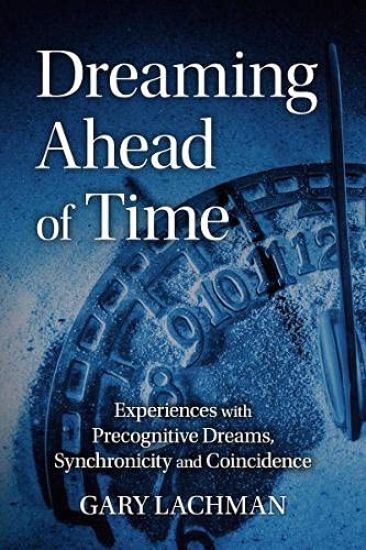
Can we see the future in our dreams?Does time flow in one direction?What is a 'meaningful coincidence'?Renowned esoteric writer Gary Lachman has been recording his own precognitive dreams for forty years. In this unique and intriguing book, Lachman recounts the discovery that he dreams 'ahead of time', and argues convincingly that this extraordinary ability is, in fact, shared by all of us.Dreaming Ahead of Time is a personal exploration of precognition, synchronicity and coincidence drawing on the work of thinkers including J.W. Dunne, J.B. Priestly and C.G. Jung. Lachman's description and analysis of his own experience introduces readers to the uncanny power of our dreaming minds, and reveals the illusion of our careful distinctions between past, present and future.
Kurt Almqvist; Daniel Birnbaum; Tessel M. Baudin; Briony Fer; Wouter J. Hanegraaff; Stephen Kern; Gary Lachman; Marco Pasi; Gertrud Sandqvist; Helmut Zander
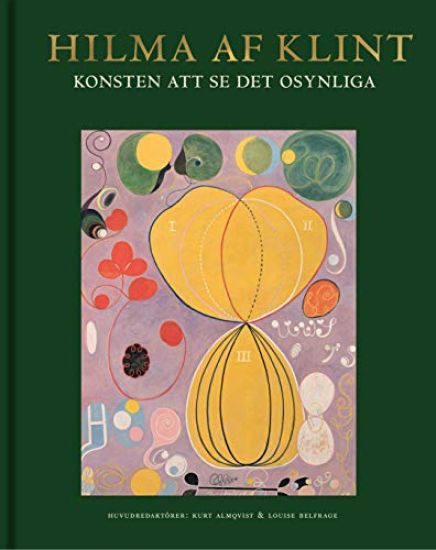
I den mest uttömmande boken om Hilma af Klint som hittills getts ut, skriver 20 specialister inom modern konst, konsthistoria, idéhistoria och religionshistoria utifrån sin unika utgångspunkt och ger sin syn på af Klints konstnärskap. Ämnena rör sig från tidig abstrakt konst och inflytandet av Darwin och Goethes färglära till betydelsen av ockulta religiösa rörelser som teosofi och antroposofi, som även influerade de tidiga modernisterna. Här finns också inslag från Hilma af Klints personliga anteckningar och efterforskningar. Boken baseras på det seminarium som hölls i samband med den häpnadsväckande framgångsrika utställningen Hilma af Klint A Pioneer of Abstraction på Moderna Museet i Stockholm 2013. Detta är en nyutgåva som innehåller ett nyskrivet bidrag av Kurt Almqvist, Hilma af Klints hemliga lära, budskap och livsåskådning, utifrån tidigare ej nyttjat källmaterial. Det bearbetar en del av historien som tidigare inte behandlats närmare: bakgrunden till Hilma af Klints lära och livsåskådning, samt utvecklingen efter hennes död 1944 och fram till bildandet av Stiftelsen Hilma af Klints verk 1972, och om den ende arvtagaren till Hilma af Klints verk, dess skapare och ende donator, antroposofen Viceamiral Erik af Klint (1901-1981). Boken har ett efterord av Daniel Birnbaum.
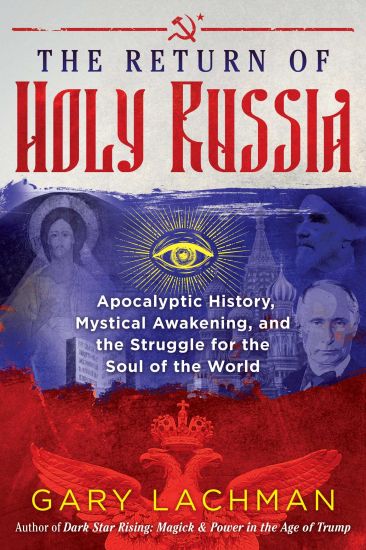
A history of how mystical and spiritual influences have shaped Russia’s identity and politics and what it means for the future of world civilization • Examines Russia’s spiritual history, from its pagan origins and Eastern Orthodox mysticism to secret societies, Rasputin, Roerich, Blavatsky, and Dostoyevsky • Explains the visionary writings of the spiritual philosophers of Russia’s Silver Age, which greatly influence Putin today • Explores what Russia’s unique identity and its history of messianic politics and apocalyptic thought mean for its future on the world stage At the turn of the 20th century, a period known as the Silver Age, Russia was undergoing a powerful spiritual and cultural rebirth. It was a time of magic and mysticism that saw a vital resurgence of interest in the occult and a creative intensity not seen in the West since the Renaissance. This was the time of the God-Seekers, pilgrims of the soul and explorers of the spirit who sought the salvation of the world through art and ideas. These sages and their visions of Holy Russia are returning to prominence now through Russian president Vladimir Putin, who, inspired by their ideas, envisions a new “Eurasian” civilization with Russia as its leader. Exploring Russia’s long history of mysticism and apocalyptic thought, Gary Lachman examines Russia’s unique position between East and West and its potential role in the future of the world. Lachman discusses Russia’s original Slavic paganism and its eager adoption of mystical and apocalyptic Eastern Orthodox Christianity. He explores the Silver Age and its “occult revival” with a look at Rasputin’s prophecies, Blavatsky’s Theosophy, Roerich’s “Red Shambhala,” and the philosophies of Berdyaev and Solovyov. He looks at Russian Rosicrucianism, the Illuminati Scare, Russian Freemasonry, and the rise of other secret societies in Russia. He explores the Russian character as that of the “holy fool,” as seen in the great Russian literature of the 19th century, especially Dostoyevsky. He also examines the psychic research performed by the Russian government throughout the 20th century and the influence of Evola and the esoteric right on the spiritual and political milieus in Russia. Through in-depth exploration of the philosophies that inspire Putin’s political regime and a look at Russia’s unique cultural identity, Lachman ponders what they will mean for the future of Russia and the world. What drives the Russian soul to pursue the apocalypse? Will these philosophers lead Russia to dominate the world, or will they lead it into a new cultural epoch centered on spiritual power and mystical wisdom?
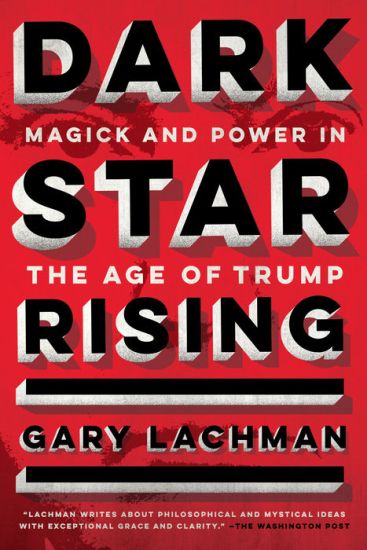
Within the concentric circles of Trump's regime lies an unseen culture of occultists, power-seekers, and mind-magicians whose influence is on the rise. In this unparalleled account, historian Gary Lachman examines the influence of occult and esoteric philosophy on the unexpected rise of the alt-right. Did positive thinking and mental science help put Donald Trump in the White House? And are there any other hidden powers of the mind and thought at work in today's world politics? In Dark Star Rising: Magick and Power in the Age of Trump, historian and cultural critic Gary Lachman takes a close look at the various magical and esoteric ideas that are impacting political events across the globe. From New Thought and Chaos Magick to the far-right esotericism of Julius Evola and the Traditionalists, Lachman follows a trail of mystic clues that involve, among others, Norman Vincent Peale, domineering gurus and demagogues, Ayn Rand, Pepe the Frog, Rene Schwaller de Lubicz, synarchy, the Alt-Right, meme magic, and Vladimir Putin and his postmodern Rasputin. Come take a drop down the rabbit hole of occult politics in the twenty-first century and find out the post-truths and alternative facts surrounding the 45th President of the United States with one of the leading writers on esotericism and its influence on modern culture.
Explores the role of magic and the occult in art and culture from ancient times to today • Examines key figures behind esoteric cultural developments, such as Carl Jung, Anton LaVey, Paul Bowles, Aleister Crowley, and Rudolf Steiner • Explores the history of magic as a source of genuine counter culture and compares it with our contemporary soulless, digital monoculture Art, magic, and the occult have been intimately linked since our prehistoric ancestors created the first cave paintings some 50,000 years ago. In this deep exploration of “occulture”--the liminal space where art and magic meet--Carl Abrahamsson reveals the integral role played by magic and occultism in the development of culture throughout history as well as their relevance to the continuing survival of art and creativity. Blending magical history and esoteric philosophy with his more than 30 years’ experience in occult movements, Showing how art and magic were initially one and the same, the author reveals how the magic of art can be restored if art is employed as a means rather than an end--if it is intense, emotional, violent, and expressive--and offers strategies for creating freely, magically, even spontaneously, with intent unfettered by the whims of trends, a creative practice akin to chaos magick that assists both creators and spectators to live with meaning. He also looks at intuition and creativity as the cornerstones of genuine individuation, explaining how insights and illuminations seldom come in collective forms. Exploring magical philosophy, occult history, the arts, psychology, and the colorful grey areas in between, Abrahamsson reveals the culturally and magically transformative role of art and the ways the occult continues to transform culture to this day.