Kirjojen hintavertailu. Mukana 12 595 353 kirjaa ja 12 kauppaa.

Kirjailija

Gary M. Feinman

Kirjat ja teokset yhdessä paikassa: 11 kirjaa, julkaisuja vuosilta 1993-2024, suosituimpien joukossa Power and Regions in Ancient States. Vertaile teosten hintoja ja tarkista saatavuus suomalaisista kirjakaupoista.

Mukana myös kirjoitusasut: Gary M Feinman

11 kirjaa

Kirjojen julkaisuhaarukka 1993-2024.

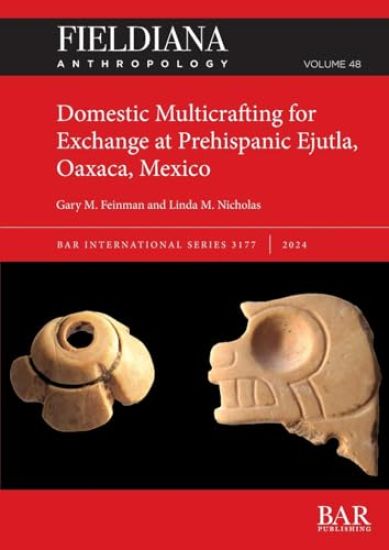
Domestic Multicrafting for Exchange at Prehispanic Ejutla, Oaxaca, Mexico

Domestic Multicrafting for Exchange at Prehispanic Ejutla, Oaxaca, Mexico

Gary M Feinman; Linda M Nicholas

British Archaeological Reports (Oxford) Ltd
2024
pokkari
This is an open access title available under the terms of a CC BY-NC-ND 4.0 License. It is free to read, download and share on the BAR Digital platform. Archaeological investigations at the prehispanic Ejutla site in Oaxaca, Mexico, have had a foundational role in reframing our perspectives on Mesoamerican economies, specifically craft specialization. This volume reports on the excavations of a residential complex located at the southern limits of the Valley of Oaxaca system, where evidence was recovered for multiple craft activities associated with a single non-elite domestic unit. The residential occupants crafted a variety of ornaments from marine shell, mostly sourced to the Pacific Coast, but few were consumed by the householders themselves. In addition, the Ejutla craftworkers produced a range of ceramic utilitarian vessels, including domestic wares and figurines, as well as small lapidary objects. Many of the craft goods produced were destined for exchange, circulating in both local and longer-distance networks. The findings have laid a basis for new theorizing on prehispanic economic production and the revision of prior notions that presumed principally local economies, in which specialized production for exchange was centered in nondomestic workshops.
Collective Action and the Reframing of Early Mesoamerica

Collective Action and the Reframing of Early Mesoamerica

David M. Carballo; Gary M. Feinman

Cambridge University Press
2024
pokkari
In considering the long trajectory of human societies, researchers have too often favored models of despotic control by the few or structural models that fail to grant agency to those with less power in shaping history. Recent scholarship demonstrates such models to be not only limiting but also empirically inaccurate. This Element reviews archaeological approaches to collective action drawing on theoretical perspectives from across the globe and case studies from prehispanic Mesoamerica. It highlights how institutions and systems of governance matter, vary over space and time, and can oscillate between more pluralistic and more autocratic forms within the same society, culture, or polity. The historical coverage examines resource dilemmas and ways of mediating them, how ritual and religion can foster both social solidarity and hierarchy, the political financing of institutions and variability in forms of governance, and lessons drawn to inform the building of more resilient communities in the present.
Collective Action and the Reframing of Early Mesoamerica

Collective Action and the Reframing of Early Mesoamerica

David M. Carballo; Gary M. Feinman

Cambridge University Press
2024
sidottu
In considering the long trajectory of human societies, researchers have too often favored models of despotic control by the few or structural models that fail to grant agency to those with less power in shaping history. Recent scholarship demonstrates such models to be not only limiting but also empirically inaccurate. This Element reviews archaeological approaches to collective action drawing on theoretical perspectives from across the globe and case studies from prehispanic Mesoamerica. It highlights how institutions and systems of governance matter, vary over space and time, and can oscillate between more pluralistic and more autocratic forms within the same society, culture, or polity. The historical coverage examines resource dilemmas and ways of mediating them, how ritual and religion can foster both social solidarity and hierarchy, the political financing of institutions and variability in forms of governance, and lessons drawn to inform the building of more resilient communities in the present.
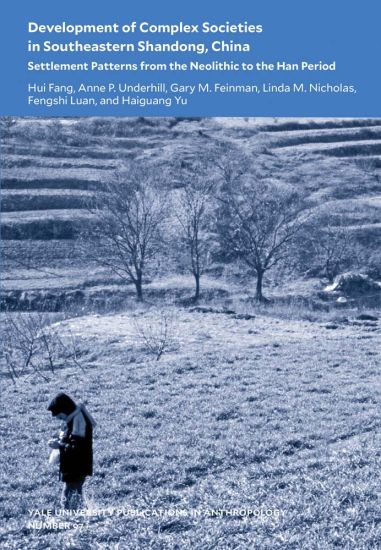
Development of Complex Societies in Southeastern Shandong, China

Development of Complex Societies in Southeastern Shandong, China

Hui Fang; Anne P Underhill; Gary M Feinman; Linda M. Nicholas; Fengshi Luan; Haiguang Yu

YALE UNIVERSITY PRESS
2023
pokkari
A comprehensive account of a pioneering archaeological project in the province of Shandong that transformed understandings of regional settlement patterns From 1995 to 2007, researchers from China and the United States conducted a systematic, full-coverage regional archaeological survey in southeastern Shandong Province, China, covering an area of more than 1,400 square kilometers. This pioneering multiyear international project transformed the archaeological understanding of regional settlement patterns from the Neolithic to the Han period in southeastern Shandong. As an update of the 2012 synthesis published in Chinese, this volume is the most detailed account of the project in English. The team discovered many new sites, including the earliest known Neolithic settlements in the area, and revealed distinctly different regional settlement patterns in the hinterlands of the two largest late Neolithic sites, Liangchengzhen and Yaowangcheng. The book includes field procedures, methods of analysis, and descriptions of major sites generously illustrated with maps as well as photographs of key artifacts and archaeological localities. Distributed for the Yale Peabody Museum
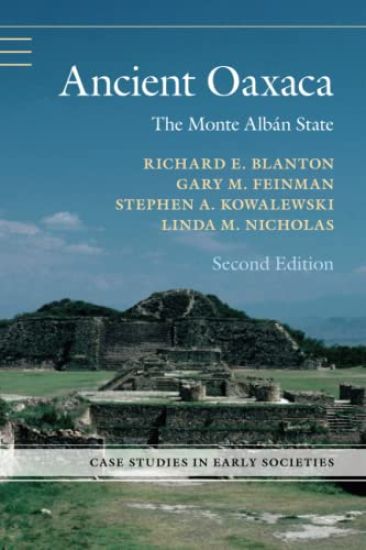
Ancient Oaxaca

Ancient Oaxaca

Richard E. Blanton; Gary M. Feinman; Stephen A. Kowalewski; Linda M. Nicholas

Cambridge University Press
2022
pokkari
Over two thousand years ago, Oaxaca, Mexico, was the site of one of the New World's earliest episodes of primary state formation and urbanism, and today it is one of the world's archaeologically best-studied regions. This volume, which thoroughly revises and updates the first edition, provides a highly readable yet comprehensive path to acquaint readers with one of the earliest and best-known examples of Native American state formation and its consequences as seen from the perspectives of urbanism, technology, demography, commerce, households, and religion and ritual. Written by prominent archaeological researchers who have devoted decades to Oaxacan research and to the development of suitable social theory, the book places ancient Oaxaca within the context of the history of ideas that have addressed the causes and consequences of social evolutionary change. It also critically evaluates the potential applicability of more recent thinking about state building grounded in collective action and related theories.
Ancient Oaxaca

Ancient Oaxaca

Richard E. Blanton; Gary M. Feinman; Stephen A. Kowalewski; Linda M. Nicholas

Cambridge University Press
2022
sidottu
Over two thousand years ago, Oaxaca, Mexico, was the site of one of the New World's earliest episodes of primary state formation and urbanism, and today it is one of the world's archaeologically best-studied regions. This volume, which thoroughly revises and updates the first edition, provides a highly readable yet comprehensive path to acquaint readers with one of the earliest and best-known examples of Native American state formation and its consequences as seen from the perspectives of urbanism, technology, demography, commerce, households, and religion and ritual. Written by prominent archaeological researchers who have devoted decades to Oaxacan research and to the development of suitable social theory, the book places ancient Oaxaca within the context of the history of ideas that have addressed the causes and consequences of social evolutionary change. It also critically evaluates the potential applicability of more recent thinking about state building grounded in collective action and related theories.
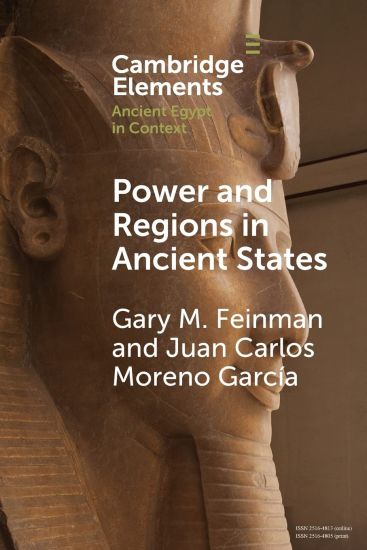
Power and Regions in Ancient States

Power and Regions in Ancient States

Gary M. Feinman; Juan Carlos Moreno García

Cambridge University Press
2022
pokkari
The aim of the Element is to provide a comprehensive comparison of the basic organization of power in Mesoamerica and Egypt. How power emerged and was exercised, how it reproduced itself, how social units (from households to cities) became integrated into political formation and how these articulations of power expanded and collapsed over time. The resilience of particular areas (Oaxaca, Middle Egypt), to the point that they preserved a highly distinctive cultural personality when they were included or not within states, may provide a useful guideline about the basics of integration, negotiation and autonomy in the organization of political formations.
China – Visions through the Ages

China – Visions through the Ages

Deborah A. Bekken; Lisa C. Niziolek; Gary M. Feinman; Gary Feinman

University of Chicago Press
2018
sidottu
At the entrance of The Field Museum's Cyrus Tang Hall of China, two Chinese stone guardian lions stand tall, gazing down intently at approaching visitors. One lion's paw rests upon a decorated ball symbolizing power, while the other lion cradles a cub. Traditionally believed to possess attributes of strength and protection, statues such as these once stood guard outside imperial buildings, temples, and wealthy homes in China. Now, centuries later, they guard this incredible permanent exhibition. China's long history is one of the richest and most complex in the known world, and the Cyrus Tang Hall of China offers visitors a wonderful, comprehensive survey of it through some 350 artifacts on display, spanning from the Paleolithic period to present day. Now, with China: Visions through the Ages, anyone can experience the marvels of this exhibition through the book's beautifully designed and detailed pages. Readers will gain deeper insight into The Field Museum's important East Asian collections, the exhibition development process, and research on key aspects of China's fascinating history. This companion book, edited by the exhibition's own curatorial team, takes readers even deeper into the wonders of the Cyrus Tang Hall of China and enables them to study more closely the objects and themes featured in the show. Mirroring the exhibition's layout of five galleries, the volume is divided into five sections. The first section focuses on the Paleolithic and Neolithic periods; the second, the Bronze Age, the first dynasties, and early writing; the third, the imperial system and power; the fourth, religion and performance; and the fifth, interregional trade and the Silk Routes. Each section also includes highlights containing brief stories on objects or themes in the hall, such as the famous Lanting Xu rubbing. With chapters from a diverse set of international authors providing greater context and historical background, China: Visions through the Ages is a richly illustrated volume that allows visitors, curious readers, and China scholars alike a chance to have an enduring exchange with the objects featured in the exhibition and with their multifaceted histories.
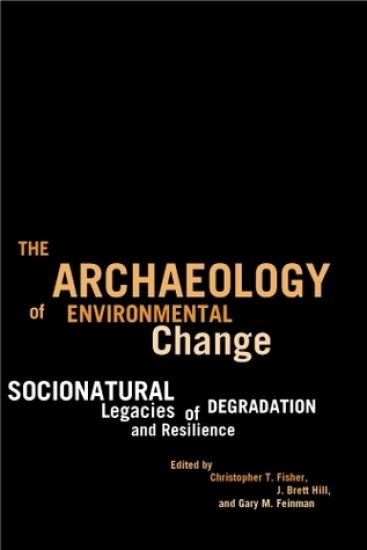
The Archaeology of Environmental Change

The Archaeology of Environmental Change

Christopher T. Fisher; J. Brett Hill; Gary M. Feinman

University of Arizona Press
2012
nidottu
Water management, soil conservation, sustainable animal husbandry . . . because such socio-environmental challenges have been faced throughout history, lessons from the past can often inform modern policy. In this book, case studies from a wide range of times and places reveal how archaeology can contribute to a better understanding of humans' relation to the environment. The Archaeology of Environmental Change shows that the challenges facing humanity today, in terms of causing and reacting to environmental change, can be better approached through an attempt to understand how societies in the past dealt with similar circumstances. The contributors draw on archaeological research in multiple regions--North America, Mesoamerica, Europe, the Near East, and Africa--from time periods spanning the Holocene, and from environments ranging from tropical forest to desert. Through such examples as environmental degradation in Transjordan, wildlife management in East Africa, and soil conservation among the ancient Maya, they demonstrate the negative effects humans have had on their environments and how societies in the past dealt with these same problems. All call into question and ultimately refute popular notions of a simple cause-and-effect relationship between people and their environment, and reject the notion of people as either hapless victims of unstoppable forces or inevitable destroyers of natural harmony. These contributions show that by examining long-term trajectories of socio-natural relationships we can better define concepts such as sustainability, land degradation, and conservation--and that gaining a more accurate and complete understanding of these connections is essential for evaluating current theories and models of environmental degradation and conservation. Their insights demonstrate that to understand the present environment and to manage landscapes for the future, we must consider the historical record of the total sweep of anthropogenic environmental change.
The Archaeology of Environmental Change

The Archaeology of Environmental Change

Christopher T. Fisher; J. Brett Hill; Gary M. Feinman

University of Arizona Press
2009
sidottu
Water management, soil conservation, sustainable animal husbandry…because such socio-environmental challenges have been faced throughout history, lessons from the past can often inform modern policy. In this book, case studies from a wide range of times and places reveal how archaeology can contribute to a better understanding of humans' relation to the environment.The Archaeology of Environmental Change shows that the challenges facing humanity today, in terms of causing and reacting to environmental change, can be better approached through an attempt to understand how societies in the past dealt with similar circumstances. The contributors draw on archaeological research in multiple regions—North America, Mesoamerica, Europe, the Near East, and Africa—from time periods spanning the Holocene, and from environments ranging from tropical forest to desert.Through such examples as environmental degradation in Transjordan, wildlife management in East Africa, and soil conservation among the ancient Maya, they demonstrate the negative effects humans have had on their environments and how societies in the past dealt with these same problems. All call into question and ultimately refute popular notions of a simple cause-and-effect relationship between people and their environment, and reject the notion of people as either hapless victims of unstoppable forces or inevitable destroyers of natural harmony.These contributions show that by examining long-term trajectories of socio-natural relationships we can better define concepts such as sustainability, land degradation, and conservation—and that gaining a more accurate and complete understanding of these connections is essential for evaluating current theories and models of environmental degradation and conservation. Their insights demonstrate that to understand the present environment and to manage landscapes for the future, we must consider the historical record of the total sweep of anthropogenic environmental change.
Ancient Mesoamerica

Ancient Mesoamerica

Richard E. Blanton; Stephen A. Kowalewski; Gary M. Feinman; Laura M. Finsten

Cambridge University Press
1993
pokkari
Mesoamerica has become one of the world's most important areas for research into the emergence of complex human societies. Between 10,000 years ago and the arrival of the Spanish in 1521, some of the most significant changes in the evolution of human societies occurred. These included the emergence of agriculture and sedentary villages, the growth of centralized governments (chiefdoms and states), and the rise of market systems, cities, and highly stratified social systems. In the 1970s and 1980s a number of ambitious research efforts produced exciting data on culture change in Mesoamerica. In this revised and updated 1993 edition of a book first published in 1981, the authors present a synthesis of Mesoamerican prehistory, focusing on three of its most intensively studied regions, the Valleys of Oaxaca and Mexico and the Maya lowlands. An original framework of ideas is developed to explain long-term change in complex societies.