Kirjojen hintavertailu. Mukana 12 269 423 kirjaa ja 12 kauppaa.
Kirjailija
Gary McDonogh
Kirjat ja teokset yhdessä paikassa: 8 kirjaa, julkaisuja vuosilta 1993-2018, suosituimpien joukossa Global Hong Kong. Vertaile teosten hintoja ja tarkista saatavuus suomalaisista kirjakaupoista.
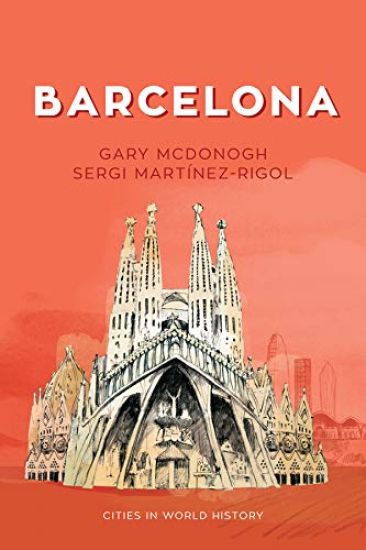
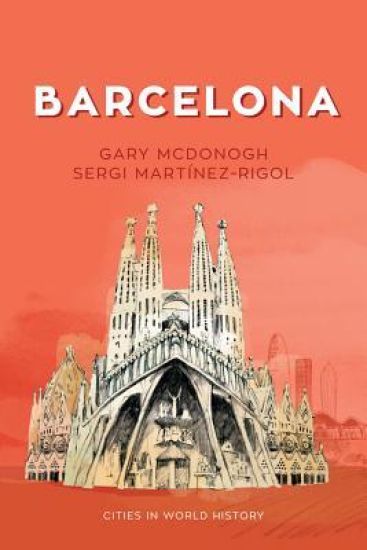
Barcelona has existed as a settlement for two millennia. Early civilizations shaped the city before it achieved, in the Middle Ages and Renaissance, global power as a trading metropolis and empire capital. After a long struggle with the unifying Spanish state, the city revived, in the eighteenth and nineteenth centuries, as an industrial and commercial powerhouse. It became a center of culture, ornamented by modern planning and wondrous works by Gaudí and others. Barcelona became known as “The Rose of Fire”: home to revolutionaries and anarchists. Creativity and conflict continued to shape Barcelona in the twentieth century, as its citizens faced the Spanish Republic, Civil War and Franco’s dictatorship. Linking social and cultural currents to the rich architectural and experiential heritage of this multi-layered city, McDonogh and Martínez-Rigol reveal Barcelona’s hidden history to modern-day visitors and residents alike.
Barcelona has existed as a settlement for two millennia. Early civilizations shaped the city before it achieved, in the Middle Ages and Renaissance, global power as a trading metropolis and empire capital. After a long struggle with the unifying Spanish state, the city revived, in the eighteenth and nineteenth centuries, as an industrial and commercial powerhouse. It became a center of culture, ornamented by modern planning and wondrous works by Gaudí and others. Barcelona became known as “The Rose of Fire”: home to revolutionaries and anarchists. Creativity and conflict continued to shape Barcelona in the twentieth century, as its citizens faced the Spanish Republic, Civil War and Franco’s dictatorship. Linking social and cultural currents to the rich architectural and experiential heritage of this multi-layered city, McDonogh and Martínez-Rigol reveal Barcelona’s hidden history to modern-day visitors and residents alike.
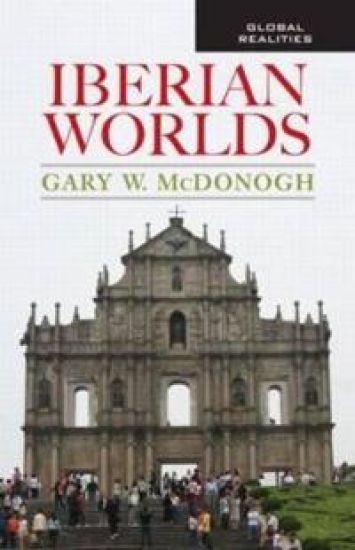
Iberian Worlds is an imaginative, short text that dramatically depicts important globalization themes and processes through the important flows and impacts Spain and Portugal have had with many important regions of the world for many centuries. Spain and Portugal have long histories at the cutting-edge of world relations, managing far-flung empires, and author Gary McDonogh stresses this historical perspective as well as foregrounding the vast present world fostered by the "Iberian project" - Latin America, Southern Europe, parts of Asia and Africa, in which Spain and Portugal possess enormous power.
Iberian Worlds is an imaginative, short text that dramatically depicts important globalization themes and processes through the important flows and impacts Spain and Portugal have had with many important regions of the world for many centuries. Spain and Portugal have long histories at the cutting-edge of world relations, managing far-flung empires, and author Gary McDonogh stresses this historical perspective as well as foregrounding the vast present world fostered by the "Iberian project" - Latin America, Southern Europe, parts of Asia and Africa, in which Spain and Portugal possess enormous power.
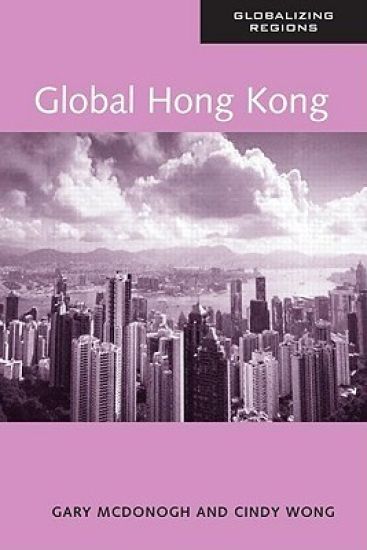
Global Hong Kong locates Hong Kong in the contemporary globalizing world. Hong Kong, as the authors argue, is an archetypal place, sitting at the intersection of East and West. It is also a major center for global capital flows and world trade. Moreover, in recent years, the island's global cultural power has become increasingly evident, as Hong Kong popular culture has spread to the West via a booming film industry. While looking at issues of postcoloniality, transnationalism and economic globalization, Wong and McDonogh focus on the new cultures and social formations of contemporary Hong Kong, as well as the transformation of the physical city itself. They also trace the new interconnections - economic, demographic, social and cultural - between Hong Kong and other parts of the worldthat have benn fostered by globalization.Books in this series look at how nations and regions across the world are navigating the tumultuous currents of globalization. Concise, descriptive, interdisciplinary, and theoretically informed, they serve as ideal introductions to the peoples and places of our increasingly globalized world.
Global Hong Kong locates Hong Kong in the contemporary globalizing world. Hong Kong, as the authors argue, is an archetypal place, sitting at the intersection of East and West. It is also a major center for global capital flows and world trade. Moreover, in recent years, the island's global cultural power has become increasingly evident, as Hong Kong popular culture has spread to the West via a booming film industry. While looking at issues of postcoloniality, transnationalism and economic globalization, Wong and McDonogh focus on the new cultures and social formations of contemporary Hong Kong, as well as the transformation of the physical city itself. They also trace the new interconnections - economic, demographic, social and cultural - between Hong Kong and other parts of the worldthat have benn fostered by globalization.Books in this series look at how nations and regions across the world are navigating the tumultuous currents of globalization. Concise, descriptive, interdisciplinary, and theoretically informed, they serve as ideal introductions to the peoples and places of our increasingly globalized world.
This book presents a cross-cultural approach to the study of urban space. Essays written by major contributors in contemporary urban studies provide a range of case studies from Asia, Latin America, North America, and Europe to address important questions about space and power, processes of change, aesthetics and attitudes toward space, and social divisions expressed through urban life. The essays fall into three interlocking sections: conceptual and linguistic approaches to urban space; visual and social examinations of world cities; and policy examinations of spatial analyses. Together with the jointly compiled bibliography, this collection of essays is designed to stimulate comparative debate and identify new areas for urban research. Essays contrast empty space in Barcelona and Savannah, explore the concept of healthy and unhealthy urban environments in the classical writings and in modern-day Vienna, and develop a model of space for Shanghai from the point of view of privacy. The subcultural ethos characterizing Tokyo and the castle as a symbol for the community in Japan are two more essay topics. The plaza in Spanish-American towns, the outdoor spaces in Italy (balcony, street, courtyard), and the school in Honduras are sites for socio-cultural analyses in three more essays. The last group of essays focus on discourses in urban planning, especially the responses of people to the growth, marketing, and decay of residential places. African-American neighborhoods and waterfront development provide examples for this section. These essays in their theoretical and geographical breadth make significant strides in defining the cultural meaning of urban space. They will be read with interest by city planners, ecologists, and other social scientists involved in finding human solutions to the metropolitan environment.
This book presents a cross-cultural approach to the study of urban space. Essays written by major contributors in contemporary urban studies provide a range of case studies from Asia, Latin America, North America, and Europe to address important questions about space and power, processes of change, aesthetics and attitudes toward space, and social divisions expressed through urban life. The essays fall into three interlocking sections: conceptual and linguistic approaches to urban space; visual and social examinations of world cities; and policy examinations of spatial analyses. Together with the jointly compiled bibliography, this collection of essays is designed to stimulate comparative debate and identify new areas for urban research. Essays contrast empty space in Barcelona and Savannah, explore the concept of healthy and unhealthy urban environments in the classical writings and in modern-day Vienna, and develop a model of space for Shanghai from the point of view of privacy. The subcultural ethos characterizing Tokyo and the castle as a symbol for the community in Japan are two more essay topics. The plaza in Spanish-American towns, the outdoor spaces in Italy (balcony, street, courtyard), and the school in Honduras are sites for socio-cultural analyses in three more essays. The last group of essays focus on discourses in urban planning, especially the responses of people to the growth, marketing, and decay of residential places. African-American neighborhoods and waterfront development provide examples for this section. These essays in their theoretical and geographical breadth make significant strides in defining the cultural meaning of urban space. They will be read with interest by city planners, ecologists, and other social scientists involved in finding human solutions to the metropolitan environment.