Kirjojen hintavertailu. Mukana 12 335 537 kirjaa ja 12 kauppaa.

Kirjailija

Gary Monroe

Kirjat ja teokset yhdessä paikassa: 7 kirjaa, julkaisuja vuosilta 2001-2024, suosituimpien joukossa Mary Ann Carroll. Vertaile teosten hintoja ja tarkista saatavuus suomalaisista kirjakaupoista.

7 kirjaa

Kirjojen julkaisuhaarukka 2001-2024.

Mary Ann Carroll

Mary Ann Carroll

Gary Monroe

University Press of Florida
2024
pokkari
In the years since the art world discovered them, much has been made of the Highwaymen—the loosely knit band of African American painters whose edenic Florida landscapes, created with inexpensive materials and sold out of their cars, "shaped the state's popular image as much as oranges and alligators" (New York Times). But lost in the legends surrounding the group is the mesmerizing story of Mary Ann Carroll (1940-2019), the only female "Highwayman."In 1957, sixteen-year-old Carroll met Harold Newton, later dubbed the original Highwayman. He was painting a landscape along the side of the road. There were red flames on his car. Yet what shocked the young African American girl most of all was discovering a black man who didn't work in the orange groves, who made a living off of his paintings. It wasn't long before she was creating and selling her own landscapes, and the other Highwaymen, taking note of her startling use of color, welcomed her into the fold.Carroll sold her first painting at eighteen—remarkable for any young artist, unheard of for a black woman in the South. Like her Highwaymen brethren, she travelled across the state, selling her art at hotels, offices, and restaurants where she was not allowed to drink, eat, or even sit. If the Highwaymen faced discrimination at every door they knocked on, then the challenges—and dangers—were magnified for Carroll. She took pride in always having her pristine Buick gassed and ready to go and her small handgun cleaned and ready to use.After years of virtual obscurity, Carroll was invited to the First Lady's Luncheon in 2011, where she presented a painting of her iconic poinciana to Michelle Obama. Today, she is pastor of the Foundation Revival Center in Fort Pierce, is an accomplished artist and musician, and still paints and exhibits her work widely.Mary Ann Carroll is the never-before-told story of a black female artist's hard-fought journey to provide for her family while also making a name for herself in a man's world.
Alfred Hair

Alfred Hair

Gary Monroe

University Press of Florida
2020
sidottu
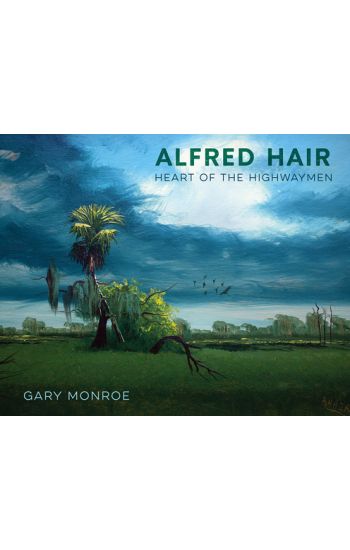
The undervalued force behind the Highwaymen phenomenon.A long-awaited testament to the life and work of Alfred Hair, the driving force of the Florida Highwaymen, this book introduces a charismatic personality whose energy and creativity were foundational to the success of his fellow African American artists during the era of Jim Crow segregation.Shot and killed in a barfight at the age of 29, Hair lived his short life fully, with a zest and intensity that informed his art. In high school he made canvas frames in the Fort Pierce studio of A. E. Backus, the painter who inspired the style of the Highwaymen, and soon became the artist's protégé. By the time Hair graduated in 1961, he was painting luminous South Florida landscapes and selling them door to door. One of the only formally trained Highwaymen, he spurred on the collective of artists as they traversed the state in search of the white clientele who would buy their artwork.Hair's paintings, reproduced here in brilliant color, are marked by their spontaneous, gestural, carefree flair. He was known for his fast painting, which yielded a sense of place well-suited for Florida's postwar residents. These oil paintings hung in their homes and offices like trophies. Sold before the oils were dry, Hair's paintings appeared to their first owners to glow from within. "Alfred could paint as fast as he wanted and as good as he wanted," said Highwayman Al Black. Hair would work on as many as 20 paintings at once to make more money. His goal, as he often declared, was to be a millionaire.Gary Monroe describes Hair's upbringing, growth as an artist, and romantic escapades and marriage, ending with the tragic events that unfolded at the juke joint known as Eddie's Place the night of August 9, 1970. Alfred Hair remembers a man who lifted the spirits of the Highwaymen painters and enhanced the idea of Florida through his art.
The Last Resort

The Last Resort

Gary Monroe

University Press of Florida
2020
sidottu
Before the high rises, the nightlife, and the fashion scene, Miami's South Beach was a retirement haven for American Jews. In The Last Resort, photographer Gary Monroe presents a collection of images that preserve his observations of this vanished time. After World War II, Jewish retirees from the Northeast—many of whom had come to America to escape Nazi Germany—found comfort, camaraderie, and culture in the sunny island city of Miami Beach. By the late 1950s, the population was 80% Jewish, and eventually the neighborhood of South Beach became home to a strong community of elderly Jews. A local who grew up in a Jewish household during this time, enchanted by the deep-rooted traditions and close-knit society of the older men and women he saw around him, Monroe set out to capture their world.Taken over the span of 10 years, Monroe's photographs chronicle the day-to-day activities of the community from sunrise to sunset. Full of energy, love, misery, and heartbreak, these images portray a shared vision of richly lived lives. During this time, card rooms became makeshift temples. People enjoyed sunrise swims in the ocean. The streets were active. Neighbors cared for each other. On Friday evenings, women lit Shabbos candles. Through these scenes, Monroe's work documents the efforts of the aging South Beach residents to maintain their dignity, mores, and lifestyle. The Last Resort memorializes an era, a culture, and a history. Gary Monroe offers an exquisitely rendered portrait of a special community most people have forgotten.
Harold Newton

Harold Newton

Gary Monroe

University Press of Florida
2018
nidottu
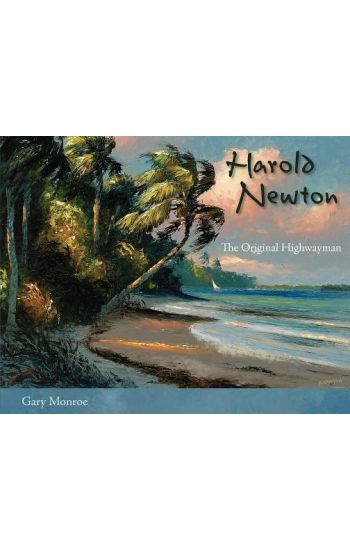
From the best-selling author of The Highwaymen comes the story of the group's most prolific and most sought after painter. Harold Newton was an unrecognized vagabond artist who not only captured the beauty of the Florida landscape but transformed it with an artistry that invoked its drama of light, color, and form while hinting at its dark, primordial forces. One of his fellow Highwaymen once observed of his work, “It don't have to be signed to know it's a Newton.” Combining samples of his paintings with biographical details and reminiscences of family members, customers, and fellow Highwaymen, Gary Monroe creates an homage to the man whose work contributed perhaps more than anyone else's to shaping the romantic imagery and identity of modern Florida.An enigmatic figure, Newton lived an artist's life-aloof and prolific while painting, gregarious and expansive when socializing. Taking to the streets to sell his paintings in 1954, he sold untold numbers of works, showering the state with them. There are “Newtons” everywhere-especially along Florida's east central coast, the Highwaymen's backyard. Their art is in Miami and the Palm Beaches, Tallahassee and across the Panhandle, Lake City and scattered throughout the interior, and along the west coast as well, in Naples, Sarasota, Tampa, and St. Petersburg-wherever there were homes and offices. More of Newton's paintings remain today than those of any of the other highwaymen. Monroe explains these images' enduring appeal while providing glimpses of the African American artist's life from which they emerged, from a childhood spent moving between Florida and south Georgia, to a pivotal encounter with Bean Backus, to his sojourns at Eddie's Place, to the repossession of his 1959 Ford sedan decorated with beach, ocean, palm trees, and nude girls, to the quiet accumulation of professional patrons eager to purchase another two or three ""Newtons"" at every available opportunity.Newton is central to understanding the style of landscape painting that emerged from the Indian River area at mid-century, and Monroe creates an attractive, engaging, and informative account of this pivotal artist and his impact on the popular image of Florida.
E. G. Barnhill

E. G. Barnhill

Gary Monroe

University Press of Florida
2016
sidottu
In the age of railroads and steamships, of frontier Florida and the tourism boom of the early 1900s, photographer E. G. Barnhill set up shop in the young city of St. Petersburg. He pioneered a popular new type of tourist art, colorizing black-and-white snapshots taken by himself and his customers. He sold many of his hand-colored photographs as postcards or home décor.Barnhill applied watercolors to black-and-white prints according to his own sense of light and palette and his interpretation of consumer demand. Visitors wanted one-of-a-kind works of art to help them remember the experience of Florida. Unlike other colorists of the time whose landscapes were airbrushed to appear dreamy and ethereal, Barnhill captured the state’s clear, brisk colors with richness and intensity. He pushed aside conventions by using matte instead of glossy print paper to soak up colors better, and with radical experiments in gold toning and uranium dyes, which created unearthly hues.Filled with vibrant images of Barnhill’s unique creations, precursors to the popular landscape art of the Highwaymen and others, this book showcases a little-known artist whose inventive techniques—particularly his uranium-dye coloring—merit a place in the story of American photography. A fascinating mix of photographic realism and individual artistic vision, his work reveals both the Florida that was and the Florida that tourists wanted to believe in.
Postcards from the Highwaymen

Postcards from the Highwaymen

Gary Monroe

University Press of Florida
2012
muistikirja
The days are long past when tourists could buy an original landscape painting on the side of the road for as little as $50 dollars--sometimes before the paint dried. This new book of postcards allows you to experience the thrill of owning (miniature) versions of these exquisite paintings.
The Highwaymen

The Highwaymen

Gary Monroe

University Press of Florida
2001
sidottu
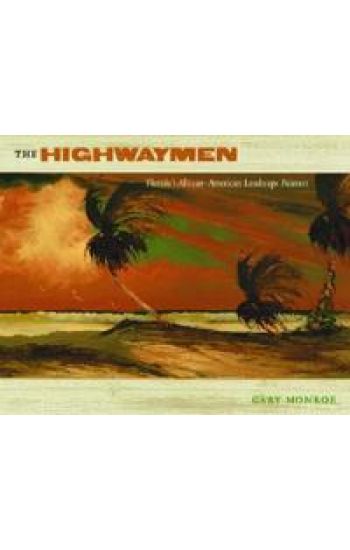
This text introduces a group of young black artists who painted their way out of the despair awaiting them in the citrus groves and packing houses of 1950s Florida. As their story recaptures the imagination of Floridians and their paintings fetch ever-escalating prices, the legacy of their freshly conceived landscapes exerts a new and powerful influence on the popular conception of the Sunshine State. Emerging in the late 1950s, the Highwaymen created idyllic, quickly realized images of the Florida dream and peddled some 100,000 of them from the trunks of their cars. Working with inexpensive materials, the Highwaymen produced an astonishing number of landscapes that depict a romanticized Florida - a faraway place of wind-swept palm trees, billowing cumulus clouds, wetlands, lakes, rivers, ocean, and setting sun. With paintings still wet, they loaded their cars and travelled the state's east coast, selling the images door-to-door and store-to-store, in restaurants, offices, courthouses and bank lobbies. Sometimes characterized as motel art, the work is a hybrid form of landscape painting, corrupting the classically influenced ideas of the Highwaymen's white mentor, A.E. ""Bean"" Backus. At first, the paintings sold like boom-time real estate. In succeeding decades, however, they were consigned to attics and garage sales. Rediscovered in the mid-1990s, today they are recognized as the work of American folk artists. Gary Monroe tells the story behind the Highwaymen, a loose association of 25 men and one woman from the Ft. Pierce area - a fascinating mixture of individual talent, collective enterprise and cultural heritage. He also offers a critical look at the paintings and the movement's development. Added to this are personal reminiscences by some of the artists, along with a gallery of 63 full-colour reproductions of their paintings.