Kirjojen hintavertailu. Mukana 12 390 323 kirjaa ja 12 kauppaa.

Kirjailija

Gary Okihiro

Kirjat ja teokset yhdessä paikassa: 5 kirjaa, julkaisuja vuosilta 1992-2006, suosituimpien joukossa AfroAsian Encounters. Vertaile teosten hintoja ja tarkista saatavuus suomalaisista kirjakaupoista.

5 kirjaa

Kirjojen julkaisuhaarukka 1992-2006.

AfroAsian Encounters

AfroAsian Encounters

Vijay Prashad; Gary Okihiro

New York University Press
2006
pokkari
With a Foreword by Vijay Prashad and an Afterword by Gary Okihiro How might we understand yellowface performances by African Americans in 1930s swing adaptations of Gilbert and Sullivan's The Mikado, Paul Robeson's support of Asian and Asian American struggles, or the absorption of hip hop by Asian American youth culture? AfroAsian Encounters is the first anthology to look at the mutual influence of and relationships between members of the African and Asian diasporas. While these two groups have often been thought of as occupying incommensurate, if not opposing, cultural and political positions, scholars from history, literature, media, and the visual arts here trace their interconnections and interactions, as well as the tensions between the two groups that sometimes arise. AfroAsian Encounters probes beyond popular culture to trace the historical lineage of these coalitions from the late nineteenth century to the present. A foreword by Vijay Prashad sets the volume in the context of the Bandung conference half a century ago, and an afterword by Gary Okihiro charts the contours of a "Black Pacific." From the history of Japanese jazz composers to the current popularity of black/Asian "buddy films" like Rush Hour, AfroAsian Encounters is a groundbreaking intervention into studies of race and ethnicity and a crucial look at the shifting meaning of race in the twenty-first century.
AfroAsian Encounters

AfroAsian Encounters

Vijay Prashad; Gary Okihiro

New York University Press
2006
sidottu
With a Foreword by Vijay Prashad and an Afterword by Gary Okihiro How might we understand yellowface performances by African Americans in 1930s swing adaptations of Gilbert and Sullivan's The Mikado, Paul Robeson's support of Asian and Asian American struggles, or the absorption of hip hop by Asian American youth culture? AfroAsian Encounters is the first anthology to look at the mutual influence of and relationships between members of the African and Asian diasporas. While these two groups have often been thought of as occupying incommensurate, if not opposing, cultural and political positions, scholars from history, literature, media, and the visual arts here trace their interconnections and interactions, as well as the tensions between the two groups that sometimes arise. AfroAsian Encounters probes beyond popular culture to trace the historical lineage of these coalitions from the late nineteenth century to the present. A foreword by Vijay Prashad sets the volume in the context of the Bandung conference half a century ago, and an afterword by Gary Okihiro charts the contours of a "Black Pacific." From the history of Japanese jazz composers to the current popularity of black/Asian "buddy films" like Rush Hour, AfroAsian Encounters is a groundbreaking intervention into studies of race and ethnicity and a crucial look at the shifting meaning of race in the twenty-first century.
The Columbia Guide to Asian American History

The Columbia Guide to Asian American History

Gary Okihiro

Columbia University Press
2005
pokkari
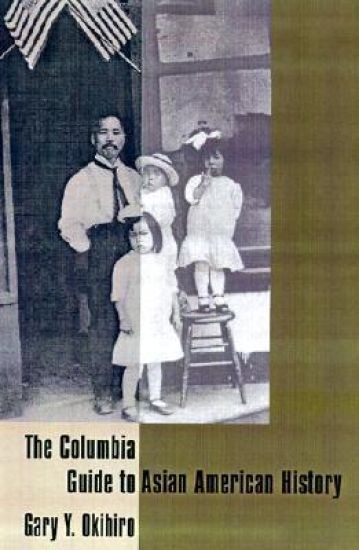
Offering a rich and insightful road map of Asian American history as it has evolved over more than 200 years, this book marks the first systematic attempt to take stock of this field of study. It examines, comments, and questions the changing assumptions and contexts underlying the experiences and contributions of an incredibly diverse population of Americans. Arriving and settling in this nation as early as the 1790s, with American-born generations stretching back more than a century, Asian Americans have become an integral part of the American experience; this cleverly organized book marks the trajectory of that journey, offering researchers invaluable information and interpretation. * Part 1 offers a synoptic narrative history, a chronology, and a set of periodizations that reflect different ways of constructing the Asian American past. * Part 2 presents lucid discussions of historical debates-such as interpreting the anti-Chinese movement of the late 1800s and the underlying causes of Japanese American internment during World War II-and such emerging themes as transnationalism and women and gender issues. * Part 3 contains a historiographical essay and a wide-ranging compilation of book, film, and electronic resources for further study of core themes and groups, including Chinese, Japanese, Filipino, Hmong, Indian, Korean, Vietnamese, and others.
The Columbia Guide to Asian American History

The Columbia Guide to Asian American History

Gary Okihiro

Columbia University Press
2001
sidottu
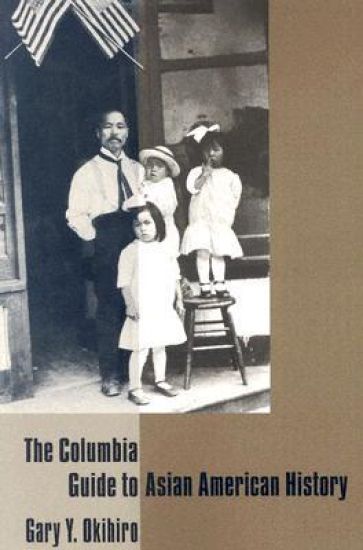
Offering a rich and insightful road map of Asian American history as it has evolved over more than 200 years, this book marks the first systematic attempt to take stock of this field of study. It examines, comments, and questions the changing assumptions and contexts underlying the experiences and contributions of an incredibly diverse population of Americans. Arriving and settling in this nation as early as the 1790s, with American-born generations stretching back more than a century, Asian Americans have become an integral part of the American experience; this cleverly organized book marks the trajectory of that journey, offering researchers invaluable information and interpretation. * Part 1 offers a synoptic narrative history, a chronology, and a set of periodizations that reflect different ways of constructing the Asian American past. * Part 2 presents lucid discussions of historical debates-such as interpreting the anti-Chinese movement of the late 1800s and the underlying causes of Japanese American internment during World War II-and such emerging themes as transnationalism and women and gender issues. * Part 3 contains a historiographical essay and a wide-ranging compilation of book, film, and electronic resources for further study of core themes and groups, including Chinese, Japanese, Filipino, Hmong, Indian, Korean, Vietnamese, and others.
Cane Fires

Cane Fires

Gary Okihiro

Temple University Press,U.S.
1992
pokkari
A history of a systematic anti-Japanese movement in Hawaii from the time migrant workers were brought to the sugar cane fields until the end of World War II