Kirjojen hintavertailu. Mukana 12 390 323 kirjaa ja 12 kauppaa.

Kirjailija

Gary Orfield

Kirjat ja teokset yhdessä paikassa: 11 kirjaa, julkaisuja vuosilta 1986-2024, suosituimpien joukossa The Closing Door. Vertaile teosten hintoja ja tarkista saatavuus suomalaisista kirjakaupoista.

11 kirjaa

Kirjojen julkaisuhaarukka 1986-2024.

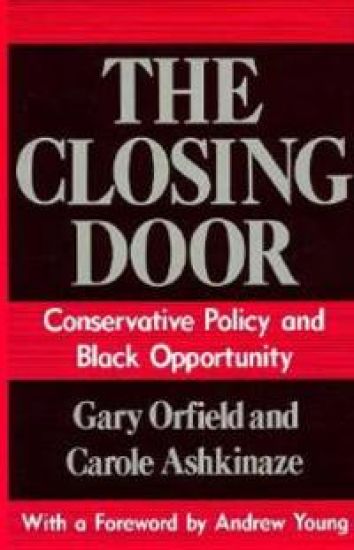
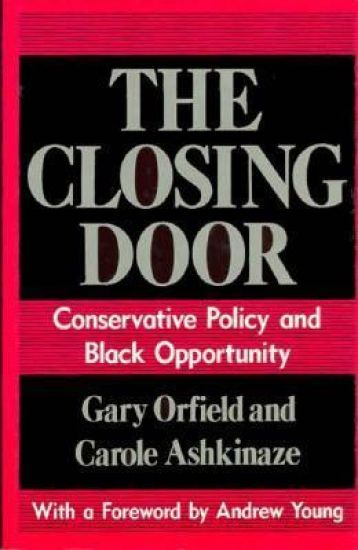
The Closing Door

The Closing Door

Gary Orfield; Carole Ashkinaze

University of Chicago Press
1991
sidottu
The Closing Door is the first major critique of the effect of conservative policies on urban race and poverty in the 1980s. Atlanta, with its booming economy, strong elected black leadership, and many highly educated blacks, seemed to be the perfect site for those policies and market solutions to prove themselves. Unfortunately, not only did expected economic opportunity fail to materialize but many of the hard-won gains of the civil rights movement were lost. Orfield and Ashkinaze painstakingly analyze the evidence from Atlanta to show why black opportunity deteriorated over the 1980s and outline possible remedies for the damage inflicted by the Reagan and Bush administrations. "The Closing Door is a crucial breath of fresh air ...an important and timely text which will help to alter the 'underclass' debate in favor of reconsidering race-specific policies. Orfield and Ashkinaze construct a convincing argument with which those who favor 'race-neutrality' will have to contend. In readable prose they make a compelling case that economic growth is not enough."--Preston H. Smith II, Transition
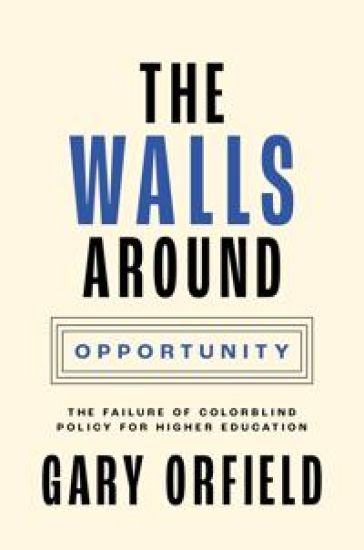
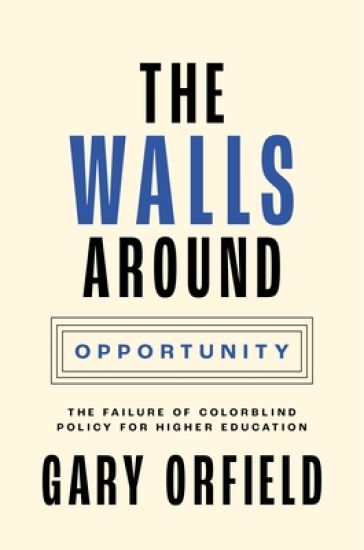
The Walls around Opportunity

The Walls around Opportunity

Gary Orfield

PRINCETON UNIVERSITY PRESS
2024
pokkari
The case for race-conscious education policyIn our unequal society, families of color fully share the dream of college but their children often attend schools that do not prepare them, and the higher education system gives the best opportunities to the most privileged. Students of color hope for college but often face a dead end.For many young people, racial inequality puts them at a disadvantage from early childhood. The Walls around Opportunity argues that colorblind policies have made college inaccessible to a large share of students of color, and reveals how policies that acknowledge racial inequalities and set racial equality goals can succeed where colorblindness has failed.Gary Orfield paints a troubling portrait of American higher education, explaining how profound racial gaps imbedded in virtually every stage of our children’s lives pose a major threat to communities of color and the nation. He describes how the 1960s and early 1970s was the only period in history to witness sustained efforts at racial equity in higher education, and how the Reagan era ushered in today’s colorblind policies, which ignore the realities of color inequality. Orfield shows how this misguided policy has resegregated public schools, exacerbated inequalities in college preparation, denied needed financial aid to families, and led to huge price increases over decades that have seen little real gain in income for most Americans.Now with a new afterword that discusses the 2023 Supreme Court decision to outlaw affirmative action in college admissions, this timely and urgent book shows that the court’s colorblind ruling is unworkable in a society where every aspect of opportunity and preparation is linked to race, and reveals the gaps in the opportunity pipeline while exploring the best ways to address them in light of this decision.
The Walls around Opportunity

The Walls around Opportunity

Gary Orfield

PRINCETON UNIVERSITY PRESS
2022
sidottu
The case for race-conscious education policyIn our unequal society, families of color fully share the dream of college but their children often attend schools that do not prepare them, and the higher education system gives the best opportunities to the most privileged. Students of color hope for college but often face a dead end.For many young people, racial inequality puts them at a disadvantage from early childhood. The Walls around Opportunity argues that colorblind policies have made college inaccessible to a large share of students of color, and reveals how policies that acknowledge racial inequalities and set racial equality goals can succeed where colorblindness has failed.Gary Orfield paints a troubling portrait of American higher education, explaining how profound racial gaps imbedded in virtually every stage of our children’s lives pose a major threat to communities of color and the nation. He describes how the 1960s and early 1970s was the only period in history to witness sustained efforts at racial equity in higher education, and how the Reagan era ushered in today’s colorblind policies, which ignore the realities of color inequality. Orfield shows how this misguided policy has resegregated public schools, exacerbated inequalities in college preparation, denied needed financial aid to families, and led to huge price increases over decades that have seen little real gain in income for most Americans.Drawing on a wealth of new data and featuring commentaries by Stella Flores and James Anderson, this timely and urgent book shows how colorblind policies serve only to raise the walls of segregation higher, and proposes real solutions that can make higher education available to all.
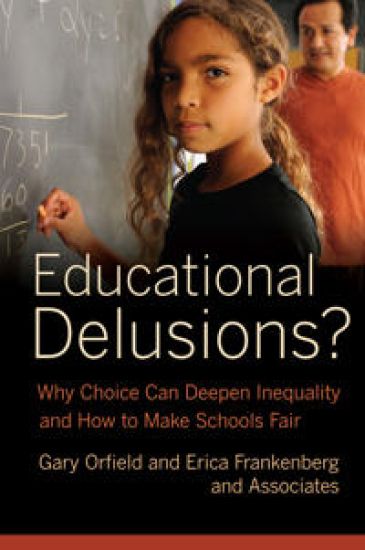
Educational Delusions?

Educational Delusions?

Gary Orfield; Erica Frankenberg

University of California Press
2013
pokkari
The first major battle over school choice came out of struggles over equalizing and integrating schools in the civil rights era, when it became apparent that choice could be either a serious barrier or a significant tool for reaching these goals. The second large and continuing movement for choice was part of the very different anti-government, individualistic, market-based movement of a more conservative period in which many of the lessons of that earlier period were forgotten, though choice was once again presented as the answer to racial inequality. This book brings civil rights back into the center of the debate and tries to move from doctrine to empirical research in exploring the many forms of choice and their very different consequences for equity in U.S. schools. Leading researchers conclude that although helping minority children remains a central justification for choice proponents, ignoring the essential civil rights dimensions of choice plans risks compounding rather than remedying racial inequality.
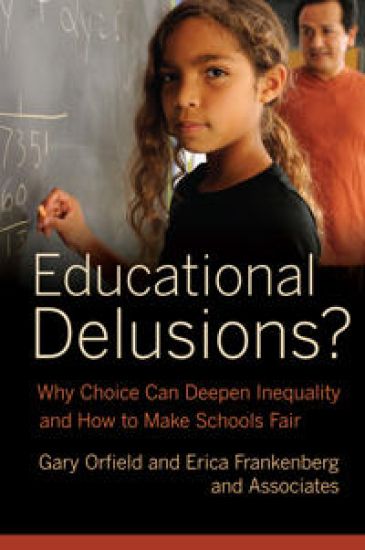
Educational Delusions?

Educational Delusions?

Gary Orfield; Erica Frankenberg

University of California Press
2013
sidottu
The first major battle over school choice came out of struggles over equalizing and integrating schools in the civil rights era, when it became apparent that choice could be either a serious barrier or a significant tool for reaching these goals. The second large and continuing movement for choice was part of the very different anti-government, individualistic, market-based movement of a more conservative period in which many of the lessons of that earlier period were forgotten, though choice was once again presented as the answer to racial inequality. This book brings civil rights back into the center of the debate and tries to move from doctrine to empirical research in exploring the many forms of choice and their very different consequences for equity in U.S. schools. Leading researchers conclude that although helping minority children remains a central justification for choice proponents, ignoring the essential civil rights dimensions of choice plans risks compounding rather than remedying racial inequality.
Dropouts in America

Dropouts in America

Gary Orfield

Harvard Educational Publishing Group
2004
nidottu
Only half of our nation's minority students graduate from high school along with their peers. For many groups-Latino, black, or Native American males-graduation rates are even lower. As states hasten to institute higher standards and high-stakes tests in the effort to raise student achievement, this situation is likely to worsen, particularly among minority students. Yet this educational and civil rights crisis remains largely hidden from public view. The dropout problem is far worse than statistics indicate. Many states and districts simply do not count those students who fail to receive diplomas as dropouts. Even the hardest-hit urban districts report dropout rates of only 5-10 percent. In Dropouts in America, The Civil Rights Project reveals the scope of this hidden crisis, reviewing the most recent and accurate data on graduation and dropout rates, exploring the reasons that young people drop out of school, and presenting the most promising models for helping high school students graduate with their peers. Dropouts in America is a call to action for educators, advocates, and policymakers alike, and an invaluable resource for those concerned with equal rights and the quality of American education.
Debunking the Middle-Class Myth

Debunking the Middle-Class Myth

Eileen Gale Kugler; Gary Orfield

Rowman Littlefield Education
2002
sidottu
Many parents search for a "good" school to enroll their children. They look at the school's standardized test scores and check out demographic statistics, but fail to investigate the strengths of these schools that have a vibrant mix of races and cultures. Eileen Gale Kugler offers a unique perspective on what every educator, parent, and community leader should know about reaping the rich harvest of our diverse schools. This book provides guidance on how we can all work together to dispel the myths and nurture the opportunities that these schools offer such as academic challenge and social advantages. Anecdotes from Kugler's personal experience are included as well as information from 80 interviews with key educators, parents, and students. This book stands alone as a resource that pulls all of this information together. Will be of interest to anyone who cares about education. See Wendy Burt-Thomas's interview with author Eileen Kugler at http://askwendy.wordpress.com/?s=kugler
Debunking the Middle-Class Myth

Debunking the Middle-Class Myth

Eileen Gale Kugler; Gary Orfield

Rowman Littlefield Education
2002
nidottu
Many parents search for a 'good' school to enroll their children. They look at the school's standardized test scores and check out demographic statistics, but fail to investigate the strengths of these schools that have a vibrant mix of races and cultures. Eileen Gale Kugler offers a unique perspective on what every educator, parent, and community leader should know about reaping the rich harvest of our diverse schools. This book provides guidance on how we can all work together to dispel the myths and nurture the opportunities that these schools offer such as academic challenge and social advantages. Anecdotes from Kugler's personal experience are included as well as information from 80 interviews with key educators, parents, and students. This book stands alone as a resource that pulls all of this information together. Will be of interest to anyone who cares about education. See Wendy Burt-Thomas's interview with author Eileen Kugler at http://askwendy.wordpress.com/?s=kugler
Dismantling Desegregation

Dismantling Desegregation

Gary Orfield; Susan E. Eaton

The New Press
1997
pokkari
Dismantling Desegregation explains the consequences of resegregation and offers direction for a more constructive route toward an equitable future. By citing case studies of ten school districts across the country, Orfield and Eaton uncover the demise of what many feel have been the only legally enforceable routes of access and opportunity for millions of school children in America.
The Closing Door

The Closing Door

Gary Orfield; Carole Ashkinaze

University of Chicago Press
1993
nidottu
The Closing Door is the first major critique of the effect of conservative policies on urban race and poverty in the 1980s. Atlanta, with its booming economy, strong elected black leadership, and many highly educated blacks, seemed to be the perfect site for those policies and market solutions to prove themselves. Unfortunately, not only did expected economic opportunity fail to materialize but many of the hard-won gains of the civil rights movement were lost. Orfield and Ashkinaze painstakingly analyze the evidence from Atlanta to show why black opportunity deteriorated over the 1980s and outline possible remedies for the damage inflicted by the Reagan and Bush administrations."The Closing Door is a crucial breath of fresh air . . . an important and timely text which will help to alter the 'underclass' debate in favor of reconsidering race-specific policies. Orfield and Ashkinaze construct a convincing argument with which those who favor 'race-neutrality' will have to contend. In readable prose they make a compelling case that economic growth is not enough."—Preston H. Smith II, Transition