

Kirjailija
Gary Paul Nabhan
Kirjat ja teokset yhdessä paikassa: 32 kirjaa, julkaisuja vuosilta 1993-2026, suosituimpien joukossa Sonoran Desert Bestiary. Vertaile teosten hintoja ja tarkista saatavuus suomalaisista kirjakaupoista.
Mukana myös kirjoitusasut: Gary Paul Nabhan
32 kirjaa
Kirjojen julkaisuhaarukka 1993-2026.
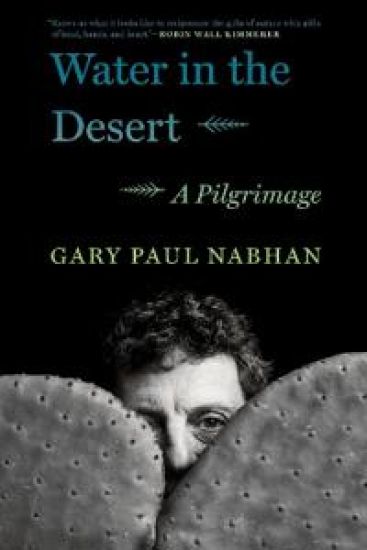
From internationally acclaimed nature writer, agrarian activist, and ethnobiologist Gary Nabhan comes a profound, inspiring memoir of self-discovery, and the roles we play in preserving our world and its inhabitants. Gary Paul Nabhan is an Arab American ethnobotanist, desert ecologist, and coastal wetlands restorationist, known to the Ecumenical Franciscan Order as Brother Coyote. Among our most celebrated thinkers and activists, he has authored dozens of books, been described as the “father of the local food movement” (Time) and our “lyrical poet of biodiversity” (Mother Jones), and been awarded a MacArthur “genius grant.” In this story of a truly singular life, Nabhan describes his childhood in the dunes along the southern shore of Lake Michigan, and the initial experiences of what will become a deep, lifelong attraction to wetlands, shorelines, and wild creatures. As a boy, school is excruciating and symptoms of neurodivergence are diagnosed as disabilities and dysfunctions. In college, Nabhan gravitates to the thinkers now associated with the dawn of ecology as a discipline, writes poetry, and travels to Baja California, where he first encounters the Indigenous communities who come to play a significant role in his life and work. His interest in earth-based spiritual practices leads him to take vows as an Ecumenical Franciscan Brother, an experience that helps open his “mind to what the heart already knew: that the earth itself—creation, for that matter—was the original scripture, the one that humans had nearly forgotten how to read.” Late in life, he returns to the land of his ancestors, finding points of resonance for a transformative vision of human culture as integrated with ecologies of interactions and reciprocities. And finally, when construction of the southern border wall begins, he collaborates with religious leaders to affirm Indigenous rights to the sacred places threatened by construction. At once a refreshingly humble account of the development of a profoundly ecological consciousness and an inspiring guide to the inclusive ethic and practice of care that will be required if we are to flourish in kinship on Earth, Water in the Desert is truly a book for our time.
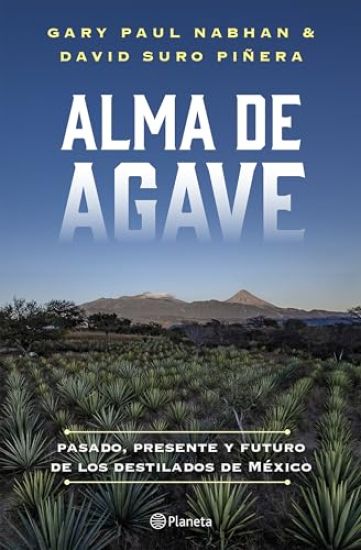
Alma de Agave: Pasado, Presente Y Futuro de Los Destilados de México / Agave Spirits: The Past, Present, and Future of Mezcal
Gary Paul Nabhan; David Suro Piñera
Editorial Planeta Mexicana S.A. de C.V.
2025
nidottu

Against the American Grain: A Borderlands History of Resistance
Gary Paul Nabhan
High Road Books
2025
nidottu
New in paper, James Beard Award winning Nabhan (Agave Spirits) creative revolutionaries from the southwest border who change American culture in countless positive ways. A celebration of the artists, activists, and writers who are not Anglo-centric. A century ago, William Carlos Williams's In the American Grain profiled Anglo, French, and Spanish conquistadors, tyrants, preachers, and thought leaders who first shaped American culture. Since then, waves of resistance and disruptive innovation have flooded into the rest of America from the arid, southwestern margins of the US-Mexico borderlands. Now, in Against the American Grain, Gary Paul Nabhan--cultural ecologist, environmental historian, and lyric poet of the American Southwest--illuminates the outlines of a history too long in the shadows. Whether Indigenous, LatinX, priests, nuns, Quakers, or cross-cultural chameleons, it is the resisters, performers, grassroots organizers, nomads, and spiritual leaders from the desert margins who are constantly reshaping America. They have, against all odds, recolored and recovered the future of North America through outrageous acts of resistance. After reading the stories of Estevanico el Moro, Maria de greda, Teresita de C bora, Coyote Iguana, Woody Guthrie, Tim X. Hernandez, Cesar Chavez, Dolores Huerta, Reyes Lopez Tijerana, Arturo Sandoval, Lalo Guerrero, John Fife, Danny and Luis Valdez, John Steinbeck and Ed Ricketts, and many more, we can never think about America the same way again. In Nabhan's magisterial, radical recounting, cross-cultural collaborations have changed the grain of American life to one that is many-colored, once again flourishing with fragrance, faith, and fecund ideas.
In Against the American Grain, Gary Paul Nabhan—cultural ecologist, environmental historian, Franciscan Brother, and lyrical poet of the American Southwest—has illuminated the outlines of a history too long in the shadows. Whether they were Indigenous, LatinX, Catholic priests and nuns, Quakers, or cross-cultural chameleons, it has been the resisters, performance artists, grassroots organizers, nomads, and spiritual leaders from the desert margins of society who constantly reshape the faces and fabric of America. Their stories are rarely told, let alone woven into a cohesive fabric. They are the ones who have recolored and recovered the future of North America by outrageous acts of resistance against all odds.After reading the stories of María de Ágreda, Joaquin Murrieta, Teresita de Cábora, Coyote Iguana, Woody Guthrie, Cesar Chavez, Dolores Huerta, John Steinbeck, and others, we can never think about America in the same way. In Nabhan’s magisterial, radical recounting, cross-cultural collaborations have changed the grain of American life to one that is many-colored, flourishing with fragrance, faith, and fecund ideas.
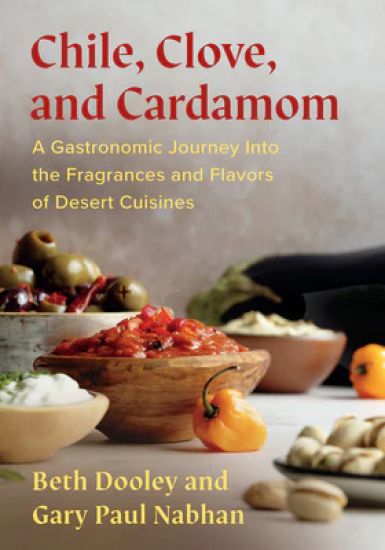
Explore mouth-watering recipes from the most vibrant and diverse culinary traditions of the hottest and driest places on earth – including the aromatic dishes and arid-adapted traditions from Central Asia, the Middle East, North Africa and the deserts shared by the US and Mexico. Chile, Clove, and Cardamom is a celebration of the fragrances and flavours of sun-drenched cuisines. Throughout this book, coauthors Beth Dooley and Gary Paul Nabhan reveal surprising patterns and principles among varied foods of traditional desert cultures, bringing to life the places, dishes and recipes that have been shaped by heat and drought and infused with bold flavours. Gary Paul Nabhan, world-renowned ethnobotanist, desert ecologist and literary naturalist, has written extensively about foods from the Middle East to the American Southwest. Joined by James Beard Award–winning food writer Beth Dooley, who has explored both Indigenous and perennial foods, the two have created a unique, stunning collection of over 90 recipes to honour the amazing cuisines that have influenced how all of humanity eats today. Steeped in history and memory, Chile, Clove, and Cardamom is also a beautifully photographed, in-depth guide to the essential spice blends that will help you build your own aromatic pantry, drawing on easy-to-follow cooking methods for planning your own desert meals. Inside, you’ll find: Main Dishes: Sticky Lamb Ribs, Spicy Orange Chicken, Roast Chicken with Tarragon and Capers, Stuffed Mexican Peppers in Yogurt Walnut Sauce, and Lamb Kebabs with Moroccan Spices and Pomegranate Molasses Glaze.Light Fare and Small Plates: Squash Blossom Fritters, Sonoran Flat Enchiladas, and Eggplant Fries with Desert Syrup.Dips and Sauces: Sonoran Tepary Dip, Fire Roasted Eggplant Tahini Dip, Aromatic Red Pepper Sauce, and Fig and Pomegranate Jam.Breads: Pocket Flat Breads, Pan de Semita, and Blue Corn Bread.Soups and Stews: Tunisian Chickpea Stew, White Bean Chili, and Watermelon and Cactus Fruit Gazpacho.Salads: Desert Succotash, Za’atar-Roasted Cauliflower, and Tangerine and Radish Salad.Drinks and Desserts: Pineapple Sotol Margarita, Canary Islands Pastries, and Phyllo Nut Pinwheels. As hotter and drier conditions become more familiar to people beyond the places where these Indigenous and Nomadic cultural cuisines originated, these water-conserving dishes and energy-saving techniques become timely for many of us. Each recipe introduces us to the gastronomic legacies that connect these cuisines, offering tips for understanding and sourcing high-quality ingredients as well as how to use them in a changing world.
The agave plant was never destined to become tasteless, cheap tequila. Follow Gary Nabhan and David Suro Pinera on the trail with archaeologists and botanists to caves where 9,000-year-old remains of agaves have been found, and then fast track to the 1990s, the peak of the “margarita craze”, before a deadly cocktail of microbes devastated blue agave plants on Mexican lands. Culled from decades of fieldwork and interviews with mezcaleros in eight Mexican states, Agave Spirits reveals the stunning innovations emerging today across the mezcal supply chain and offers solutions for improving sustainability and equity. Thousands of years of tradition are inspiring a new generation of individuals (including women), with an explosion of cutting-edge science pointing a way forward for the betterment of the drink and the lives of the people who create it. Agave Spirits boldly delights in the most flavourful and memorable spirits humankind has ever sipped and savoured.
The agave plant was never destined to become tasteless, cheap tequila. Follow Gary Nabhan and David Suro Piñera on the trail with archaeologists and botanists to caves where 9,000-year-old remains of agaves have been found, and then fast track to the 1990s, the peak of the “margarita craze,” before a deadly cocktail of microbes devastated blue agave plants on Mexican lands. Culled from decades of fieldwork and interviews with mezcaleros in eight Mexican states, Agave Spirits reveals the stunning innovations emerging today across the mezcal supply chain and offers solutions for improving sustainability and equity. Thousands of years of tradition are inspiring a new generation of individuals (including women), with an explosion of cutting-edge science pointing a way forward for the betterment of the drink and the lives of the people who create it. Agave Spirits boldly delights in the most flavourful and memorable spirits humankind has ever sipped and savoured.
Published more than forty years ago, The Desert Smells Like Rain remains a classic work about nature, how to respect it, and what transplants can learn from the longtime residents of the Sonoran Desert, the Tohono O’odham people. In this work, Gary Paul Nabhan brings O’odham voices to the page at every turn. He writes elegantly of how they husband scant water supplies, grow crops, and utilize edible wild foods. Woven through his account are coyote tales, O’odham children’s impressions of the desert, and observations of the political problems that come with living on both sides of an international border. Nabhan conveys the everyday life and extraordinary perseverance of these desert people. This edition includes a new preface written by the author, in which he reflects on his gratitude for the O’odham people who shared their knowledge with him. He writes about his own heritage and connections to the desert, climate change, and the border. He shares his awe and gratitude for O’odham writers and storytellers who have been generous enough to share stories with those of us from other cultural traditions so that we may also respect and appreciate the smell of the desert after a rain. Longtime residents of the Sonoran Desert, the Tohono O'odham people have spent centuries living off the land—a land that most modern citizens of southern Arizona consider totally inhospitable. Ethnobotanist Gary Nabhan has lived with the Tohono O'odham, long known as the Papagos, observing the delicate balance between these people and their environment. Bringing O'odham voices to the page at every turn, he writes elegantly of how they husband scant water supplies, grow crops, and utilize wild edible foods. Woven through his account are coyote tales, O'odham children's impressions of the desert, and observations on the political problems that come with living on both sides of an international border. Whether visiting a sacred cave in the Baboquivari Mountains or attending a saguaro wine-drinking ceremony, Nabhan conveys the everyday life and extraordinary perseverance of these desert people in a book that has become a contemporary classic of environmental literature.
Gary Paul Nabhan takes the reader on a vivid and far-ranging journey across time and space in this fascinating look at the relationship between the spice trade and culinary imperialism. Drawing on his own family’s history as spice traders, as well as travel narratives, historical accounts, and his expertise as an ethnobotanist, Nabhan describes the critical roles that Semitic peoples and desert floras had in setting the stage for globalized spice trade. Traveling along four prominent trade routes—the Silk Road, the Frankincense Trail, the Spice Route, and the Camino Real (for chiles and chocolate)—Nabhan follows the caravans of itinerant spice merchants from the frankincense-gathering grounds and ancient harbors of the Arabian Peninsula to the port of Zayton on the China Sea to Santa Fe in the southwest United States. His stories, recipes, and linguistic analyses of cultural diffusion routes reveal the extent to which aromatics such as cumin, cinnamon, saffron, and peppers became adopted worldwide as signature ingredients of diverse cuisines. Cumin, Camels, and Caravans demonstrates that two particular desert cultures often depicted in constant conflict—Arabs and Jews—have spent much of their history collaborating in the spice trade and suggests how a more virtuous multicultural globalized society may be achieved in the future.
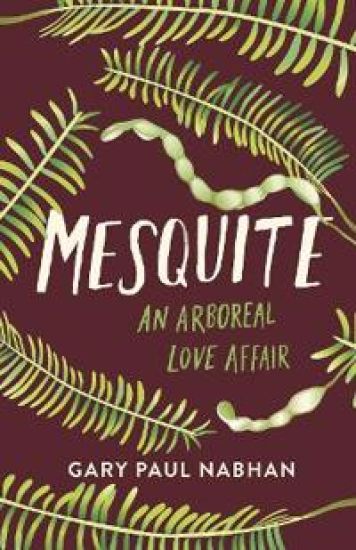
Winner of a 2019 Southwest Book Award (BRLA) An homage to the useful and idiosyncratic mesquite tree In his latest book, Mesquite, Gary Paul Nabhan employs humor and contemplative reflection to convince readers that they have never really glimpsed the essence of what he calls “arboreality.” As a Franciscan brother and ethnobotanist who has often mixed mirth with earth, laughter with landscape, food with frolic, Nabhan now takes on a large, many-branched question: What does it means to be a tree, or, accordingly, to be in a deep and intimate relationship with one? To answer this question, Nabhan does not disappear into a forest but exposes himself to some of the most austere hyper-arid terrain on the planet—the Sonoran and Chihuahuan deserts along the US/Mexico border—where even the most ancient perennial plants are not tall and thin, but stunted and squat. There, in desert regions that cover more than a third of our continent, mesquite trees have become the staff of life, not just for indigenous cultures, but for myriad creatures, many of which respond to these “nurse plants” in wildly intelligent and symbiotic ways. In this landscape, where Nabhan claims that nearly every surviving being either sticks, stinks, stings, or sings, he finds more lives thriving than you could ever shake a stick at. As he weaves his arid yarns, we suddenly realize that our normal view of the world has been turned on its head: where we once saw scarcity, there is abundance; where we once perceived severity, there is whimsy. Desert cultures that we once assumed lived in “food deserts” are secretly savoring a most delicious world. Drawing on his half-century of immersion in desert ethnobotany, ecology, linguistics, agroforestry, and eco-gastronomy, Nabhan opens up for us a hidden world that we had never glimpsed before. Along the way, he explores the sensuous reality surrounding this most useful and generous tree. Mesquite is a book that will delight mystics and foresters, naturalists and foodies. It combines cutting-edge science with a generous sprinkling of humor and folk wisdom, even including traditional recipes for cooking with mesquite.
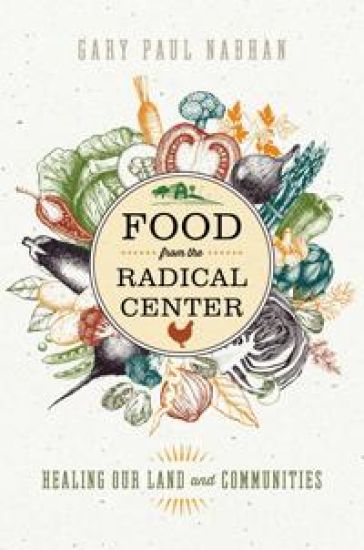
America has never felt more divided. But in the midst of all the acrimony comes one of the most promising movements in our country’s history. People of all races, faiths, and political persuasions are coming together to restore America's natural wealth: its ability to produce healthy foods. In Food from the Radical Center, Gary Nabhan tells the stories of diverse communities who are getting their hands dirty and bringing back North America's unique fare: bison, sturgeon, camas lilies, ancient grains, turkeys, and more. These efforts have united people from the left and right, rural and urban, faith-based and science-based, in game-changing collaborations. Their successes are extraordinary by any measure, whether economic, ecological, or social. In fact, the restoration of land and rare species has provided—dollar for dollar—one of the best returns on investment of any conservation initiative. As a leading thinker and seasoned practitioner in biocultural conservation, Nabhan offers a truly unique perspective on the movement. He draws on fifty years of work with community-based projects around the nation, from the desert Southwest to the low country of the Southeast. Yet Nabhan’s most enduring legacy may be his message of hope: a vision of a new environmentalism that is just and inclusive, allowing former adversaries to commune over delicious foods.
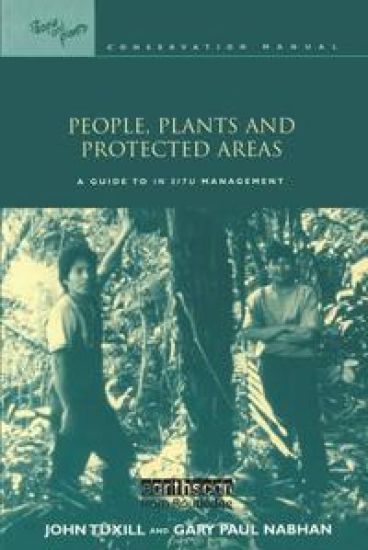
People, Plants and Protected Areas
John Tuxill; Gary Paul Nabhan; with Elizabeth Drexler; Michael Hathaway
Routledge
2017
sidottu
Conservation of plant resources is often focused on seed banks and botanical gardens. However, the two authors of this volume present a comprehensive conservation strategy that complements this ex-situ approach with practical guidance on in-situ management and conservation of plant resources. The book aims to facilitate better management of protected areas and to illustrate new approaches to conservation of plants within their landscapes. It draws on concepts from forestry, the agricultural sciences, anthropology, ethnology and ethnobotany and should be useful to practitioners, academics and policy-makers.
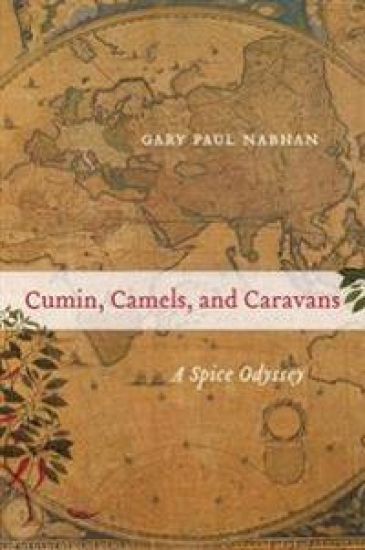
Gary Paul Nabhan takes the reader on a vivid and far-ranging journey across time and space in this fascinating look at the relationship between the spice trade and culinary imperialism. Drawing on his own family's history as spice traders, as well as travel narratives, historical accounts, and his expertise as an ethnobotanist, Nabhan describes the critical roles that Semitic peoples and desert floras had in setting the stage for globalized spice trade. Traveling along four prominent trade routes - the Silk Road, the Frankincense Trail, the Spice Route, and the Camino Real (for chiles and chocolate) - Nabhan follows the caravans of itinerant spice merchants from the frankincense-gathering grounds and ancient harbors of the Arabian Peninsula to the port of Zayton on the China Sea to Santa Fe in the southwest United States. His stories, recipes, and linguistic analyses of cultural diffusion routes reveal the extent to which aromatics such as cumin, cinnamon, saffron, and peppers became adopted worldwide as signature ingredients of diverse cuisines. Cumin, Camels, and Caravans demonstrates that two particular desert cultures often depicted in constant conflict - Arabs and Jews - have spent much of their history collaborating in the spice trade and suggests how a more virtuous multicultural globalized society may be achieved in the future.
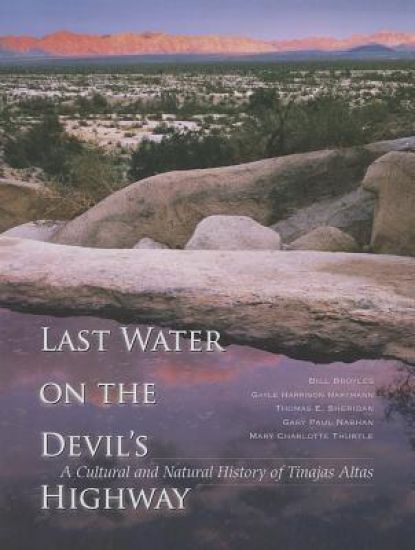
Last Water on the Devil's Highway
Bill Broyles; Gayle Harrison Hartmann; Thomas E. Sheridan; Gary Paul Nabhan; Mary Charlotte Thurtle
University of Arizona Press
2014
nidottu
The Devil's Highway—El Camino del Diablo—crosses hundreds of miles and thousands of years of Arizona and Southwest history. This heritage trail follows a torturous route along the U.S. Mexico border through a lonely landscape of cactus, desert flats, drifting sand dunes, ancient lava flows, and searing summer heat. The most famous waterhole along the way is Tinajas Altas, or High Tanks, a series of natural rock basins that are among the few reliable sources of water in this notoriously parched region. Now an expert cast of authors describes, narrates, and explains the human and natural history of this special place in a thorough and readable account. Addressing the latest archaeological and historical findings, they reveal why Tinajas Altas was so important and how it related to other waterholes in the arid borderlands. Readers can feel like pioneers, following in the footsteps of early Native Americans, Spanish priests and soldiers, gold seekers and borderland explorers, tourists, and scholars. Combining authoritative writing with a rich array of more than 180 illustrations and maps as well as detailed appendixes providing up-to-date information on the wildlife and plants that live in the area, Last Water on the Devil's Highway allows readers to uncover the secrets of this fascinating place, revealing why it still attracts intrepid tourists and campers today.
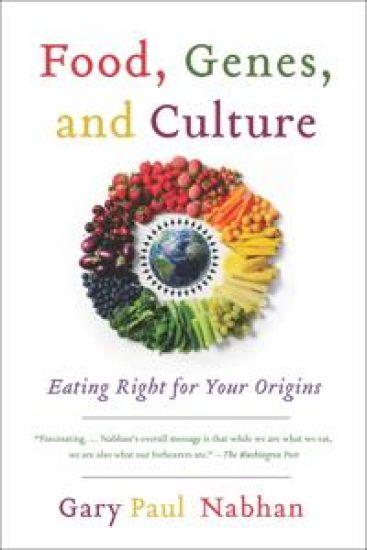
Vegan, low fat, low carb, slow carb: Every diet seems to promise a one-size-fits-all solution to health. But they ignore the diversity of human genes and how they interact with what we eat. In Food, Genes, and Culture, renowned ethnobotanist Gary Nabhan shows why the perfect diet for one person could be disastrous for another. If your ancestors were herders in Northern Europe, milk might well provide you with important nutrients, whereas if you're Native American, you have a higher likelihood of lactose intolerance. If your roots lie in the Greek islands, the acclaimed Mediterranean diet might save your heart; if not, all that olive oil could just give you stomach cramps. Nabhan traces food traditions around the world, from Bali to Mexico, uncovering the links between ancestry and individual responses to food. The implications go well beyond personal taste. Today's widespread mismatch between diet and genes is leading to serious health conditions, including a dramatic growth over the last 50 years in auto-immune and inflammatory diseases. Readers will not only learn why diabetes is running rampant among indigenous peoples and heart disease has risen among those of northern European descent, but may find the path to their own perfect diet.
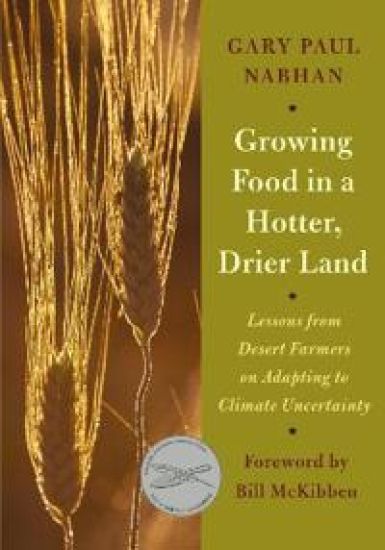
How to harvest water and nutrients, select drought-tolerant plants, and create natural diversityBecause climatic uncertainty has now become "the new normal," many farmers, gardeners and orchard-keepers in North America are desperately seeking ways to adapt their food production to become more resilient in the face of such "global weirding." This book draws upon the wisdom and technical knowledge from desert farming traditions all around the world to offer time-tried strategies for:Building greater moisture-holding capacity and nutrients in soilsProtecting fields from damaging winds, drought, and floodsHarvesting water from uplands to use in rain gardens and terraces filled with perennial cropsDelecting fruits, nuts, succulents, and herbaceous perennials that are best suited to warmer, drier climatesGary Paul Nabhan is one of the world's experts on the agricultural traditions of arid lands. For this book he has visited indigenous and traditional farmers in the Gobi Desert, the Arabian Peninsula, the Sahara Desert, and Andalusia, as well as the Sonoran, Chihuahuan, and Painted deserts of North America, to learn firsthand their techniques and designs aimed at reducing heat and drought stress on orchards, fields, and dooryard gardens. This practical book also includes colorful "parables from the field" that exemplify how desert farmers think about increasing the carrying capacity and resilience of the lands and waters they steward. It is replete with detailed descriptions and diagrams of how to implement these desert-adapted practices in your own backyard, orchard, or farm.This unique book is useful not only for farmers and permaculturists in the arid reaches of the Southwest or other desert regions. Its techniques and prophetic vision for achieving food security in the face of climate change may well need to be implemented across most of North America over the next half-century, and are already applicable in most of the semiarid West, Great Plains, and the U.S. Southwest and adjacent regions of Mexico.

Why does food taste better when you know where it comes from? Because history-ecological, cultural, even personal-flavors every bite we eat. Whether it’s the volatile chemical compounds that a plant absorbs from the soil or the stories and memories of places that are evoked by taste, layers of flavor await those willing to delve into the roots of real food. In this landmark book, Gary Paul Nabhan takes us on a personal trip into the southwestern borderlands to discover the terroir-the “taste of the place”-that makes this desert so delicious.To savor the terroir of the borderlands, Nabhan presents a cornucopia of local foods-Mexican oregano, mesquite-flour tortillas, grass-fed beef, the popular Mexican dessert capirotada, and corvina (croaker or drum fish) among them-as well as food experiences that range from the foraging of Cabeza de Vaca and his shipwrecked companions to a modern-day camping expedition on the Rio Grande. Nabhan explores everything from the biochemical agents that create taste in these foods to their history and dispersion around the world. Through his field adventures and humorous stories, we learn why Mexican oregano is most potent when gathered at the most arid margins of its range-and why foods found in the remote regions of the borderlands have surprising connections to foods found by his ancestors in the deserts of the Mediterranean and the Middle East. By the end of his movable feast, Nabhan convinces us that the roots of this fascinating terroir must be anchored in our imaginations as well as in our shifting soils.
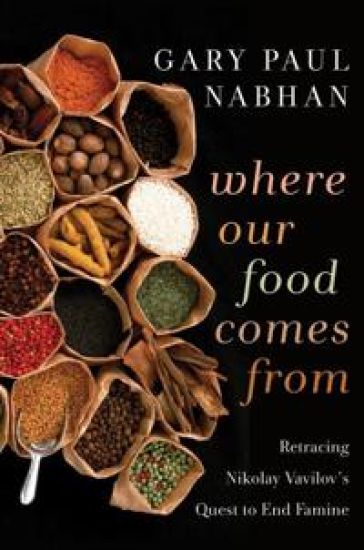
The future of our food depends on tiny seeds in orchards and fields the world over. In 1943, one of the first to recognize this fact, the great botanist Nikolay Vavilov, lay dying of starvation in a Soviet prison. But in the years before Stalin jailed him as a scapegoat for the country’s famines, Vavilov had traveled over five continents, collecting hundreds of thousands of seeds in an effort to outline the ancient centers of agricultural diversity and guard against widespread hunger. Now, another remarkable scientist—and vivid storyteller—has retraced his footsteps. In Where Our Food Comes From, Gary Paul Nabhan weaves together Vavilov’s extraordinary story with his own expeditions to Earth’s richest agricultural landscapes and the cultures that tend them. Retracing Vavilov’s path from Mexico and the Colombian Amazon to the glaciers of the Pamirs in Tajikistan, he draws a vibrant portrait of changes that have occurred since Vavilov’s time and why they matter.
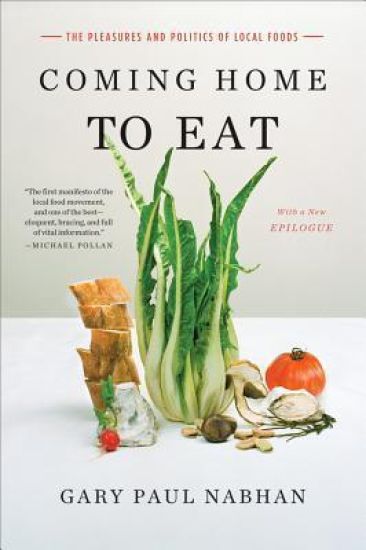
Since Coming Home to Eat was first published in 2001, the local food movement has exploded, and more people than ever are "going green" in an effort to lead healthier, more eco-friendly lives. Gary Nabhan’s year-long mission to eat only foods grown, fished, or gathered within 220 miles of his Arizona home offers striking and timely insights into our evolving relationship with food and place—and encourages us to redefine "eating close to home" as an act of deep cultural and environmental significance. As an avid gardener, ethnobotanist preserving seed diversity, and activist devoted to recovering native food traditions in the Southwest, Nabhan writes of his long campaign to raise awareness about food with contagious passion and humor.