

Kirjailija
Gary R. Habermas
Kirjat ja teokset yhdessä paikassa: 20 kirjaa, julkaisuja vuosilta 2003-2026, suosituimpien joukossa Confiable. Vertaile teosten hintoja ja tarkista saatavuus suomalaisista kirjakaupoista.
Mukana myös kirjoitusasut: Gary R Habermas
20 kirjaa
Kirjojen julkaisuhaarukka 2003-2026.
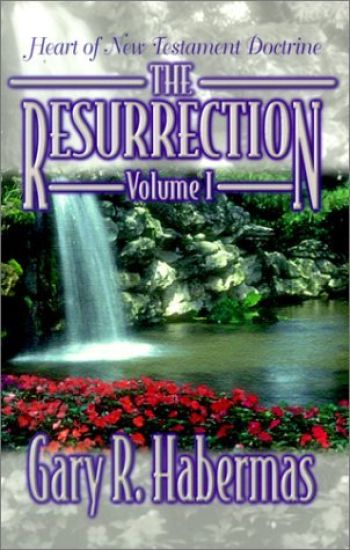
Overview From the "Heart of New Testament Doctrine" series, The Resurrection Volume 1 speaks on a central subject of our faith at a level intended for group study and discussion. Though a highly qualified scholar, Habermas goes directly to the important applications of the meaning of the resurrection. In this study, the Bible student will see the connection of the resurrection to other important doctrines of our faith. The centrality of the resurrection and how it relates to other basic teachings of Scripture is made clear. Seven chapters include: Focusing on the Resurrection The Resurrection as a sign for unbelievers What it means to "be raised like Jesus" The Resurrection as evidence of the truthfulness of Jesus' teaching The Resurrection as a foretaste of heaven The Resurrection and salvation How the Resurrection is at the center of New Testament theology The author speaks of resurrection from the perspective of someone that has suffered painful personal loss, something that he discusses in the text. His words are more than another study, but they reflect his own personal journey.

The cross proves that God understands suffering and loves each of us enough to endure the pain. The Resurrection proves that such victory is ours too. Explore the Resurrection in a whole new light. The Resurrection offers: the ultimate offer of proof for what we believe the defining role in transforming lives the best evangelism tool ever empowerment for daily living the solution for overcoming doubt hope in our grief, suffering, and pain Because He Lives, we can face every struggle, every tragedy, every triumph, every tomorrow.
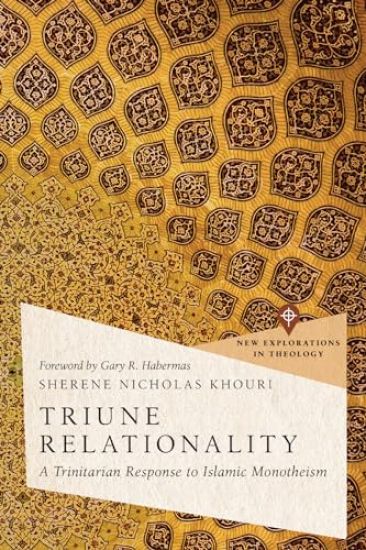
For centuries, Christians and Muslims have engaged each other in debate and critique. A key area of disagreement is the nature of God: Is God a Trinity or absolutely one? To promote interfaith dialogue, Christians must understand the history of the conversation and also articulate the doctrine of the Trinity in reasonable, compelling ways.In this New Explorations in Theology volume, Sherene Nicholas Khouri offers both historical and constructive responses to Islamic objections to the doctrine of the Trinity. Khouri considers arguments from Arabic Christian theologians and philosophers in the eighth to tenth centuries, primarily John of Damascus, Theodore Abū Qurrah, and Yaḥyā Ibn cAdī. When Muslims expanded beyond the Arabic peninsula, Christians in occupied regions were spurred to defend the Trinity against the Islamic understanding of tawḥid, the absolute oneness of Allah, and against misconceptions of Christian belief.Khouri then applies the insights of these little-known thinkers to current theology and apologetics conversations. She makes the case for appealing to the common ground of God as the greatest conceived being, then arguing that such a being must be relational in nature. While Christians today debate models of the Trinity with each other and with Muslims, they can be confident that Christians throughout history have believed in triune relationality and found in the doctrine of the Trinity an invitation to personal relationship with the divine.Featuring new monographs with cutting-edge research, New Explorations in Theology provides a platform for constructive, creative work in the areas of systematic, historical, philosophical, biblical, and practical theology.
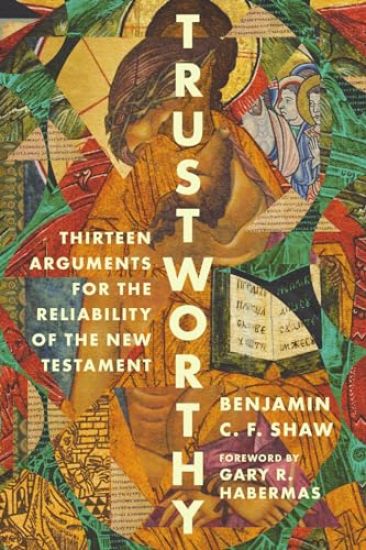

2021 Southwestern Journal of Theology Book of the Year Honorable Mention for Christian Worldview/ApologeticsA pivotal contribution to the history of apologetics. Gary Habermas has spent a career defending the historicity and truthfulness of the resurrection of Jesus. But his earliest writing on Jesus' resurrection has been unavailable to the broader public, until now.In Risen Indeed: A Historical Investigation Into the Resurrection of Jesus, readers will encounter Gary Habermas' foundational research into the historicity of the resurrection. With a new, extensive, introductory essay on contemporary scholarship regarding the resurrection, Habermas shows how the questions surrounding the historicity of the resurrection and arguments raised by critics are perennially important for Christian faith.

Evidence for the Historical Jesus: Is the Jesus of History the Christ of Faith
Gary R. Habermas
Christian Publishing House
2020
nidottu
The search for the historical Jesus is a hot topic in both popular and academic circles today and has drawn a lot of attention from national magazines, such as Time, Newsweek, and U.S. News & World Report. Further, the media has given an undue amount of attention to the Jesus Seminar's outlandish statements, a self-selected liberal group representing a tiny percentage of New Testament scholarship. Dr. Gary Habermas will address the questions surrounding the debate over the historical Jesus and show a significant number of historical facts about Jesus in secular and non-New Testament sources that prove that the Jesus of history is the same Jesus of the Christian faith.The author of EVIDENCE FOR THE HISTORICAL JESUS is Dr. Gary Habermas, author of the book, The Historical Jesus and about twenty other volumes. He received his Ph.D. from Michigan State University. Dr. Habermas is chairman of the Department of Philosophy at Liberty University. He has written more than 100 articles, mostly on the life of Jesus, which have appeared in scholarly journals and elsewhere. Herein you will learn why Jesus is one of the most historically verified lives of ancient times.

That's now, but what about then? There is much diversity in Christianity today in terms of what constitutes necessary core beliefs, but what can we know about the earliest Christianity? Until the major councils began in the fourth century, were all who claimed to be Christian considered part of the church, or was there more to it than just claiming a name? Is there evidence for how the church understood core and necessary beliefs prior to Constantine's arrival in history and the Council of Nicea in AD 325? This book examines such questions. Using only those materials that are accepted by most scholars on the subject, whether they are Christian or not, and focusing on the period from AD 30-250, a picture emerges showing what Christians held as a core belief as well as how flexible they were on this belief. Only after identifying where the church stood in this period can we begin to understand whether others such as Ebionites, Docetists, and Marcionites would have been accepted as Christian. A case is made based on writings from the church, the Nag Hammadi, and a completely secular tool from the twentieth century to find the conclusion to this question.
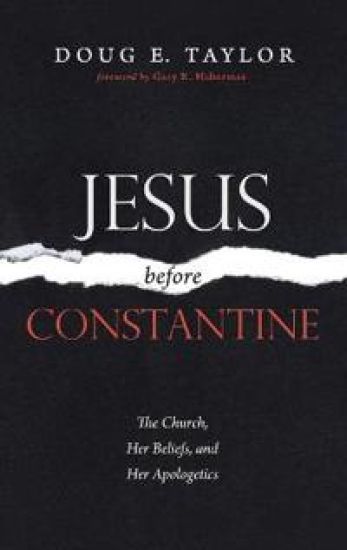
That's now, but what about then? There is much diversity in Christianity today in terms of what constitutes necessary core beliefs, but what can we know about the earliest Christianity? Until the major councils began in the fourth century, were all who claimed to be Christian considered part of the church, or was there more to it than just claiming a name? Is there evidence for how the church understood core and necessary beliefs prior to Constantine's arrival in history and the Council of Nicea in AD 325? This book examines such questions. Using only those materials that are accepted by most scholars on the subject, whether they are Christian or not, and focusing on the period from AD 30-250, a picture emerges showing what Christians held as a core belief as well as how flexible they were on this belief. Only after identifying where the church stood in this period can we begin to understand whether others such as Ebionites, Docetists, and Marcionites would have been accepted as Christian. A case is made based on writings from the church, the Nag Hammadi, and a completely secular tool from the twentieth century to find the conclusion to this question.
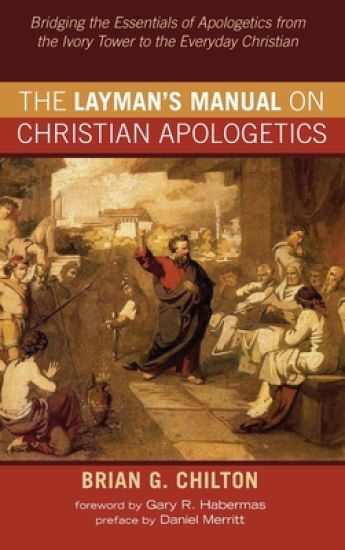
The Layman's Manual on Christian Apologetics
Brian G Chilton; Gary R Habermas
Resource Publications (CA)
2019
sidottu
Modern Christians have been bombarded by objections launched against the Christian faith from popular secular authors, bloggers, and stars from the entertainment industry. The church is quickly beginning to acknowledge the need for apologetics due to the number of youth and adults alike leaving the faith. But how does one respond to these objections? For the laity of the church, this is especially difficult, as many are left without the proper training to know how to answer these objections. In The Layman's Manual on Christian Apologetics, the essentials of apologetics are taken from the ivory towers of academia and are made available to those who have not obtained seminary training or for those thinking about attending seminary. In this book, three major areas of apologetics are covered. The first unit engages the nature of truth and what can be known. The second unit deals with the existence of God and issues involving God's existence. The last unit tackles historical objections to the resurrection of Jesus and early Christianity. The Layman's Manual on Christian Apologetics delivers heavy apologetic issues with the laity in mind and blends in personal illustrations to make the material applicable.

The Layman's Manual on Christian Apologetics
Brian G Chilton; Gary R Habermas
Resource Publications (CA)
2019
pokkari
Modern Christians have been bombarded by objections launched against the Christian faith from popular secular authors, bloggers, and stars from the entertainment industry. The church is quickly beginning to acknowledge the need for apologetics due to the number of youth and adults alike leaving the faith. But how does one respond to these objections? For the laity of the church, this is especially difficult, as many are left without the proper training to know how to answer these objections. In The Layman's Manual on Christian Apologetics, the essentials of apologetics are taken from the ivory towers of academia and are made available to those who have not obtained seminary training or for those thinking about attending seminary. In this book, three major areas of apologetics are covered. The first unit engages the nature of truth and what can be known. The second unit deals with the existence of God and issues involving God's existence. The last unit tackles historical objections to the resurrection of Jesus and early Christianity. The Layman's Manual on Christian Apologetics delivers heavy apologetic issues with the laity in mind and blends in personal illustrations to make the material applicable.


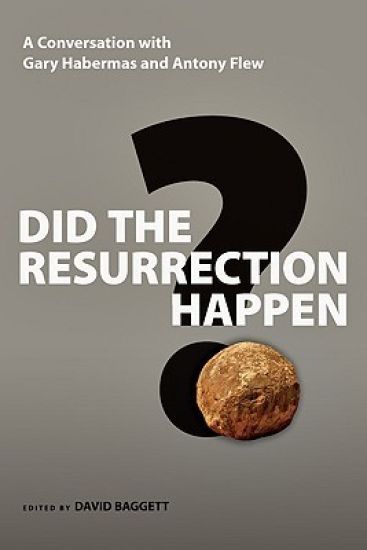
Did the Resurrection Happen?: A Conversation with Gary Habermas and Antony Flew
Gary R. Habermas; Antony Flew
IVP
2009
nidottu
This book presents the full content of the third and final debate between philosopher Antony Flew--who was, until 2004, one of the world's most prominent atheists--and Christian philosopher Gary Habermas. Included as well are transcripts of the Q A session with the audience afterward, a 2004 conversation between Habermas and Flew shortly after Flew's much-publicized change of position to theism, as well as editor David Baggett's assessment and analysis of the full history of Habermas and Flew's interactions.
The subject of the historical Jesus is of primary interest today, both in scholarly and popular circles. More attention has been given to various aspects of Jesus' life, death, and resurrection than has been the case in many years. This interest has even extended across the theological spectrum. The number of published books has been staggering, and not at all easy to review and survey.Of all these subjects, the resurrection of Jesus is like a many faceted diamond. Turned one way, it is the very center of the Christian Gospel. From another angle, it is the best-attested miracle-claim in Scripture (or in any other "holy book,"for that matter). Turned again, it provides an evidential basis for Christian theism. Further, in the New Testament it is a bridge to almost every major doctrine in the Christian faith, as well as being related to multiple areas of Christian practice, as well
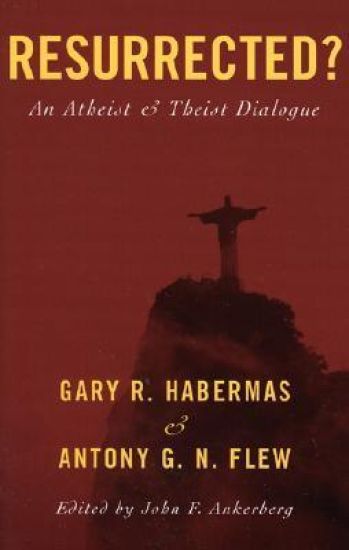
The Resurrection of Jesus of Nazareth is the central tenet of the Christian faith. St. Paul put it succinctly: if Christ did not rise from the dead, our faith is in vain. This remarkable dialogue between the leading Christian scholar of the Resurrection and the world's best-known philosophical atheist resulted from a three-hour discussion on a popular religious television talk show, moderated by John Ankerberg. The dialogue began with both participants agreeing to 12 separate historical facts that occurred when Jesus died and shortly afterward. Habermas and Flew then explored how each of their perspectives could account for what happened. Flew offered a psychological thesis interpreting the biblical accounts in natural terms. Habermas supported the historicity of the Resurrection by using contemporary critical methods. The discussion goes on to examine subjects such as medical details regarding crucifixion, extra-biblical sources for Jesus, the Jesus Seminar, St. Paul's conversion experience and his contribution to the early Christian testimony. The interchange is marked by mutual respect and exceptional clarity of thought and expression. This is a book that will appeal to a wide audience of believers, seekers, and non-believers. The topic is timely, the participants renowned, and the presentation inviting to both scholar and layperson.
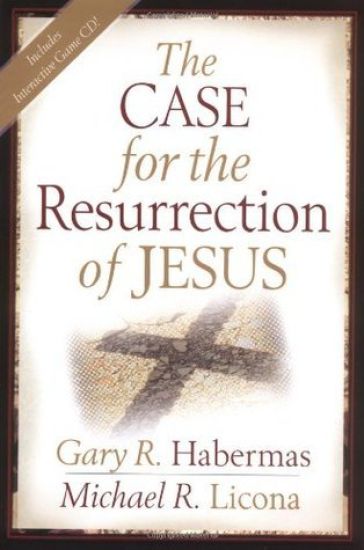
The Case for the Resurrection of Jesus
Gary R. Habermas; Michael R. Licona
Kregel Publications,U.S.
2004
nidottu
"There is nothing like this on the market. It is interesting, engaging, and crucial material." --Norman Geisler This is an accessible, comprehensive, and persuasive resource providing detailed evidence for the resurrection of Jesus. It also demonstrates how to share the material clearly, honestly, and definitively. Included is an interactive CD which tests the reader's knowledge of the material by using an entertaining TV game show format. "[The authors] have distinguished themselves as leading experts on the evidence for this all important event." --D. James Kennedy Written by the leading evangelical apologist on the resurrection and an up-and-comerIncludes an interactive CD to cement the information from the bookWritten for lay people but includes extensive footnotes that scholars will find valuableIncludes charts, diagrams, and a detailed outline for quick reference
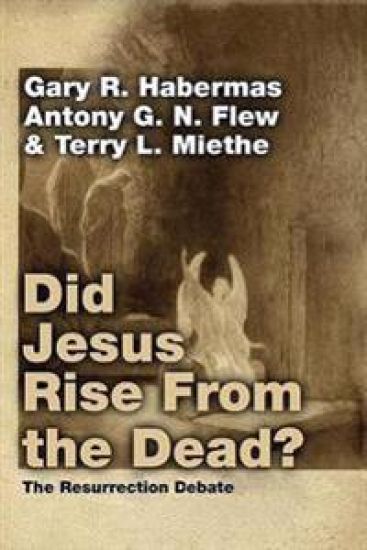
Did Jesus Rise From the Dead?
Gary R Habermas; Antony Flew; Terry L Miethe
Wipf Stock Publishers
2003
pokkari
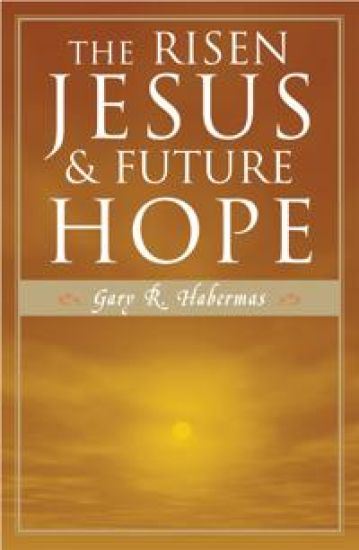
'Always be prepared,' wrote the apostle Peter, 'to give an answer to everyone who asks you to give the reason for the hope that you have.' Reading and digesting this book will help. Gary R. Habermas begins his apologetic for Christianity by demonstrating the historicity of the resurrection of Christ. He then connects the resurrection to several key tenets of Christian theology, through paths not only historical, but also philosophical, counseling, and experiential. The resurrection, Habermas shows, is the central belief for every Christian, whether that person believes it was an actual historical event or not. But it is Habermas' illustration that Jesus quite literally rose bodily from the dead that makes this book so unique. The resurrection is not only the foundation for Christian belief past and present, but also the basis for future hope. What, for instance, does the resurrection of Jesus have to teach us about our own fear of death? Habermas' answers to this and other questions proves how essential the resurrection is to living a Christian life, and gives us great hope for the future.