Kirjojen hintavertailu. Mukana 12 390 323 kirjaa ja 12 kauppaa.

Kirjailija

Gary Sands

Kirjat ja teokset yhdessä paikassa: 6 kirjaa, julkaisuja vuosilta 2012-2018, suosituimpien joukossa Cities at Risk. Vertaile teosten hintoja ja tarkista saatavuus suomalaisista kirjakaupoista.

6 kirjaa

Kirjojen julkaisuhaarukka 2012-2018.

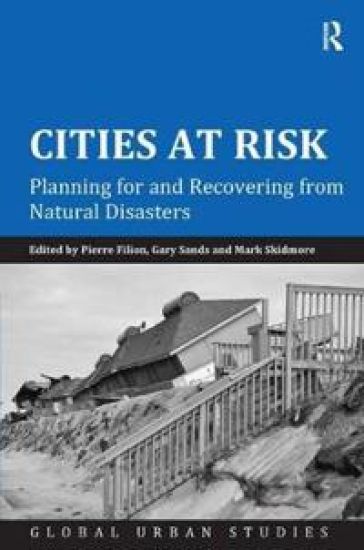
Cities at Risk

Cities at Risk

Pierre Filion; Gary Sands

Routledge
2018
nidottu
As levels of urbanization increase around the world, the growing concentrations of population and economic activity increases vulnerability to natural disasters. Interdependencies among urban populations mean that damage to the built environment, including water, sewer and energy infrastructure, can affect millions. Even if there is no change in the rate of occurrence of natural disasters (an unlikely prospect in the face of ongoing climate change) the potential for human and economic loss will continue to increase, along with the time required to recover. How do cities prepare for and recover from natural disasters? In this book, the authors provide a broad overview of the issues related to the impacts of disasters on cities around the world, from assessing risks to accounting for damages. The comparative approach across different types of disasters in a range of urban locations is useful in identifying opportunities for policy transfer. While there is no ’one size fits all’ solution to hazard mitigation, valuable lessons can be learned from the experiences of others. The chapters emphasize different modes for assessing hazard risk, as well as strategies for increasing the resiliency of vulnerable populations.
Roads to Prosperity

Roads to Prosperity

Gary Sands; Laura A. Reese

Wayne State University Press
2017
sidottu
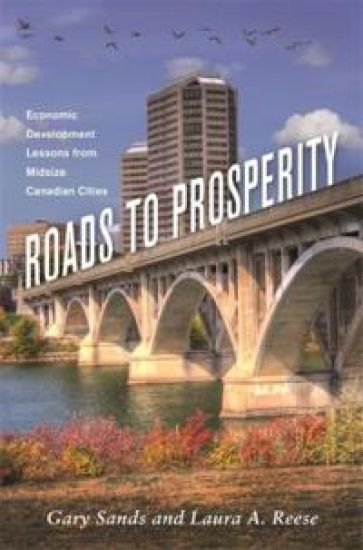
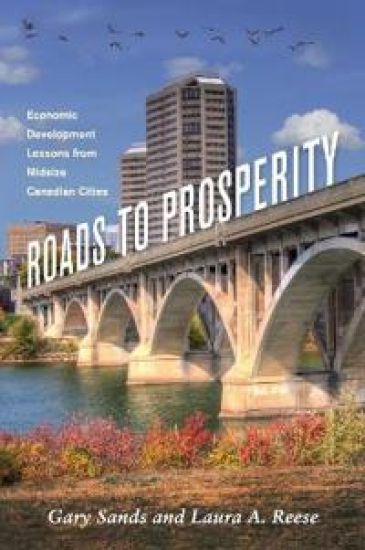
Explores popular economic development strategies in midsize Canadian urban areas.Roads to Prosperity: Economic Development Lessons from Midsize Canadian Cities explores the relative prosperity of midsize Canadian urban areas (population 50,000 to 400,000) over the past two decades. Communities throughout North America have strived for decades to maintain and enhance the prosperity of their residents. In the areas that are the focus of this research, the results of these efforts have been mixed—some communities have been relatively successful while others have fallen further behind the national averages. Midsize cities often lack the resources, both internal and external, to sustain and enhance their prosperity. Policies and strategies that have been successful in larger urban areas may be less effective (or unaffordable) in smaller ones.Roads to Prosperity first examines the economic structure of forty-two Canadian urban regions that fall within the midsize range to determine the economic specializations that characterize these communities and to trace how these specializations have evolved over the time period between 1991 and 2011. While urban areas with an economic base of natural resource or manufacturing industries tend to retain this economic function over the years, communities that rely on the service industries have been much more likely to experience some degree of restructuring in their economies over the past twenty years. The second part of the book looks at a number of currently popular economic development strategies as they have been applied to midsize urban areas and their success and failures. While there appears to be no single economic development strategy that will lead to greater prosperity for every community, Sands and Reese explore the various factors that help explain why some work and others don’t.
Roads to Prosperity

Roads to Prosperity

Gary Sands; Laura A. Reese

Wayne State University Press
2017
nidottu
Explores popular economic development strategies in midsize Canadian urban areas.Roads to Prosperity: Economic Development Lessons from Midsize Canadian Cities explores the relative prosperity of midsize Canadian urban areas (population 50,000 to 400,000) over the past two decades. Communities throughout North America have strived for decades to maintain and enhance the prosperity of their residents. In the areas that are the focus of this research, the results of these efforts have been mixed—some communities have been relatively successful while others have fallen further behind the national averages. Midsize cities often lack the resources, both internal and external, to sustain and enhance their prosperity. Policies and strategies that have been successful in larger urban areas may be less effective (or unaffordable) in smaller ones.Roads to Prosperity first examines the economic structure of forty-two Canadian urban regions that fall within the midsize range to determine the economic specializations that characterize these communities and to trace how these specializations have evolved over the time period between 1991 and 2011. While urban areas with an economic base of natural resource or manufacturing industries tend to retain this economic function over the years, communities that rely on the service industries have been much more likely to experience some degree of restructuring in their economies over the past twenty years. The second part of the book looks at a number of currently popular economic development strategies as they have been applied to midsize urban areas and their success and failures. While there appears to be no single economic development strategy that will lead to greater prosperity for every community, Sands and Reese explore the various factors that help explain why some work and others don’t.
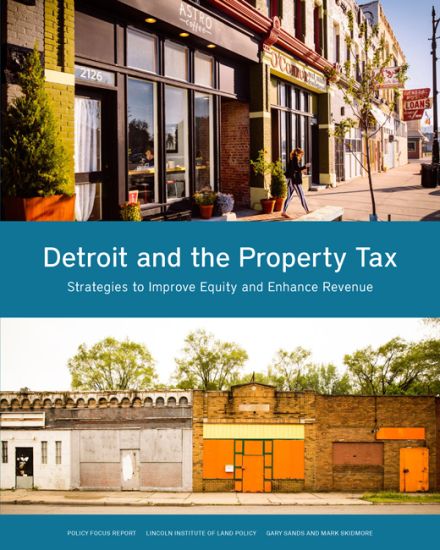
Detroit and the Property Tax – Strategies to Improve Equity and Enhance Revenue

Detroit and the Property Tax – Strategies to Improve Equity and Enhance Revenue

Gary Sands; Mark Skidmore

Lincoln Institute of Land Policy
2015
nidottu
This report outlines the problems underlying the erosion of Detroit's property tax base--a factor that contributed to the city's bankruptcy in 2013. It offers recommendations for reform at the local and state level, as well as insight and analysis to help policy makers across the country protect their communities from economic decline.
Cities at Risk

Cities at Risk

Pierre Filion; Gary Sands

Routledge
2015
sidottu
As levels of urbanization increase around the world, the growing concentrations of population and economic activity increases vulnerability to natural disasters. Interdependencies among urban populations mean that damage to the built environment, including water, sewer and energy infrastructure, can affect millions. Even if there is no change in the rate of occurrence of natural disasters (an unlikely prospect in the face of ongoing climate change) the potential for human and economic loss will continue to increase, along with the time required to recover. How do cities prepare for and recover from natural disasters? In this book, the authors provide a broad overview of the issues related to the impacts of disasters on cities around the world, from assessing risks to accounting for damages. The comparative approach across different types of disasters in a range of urban locations is useful in identifying opportunities for policy transfer. While there is no ’one size fits all’ solution to hazard mitigation, valuable lessons can be learned from the experiences of others. The chapters emphasize different modes for assessing hazard risk, as well as strategies for increasing the resiliency of vulnerable populations.
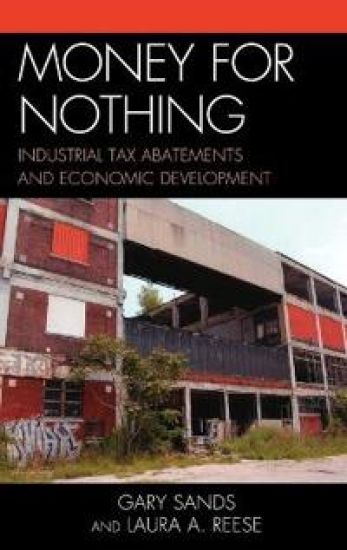
Money for Nothing

Money for Nothing

Laura A. Reese; Gary Sands

Lexington Books
2012
sidottu
Tax incentives are a mainstay of state and local economic development strategies and have been so for decades. Evaluations of their effectiveness have provided mixed results and few recommendations that have been translated into actual policy modifications. Since the mid-1970s, the State of Michigan has allowed local governments to grant substantial property tax abatements for new investments in real and personal industrial property. The program has been extremely popular, with more than 400 different municipalities granting a total of over 17,000 abatements. Despite its prominence, the program has been subject to only limited analysis at either the State or local level. This book systematically evaluates several different dimensions of industrial property tax abatements: The book utilizes a number of analytical techniques, including GIS, regression, factor, and shift-share analyses. While the data are drawn from a single state, they represent the complete history of the tax abatement program in a state that has allowed widespread use of local tax incentives. Thus, findings about the effectiveness, efficiency, and equity of local industrial tax abatements are applicable to local and state governments across the country. Further, findings about tax abatements are instructive for most financial or tax incentive schemes.