Kirjojen hintavertailu. Mukana 12 390 323 kirjaa ja 12 kauppaa.
Kirjailija
Gary Schwartz
Kirjat ja teokset yhdessä paikassa: 13 kirjaa, julkaisuja vuosilta 1970-2026, suosituimpien joukossa Dutch Painting. Vertaile teosten hintoja ja tarkista saatavuus suomalaisista kirjakaupoista.
This authoritative book in the World of Art series offers a new perspective on the paintings of the Dutch Golden Age, authored by one of the world's foremost experts on Dutch art. Renowned art historian Gary Schwartz offers a fresh and contemporary perspective on seventeenth-century Dutch painting, one of the most important schools of European art. This lively and authoritative guide brings together a range of notable paintings from leading museum collections to explore the work of well-known masters such as Rembrandt van Rijn, Judith Leyster and Johannes Vermeer, as well as artists that the reader may be encountering for the first time, such as Adriaen van de Velde and Gesina ter Borch. Across nine chapters, particular attention is paid to patronage and the market; reception and study; gender and race; painters abroad, in Europe as well as Asia and elsewhere; and issues of attribution. Covering an impressively wide range of subjects and styles, Dutch Painting investigates the full panoply of works created by the largest school of seventeenth-century European painters, offering a comprehensive overview of Dutch painting in its own context – and in ours – with a fresh and insightful eye.
Rembrandt in a red beret: the vanishings and reappearances of a self-portrait follows the fortunes of a fascinating painting along two lines. First is the history of the painting as a precious collector’s object, a story almost too unlikely to be true. In 1823 it was bought by the future King Willem II as one of his first purchases for the greatest collection of paintings ever assembled by a Dutch individual. For nearly a hundred years it remained with his heirs, coming to Weimar. Then, in 1921 it was stolen from the Weimar Museum, to turn up in 1945 in Dayton, Ohio, owned by a man who said he bought it in 1934 from a German sailor on the New York waterfront. What followed is revealed in this book for the first time, based on declassified U.S. government information. In 1947 the U.S. government seized the Rembrandt under such strict terms that 20 years later, when it wanted to return it to Germany, it was forced to go into legislative and diplomatic gymnastics to do so. Upon its return, an heir to the Weimar title sued for its restitution, and after seven years of one trial after another, she got it. She sold it in 1983 to the private collector who still owns it. Since 1921 it has been on public display only for 10 days in Dayton (1947) and 10 weeks in Washington (1967). The book also traces the critical history of the painting as a Rembrandt. In 1969 his authorship was disputed by Horst Gerson, an opinion that was seconded by the Rembrandt Research Project. Examining all the evidence and arguments, the eminent Rembrandt specialist Gary Schwartz comes to the conclusion that there is no reason not to accept the painting for what it looks like – a self-portrait of the great master, painted by his own hand.
Can a loving relationship survive death? The Afterlife Revolution triumphantly says that it can. After a near-death experience in 2004, Anne Strieber became an expert in afterlife studies and created an ingenious plan of contact which, to her husband Whitley's amazement, she proceeded to carry out, starting just an hour and a half after she died. As verified by famed afterlife researcher Dr. Gary Schwartz, who wrote the foreword, the Afterlife Revolution is among the most convincing stories of afterlife communication ever told, and is a ringing endorsement not only of the fact that we do not die, but also that the power of love can create an actual bridge between the physical and nonphysical worlds. The book points the way to a new relationship between the living and, as Anne puts it, "what you call the dead." Anne tells of her experience on the other side, saying that "we are light, alive," and that "enlightenment is what comes when there is nothing left of us but love." Her descriptions of the afterlife are brilliantly articulate and nuanced, at once deeply familiar and uniquely her own. The Afterlife Revolution shows how to use basic tools such as what Anne describes as "objective love" combined with a simple but special form of meditation to build a relationship between physical and nonphysical worlds. It is intended to help us find that sweet point at which the souls of the living touch those of the dead. As Anne says, "Mankind is divided, not so much between the sexes as between the living and what are called the dead. It isn't natural and it isn't necessary. We can become whole." The Afterlife Revolution is about the joy of doing just that, and the magnificent new human experience that will unfold as more and more of us learn to live in this way. "It has been observed that belief in the afterlife is really a belief in the undying nature of love. In The Afterlife Revolution, Whitley Strieber gives form, story, and insight to that principle, mapping out in vivid, moving, and persuasive detail his continued communion with his beloved wife Anne. Our generation is passing through a renaissance of near and after-death literature. This memoir forms the gravitational center of that field." -Mitch Horowitz, PEN Award-winning author of Occult America and One Simple Idea: How Positive Thinking Reshaped Modern Life
Published to coincide with the major exhibition at the National Gallery this autumn, here is the ultimate book on Rembrandt’s art and life – his work as an artist, his family, friends and patrons, his place in European culture – by one of the world’s best-known writers on Dutch art. Designed to be the Rembrandt book of first resort, this complete and accessible volume, available again in a new, reduced format edition, will be an invaluable work of reference and vital reading for art lovers, art students and museum-goers.
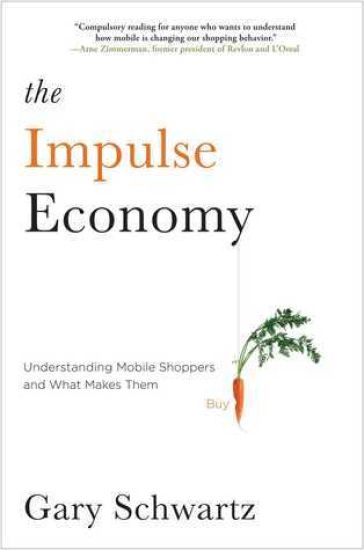
We live in a world where our mobile devices have become extensions of ourselves. We depend on them for instant connections to entertainment, social media, news, and deals. The phone has become our ticket, loyalty card, and catchall wallet. Networks are faster, phones are smarter, and the mobile shopper is ready to spend money now. What can a business do to maximize the mobile buying power of the new impulse consumer? Gary Schwartz has written a groundbreaking book that outlines the history of the mobile industry and shows just how businesses can build up their mobile platforms to maximize online sales. He'll explain: - How to minimize barriers between the shopper and a sale. - How marketers can connect and, more important, reconnect with loyal shoppers. - The technology available now--and what's coming soon--and how to pick a solution that will deliver results. But like Blink or Freakonomics, this isn't just a book for businesses. It's also an eye-opening look into the ways our economy is changing every second of every day. Gary Schwartz analyzes a phenomenon that's modifying people's actions and challenges our assumptions about our behavior as consumers. Anyone interested in the ways our behavior as shoppers is changing--and what we can do to better harness this opportunity--will find this book to be essential reading.
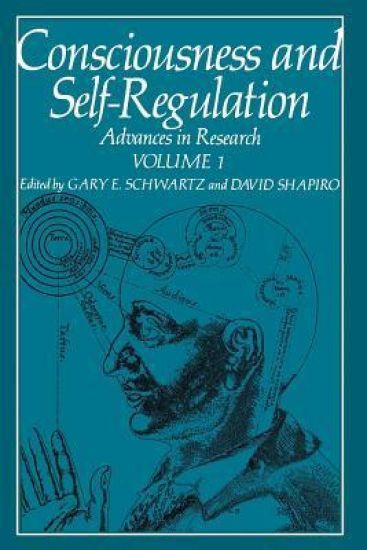
The first and foremost concrete fact which every one will affirm to belong to his inner experience is the fact that consciousness of some sort goes on. I -William James, 1893 We are witnessing today a mounting interest among behavioral and biological scientists in problems long recognized as central to our understanding of human nature, yet until recently considered out of the bounds of scientific psychology and physiology. Sometimes thrown into the heading of "altered states of consciousness," this growing research bears directly upon such time-honored questions as the nature of conscious experience, the mind-body relationship, and volition. If one broadly views this research as encompassing the two interrelated areas of consciousness and self-regulation, one can find many relevant contemporary examples of creative and experimentally sophisticated approaches, including research on the regulation of perception and sensory experience, attention, imagery and thinking, emotion and pain; hypnosis and meditation; biofeedback and volun tary control; hemispheric asymmetry and specialization of brain func tion; drug-induced subjective states; and biological rhythms. Because the material is spread over many different kinds of publications and disciplines, it is difficult for anyone person to keep fully abreast of the significant advances. The overall aim of the new Plenum Series in Consciousness and Self-Regulation: Advances in Research is to provide a scholarly forum for discussing integration of these diverse areas by presenting some of the best current research and theory.
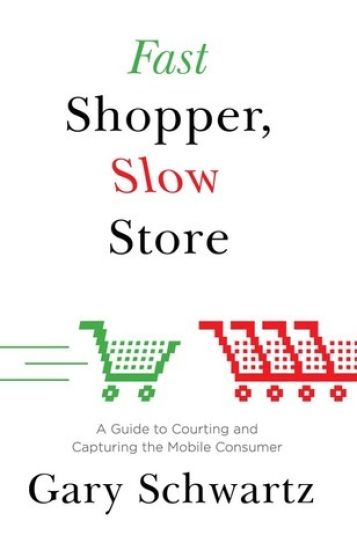
From mobile pioneer Gary Schwartz, the author of The Impulse Economy, a short guide to the steps every company must take to connect with the mobile consumer From Best Buy to Borders, retail stores are closing their doors forever. Increasingly consumers are looking to their mobile devices as the primary screen to find best products and the cheapest deals. The shop has lost its connection to this shopper. Gary Schwartz has been at the front lines of the mobile industry for over a decade, and this book is about what companies can do to build the mobile tools necessary to reestablish a relationship with their mobile shoppers. Rich with examples—from Amazon to Barnes & Noble to Google— Fast Shopper, Slow Store provides a step-by-step approach to harnessing and executing the strategies necessary for companies to move into the mobile sphere . . . and see lasting, lucrative results.
The first and foremost concrete fact which every one will affirm to belong to his inner experience is the fact that consciousness of some sort goes on. I -William James, 1893 We are witnessing today a mounting interest among behavioral and biological scientists in problems long recognized as central to our understanding of human nature, yet until recently considered out of the bounds of scientific psychology and physiology. Sometimes thrown into the heading of "altered states of consciousness," this growing research bears directly upon such time-honored questions as the nature of conscious experience, the mind-body relationship, and volition. If one broadly views this research as encompassing the two interrelated areas of consciousness and self-regulation, one can find many relevant contemporary examples of creative and experimentally sophisticated approaches, including research on the regulation of perception and sensory experience, attention, imagery and thinking, emotion and pain; hypnosis and meditation; biofeedback and volun tary control; hemispheric asymmetry and specialization of brain func tion; drug-induced subjective states; and biological rhythms. Because the material is spread over many different kinds of publications and disciplines, it is difficult for anyone person to keep fully abreast of the significant advances. The overall aim of the new Plenum Series in Consciousness and Self-Regulation: Advances in Research is to provide a scholarly forum for discussing integration of these diverse areas by presenting some of the best current research and theory.
By the late 1970s, drugs, blue jeans, rock and roll, and sexual precocity appeared to be all that remained of the cultural ferment of the 1960s. In this classic new study of high school-aged youth in the eartly 70s, Gary Schwartz reveals subtle yet significant changes in the style of deviance in adolescent culture. He argues that a new sort of peer-group pluralism emerged from the counter-culture movement of the 60s, a deviance defined less by persistent violations of the law than by disengagement from traditional images of success and civic responsibility.
In this penetrating study of urban religion, Gary Schwartz examines the nature of the relationship between religious belief and the social order. He shows how a person's experience in the social hierarchy shapes his response to competing religious ideologies and, in turn, how commitment to a particular sect ideology colors his attitude toward mundane affairs. The author studied and compared a Pentecostal group and a Seventh-day Adventist group in preparation for this work. The question which stimulated the investigation can be stated as a paradox. In the Adventist case, why should persons who firmly believe that God is soon to destroy the world work so diligently and against formidable odds to improve their own secular fortunes? In the Pentecostal case, why should persons who believe that God is available for direct aid in every human contingency not use this power for their own advancement? In theorizing about the relationship between an individual's position in the socioeconomic system and his sect affiliation, Mr. Schwartz asserts that the specifically ideological component of a creed resides in the ways in which believers conceptualize the meaning of secular problems. The study as a whole attempts to reveal what makes a special set of beliefs attractive to a person grappling with certain secular exigencies, and how these beliefs affect his view of secular matters. It develops a model of a religious ideology applicable to any study of the relationship between cultural symbols and social structure.