Kirjojen hintavertailu. Mukana 12 152 606 kirjaa ja 12 kauppaa.

Kirjailija

Gary Sheffield

Kirjat ja teokset yhdessä paikassa: 11 kirjaa, julkaisuja vuosilta 2008-2023, suosituimpien joukossa Douglas Haig. Vertaile teosten hintoja ja tarkista saatavuus suomalaisista kirjakaupoista.

11 kirjaa

Kirjojen julkaisuhaarukka 2008-2023.

Douglas Haig

Douglas Haig

Gary Sheffield; John Bourne

Weidenfeld Nicolson
2008
nidottu
The diaries of the most controversial British general of the twentieth century.There's a commonly held view that Douglas Haig was a bone-headed, callous butcher, who through his incompetence as commander of the British Army in WWI, killed a generation of young men on the Somme and Passchendaele. On the other hand there are those who view Haig as a man who successfully struggled with appalling difficulties to produce an army which took the lead in defeating Germany in 1918.Haig's Diaries, hitherto only previously available in bowdlerised form, give the C-in-C's view of Asquith and his successor Lloyd George, of whom he was highly critical. The diaries show him intriguing with the King vs. Lloyd George. Additional are his day by day accounts of the key battles of the war, not least the Somme campaign of 1916.
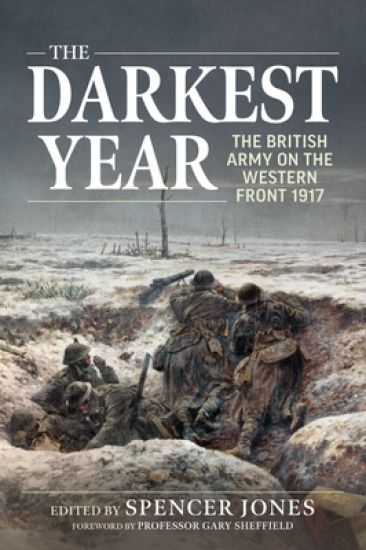
Darkest Year 1917: The British Army on the Western Front 1917
Nineteen-seventeen was a desperately hard year for the Allies. The forces of France, Russia and Italy were at a low ebb, whilst the Central Powers appeared resurgent. By the middle of the year only the British Army was capable of major offensive operations on the Western Front. Forced to bear the brunt of the war, it found itself locked in hard fighting against a skilled and determined German foe. Thus the year would not only be defined by the mud-stricken Third Battle of Ypres (Passchendaele) but also by major offensives at Arras, Messines Ridge and Cambrai.The fourth of a five-volume series, The Darkest Year brings together leading First World War scholars to examine the British Army in 1917. It includes essays which consider grand strategy, tactical development and training, maintenance of morale and the importance of intelligence gathering. It also includes insightful studies of crucial battles and engagements such as the advance to the Hindenburg Line, Third Battle of the Scarpe and the dreadful struggle for Bourlon Wood. Drawing upon the latest research, this volume provides valuable new insights into the British Army's experience during this controversial year.
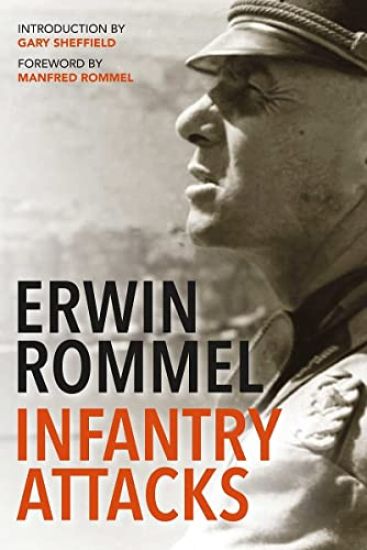
Infantry Attacks

Infantry Attacks

Erwin Rommel; Gary Sheffield

GREENHILL BOOKS
2023
nidottu
Field Marshal Erwin Rommel exerted an almost hypnotic influence not only over his own troops but also over the Allied soldiers of the Eighth Army in the Second World War. Even when the legend surrounding his invincibility was overturned at El Alamein, the aura surrounding Rommel himself remained unsullied. In this classic study of the art of war Rommel analyses the tactics that lay behind his success. First published in 1937 it quickly became a highly regarded military textbook, and also brought its author to the attention of Adolph Hitler. Rommel was to subsequently advance through the ranks to the high command in the Second World War. As a leader of a small unit in the First World War, he proved himself an aggressive and versatile commander with a reputation for using the battleground terrain to his own advantage, for gathering intelligence, and for seeking out and exploiting enemy weaknesses. Rommel graphically describes his own achievements, and those of his units, in the swift-moving battles on the Western Front, in the ensuing trench warfare, in the 1917 campaign in Romania, and in the pursuit across the Tagliamento and Piave rivers. This classic account seeks out the basis of his astonishing leadership skills, providing an indispensable guide to the art of war.
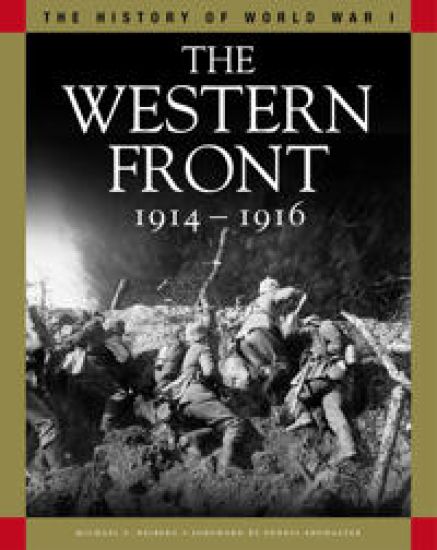
The Western Front 1914-1916

The Western Front 1914-1916

Michael S Neiberg; Dennis Showalter; Gary Sheffield

AMBER BOOKS LTD
2022
nidottu
After the first few months of World War I, the Western Front consisted of a relatively static line of trench systems which stretched from the coast of the North Sea southwards to the Swiss border. To try to break through the opposing lines of trenches and barbed wire entanglements, both sides employed huge artillery bombardments followed by attacks by tens of thousands of soldiers. Battles could last for months and led to casualties measured in hundreds of thousands for attacker and defender alike. After most of these attacks, only a short section of the front would have moved and only by a kilometer or two. After Gallipoli, Australians were moved to fight in France on the western Front, in battles including the Battle of the Somme. On the first day of the 1916 Battle of the Somme, 60,000 Allies were casualties, including 20,000 deaths. The principal adversaries on the Western Front, who fielded armies of millions of men, were Germany to the East against a western alliance to the West consisting of France and the United Kingdom with sizable contingents from the British Empire, especially the Dominions. The United States entered the war in 1917 and by the summer of 1918 had an army of around half a million men which rose to a million by the time the Armistice was signed on November 11, 1918. For most of World War I, Allied Forces, predominantly those of France and the British Empire, were stalled at trenches on the Western Front. With the last few men who served in World War I now dying out, and the 90th anniversary of the Armistice coming in November 2008, there is no better time to reevaluate this controversial war and shed fresh light on the conflict. With the aid of numerous black and white and color photographs, many previously unpublished, the World War I series recreates the battles and campaigns that raged across the surface of the globe, on land, at sea and in the air. The text is complemented by full-color maps that guide the reader through specific actions and campaigns.
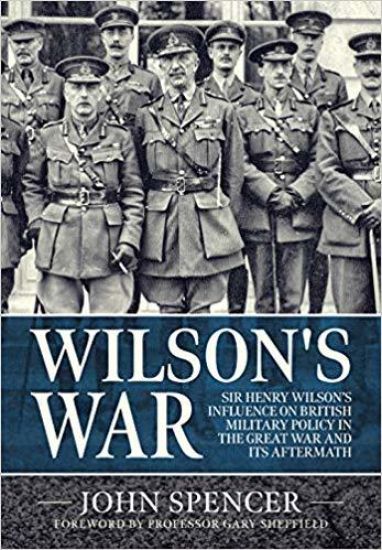
Wilson'S War

Wilson'S War

John Spencer; Gary Sheffield

Helion Company
2021
sidottu
Today, just as he was a century ago, Field-Marshal Sir Henry Wilson is an archetypal ‘love him or hate him’ character. An agile mind, a sharp, witty and sometimes wicked tongue, and the author of diaries full of the kind of coruscating remarks that a modern tabloid newspaper editor only dreams of. Wilson enjoyed hobnobbing with politicians as much as with his fellow soldiers, often to the chagrin of both ‘frocks’ and ‘brasshats’. The former, so the accepted narrative goes, found him pliable, naïve and ready to do their bidding. The latter, we are told, found him untrustworthy, mendacious and shallow. Yet in his lifetime Henry Wilson’s many genuine admirers included leading figures in both the political and military establishments. Unlike many of his peers, Wilson was unable to present evidence in his own defence in the Battle of the Memoirs which followed the Great War. Soon after his death at the hands of Irish republican assassins his reputation was ruined by the publication of a biography based on his outspoken diaries. Wilson’s enemies had their suspicions confirmed, his friends too often found themselves criticised in his late-night scribblings. More recent scholarship has examined Wilson’s interventions in the cause of Irish Unionism and revealed a ‘political soldier’ willing and able to fight for this in the corridors of power. This study concentrates instead on Wilson’s impact on the development and execution of British military policy during the Great War. Wilson’s contribution to the British Army’s preparations for war is familiar to military historians, his role in shaping policy in the final 18 months of the conflict deserve greater attention. In 1917 Wilson disagreed with the costly attritional strategy of both Sir Douglas Haig, the commander of the British forces in France, and Sir William Robertson, the government’s principle military adviser at the War Office. It was a scepticism shared by British Prime Minister David Lloyd George who found Wilson’s views refreshingly different. As a result, Wilson effectively put paid to a new British offensive in early 1918 and was instrumental in setting up the Supreme War Council, designed to better co-ordinate Allied military strategy. He then dominated the work of this body, setting its strategic priorities and putting in place structures which eased the adoption of unity of command on the Western Front. As this study shows, Wilson was neither the dupe of politicians, nor the hapless hand-maiden to greater military minds than his. Instead, his diplomatic skills helped preserve the brittle Anglo-French alliance, both in the early stages of the war and towards its end. His period as Chief of the Imperial General Staff from February 1918 saw him successfully walk the tightrope between politicians and military leaders and maintain fragile civil-military relations. In the aftermath of the conflict, Wilson helped shape Britain’s imperial future, for better and for worse.
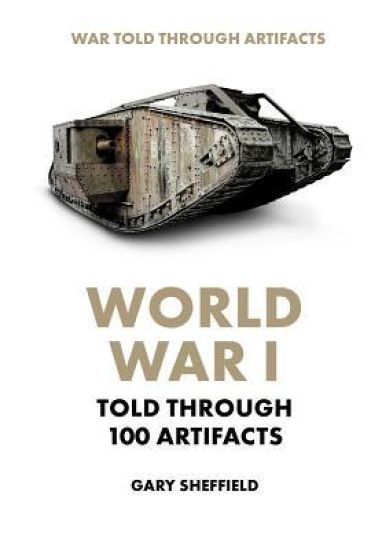
World War I Told Through 100 Artifacts

World War I Told Through 100 Artifacts

Gary Sheffield

Cavendish Square Publishing
2019
nidottu
Though World War I was fought more than a century ago, its legacy lives on in the form of artifacts both big and small, from tanks and rifles to barbed wire and gas masks. Readers will be fascinated by how these items and documents helped shape the course of the conflict, beginning with the bullet-marked car where Archduke Franz Ferdinand was assassinated, and carrying through to memorials built after the war, such as the Tomb of the Unknown Warrior. The stories and photographs of these objects illustrate the daily experience of the soldiers, as well as the impact of the war on everyday citizens.
Wellington: pocket GIANTS

Wellington: pocket GIANTS

Gary Sheffield

The History Press Ltd
2017
nidottu
Wellington is a giant because he was one of the greatest military commanders in British history, an important figure in the emergence of Britain as a great imperial power, a man who dominated British society and politics for 35 years. He was the only one of Napoleon’s contemporaries who can be mentioned in the same breath as a general - a master of logistics, politics and coalition warfare as well as strategy, operations and tactics. The book’s focus is on Wellington’s military career, and it looks at all of these aspects, placing them in the context of the military and political developments of the time. It explores Wellington’s personality – a key to understanding his success - and briefly examines his post-Waterloo career as a politician. It concludes that Wellington was not only a military genius, but an icon whose fame endures to our own time.
Loyal to Empire

Loyal to Empire

Patrick Crowley; Gary Sheffield

The History Press Ltd
2016
sidottu
Winston Churchill did not describe General Sir Charles Monro in the most glowing terms. Referring to Monro’s brave decision to recommend a withdrawal from the Gallipoli disaster, Churchill said: ‘He came, he saw, he capitulated.’ Monro was one of a handful of senior officers selected to command a division with the British Expeditionary Force in 1914 and also led a corps on the Western Front as the war progressed. After Gallipoli he was instrumental in supporting the war effort from India as commander-in-chief and was directly involved in the aftermath of the Amritsar massacre by Brigadier General Dyer. His earlier life included distinguished service on the North West Frontier and in South Africa, and he was responsible for dramatically improving tactics within the army. Loyal to Empire brings to life the interesting character of General Monro, perhaps the least well known of all the British First World War commanders, and reassesses the legacy of his important military contributions.
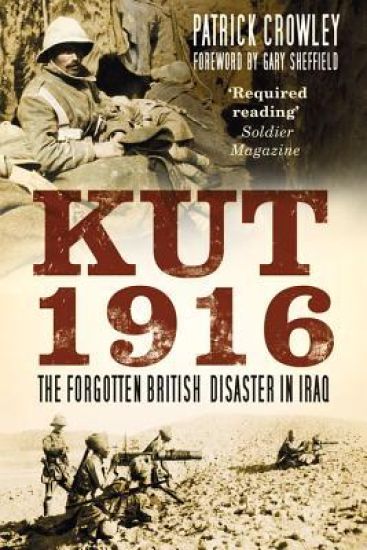
Kut 1916: The Forgotten British Disaster in Iraq

Kut 1916: The Forgotten British Disaster in Iraq

Patrick Crowley; Gary Sheffield

The History Press Ltd
2016
nidottu
The siege of Kut is a story of blunders, sacrifice, imprisonment and escape. The allied campaign in Mesopotamia began in 1914 as a relatively simple operation to secure the oilfields in the Shatt-al-Arab delta and Basra area. Initially it was a great success, but as the army pressed towards Baghdad its poor logistic support, training, equipment and command left it isolated and besieged by the Turks. By 1916 the army had not been relieved, and on 29 April 1916, the British Army suffered one of the worst defeats in its military history. Major-General Sir Charles Townshend surrendered his allied force to the Turks in the Mesopotamian (now Iraq) town of Kut-al-Amara. Over 13,000 troops, British and Indian, went into captivity; many would not survive their incarceration. In Kut 1916, Colonel Crowley recounts this dramatic tale and its terrible aftermath.
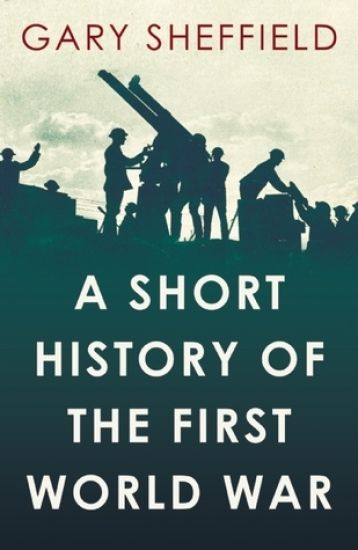
A Short History of the First World War

A Short History of the First World War

Gary Sheffield

Oneworld Publications
2014
pokkari
The First World War was a watershed in world history. Tragic but far from futile, its origins, events and legacy have roused impassioned debate, creating multiple interpretations and confusion for those encountering the period for the first time. Synthesising the latest scholarship, acclaimed historian Gary Sheffield cuts to the heart of the conflict. He explores such key issues as: - the causes of war- the great battles on land, sea and in the air- the search for the peace and peace settlements- the political, social and economic consequences- the impact of 'total war' on the belligerents and the individual- and the place of the Great War in the history of warfare Accessible and authoritative, this is the ultimate introduction for anyone wanting a clear understanding of what happened and why.
The  Chief

The Chief

Gary Sheffield

Aurum Press
2012
pokkari
‘ Well written and persuasive … objective and well-rounded… .this scholarly rehabilitation should be the standard biography’ **** Andrew Roberts, Mail on Sunday ‘ A true judgment of him must lie somewhere between hero and zero, and in this detailed biography Gary Sheffield shows himself well qualified to make it … a balanced portrait’ Sunday Times ‘ Solid scholarship and admirable advocacy’ Sunday Telegraph Douglas Haig is the single most controversial general in British history. In 1918, after his armies had won the First World War, he was feted as a saviour. But within twenty years his reputation was in ruins, and it has never recovered. In this fascinating biography, Professor Gary Sheffield reassesses Haig’ s reputation, assessing his critical role in preparing the army for war.