
Kirjailija
Gary Tomlinson
Kirjat ja teokset yhdessä paikassa: 9 kirjaa, julkaisuja vuosilta 1990-2023, suosituimpien joukossa A Million Years of Music. Vertaile teosten hintoja ja tarkista saatavuus suomalaisista kirjakaupoista.
9 kirjaa
Kirjojen julkaisuhaarukka 1990-2023.
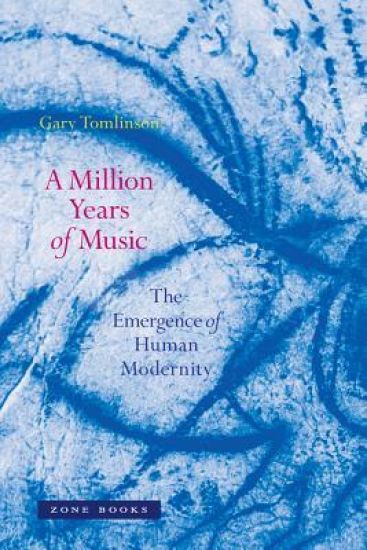
A new narrative for the emergence of human music, drawing from archaeology, cognitive science, linguistics, and evolutionary theory.What is the origin of music? In the last few decades this centuries-old puzzle has been reinvigorated by new archaeological evidence and developments in the fields of cognitive science, linguistics, and evolutionary theory. In this path-breaking book, renowned musicologist Gary Tomlinson draws from these areas to construct a new narrative for the emergence of human music. Starting at a period of human prehistory long before Homo sapiens or music existed, Tomlinson describes the incremental attainments that, by changing the communication and society of prehumen species, laid the foundation for musical behaviors in more recent times. He traces in Neandertals and early sapiens the accumulation and development of these capacities, and he details their coalescence into modern musical behavior across the last hundred millennia.But A Million Years of Music is not about music alone. Tomlinson builds a model of human evolution that revises our understanding of the interaction of biology and culture across evolutionary time-scales, challenging and enriching current models of our deep history. As he tells his story, he draws in other emerging human traits: language, symbolism, a metaphysical imagination and the ritual it gives rise to, complex social structure, and the use of advanced technologies. Tomlinson's model of evolution allows him to account for much of what makes us a unique species in the world today and provides a new way of understanding the appearance of humanity in its modern form.
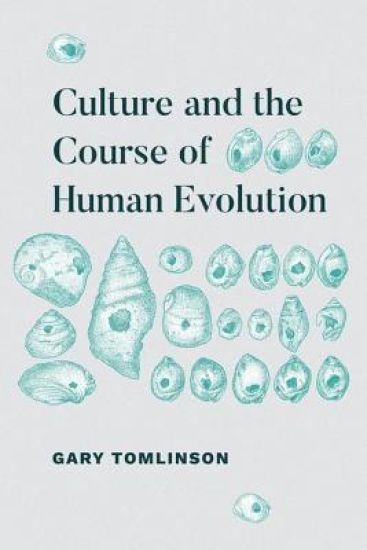
The rapid evolutionary development of modern Homo sapiens over the past 200,000 years is a topic of fevered interest in numerous disciplines. How did humans, while undergoing few physical changes from their first arrival, so quickly develop the capacities to transform their world? Gary Tomlinson’s Culture and the Course of Human Evolution is aimed at both scientists and humanists, and it makes the case that neither side alone can answer the most important questions about our origins. Tomlinson offers a new model for understanding this period in our emergence, one based on analysis of advancing human cultures in an evolution that was simultaneously cultural and biological—a biocultural evolution. He places front and center the emergence of culture and the human capacities to create it, in a fashion that expands the conceptual framework of recent evolutionary theory. His wide-ranging vision encompasses arguments on the development of music, modern technology, and metaphysics. At the heart of these developments, he shows, are transformations in our species’ particular knack for sign making. With its innovative synthesis of humanistic and scientific ideas, this book will be an essential text.
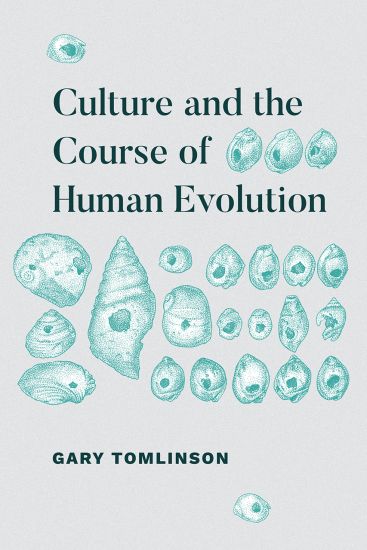
The rapid evolutionary development of modern Homo sapiens over the past 200,000 years is a topic of fevered interest in numerous disciplines. How did humans, while undergoing few physical changes from their first arrival, so quickly develop the capacities to transform their world? Gary Tomlinson’s Culture and the Course of Human Evolution is aimed at both scientists and humanists, and it makes the case that neither side alone can answer the most important questions about our origins. Tomlinson offers a new model for understanding this period in our emergence, one based on analysis of advancing human cultures in an evolution that was simultaneously cultural and biological—a biocultural evolution. He places front and center the emergence of culture and the human capacities to create it, in a fashion that expands the conceptual framework of recent evolutionary theory. His wide-ranging vision encompasses arguments on the development of music, modern technology, and metaphysics. At the heart of these developments, he shows, are transformations in our species’ particular knack for sign making. With its innovative synthesis of humanistic and scientific ideas, this book will be an essential text.


Music and Historical Critique provides a definitive collection of Gary Tomlinson's influential studies on critical musicology, with the watchword throughout being history. This collection gathers his most innovative essays and lectures, some of them published here for the first time, along with an introduction outlining the context of the contributions and commenting on their aims and significance. Music and Historical Critique provides a retrospective view of the author's achievements in bringing to the heart of musicological discourse both deep-seated experiences of the past and meditations on the historian's ways of understanding them.
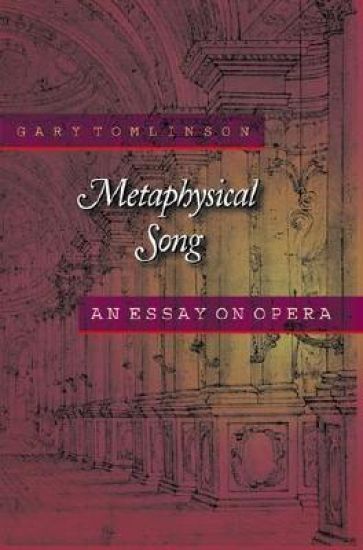
Describes how changes in the composition and staging of opera reflect developments in metaphysics, variations in perception of the emotions and of the self, and other social and artistic changes
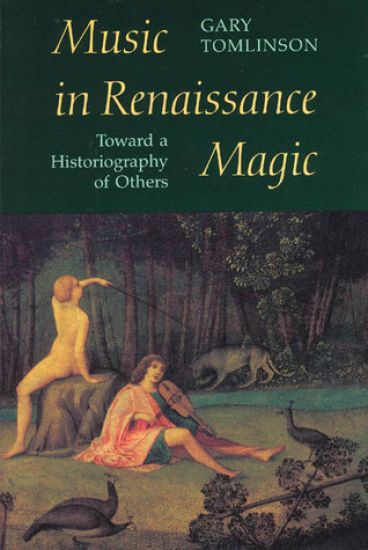
Magic enjoyed a vigorous revival in sixteenth-century Europe, attaining a prestige lost for over a millennium and becoming, for some, a kind of universal philosophy. Renaissance music also suggested a form of universal knowledge through renewed interest in two ancient themes: the Pythagorean and Platonic "harmony of the celestial spheres" and the legendary effects of the music of bards like Orpheus, Arion, and David. In this climate, Renaissance philosophers drew many new and provocative connections between music and the occult sciences. In Music in Renaissance Magic, Gary Tomlinson describes some of these connections and offers a fresh view of the development of early modern thought in Italy. Raising issues essential to postmodern historiography--issues of cultural distance and our relationship to the others who inhabit our constructions of the past --Tomlinson provides a rich store of ideas for students of early modern culture, for musicologists, and for historians of philosophy, science, and religion.

Monteverdi and the End of the Renaissance
Gary Tomlinson
University of California Press
1990
pokkari
Combining a close study of Monteverdi's secular works with recent research on late Renaissance history, Gary Tomlinson places the composer's creative career in its broad cultural context and illuminates the state of Italian music, poetry, and ideology in the sixteenth and seventeenth centuries.