Kirjojen hintavertailu. Mukana 12 408 315 kirjaa ja 12 kauppaa.

Kirjailija

Gayatri Chakravorty Spivak

Kirjat ja teokset yhdessä paikassa: 22 kirjaa, julkaisuja vuosilta 1990-2024, suosituimpien joukossa Spivak Moving. Vertaile teosten hintoja ja tarkista saatavuus suomalaisista kirjakaupoista.

22 kirjaa

Kirjojen julkaisuhaarukka 1990-2024.

Spivak Moving

Spivak Moving

Gayatri Chakravorty Spivak

SEAGULL BOOKS LONDON LTD
2024
sidottu
This collection offers a broad range of Spivak’s recent essays, lectures, and other writings that speak to her groundbreaking work in feminism, deconstruction, Marxism, and subaltern studies. The pieces collected in Spivak Moving touch on a variety of topics, including her crucial thinking on pan-Africanism and W. E. B. DuBois, reproductive heteronormativity, art and film, class apartheid in education, practices of institutional critique, and the training of imaginative activism through a sustained engagement with the humanities. She moves from a look at the unsystematized first languages of continental Africa into a broader consideration of human rights, international civil society practice, the question of terror, the “freedom” of the academic, and the place of the digital. About half the essays are collected here for the first time and are not found in Spivak’s several published essay collections.

Death of a Discipline

Death of a Discipline

Gayatri Chakravorty Spivak

Columbia University Press
2023
pokkari
Gayatri Chakravorty Spivak is among the foremost figures in the study of world literature and its cultural consequences of the past half-century. In this book, originally published in 2003, she declares the death of comparative literature as we know it and sounds an urgent call for a “new comparative literature,” in which the discipline is reborn—one that is not appropriated and determined by the market.Spivak examines how comparative literature and world literature in translation have fared in the era of globalization and considers how to protect the multiplicity of languages and literatures at the university. She demonstrates why critics interested in social justice should pay close attention to literary form and offers insightful interpretations of classics such as Joseph Conrad’s Heart of Darkness and Virginia Woolf’s A Room of One’s Own. Through readings of texts not only in English, French, and German but also in Arabic and Bengali, Spivak practices what she preaches.This anniversary edition features a new preface in which Spivak reflects on the fortunes of comparative literature in the intervening years and its tasks today.
Outside in the Teaching Machine

Outside in the Teaching Machine

Gayatri Chakravorty Spivak

Routledge
2015
sidottu
Gayatri Chakravorty Spivak is one of the most pre-eminent postcolonial theorists writing today and a scholar of genuinely global reputation. This collection, first published in 1993, presents some of Spivak’s most engaging essays on works of literature such as Salman Rushdie's controversial Satanic Verses, and twentieth century thinkers such as Jacques Derrida and Karl Marx. Spivak relentlessly questions and deconstructs power structures where ever they operate. In doing so, she provides a voice for those who can not speak, proving that the true work of resistance takes place in the margins, Outside in the Teaching Machine.
Readings

Readings

Gayatri Chakravorty Spivak; Lara Choksey

Seagull Books London Ltd
2014
sidottu
Throughout her distinguished career, Gayatri Chakravorty Spivak has sought to locate and confront shifting forms of social and cultural oppression. As her work shows, the best method for doing so is through extended practice in the ethics of reading. In Readings, Spivak elaborates a utopian vision for the kind of deep and investigative reading that can develop a will for peaceful social justice in coming generations. Through her own analysis of specific works, Spivak demonstrates modes in which such a vision might be achieved. In the examples here, she pays close attention to signposts of character, action, and place in J. M. Coetzec's Summertime and Elizabeth Gaskell's North and South. She also offers rereads of two of her own essays, addressing changes in her own thinking and practice over the course of her career. Now in her fifth decade of teaching, Spivak passes on her lessons through anecdote, interpretation, warning, and instruction to students and teachers of literature. She writes, "I urge students of English to understand that utopia does not happen, and yet to understand, also, their importance to the nation and the world. Indeed, I know how hard it is to sustain such a spirit in the midst of a hostile polity, but I urge the students to consider the challenge."
Harlem

Harlem

Gayatri Chakravorty Spivak

Seagull Books London Ltd
2013
sidottu
The African American at the end of the nineteenth century was described by W. E. B. Du Bois as "two souls in one dark body, whose dogged strength alone keeps it from being torn asunder." In the United States today, the hyphen between these two souls-African and American, African-American-is still being negotiated. In "Harlem", Gayatri Chakravorty Spivak engages with twenty-four photographs by Alice Attie as she attempts teleopoiesis, which she describes as a reaching toward the distant other through the empathetic power of the imagination. In the hands of Spivak, teleopoiesis is a kind of identity politics in which one disrupts identity as a result of migration or exile. For the last two decades, Spivak notes, Harlem has been the focus of major economic development. As the old Harlem disappears into a present that simultaneously demands and rejects a cultural essence, Spivak dwells in Attie's images, trying to navigate some middle ground between the rock of social history and the hard place of a collective culture.
Outside in the Teaching Machine

Outside in the Teaching Machine

Gayatri Chakravorty Spivak

Routledge
2008
nidottu
Gayatri Chakravorty Spivak is one of the most pre-eminent postcolonial theorists writing today and a scholar of genuinely global reputation. This collection, first published in 1993, presents some of Spivak’s most engaging essays on works of literature such as Salman Rushdie's controversial Satanic Verses, and twentieth century thinkers such as Jacques Derrida and Karl Marx. Spivak relentlessly questions and deconstructs power structures where ever they operate. In doing so, she provides a voice for those who can not speak, proving that the true work of resistance takes place in the margins, Outside in the Teaching Machine.
Other Asias

Other Asias

Gayatri Chakravorty Spivak

Wiley-Blackwell (an imprint of John Wiley Sons Ltd)
2007
sidottu
In this major intervention into the 'Asian Century', Gayatri Chakravorty Spivak challenges the reader to re-think Asia, in its political and cultural complexity, in the global South and in the metropole. Major work from one of the world’s most distinguished literary and cultural theorists Intervenes in the fraught issues generated by ideas of Asia Featured essays include “Foucault and Najibullah,” “Moving Devi,” “Responsibility,” and “Megacity” Other chapters focus on, among other things, Human Rights, and the turbulent "present" of the Caucasus Essential reading for anyone interested in postcolonialism, and devotees of Spivak’s writing
Other Asias

Other Asias

Gayatri Chakravorty Spivak

Wiley-Blackwell (an imprint of John Wiley Sons Ltd)
2007
nidottu
In this major intervention into the 'Asian Century', Gayatri Chakravorty Spivak challenges the reader to re-think Asia, in its political and cultural complexity, in the global South and in the metropole. Major work from one of the world’s most distinguished literary and cultural theorists Intervenes in the fraught issues generated by ideas of Asia Featured essays include “Foucault and Najibullah,” “Moving Devi,” “Responsibility,” and “Megacity” Other chapters focus on, among other things, Human Rights, and the turbulent "present" of the Caucasus Essential reading for anyone interested in postcolonialism, and devotees of Spivak’s writing
Death of a Discipline

Death of a Discipline

Gayatri Chakravorty Spivak

Columbia University Press
2005
pokkari
For almost three decades, Gayatri Chakravorty Spivak has been ignoring the standardized "rules" of the academy and trespassing across disciplinary boundaries. Today she remains one of the foremost figures in the study of world literature and its cultural consequences. In this new book she declares the death of comparative literature as we know it and sounds an urgent call for a "new comparative literature," in which the discipline is given new life-one that is not appropriated and determined by the market. In the era of globalization, when mammoth projects of world literature in translation are being undertaken in the United States, how can we protect the multiplicity of languages and literatures at the university? Spivak demonstrates how critics interested in social justice should pay close attention to literary form and offers new interpretations of classics such as Joseph Conrad's Heart of Darkness and Virginia Woolf's A Room of One's Own. Through close readings of texts not only in English, French, and German but also in Arabic and Bengali, Spivak practices what she preaches. Acclaim for Gayatri Chakravorty Spivak and her work: "[Spivak] pioneered the study in literary theory of non-Western women."-Edward W. Said "She has probably done more long-term political good, in pioneering feminist and post-colonial studies within global academia, than almost any of her theoretical colleagues." -Terry Eagleton "A celebrity in academia...create[s] a stir wherever she goes." -The New York Times
Death of a Discipline

Death of a Discipline

Gayatri Chakravorty Spivak

Columbia University Press
2003
sidottu
For almost three decades, Gayatri Chakravorty Spivak has been ignoring the standardized "rules" of the academy and trespassing across disciplinary boundaries. Today she remains one of the foremost figures in the study of world literature and its cultural consequences. In this new book she declares the death of comparative literature as we know it and sounds an urgent call for a "new comparative literature," in which the discipline is given new life-one that is not appropriated and determined by the market. In the era of globalization, when mammoth projects of world literature in translation are being undertaken in the United States, how can we protect the multiplicity of languages and literatures at the university? Spivak demonstrates how critics interested in social justice should pay close attention to literary form and offers new interpretations of classics such as Joseph Conrad's Heart of Darkness and Virginia Woolf's A Room of One's Own. Through close readings of texts not only in English, French, and German but also in Arabic and Bengali, Spivak practices what she preaches. Acclaim for Gayatri Chakravorty Spivak and her work: "[Spivak] pioneered the study in literary theory of non-Western women."-Edward W. Said "She has probably done more long-term political good, in pioneering feminist and post-colonial studies within global academia, than almost any of her theoretical colleagues." -Terry Eagleton "A celebrity in academia...create[s] a stir wherever she goes." -The New York Times
A Critique of Postcolonial Reason

A Critique of Postcolonial Reason

Gayatri Chakravorty Spivak

Harvard University Press
1999
nidottu
Are the “culture wars” over? When did they begin? What is their relationship to gender struggle and the dynamics of class? In her first full treatment of postcolonial studies, a field that she helped define, Gayatri Chakravorty Spivak, one of the world’s foremost literary theorists, poses these questions from within the postcolonial enclave.“We cannot merely continue to act out the part of Caliban,” Spivak writes; and her book is an attempt to understand and describe a more responsible role for the postcolonial critic. A Critique of Postcolonial Reason tracks the figure of the “native informant” through various cultural practices—philosophy, history, literature—to suggest that it emerges as the metropolitan hybrid. The book addresses feminists, philosophers, critics, and interventionist intellectuals, as they unite and divide. It ranges from Kant’s analytic of the sublime to child labor in Bangladesh. Throughout, the notion of a Third World interloper as the pure victim of a colonialist oppressor emerges as sharply suspect: the mud we sling at certain seemingly overbearing ancestors such as Marx and Kant may be the very ground we stand on.A major critical work, Spivak’s book redefines and repositions the postcolonial critic, leading her through transnational cultural studies into considerations of globality.
The Idea of India

The Idea of India

Gayatri Chakravorty Spivak; Romila Thapar

SEAGULL BOOKS LONDON LTD
2024
sidottu
A lively discussion between two eminent Indian academics that examines what it means to be an Indian. Through a stimulating dialogue, two old friends trace the history of the idea of India through digressions, anecdotes, and observations. Historian Romila Thapar and theorist Gayatri Chakravorty Spivak reflect on the challenges posed by essentialism and exclusion whenever cultures attempt to define and assert themselves. They also emphasize the role of education in fostering a more inclusive and accurate understanding of the nation’s complex history. Their conversation revolves around the narratives that have shaped Indian identity—from Vedic times to the present—and those whose voices and visions for this land remain unheard and unseen. Ranging from nationalism to religion and beyond, TheIdea of India discusses an urgent question: What does it mean to be an Indian in contemporary society?
Death of a Discipline

Death of a Discipline

Gayatri Chakravorty Spivak

Columbia University Press
2023
sidottu
Gayatri Chakravorty Spivak is among the foremost figures in the study of world literature and its cultural consequences of the past half-century. In this book, originally published in 2003, she declares the death of comparative literature as we know it and sounds an urgent call for a “new comparative literature,” in which the discipline is reborn—one that is not appropriated and determined by the market.Spivak examines how comparative literature and world literature in translation have fared in the era of globalization and considers how to protect the multiplicity of languages and literatures at the university. She demonstrates why critics interested in social justice should pay close attention to literary form and offers insightful interpretations of classics such as Joseph Conrad’s Heart of Darkness and Virginia Woolf’s A Room of One’s Own. Through readings of texts not only in English, French, and German but also in Arabic and Bengali, Spivak practices what she preaches.This anniversary edition features a new preface in which Spivak reflects on the fortunes of comparative literature in the intervening years and its tasks today.
Strejke

Strejke

Claire Fontaine; Rosa Luxemburg; Gayatri Chakravorty Spivak; Mikkel Bolt; Dominique Routhier

Antipyrine, Forlaget
2021
nidottu
Verden er i forandring, de gamle koordinater for klassekampen er ubrugelige, og sammenbruddet af den senkapitalistiske verdensorden er helt åbenlyst i gang, hvad enten man kan lide det eller ej.I forlængelse af en venstrekommunistisk tradition for historisk analyse og kritisk tænkning, fra Rosa Luxemburg over Karl Korsch og Walter Benjamin til Guy Debord og Jacques Camatte og frem til Roswitha Scholz, sætter vi fokus på klassekampens historiske og nuværende repræsentationsformer. Strejken, som vi ønsker at pointere med Luxemburg, er ikke blot et pressionsmiddel i kampen for bedre lønvilkår men en historisk specifik form for konfliktoptrapning i en uforsonlig klassekamp, der ændrer sig organisk i takt med kapitalakkumulationen. Spørgsmålet er så, om strejken fortsat har en rolle at spille i dag, hinsides traditionelle forestillinger om arbejderklassen og klassekampen?
In Other Worlds

In Other Worlds

Gayatri Chakravorty Spivak

Routledge
2015
sidottu
In this classic work, Gayatri Chakravorty Spivak, one of the leading and most influential cultural theorists working today, analyzes the relationship between language, women and culture in both Western and non-Western contexts. Developing an original integration of powerful contemporary methodologies – deconstruction, Marxism and feminism – Spivak turns this new model on major debates in the study of literature and culture, thus ensuring that In Other Worlds has become a valuable tool for studying our own and other worlds of culture.
Nationalism and the Imagination

Nationalism and the Imagination

Gayatri Chakravorty Spivak

Seagull Books London Ltd
2015
nidottu
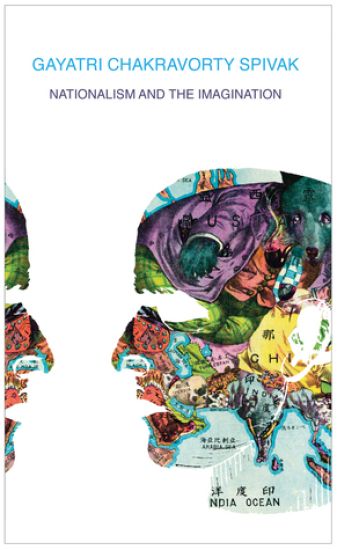
Gayatri Chakravorty Spivak has distinguished herself as one of the foremost scholars of contemporary literary and postcolonial theory and feminist thought. Known for her translation of Derrida's On Grammatology and her groundbreaking essay, Can the Subaltern Speak?, Spivak has often focused on subaltern, marginalized women and the role of essentialism in feminist thought to unite women from divergent cultural backgrounds. In Nationalism and the Imagination, Spivak expands upon her previous postcolonial scholarship, employing a cultural lens to examine the rhetorical underpinnings of the idea of the nation-state. In this gripping and intellectually rigorous work, Spivak specifically analyzes the creation of Indian sovereignty in 1947 and the tone of Indian nationalism, bound up with class and religion, that arose in its wake. Spivak was five years old when independence was declared, and she vividly writes: These are my earliest memories: Famine and blood on the streets. As well, she recollects the songs and folklore stories that were prevalent at the time in order to examine the role of the mother tongue and the relationship between language and feelings of national identity. She concludes that nationalism colludes with the private sphere of the imagination in order to command the public sphere. Originally given as an address at the University of Sofia in Bulgaria, Nationalism and the Imagination provides powerful insight into the historical narrative of India as well as compelling ideas that speak to nationalist concerns around the world. Also included in this book is the discussion with Spivak that followed the speech, making this an essential and informative work for scholars of post-colonialism.
Subalternisering och den globala utopin

Subalternisering och den globala utopin

Gayatri Chakravorty Spivak

Tankekraft Förlag
2014
nidottu
Gayatri Chakravorty Spivak har under de senaste decennierna etablerat sig som en av vår tids viktigaste intellektuella. I sin kritik har hon, utifrån en marxistisk hållning, analyserat globala materiella och kunskapsmässiga maktojämlikheter, men också utmanat koloniala strukturer och mönster inom vänsterns tanketraditioner. Föreliggande volym samlar, för första gången på svenska, några av de texter som har bidragit till att grundlägga Spivaks ryktbarhet såväl inom en rad akademiska discipliner som i politiska aktivistmiljöer. Från den klassiska ”Kan den subalterna tala?”, som tillhör grundtexterna inom fältet postkoloniala studier, till mer sentida interventioner som ”Översättningens politik” och ”Att situera feminismen”, ges en bred introduktion till flera av de teman i Spivaks kritik som alltjämt engagerar och väcker debatt: blottläggandet av koloniala mönster i teori och praktik, humanvetenskapernas roll, läsandets och översättandets betydelse samt det komplexa och nödvändiga sambandet mellan intellektuellt arbete och politisk aktivism. I ett längre förord presenterar Mikela Lundahl de valda texterna och ger en översikt över Spivaks arbete i stort. I anslutning till föreliggande antologi har TankeKraft förlag även publicerat Spivaks essä ”Att rätta orätt”. Innehåll: - Förord av Gayatri C. Spivak - Inledning: Att lära av och med Spivak - Gamla och nya diasporer - Kvinnor i den transnationella världen - Den nya invandraren - Komparativismen omprövad - Översättningens politik - Spridda spekulationer om subalternt och folkligt - Att situera feminismen - Tre kvinnotexter och en kritik av imperialismen - Kan den subalterna tala?
An Aesthetic Education in the Era of Globalization

An Aesthetic Education in the Era of Globalization

Gayatri Chakravorty Spivak

Harvard University Press
2013
nidottu
During the past twenty years, the world’s most renowned critical theorist—the scholar who defined the field of postcolonial studies—has experienced a radical reorientation in her thinking. Finding the neat polarities of tradition and modernity, colonial and postcolonial, no longer sufficient for interpreting the globalized present, she turns elsewhere to make her central argument: that aesthetic education is the last available instrument for implementing global justice and democracy.Spivak’s unwillingness to sacrifice the ethical in the name of the aesthetic, or to sacrifice the aesthetic in grappling with the political, makes her task formidable. As she wrestles with these fraught relationships, she rewrites Friedrich Schiller’s concept of play as double bind, reading Gregory Bateson with Gramsci as she negotiates Immanuel Kant, while in dialogue with her teacher Paul de Man. Among the concerns Spivak addresses is this: Are we ready to forfeit the wealth of the world’s languages in the name of global communication? “Even a good globalization (the failed dream of socialism) requires the uniformity which the diversity of mother-tongues must challenge,” Spivak writes. “The tower of Babel is our refuge.”In essays on theory, translation, Marxism, gender, and world literature, and on writers such as Assia Djebar, J. M. Coetzee, and Rabindranath Tagore, Spivak argues for the social urgency of the humanities and renews the case for literary studies, imprisoned in the corporate university. “Perhaps,” she writes, “the literary can still do something.”
Rewriting Difference

Rewriting Difference

Gayatri Chakravorty Spivak

State University of New York Press
2010
pokkari
A transdisciplinary reader on Luce Irigaray's reading and re-writing of Ancient Greek texts.In this definitive reader, prominent scholars reflect on how Luce Irigaray reads the classic discourse of Western metaphysics and also how she is read within and against this discourse. Her return to "the Greeks," through strategies of deconstructing, demythifying, reconstructing, and remythifying, is not a nostalgic return to the ideality of Hellenocentric antiquity, but rather an affirmatively critical revisiting of this ideality. Her persistent return and affective bond to ancient Greek logos, mythos, and tragedy sheds light on some of the most complex epistemological issues in contemporary theory, such as the workings of criticism, the language of politics and the politics of language, the possibility of social and symbolic transformation, the multiple mediations between metropolitan and postcolonial contexts of theory and practice, the question of the other, and the function of the feminine in Western metaphysics. With a foreword by Gayatri Chakravorty Spivak and a chapter by Irigaray responding to her commentators, this book is an essential text for those in social theory, comparative literature, or classics.