Kirjojen hintavertailu. Mukana 12 405 880 kirjaa ja 12 kauppaa.

Kirjailija

Gayle Rogers

Kirjat ja teokset yhdessä paikassa: 11 kirjaa, julkaisuja vuosilta 2014-2026, suosituimpien joukossa Modernism and the New Spain. Vertaile teosten hintoja ja tarkista saatavuus suomalaisista kirjakaupoista.

11 kirjaa

Kirjojen julkaisuhaarukka 2014-2026.

Modernism and the New Spain

Modernism and the New Spain

Gayle Rogers

Academic Studies Press
2026
pokkari
? ????? ????? ???? ??????? ?????????????? ????????????? ????? ???? ???????? ????????????? ???????? — ??????????? ? ??????????, ????????? ??????? ?? ????????, ? ????? ???????? ? ????? ???????. ? ?????? ???????????? — ????????????????? ???????????? ? ?????????? ??????????????: ?????? ????? ????????? ?. ?. ?????? ? ???? ??????-?-???????, ??????? «??????» ??. ?????? ?? ????????? ???????????????? ??????????, ?????? ? ????????? ???????? ? ??????? ?????????? ?????????????? ??????? ? ?????????? ????????? ???? ??? ???????? ??????? ???????????? ??????????? ???????? ??????, ? ????? ?????????????? ??????????? ???????????, ??????????????? ?????? ???????? ?????? ?????. ??????????? ?? ???????? ??????? ??????????, ??????? ?????????????, ??? ?????????? ????????? ?????????????? ????? ??? ?????????????? ???????????? ?????? ?? ? ???????????? ??????? — ???????, ?????? ? ???????, ? ? ?????????????? ???????????? ???????.
Modernism and the New Spain

Modernism and the New Spain

Gayle Rogers

Academic Studies Press
2026
sidottu
? ????? ????? ???? ??????? ?????????????? ????????????? ????? ???? ???????? ????????????? ???????? — ??????????? ? ??????????, ????????? ??????? ?? ????????, ? ????? ???????? ? ????? ???????. ? ?????? ???????????? — ????????????????? ???????????? ? ?????????? ??????????????: ?????? ????? ????????? ?. ?. ?????? ? ???? ??????-?-???????, ??????? «??????» ??. ?????? ?? ????????? ???????????????? ??????????, ?????? ? ????????? ???????? ? ??????? ?????????? ?????????????? ??????? ? ?????????? ????????? ???? ??? ???????? ??????? ???????????? ??????????? ???????? ??????, ? ????? ?????????????? ??????????? ???????????, ??????????????? ?????? ???????? ?????? ?????. ??????????? ?? ???????? ??????? ??????????, ??????? ?????????????, ??? ?????????? ????????? ?????????????? ????? ??? ?????????????? ???????????? ?????? ?? ? ???????????? ??????? — ???????, ?????? ? ???????, ? ? ?????????????? ???????????? ???????.
Healing the Traumatized Soul

Healing the Traumatized Soul

Gayle Rogers

Mainspring Books
2022
pokkari
Living a life of freedom from mental and emotional issues is a challenge yet attainable. It requires tenacity, endurance, and a resolve to be completely and forever free. - is book was originally written 17 years ago as a doctoral dissertation project about inner healing and deliverance for hurting women and children from sexual trauma and intimate partner violence, relating the narratives of women who have experienced healing. Although its focus during the initial dissertation process was narrowed to only include African American women, it is about all women, men, and children across all cultures. Considering the trauma experienced by the entire world during the COVID-19 pandemic, its expanded chapters include PTSD and other mental health challenges. It also includes research of other cultures. Though the author writes from a biblical based spiritual perspective, by no means is she implying, it is the only method of receiving healing.
Speculation

Speculation

Gayle Rogers

Columbia University Press
2021
sidottu
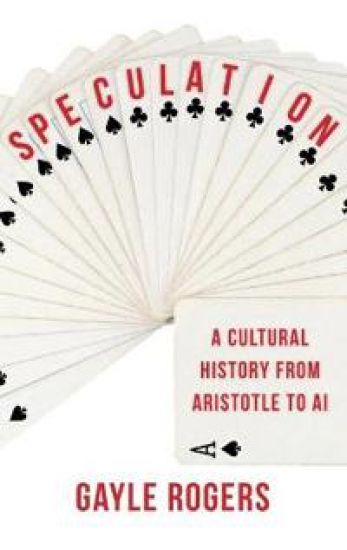
In the modern world, why do we still resort to speculation? Advances in scientific and statistical reasoning are supposed to have provided greater certainty in making claims about the future. Yet we constantly spin out scenarios about tomorrow, for ourselves or for entire societies, with flimsy or no evidence. Insubstantial speculations—from utopian thinking to high-risk stock gambles—often provoke fierce backlash, even when they prove prophetic for the world we come to inhabit. Why does this hypothetical way of thinking generate such controversy?In this cultural, literary, and intellectual history, Gayle Rogers traces debates over speculation from antiquity to the present. Celebrated by Boethius as the height of humanity’s mental powers but denigrated as sinful by John Calvin, speculation eventually became central to the scientific revolution’s new methods of seeing the natural world. In the nineteenth century, writers such as Jane Austen used the concept to diagnose the marriage market, redefining speculation for the purpose of social critique. Speculation fueled the development of modern capitalism, spurring booms, busts, and bubbles, and recently artificial intelligence has automated the speculation previously done by humans, with uncertain and troubling consequences. Unraveling these histories and many other disputes, Rogers argues that what has always been at stake in arguments over speculation, and why it so often appears so threatening, is the authority to produce and control knowledge about the future.Recasting centuries of contests over the power to anticipate tomorrow, this book reveals the crucial role speculation has played in how we create—and potentially destroy—the future.
Speculation

Speculation

Gayle Rogers

Columbia University Press
2021
pokkari
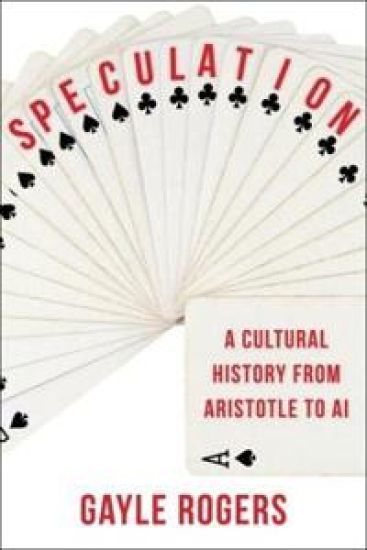
In the modern world, why do we still resort to speculation? Advances in scientific and statistical reasoning are supposed to have provided greater certainty in making claims about the future. Yet we constantly spin out scenarios about tomorrow, for ourselves or for entire societies, with flimsy or no evidence. Insubstantial speculations—from utopian thinking to high-risk stock gambles—often provoke fierce backlash, even when they prove prophetic for the world we come to inhabit. Why does this hypothetical way of thinking generate such controversy?In this cultural, literary, and intellectual history, Gayle Rogers traces debates over speculation from antiquity to the present. Celebrated by Boethius as the height of humanity’s mental powers but denigrated as sinful by John Calvin, speculation eventually became central to the scientific revolution’s new methods of seeing the natural world. In the nineteenth century, writers such as Jane Austen used the concept to diagnose the marriage market, redefining speculation for the purpose of social critique. Speculation fueled the development of modern capitalism, spurring booms, busts, and bubbles, and recently artificial intelligence has automated the speculation previously done by humans, with uncertain and troubling consequences. Unraveling these histories and many other disputes, Rogers argues that what has always been at stake in arguments over speculation, and why it so often appears so threatening, is the authority to produce and control knowledge about the future.Recasting centuries of contests over the power to anticipate tomorrow, this book reveals the crucial role speculation has played in how we create—and potentially destroy—the future.
Incomparable Empires

Incomparable Empires

Gayle Rogers

Columbia University Press
2018
pokkari
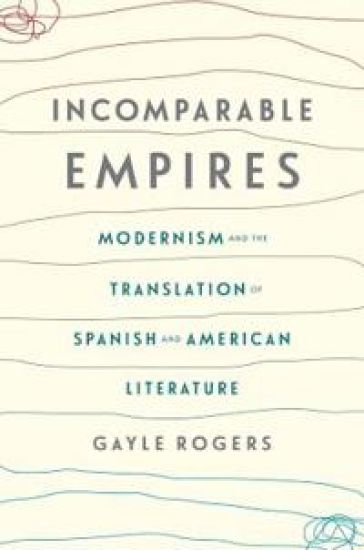
The Spanish-American War of 1898 seems to mark a turning point in both geopolitical and literary histories. The victorious American empire ascended and began its cultural domination of the globe in the twentieth century, while the once-mighty Spanish empire declined and became a minor state in the world republic of letters. But what if this narrative relies on several faulty assumptions, and what if key modernist figures in both America and Spain radically rewrote these histories at a foundational moment of modern literary studies?Following networks of American and Spanish writers, translators, and movements, Gayle Rogers uncovers the arguments that forged the politics and aesthetics of modernism. He revisits the role of empire—from its institutions to its cognitive effects—in shaping a nation's literature and culture. Ranging from universities to comparative practices, from Ezra Pound's failed ambitions as a Hispanist to Juan Ramón Jiménez's multilingual maps of modernismo, Rogers illuminates modernists' profound engagements with the formative dynamics of exceptionalist American and Spanish literary studies. He reads the provocative, often counterintuitive arguments of John Dos Passos, who held that "American literature" could only flourish if the expanding U.S. empire collapsed like Spain's did. And he also details both a controversial theorization of a Harlem–Havana–Madrid nexus for black modernist writing and Ernest Hemingway's unorthodox development of a version of cubist Spanglish in For Whom the Bell Tolls. Bringing together revisionary literary historiography and rich textual analyses, Rogers offers a striking account of why foreign literatures mattered so much to two dramatically changing countries at a pivotal moment in history.
Incomparable Empires

Incomparable Empires

Gayle Rogers

Columbia University Press
2016
sidottu
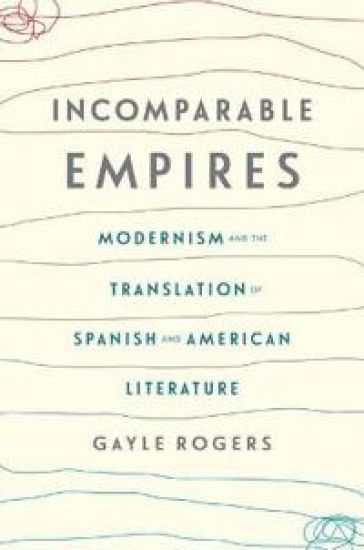
The Spanish-American War of 1898 seems to mark a turning point in both geopolitical and literary histories. The victorious American empire ascended and began its cultural domination of the globe in the twentieth century, while the once-mighty Spanish empire declined and became a minor state in the world republic of letters. But what if this narrative relies on several faulty assumptions, and what if key modernist figures in both America and Spain radically rewrote these histories at a foundational moment of modern literary studies? Following networks of American and Spanish writers, translators, and movements, Gayle Rogers uncovers the arguments that forged the politics and aesthetics of modernism. He revisits the role of empire-from its institutions to its cognitive effects-in shaping a nation's literature and culture. Ranging from universities to comparative practices, from Ezra Pound's failed ambitions as a Hispanist to Juan Ramon Jimenez's multilingual maps of modernismo, Rogers illuminates modernists' profound engagements with the formative dynamics of exceptionalist American and Spanish literary studies. He reads the provocative, often counterintuitive arguments of John Dos Passos, who held that "American literature" could only flourish if the expanding U.S. empire collapsed like Spain's did. And he also details both a controversial theorization of a Harlem-Havana-Madrid nexus for black modernist writing and Ernest Hemingway's unorthodox development of a version of cubist Spanglish in For Whom the Bell Tolls. Bringing together revisionary literary historiography and rich textual analyses, Rogers offers a striking account of why foreign literatures mattered so much to two dramatically changing countries at a pivotal moment in history.
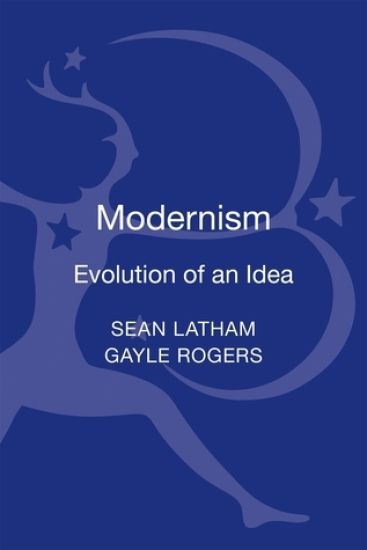
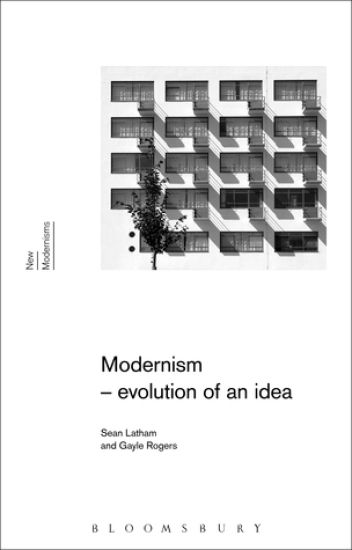
Modernism: Evolution of an Idea

Modernism: Evolution of an Idea

Sean Latham; Gayle Rogers

Bloomsbury Academic
2015
sidottu
What exactly is 'modernism'? And how has the critical definition of the word changed?Exploring shifting understandings of modernism from the beginning of the 20th century to the present day, this is a concise critical history of modernist criticism. Taking an accessible chronological approach, Modernism: Evolution of An Idea covers such topics as:•Early debates, from Calinescu's Five Faces of Modernity to The New Age magazine and writer-critics such as T.S. Eliot and Cyril Connolly•New Criticism and the forming of the modernist canon•The rise of Theory - from Derrida and Houston Baker to the Frankfurt School•New modernist studies and contemporary approaches: from international modernisms to engagements with race, sexuality and genderWith annotated guides to further reading throughout and a companion website with additional resources, this is an essential survey for students and scholars working in modernist studies at all levels.
Modernism: Evolution of an Idea

Modernism: Evolution of an Idea

Sean Latham; Gayle Rogers

Bloomsbury Academic
2015
nidottu
What exactly is “modernism”? And how and why has its definition changed over time?Modernism: Evolution of an Idea is the first book to trace the development of the term “modernism” from cultural debates in the early twentieth century to the dynamic contemporary field of modernist studies. Rather than assuming and recounting the contributions of modernism’s chief literary and artistic figures, this book focuses on critical formulations and reception through topics such as:- The evolution of “modernism” from a pejorative term in intellectual arguments, through its condemnation by Pope Pius X in 1907, and on to its subsequent centrality to definitions of new art by T. S. Eliot, Laura Riding and Robert Graves, F. R. Leavis, Edmund Wilson, and Clement Greenberg- New Criticism and its legacies in the formation of the modernist canon in anthologies, classrooms, and literary histories - The shifting conceptions of modernism during the rise of gender and race studies, French theory, Marxist criticism, postmodernism, and more - The New Modernist Studies and its contemporary engagements with the politics, institutions, and many cultures of modernism internationallyWith a glossary of key terms and movements and a capacious critical bibliography, this is an essential survey for students and scholars working in modernist studies at all levels.
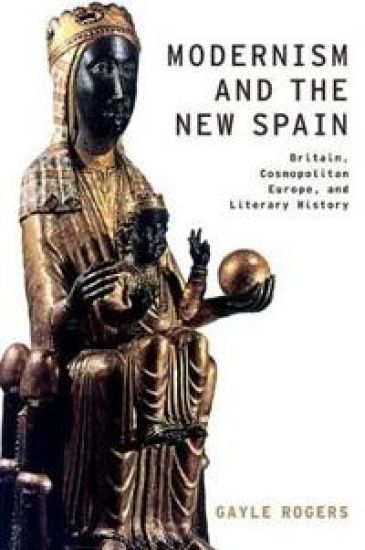
Modernism and the New Spain

Modernism and the New Spain

Gayle Rogers

Oxford University Press Inc
2014
nidottu
Assembling works in a variety of genres, Gayle Rogers reconstructs an archive of cross-cultural exchanges to reveal the mutual constitution of two modernist movements -- one in Britain, the other in Spain, with both stretching at key moments to Ireland and the Americas. Several sites of transnational collaboration form the core of Rogers's innovative literary history: the relationship between T. S. Eliot's Criterion and José Ortega y Gasset's Revista de Occidente; the 1922 publication of Joyce's Ulysses and how its forward-thinking sentiments on race and nation resonated within Spain; the connections between fighting Spanish fascism and dismantling the English patriarchal system in Virginia Woolf's Three Guineas, especially as activated by the Argentine dissident Victoria Ocampo; and the international, anti-fascist poetic community formed by Stephen Spender, Manuel Altolaguirre, and others as they sought to establish Federico García Lorca as an apolitical Spanish-European poet. Mining novels, periodicals, biographies, translations, and poetry in English and in Spanish, Modernism and the New Spain reveals how writers created reformative alliances to reinvent post-Great War Europe not in the London-Paris-Berlin nexus, but in Madrid.
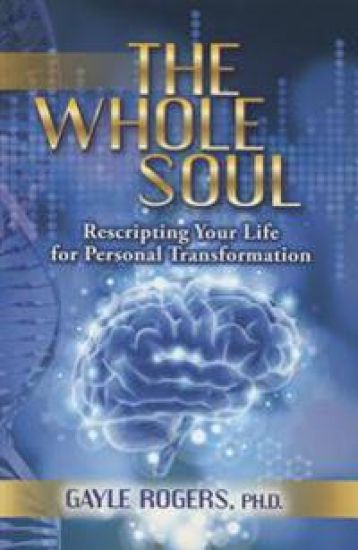
The Whole Soul

The Whole Soul

Gayle Rogers

Kingdom House Publishing
2014
nidottu
Transform your life as you change your thoughts. A key to wholeness is found in this simple yet profound truth. The Whole Soul offers simple solutions to earth-shattering, overwhelming, every day life crises. Transformation has never been easy, yet we have the solution to every issue we encounter. Imagine living a lifestyle where you literally have the power to walk over every circumstance, every obstacle, and every challenge. A lifestyle where you have authority to take captive every debilitating thought and toxic mindset - changing your life permanently. Eternity is in the hearts of men/women (Eccl. 3:11) giving dominion over every thought. You see, the circumstances we face every day are simply the result of our perception and how we navigate our thought life. In the pages of this book you will find the opportunity to choose victory over defeat.