Kirjojen hintavertailu. Mukana 12 595 353 kirjaa ja 12 kauppaa.

Kirjailija

Geert Hofstede

Kirjat ja teokset yhdessä paikassa: 7 kirjaa, julkaisuja vuosilta 1993-2017, suosituimpien joukossa Exploring Culture. Vertaile teosten hintoja ja tarkista saatavuus suomalaisista kirjakaupoista.

7 kirjaa

Kirjojen julkaisuhaarukka 1993-2017.

Kulturer og organisationer

Kulturer og organisationer

Geert Hofstede; Gert Jan Hofstede & Michael Minkov

Jurist- og økonom-
2010
nidottu
Kultur er de grundfæstede og ofte ubevidste værdier vi er vokset op med. Det er de kulturelle forskelle der adskiller os fra de andre. Bogen afdækker de værdier, der kendetegner de forskellige kulturer – såvel de nationale og regionale som de organisatoriske. Forfatterne redegør for disse værdier via kulturelle dimensioner som forholdet mellem magt og lighed, forholdet mellem individ og gruppe, sociale roller for kvinder og mænd samt usikkerhedsundvigelse og krisehåndtering. Disse begreber og værdier gøres levende og vedkommende med en række eksempler fra dagligdagen rundt om i verden.Forfatterne viser desuden hvordan man håndterer det interkulturelle – dvs. slår bro over forskellene i de kulturelle værdinormer, f.eks. i internationale koncerner. Bogen henvender sig især til ledere, faglige specialister og forhandlere i såvel erhvervslivet som organisationer, hvor der arbejdes på tværs af de kulturelle skel. Men alle med interesse for interkulturelle forhold og ønske om en større kulturforståelse, kan få glæde af denne spændende bog. I denne ajourførte 3. udgave medvirker Michael Minkov som ny medforfatter. Dette har bl.a. betydet, at datagrundlaget er udvidet med en række østeuropæiske lande, således at resultater, eksempler og kulturmodeller er blevet endnu bedre og mere nuancerede.
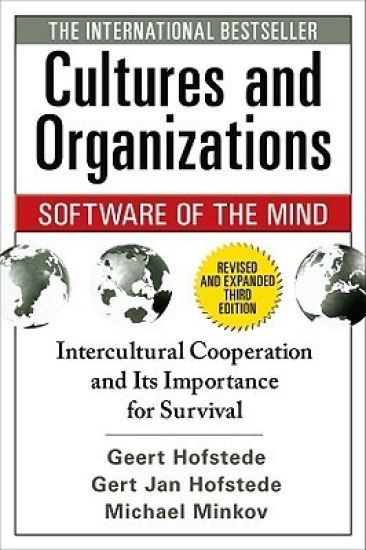
Cultures and Organizations: Software of the Mind, Third Edition

Cultures and Organizations: Software of the Mind, Third Edition

Geert Hofstede; Gert Jan Hofstede; Michael Minkov

McGraw-Hill Professional
2010
nidottu
The revolutionary study of how the place where wegrew up shapes the way we think, feel, and act--with new dimensions and perspectivesBased on research conducted in more than seventy countries over a forty-year span,Cultures and Organizations examines what drives people apart—when cooperationis so clearly in everyone’s interest. With major new contributions from MichaelMinkov’s analysis of data from the World Values Survey, as well as an account ofthe evolution of cultures by Gert Jan Hofstede, this revised and expanded edition:Reveals the “moral circles” from which national societiesare built and the unexamined rules by which people think,feel, and actExplores how national cultures differ in the areas of inequality,assertiveness versus modesty, and tolerance for ambiguityExplains how organizational cultures differ from nationalcultures—and how they can be managedAnalyzes stereotyping, differences in language, cultural rootsof the 2008 economic crisis, and other intercultural dynamics
Culture's Consequences

Culture's Consequences

Geert Hofstede

SAGE Publications Inc
2003
nidottu
"An important, sophisticated and complex monograph . . . Both the theoretical analysis and the empirical findings constitute major contributions to cross-cultural value analysis and the cross-cultural study of work motivations and organizational dynamics. This book is also a valuable resource for anyone interested in a historical or anthropological approach to cross-cultural comparisons."--PERSONNEL PSYCHOLOGY--PERSONNEL PSYCHOLOGYThe Second Edition of this classic work, first published in 1981 and an international best seller, explores the differences in thinking and social action that exist among members of more than 50 modern nations. Geert Hofstede argues that people carry "mental programs" which are developed in the family in early childhood and reinforced in schools and organizations, and that these programs contain components of national culture. They are expressed most clearly in the different values that predominate among people from different countries.Geert Hofstede has completely rewritten, revised and updated Culture's Consequences for the twenty-first century, he has broadened the book's cross-disciplinary appeal, expanded the coverage of countries examined from 40 to more than 50, reformulated his arguments and a large amount of new literature has been included. The book is structured around five major dimensions: power distance; uncertainty avoidance; individualism versus collectivism; masculinity versus femininity; and long term versus short-term orientation.
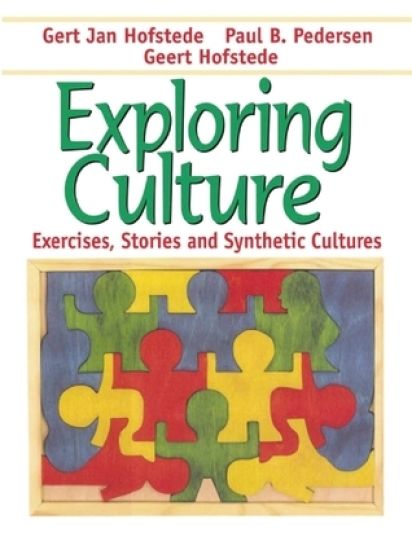
Exploring Culture

Exploring Culture

Geert Hofstede; Gert Jan Hofstede; Paul B. Pedersen

Intercultural Press
2002
pokkari
Exploring Culture brings Geert Hofstede's five dimensions of national culture to life. Gert Jan Hofstede and his co-authors Paul Pedersen and Geert Hofstede introduce synthetic cultures, the ten "pure" cultural types derived from the extremes of the five dimensions. The result is a playful book of practice that is firmly rooted in theory. Part light, part serious, but always thought-provoking, this unique book approaches training through the three-part process of building awareness, knowledge, and skills. It leads the reader through the first two components with more than 75 activities, dialogues, stories, and incidents. The Synthetic Culture Laboratory and two full simulations fulfill the skill-building component. Exploring Culture is suitable for students, trainers, coaches and educators. It can be used for individual study or as a text, and it serves as an excellent partner to Geert Hofstede's popular Cultures and Organizations.
Culture's Consequences

Culture's Consequences

Geert Hofstede

SAGE Publications Inc
2001
sidottu
"An important, sophisticated and complex monograph . . . Both the theoretical analysis and the empirical findings constitute major contributions to cross-cultural value analysis and the cross-cultural study of work motivations and organizational dynamics. This book is also a valuable resource for anyone interested in a historical or anthropological approach to cross-cultural comparisons."--PERSONNEL PSYCHOLOGY--PERSONNEL PSYCHOLOGYThe Second Edition of this classic work, first published in 1981 and an international best seller, explores the differences in thinking and social action that exist among members of more than 50 modern nations. Geert Hofstede argues that people carry "mental programs" which are developed in the family in early childhood and reinforced in schools and organizations, and that these programs contain components of national culture. They are expressed most clearly in the different values that predominate among people from different countries.Geert Hofstede has completely rewritten, revised and updated Culture's Consequences for the twenty-first century, he has broadened the book's cross-disciplinary appeal, expanded the coverage of countries examined from 40 to more than 50, reformulated his arguments and a large amount of new literature has been included. The book is structured around five major dimensions: power distance; uncertainty avoidance; individualism versus collectivism; masculinity versus femininity; and long term versus short-term orientation.
Interkulturelle Zusammenarbeit

Interkulturelle Zusammenarbeit

Geert Hofstede

Gabler Verlag
1993
nidottu
Ende der 60er Jahre beschäftigte ich mich eher zufällig mit kulturellen Unterschiede- und stieß dabei auf umfangreiches Material für eine Studie. Als Ergebnis dieser Studie wurde im Jahr 1980 ein Buch zu diesem Thema mit dem Titel Culture's Consequences veröffentlicht. Es war bewußt für ein Fachpublikum geschrieben, denn es weckte Zweifel an der Allgemeingültigkeit traditioneller Lehren der Psychologie, Organisationssoziolo­ gie und Manag!!menttheorie: ich mußte daher sowohl die theoretische Argumentation darlegen, als auch Basisdaten und die statistischen Verfahren angeben, an hand derer ich meine Thesen aufstellte. Die 1984 erschienene Taschenbuchausgabe verzichtete auf Basisdaten und Statistik, war ansonsten aber mit der gebundenen Ausgabe von 1980 identisch. Culture's Consequences erschien in einer Zeit, als das Interesse an kulturellen Unterschie­ den sowohl zwischen Ländern als auch zwischen Organisationen rapide anstieg; es gab damals kaum empirisch gestützte Informationen zu diesem Thema. Die Unterschiede zwischen Ländern waren zwar auch in dem vorherigen Buch enthalten, aber vielleicht waren es zu viele auf einmal. Offensichtlich haben sich viele Leser nur mit einem Teil des Inhalts befaßt. Viele Leute, die sich auf das Buch berufen, behaupten beispielsweise, ich hätte die Wertvorstellungen von IBM-(oder "Hermes-") Führungskräften untersucht. Die von mir verwendeten Daten bezogen sich auf IBM-Mitarbeiter, und wie das Buch selbst zeigte, ist dies ein erheblicher Unterschied.