Kirjojen hintavertailu. Mukana 12 156 538 kirjaa ja 12 kauppaa.

Kirjailija

Gene D. Phillips

Kirjat ja teokset yhdessä paikassa: 9 kirjaa, julkaisuja vuosilta 1988-2014, suosituimpien joukossa Some Like It Wilder. Vertaile teosten hintoja ja tarkista saatavuus suomalaisista kirjakaupoista.

Mukana myös kirjoitusasut: Gene D Phillips

9 kirjaa

Kirjojen julkaisuhaarukka 1988-2014.

Gangsters and G-Men on Screen

Gangsters and G-Men on Screen

Gene D. Phillips

Rowman Littlefield
2014
sidottu
While the gangster film may have enjoyed its heyday in the 1930s and ’40s, it has remained a movie staple for almost as long as cinema has existed. From the early films of Humphrey Bogart, James Cagney, and Edward G. Robinson to modern versions like Bugsy, Public Enemies, and Gangster Squad, such films capture the brutality of mobs and their leaders. In Gangsters and G-Men on Screen: Crime Cinema Then and Now, Gene D. Phillips revisits some of the most popular and iconic representations of the genre. While this volume offers new perspectives on some established classics—usual suspects like Little Caesar, Bonnie and Clyde, and The Godfather Part II—Phillips also calls attention to some of the unheralded but no less worthy films and filmmakers that represent the genre. Expanding the viewer’s notion of what constitutes a gangster film, Phillips offers such unusual choices as You Only Live Once, Key Largo, The Lady from Shanghai, and even the 1949 version of The Great Gatsby. Also included in this examination are more recent ventures, such as modern classics The Grifters and Martin Scorsese’s The Departed. In his analyses, Phillips draws on a number of sources, including personal interviews with directors and other artists and technicians associated with the films he discusses. Of interest to film historians and scholars, Gangsters and G-Men on Screen will also appeal to anyone who wants to better understand the films that represent an important contribution to crime cinema.
Out of the Shadows

Out of the Shadows

Gene D. Phillips

Scarecrow Press
2011
sidottu
Film noir was a cycle in American cinema which first came into prominence during World War II, peaked in the 1950s, and began to taper off as a definable trend by 1960. Over the years, a group of films from the period emerged as noir standards, beginning with Stranger on the Third Floor in 1940. However, since film noir is too wide-ranging, it cannot be kept within the narrow limits of the official canon that has been established by film historians. Consequently, several neglected movies made during the classic noir period need to be re-evaluated as noir films. In Out of the Shadows: Expanding the Canon of Classic Film Noir, Gene Phillips provides an in-depth examination of several key noir films, including acknowledged masterpieces like Laura, The Maltese Falcon, Sunset Boulevard, and Touch of Evil, as well as films not often associated with film noir like Spellbound, A Double Life, and Anatomy of a Murder. Phillips also examines overlooked or underappreciated films such as Song of the Thin Man, The Glass Key, Ministry of Fear, and Act of Violence. Also considered in this reevaluation are significant neo-noir films, among them Chinatown, Hammett, L.A. Confidential, and The Talented Mr. Ripley. In his analyses, Phillips draws upon a number of sources, including personal interviews with directors and others connected with their productions, screenplays, and evaluations of other commentators. Out of the Shadows explores not only the most celebrated noir films but offers new insight into underrated films that deserve reconsideration. Of interest to film historians and scholars, this volume will also appeal to anyone who wants a better understanding of the works that represent this unique cycle in American filmmaking.
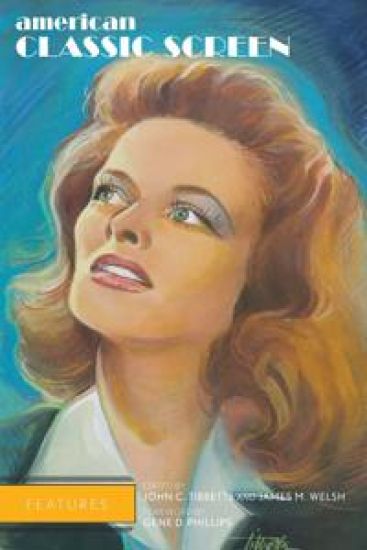
American Classic Screen Features

American Classic Screen Features

Gene D. Phillips

Scarecrow Press
2010
nidottu
First appearing in 1976, American Classic Screen was the publishing arm of The National Film Society. Intended for scholars and general readers interested in films from the golden age of cinema and beyond, the magazine ran for a decade and included original interviews, profiles, and articles that delved deep into the rich history of Hollywood. Contributors to the magazine included noted academics in the area of film studies, as well as independent scholars and authors eager to expand the world of cinema. Since the periodical's demise, however, many of the essays and articles have been difficult to find—at best—and in some cases, entirely unavailable. In American Classic Screen Features, editors John C. Tibbetts and James M. Welsh have assembled some of the most significant and memorable essays and critical pieces written for the magazine over its ten-year history. This collection contains fascinating accounts of Hollywood history including articles on Marilyn Monroe's first screen test, John Ford's favorite film, Olivia De Havilland's lawsuit against Warner Bros., Walt Disney's unfinished projects, and Stanley Kubrick's early noir classics, as well as such articles as "The Rise and Fall of the California Motion Picture Company," "Red Alert: Images of Communism in Hollywood," "Uncensored Garbo," and "The Lost Movie of Errol Flynn." This volume also contains in-depth examinations of classic films, including Birth of a Nation, The Big Parade, The Jazz Singer, King Kong, and Citizen Kane. This compendium of essays recaptures the spirit and scholarship of that time and will appeal to both scholars and fans who have an abiding interest in the American motion picture industry.
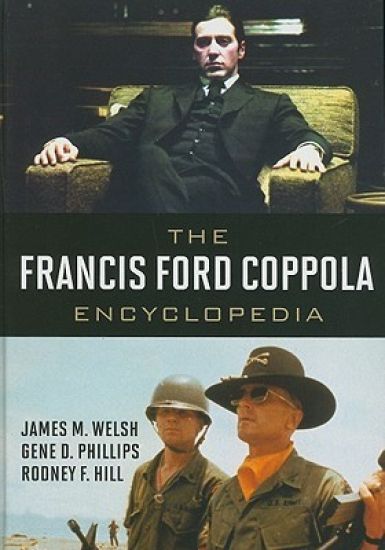
The Francis Ford Coppola Encyclopedia

The Francis Ford Coppola Encyclopedia

James M. Welsh; Gene D. Phillips; Rodney F. Hill

Scarecrow Press
2010
sidottu
Francis Ford Coppola's career has spanned five decades, from low budget films he produced in the early 1960s to more personal films of recent years. Because of the tremendous popular success of The Godfather and the tremendous critical success of its sequel, Coppola is considered to be one of the best directors of all time. The entries in this encyclopedia focus on all aspects of Coppola's work—from his early days with producer Roger Corman to his films as the director of the 1970s. This extensive reference contains material on all of the films Coppola has played a role in, from screenwriter to producer to director, including such classics as Patton, The Godfather, The Conversation, The Godfather Part II, and Apocalypse Now. Each entry is followed by a bibliography of published sources, both in print and online, making The Francis Ford Coppola Encyclopedia the most comprehensive reference on this director's body of work.
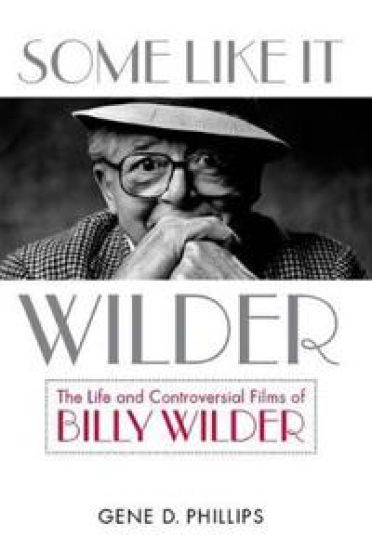
Some Like It Wilder

Some Like It Wilder

Gene D Phillips

The University Press of Kentucky
2010
sidottu
One of the most accomplished writers and directors of classic Hollywood, Billy Wilder (1906--2002) directed numerous acclaimed films, including Sunset Boulevard (1950), Sabrina (1954), The Seven Year Itch (1955), Witness for the Prosecution (1957), and Some Like It Hot (1959). Featuring Gene D. Phillips's unique, in-depth critical approach, Some Like It Wilder: The Life and Controversial Films of Billy Wilder provides a groundbreaking overview of a filmmaking icon. Wilder began his career as a screenwriter in Berlin but, because of his Jewish heritage, sought refuge in America when Germany came under Nazi control. Making fast connections in Hollywood, Wilder immediately made the jump from screenwriter to director. His classic films Five Graves to Cairo (1943), Double Indemnity (1945), and The Lost Weekend (1945) earned Academy Awards for best picture, director, and screenplay. During the 1960s, Wilder continued to direct and produce controversial comedies, including Kiss Me, Stupid (1964) and The Apartment (1960), which won Oscars for best picture and director. This definitive biography reveals that Wilder was, and remains, one of the most influential directors in filmmaking.
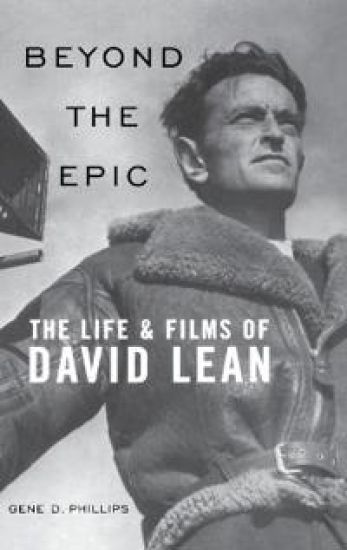
Beyond the Epic

Beyond the Epic

Gene D. Phillips

The University Press of Kentucky
2006
sidottu
Two-time Academy Award winner Sir David Lean (1908-1991) was a prominent director in the world of twentieth-century cinema, responsible for such classics as The Bridge on the River Kwai, Doctor Zhivago, and Lawrence of Arabia. British-born Lean asserted himself in Hollywood as a major artistic voice with his epic storytelling and panoramic depictions of history, but he was also a highly skilled film editor in Great Britain before he became a director who brought an art-house sensibility to big market films. Lean's approach to filmmaking was far different from that of his contemporaries. He carefully chose his projects and, as a result, directed only sixteen films in a span of more than forty years. Those films, however, are some of the landmarks of motion-picture history. In addition to his epics, Lean also made adaptations of well-known novels, including Great Expectations, Oliver Twist, and A Passage to India, and plays, including Brief Encounter. Using elements of both biography and film criticism, author Gene D. Phillips examines the screenplays and production histories central to Lean's body of work and interviews actors and other directors who worked with Lean. Phillips also explores Lean's lesser-studied films, such as The Passionate Friends, unearthing new details. This in-depth examination of Lean in a cultural, historic, and cinematic context makes Beyond the Epic truly unique -- a vital assessment of a great director's artistic process and his place in an evolving film industry.
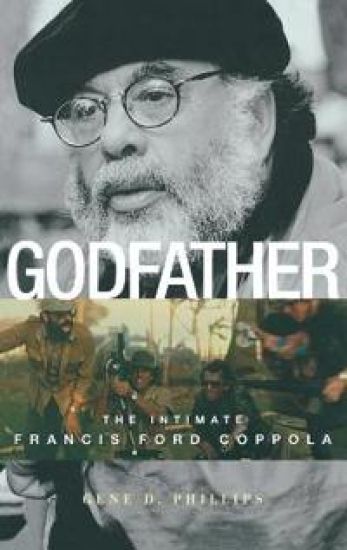
Godfather

Godfather

Gene D. Phillips

The University Press of Kentucky
2004
sidottu
Biography, studio history, and film criticism are blended to capture the work of Francis Ford Coppola, the director behind distinct films, such as Apocalypse Now, that reflect his creative control over all aspects of the filmmaking process.
Conrad and Cinema

Conrad and Cinema

Gene D. Phillips

Peter Lang Publishing Inc
1997
nidottu
The purpose of this book is to show how the wedding of fiction and film works out concretely in a book that focuses on the screen versions of the work of a single novelist, Joseph Conrad. Conrad is not only one of the greatest writers of this century, but has the distinction of having all of his major works committed to film, including "Lord Jim" and "Heart of Darkness" (as "Apocalypse Now)." Here is an in-depth study of the films of Conrad's fiction, solidly based on both literary and cinematic theory. The author conducted interviews with several of the notable directors who made Conrad films, including Sir Alfred Hitchcock and Francis Coppola; this interview material is a highlight of the book.