Kirjailija
Gene Roberts
Kirjat ja teokset yhdessä paikassa: 9 kirjaa, julkaisuja vuosilta 1977-2026, suosituimpien joukossa The Seventh Trumpet. Vertaile teosten hintoja ja tarkista saatavuus suomalaisista kirjakaupoista.
9 kirjaa
Kirjojen julkaisuhaarukka 1977-2026.



Former New York Times correspondent John N. Herbers (1923-2017), who covered the civil rights movement for more than a decade, has produced Deep South Dispatch: Memoir of a Civil Rights Journalist, a compelling story of national and historical significance. Born in the South during a time of entrenched racial segregation, Herbers witnessed a succession of landmark civil rights uprisings that rocked the country, the world, and his own conscience. Herbers's retrospective is a timely and critical illumination on America's current racial dilemmas and ongoing quest for justice.Herbers's reporting began in 1951, when he covered the brutal execution of Willie McGee, a black man convicted for the rape of a white housewife, and the 1955 trial for the murder of Emmett Till, a black teenager killed for allegedly whistling at a white woman. With immediacy and first-hand detail, Herbers describes the assassination of John F. Kennedy; the death of four black girls in the Birmingham, Alabama, church bombing; extensive travels and interviews with Martin Luther King Jr.; Ku Klux Klan cross-burning rallies and private meetings; the Freedom Summer murders in Philadelphia, Mississippi; and marches and riots in St. Augustine, Florida, and Selma, Alabama, that led to passage of national civil rights legislation.This account is also a personal journey as Herbers witnessed the movement with the conflicted eyes of a man dedicated to his southern heritage but who also rejected the prescribed laws and mores of a prejudiced society. His story provides a complex understanding of how the southern status quo, in which the white establishment benefited at the expense of African Americans, was transformed by a national outcry for justice.

During my time in health care ( 47 years), I saw much in the way of suffering and adversity. In line with that, I often hear the question "why do Christians suffer?" When I or my family met with adversity, my resource was always God and the Bible. I have read several books on the subject and it just seemed to me "they" were leaving out much of what the Bible has to say about suffering and adversity. Through much prayer and after several years, I have a book which I believe will help answer the question of why Christians suffer and it is basically a step by step Biblical approach to help deal with suffering and adversity. It covers the subjects of "Who is God", "Who is Jesus", and why does it matter ... on to the subject of prayer and a need for an open, accepting heart.
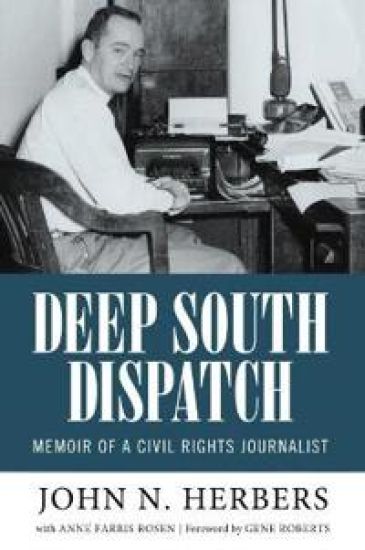
Former New York Times correspondent John N. Herbers (1923-2017), who covered the civil rights movement for more than a decade, has produced Deep South Dispatch: Memoir of a Civil Rights Journalist, a compelling story of national and historical significance. Born in the South during a time of entrenched racial segregation, Herbers witnessed a succession of landmark civil rights uprisings that rocked the country, the world, and his own conscience. Herbers's retrospective is a timely and critical illumination on America's current racial dilemmas and ongoing quest for justice.Herbers's reporting began in 1951, when he covered the brutal execution of Willie McGee, a black man convicted for the rape of a white housewife, and the 1955 murder trial of Emmett Till, a black teenager killed for allegedly whistling at a white woman. With immediacy and first-hand detail, Herbers describes the assassination of John F. Kennedy; the death of four black girls in the Birmingham, Alabama, church bombing; extensive travels and interviews with Martin Luther King Jr.; Ku Klux Klan cross-burning rallies and private meetings; the Freedom Summer murders in Philadelphia, Mississippi; and marches and riots in St. Augustine, Florida, and Selma, Alabama, that led to passage of national civil rights legislation.This account is also a personal journey as Herbers witnessed the movement with the conflicted eyes of a man dedicated to his southern heritage but who also rejected the prescribed laws and mores of a prejudiced society. His story provides a complex understanding of how the southern status quo, in which the white establishment benefited at the expense of African Americans, was transformed by a national outcry for justice.

The American newspaper industry is in the middle of the most momentous change in its entire three-hundred-year history. A generation of relentless "corporatization" has resulted in a furious, unprecedented blitz of buying, selling, and consolidation of newspapers, accompanied by dramatic -- and drastic -- change in reporting and coverage of all kinds. Concerned that this phenomenon was going largely unreported, Gene Roberts, legendary reporter and editor, decided to undertake a huge, extended reportorial study of his own industry, what would become the Project on the State of the American Newspaper. Gathering more than two dozen distinguished journalists and writers, Roberts produced a long series of reports in the American Journalism Review, published by the University of Maryland's Philip Merrill College of Journalism, asking the crucial question: Are American communities -- in the very middle of the so-called information explosion -- in danger of becoming less informed than ever?