Kirjojen hintavertailu. Mukana 12 595 353 kirjaa ja 12 kauppaa.
Kirjailija
Genserik Reniers
Kirjat ja teokset yhdessä paikassa: 14 kirjaa, julkaisuja vuosilta 2010-2026, suosituimpien joukossa Resilience Assessment of Oil and Gas Infrastructures. Vertaile teosten hintoja ja tarkista saatavuus suomalaisista kirjakaupoista.
This revised and updated 4th edition of Engineering Risk Management (ERM) presents an understanding and insights into what risk is, what it constitutes, and how to interpret the building blocks of the concept. It promotes a culture of risk awareness and integrating risk management principles and practices into the educational environment. This is essential to ensure that students have the knowledge and skills to identify hazards and assess and control risks in different contexts through the development and implementation of a risk management curriculum. The book also elaborates on the differences between safety and security, and risk management metaphors. Models, theories and principles are discussed, as well as risk assessment methods, risk treatment, risk resilience and micro-economic approaches to optimizing risk decision-making. Some iconic major accidents are explained, followed by examples of practical implementation of ERM in chemistry, physics, and nanotechnology. Overall, the interface between risk management and education is essential to develop a generation of professionals who can effectively deal with risks in a variety of contexts. By integrating risk management principles and practices into the educational process, educational institutions can help ensure, that their students are well prepared to meet the challenges of the modern world.
This book provides insight into domino effects in industrial chemical sites and process industries. It is about the integration of safety and security resources to prevent and mitigate domino effects in the process industries. It explains how chemical industrial areas, comprised of various hazardous installations, are susceptible to a chain of undesired events, or domino effects, triggered by accidental events or intentional attacks and then presents solutions to prevent them. Firstly, the book provides a dynamic graph approach to model the domino effects induced by accidental fire or intentional fire, considering the spatial-temporal evolution of fires. Then, a dynamic risk assessment method based on a discrete dynamic event tree is proposed to assess the likelihood of VCEs and the vulnerability of installations, addressing the time dependencies in vapor cloud dispersion and the uncertainty of delayed ignitions. A dynamic methodology based on dynamic graphs and Monte Carlois provided to assess the vulnerability of individuals and installations exposed to multi-hazards, such as fire, explosion and toxic release during escalation events. Based on these domino effect models, an economic approach is developed to integrate safe and security resources, obtaining the most cost–benefit protection strategy for preventing domino effects. Finally, a resilience-based approach is provided to find out the most cost-resilient way to protect chemical industrial areas, addressing possible domino effects. This integrated approach will be of interest to researchers, industrial engineers, chemical engineers and safety managers and will help professionals to new solutions in the area of safety and security.
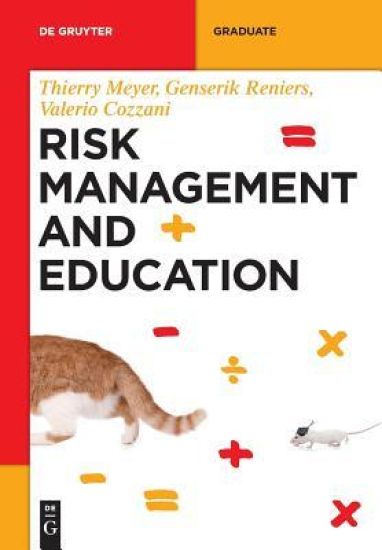
This book is a valuable resource for achieving and promoting a culture of risk awareness and integrating risk management principles and practices into the educational environment. This integration is essential to ensure that students have the knowledge and skills to identify hazards, and assess and control risks in different contexts through the development and implementation of a risk management curriculum. Besides theoretical considerations and learning to ask the right questions at all times for the sake of critical thinking, effective risk management education also involves the use of case studies, simulations and other experiential learning tools to help students understand and apply risk management concepts in real-life situations. This approach helps students develop a questioning attitude and problem-solving skills, which are essential for effective risk management. Overall, the interface between risk management and education is essential to develop a generation of professionals who can effectively deal with risks in a variety of contexts. By integrating risk management principles and practices into the educational process, educational institutions can help ensure that their students are well prepared to meet the challenges of the modern world.
This book provides insight into domino effects in industrial chemical sites and process industries. It is about the integration of safety and security resources to prevent and mitigate domino effects in the process industries. It explains how chemical industrial areas, comprised of various hazardous installations, are susceptible to a chain of undesired events, or domino effects, triggered by accidental events or intentional attacks and then presents solutions to prevent them. Firstly, the book provides a dynamic graph approach to model the domino effects induced by accidental fire or intentional fire, considering the spatial-temporal evolution of fires. Then, a dynamic risk assessment method based on a discrete dynamic event tree is proposed to assess the likelihood of VCEs and the vulnerability of installations, addressing the time dependencies in vapor cloud dispersion and the uncertainty of delayed ignitions. A dynamic methodology based on dynamic graphs and Monte Carlois provided to assess the vulnerability of individuals and installations exposed to multi-hazards, such as fire, explosion and toxic release during escalation events. Based on these domino effect models, an economic approach is developed to integrate safe and security resources, obtaining the most cost–benefit protection strategy for preventing domino effects. Finally, a resilience-based approach is provided to find out the most cost-resilient way to protect chemical industrial areas, addressing possible domino effects. This integrated approach will be of interest to researchers, industrial engineers, chemical engineers and safety managers and will help professionals to new solutions in the area of safety and security.
Physical Security in the Process Industry: Theory with Applications deals with physical security in the field of critical infrastructures where hazardous materials are a factor, along with the state-of-the-art thinking and modeling methods for enhancing physical security. The book offers approaches based on scientific insights, mainly addressing terrorist attacks. Moreover, the use of innovative techniques is explained, including Bayesian networks, game-theory and petri-networks. Dealing with economic parameters and constraints and calculating the costs and benefits of security measures are also included. The book will be of interest to security (and safety) scientists, security managers and the public at large.
Risk and Safety Management are crucial aspects in chemical industry and academic laboratories. From their rich experience in academic education and industrial practice, the authors present options for professional training addressing engineers and scientists at different career levels. The book informs about existing norms (OHSAS, ISO, etc.) and discusses examples from several countries.
This book systematically studies how game theory can be used to improve security in chemical industrial areas, capturing the intelligent interactions between security managers and potential adversaries. The recent unfortunate terrorist attacks on critical infrastructures show that adversaries are intelligent and strategic. Game theoretic models have been extensively used in some domains to model these strategic adversaries. However, there is a lack of such advanced models to be employed by chemical security managers. In this book, game theoretic models for protecting chemical plants as well as clusters are proposed. Different equilibrium concepts are explored, with user-friendly explanation of how to reflect them to realistic cases. Based on efficient analysis of the properties of security issues in chemical plants/clusters, models in this book are capable to support resources allocations, cost-effectiveness analysis, cooperation incentives and alike.
This book systematically studies how game theory can be used to improve security in chemical industrial areas, capturing the intelligent interactions between security managers and potential adversaries. The recent unfortunate terrorist attacks on critical infrastructures show that adversaries are intelligent and strategic. Game theoretic models have been extensively used in some domains to model these strategic adversaries. However, there is a lack of such advanced models to be employed by chemical security managers. In this book, game theoretic models for protecting chemical plants as well as clusters are proposed. Different equilibrium concepts are explored, with user-friendly explanation of how to reflect them to realistic cases. Based on efficient analysis of the properties of security issues in chemical plants/clusters, models in this book are capable to support resources allocations, cost-effectiveness analysis, cooperation incentives and alike.
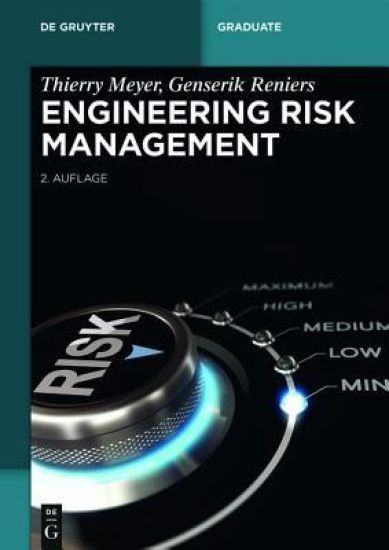
This revised 2nd edition of Engineering Risk Management presents engineering aspects of risk management. After an introduction to potential risks the authors presents management principles, risk diagnostics, analysis and treatments followed by examples of practical implementation in chemistry, physics and emerging technologies such as nanoparticles.
Though the game-theoretic approach has been vastly studied and utilized in relation to economics of industrial organizations, it has hardly been used to tackle safety management in multi-plant chemical industrial settings. Using Game Theory for Improving Safety within Chemical Industrial Parks presents an in-depth discussion of game-theoretic modeling which may be applied to improve cross-company prevention and -safety management in a chemical industrial park. By systematically analyzing game-theoretic models and approaches in relation to managing safety in chemical industrial parks, Using Game Theory for Improving Safety within Chemical Industrial Parks explores the ways game theory can predict the outcome of complex strategic investment decision making processes involving several adjacent chemical plants. A number of game-theoretic decision models are discussed to provide strategic tools for decision-making situations. Offering clear and straightforward explanations of methodologies, Using Game Theory for Improving Safety within Chemical Industrial Parks provides managers and management teams with approaches to asses situations and to improve strategic safety- and prevention arrangements.
The book presents risk management from an engineering perspective. Both a systemic and analytic viewpoint are important in this regard. The introduction to the concept of 'risk' is followed by risk management principles, risk diagnostic, analysis and treatment, event analysis, crisis management, economic issues, risk governance followed by examples of practical implementation in chemistry, physics and emerging technologies such as nanoparticles. Finally, also a number of well-known major industrial accidents are discussed, and how one can learn from accidents. The book is aimed at anyone faced with risk and safety issues. The target audience can be as diverse as students, engineers, scientists, sociologists, psychologists, or actually all practitioners and academics interested in the matter.
Though the game-theoretic approach has been vastly studied and utilized in relation to economics of industrial organizations, it has hardly been used to tackle safety management in multi-plant chemical industrial settings. Using Game Theory for Improving Safety within Chemical Industrial Parks presents an in-depth discussion of game-theoretic modeling which may be applied to improve cross-company prevention and -safety management in a chemical industrial park. By systematically analyzing game-theoretic models and approaches in relation to managing safety in chemical industrial parks, Using Game Theory for Improving Safety within Chemical Industrial Parks explores the ways game theory can predict the outcome of complex strategic investment decision making processes involving several adjacent chemical plants. A number of game-theoretic decision models are discussed to provide strategic tools for decision-making situations. Offering clear and straightforward explanations of methodologies, Using Game Theory for Improving Safety within Chemical Industrial Parks provides managers and management teams with approaches to asses situations and to improve strategic safety- and prevention arrangements.