Kirjojen hintavertailu. Mukana 12 152 606 kirjaa ja 12 kauppaa.

Kirjailija

Geoff Chaplin

Kirjat ja teokset yhdessä paikassa: 2 kirjaa, julkaisuja vuosilta 2009-2010, suosituimpien joukossa Life Settlements and Longevity Structures. Vertaile teosten hintoja ja tarkista saatavuus suomalaisista kirjakaupoista.

2 kirjaa

Kirjojen julkaisuhaarukka 2009-2010.

Life Settlements and Longevity Structures

Life Settlements and Longevity Structures

Geoff Chaplin; Jim Aspinwall; Mark Venn

John Wiley Sons Inc
2009
sidottu
Recent turbulence in the financial markets has highlighted the need for diversified portfolios with lower correlations between the different investments. Life settlements meet this need, offering investors the prospect of high, stable returns, uncorrelated with the broader financial markets. This book provides readers of all levels of experience with essential information on the process surrounding the acquisition and management of a portfolio of life settlements; the assessment, modelling and mitigation of the associated longevity, interest rate and credit risks; and practical approaches to financing and risk management structures. It begins with the history of life insurance and looks at how the need for new financing sources has led to the growth of the life settlements market in the United States. The authors provide a detailed exploration of the mathematical formulae surrounding the generation of mortality curves, drawing a parallel between the tools deployed in the credit derivatives market and those available to model longevity risk. Structured products and securitisation techniques are introduced and explained, starting with simple vanilla products and models before illustrating some of the investment structures associated with life settlements. Capital market mechanisms available to assist the investor in limiting the risks associated with life settlement portfolios are outlined, as are opportunities to use life settlement portfolios to mitigate the risks of traditional capital markets. The last section of the book covers derivative products, either available now or under consideration, that will reduce or potentially eliminate longevity risks within life settlement portfolios. It then reviews hedging and risk management strategies and considers how to measure the effectiveness of risk mitigation.
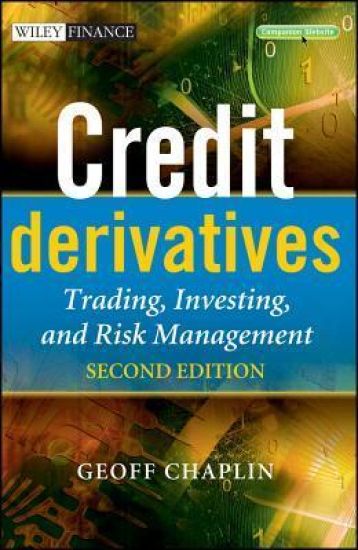
Credit Derivatives

Credit Derivatives

Geoff Chaplin

John Wiley Sons Inc
2010
sidottu
The credit derivatives industry has come under close scrutiny over the past few years, with the recent financial crisis highlighting the instability of a number of credit structures and throwing the industry into turmoil. What has been made clear by recent events is the necessity for a thorough understanding of credit derivatives by all parties involved in a transaction, especially traders, structurers, quants and investors. Fully revised and updated to take in to account the new products, markets and risk requirements post financial crisis, Credit Derivatives: Trading, Investing and Risk Management, Second Edition, covers the subject from a real world perspective, tackling issues such as liquidity, poor data, and credit spreads, to the latest innovations in portfolio products, hedging and risk management techniques. The book concentrates on practical issues and develops an understanding of the products through applications and detailed analysis of the risks and alternative means of trading. It provides: a description of the key products, applications, and an analysis of typical trades including basis trading, hedging, and credit structuring;analysis of the industry standard 'default and recovery' and Copula models including many examples, and a description of the models' shortcomings;tools and techniques for the management of a portfolio or book of credit risks including appropriate and inappropriate methods of correlation risk management;a thorough analysis of counterparty risk;an intuitive understanding of credit correlation in reality and in the Copula model. The book is thoroughly updated to reflect the changes the industry has seen over the past 5 years, notably with an analysis of the lead up and causes of the credit crisis. It contains 50% new material, which includes copula valuation and hedging, portfolio optimisation, portfolio products and correlation risk management, pricing in illiquid environments, chapters on the evolution of credit management systems, the credit meltdown and new chapters on the implementation and testing of credit derivative models and systems. The book is accompanied by a website which contains tools for credit derivatives valuation and risk management, illustrating the models used in the book and also providing a valuation toolkit.