Kirjojen hintavertailu. Mukana 12 390 323 kirjaa ja 12 kauppaa.

Kirjailija

Geoff Danaher

Kirjat ja teokset yhdessä paikassa: 5 kirjaa, julkaisuja vuosilta 2002-2012, suosituimpien joukossa Mobile Learning Communities. Vertaile teosten hintoja ja tarkista saatavuus suomalaisista kirjakaupoista.

5 kirjaa

Kirjojen julkaisuhaarukka 2002-2012.

Understanding Foucault

Understanding Foucault

Geoff Danaher

Allen Unwin
2012
nidottu
'An outstandingly good introduction to Foucault's work: lucid, measured, well organised, and covering this complex and in many ways heterogeneous body of work with remarkable thoroughness and ease.' - Professor John Frow, University of MelbourneMichel Foucault is now regarded as one of the most important thinkers of the twentieth century. He is known for his sensibility of critique and his commitment to movements for social change. His analysis of the ways our notions of truth, meaning, knowledge and reason are shaped by historical forces continues to influence thinkers around the world.Understanding Foucault offers a comprehensive introduction to Foucault's work. The authors examine Foucault's thinking in the context of the philosophies he engaged with during his career, and the events he participated in, including the student protests of 1968. A unique feature of the book is its consideration of the recently published lectures and minor works, and the authors show how these illuminate and extend our understanding of Foucault's major books.Understanding Foucault provides an accessible entree to the world of this extraordinary and challenging philosopher.
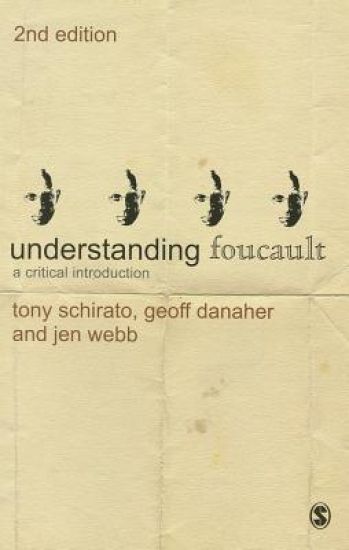
Understanding Foucault

Understanding Foucault

Tony Schirato; Geoff Danaher; Jenn Webb

SAGE Publications Ltd
2012
nidottu
"An outstandingly good introduction to Foucault's work: lucid, measured, well organised, and covering this complex and in many ways heterogeneous body of work with remarkable thoroughness and ease." - Professor John Frow, University of Melbourne "This is a clear and understandable book, starting with a very helpful glossary of theoretical terms... an accessible introduction to Foucault's major work exploring power and control, governmentality and ethics which are crucial for students to understand." - Tracy Ramsey, Liverpool Hope University "A very good accompaniment to any student thinking seriously about following the work of Foucault... Easy to follow, very well structured." - Mark Timoney, Sligo Institute of Technology Michel Foucault is now regarded as one of the most important thinkers of the twentieth century. He is known for his sensibility of critique and his commitment to movements for social change. His analysis of the ways our notions of truth, meaning, knowledge and reason are shaped by historical forces continues to influence thinkers around the world. Understanding Foucault offers a comprehensive introduction to Foucault's work. The authors examine Foucault's thinking in the context of the philosophies he engaged with during his career, and the events he participated in, including the student protests of 1968. A unique feature of the book is its consideration of recently published lectures and minor works, and the authors show how these illuminate and extend our understanding of Foucault's major books. Understanding Foucault provides an accessible entrée to the world of this extraordinary and challenging philosopher.
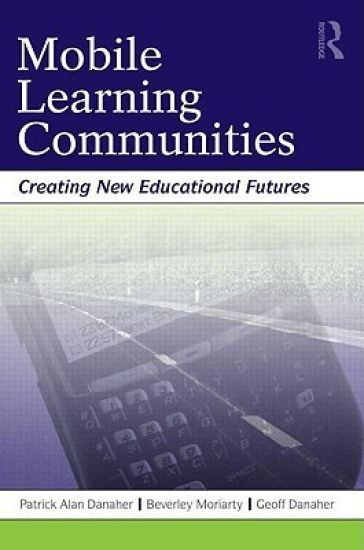
Mobile Learning Communities

Mobile Learning Communities

Patrick Alan Danaher; Beverley Moriarty; Geoff Danaher

Routledge
2009
nidottu
Mobile Learning Communities explores the diverse ways in which traveling groups experience learning ‘on the run’. This book provides empirical evidence that draws on the authors’ 17 years of continuing research with international occupational Travelers. It engages with themes such as workplace learning, globalization, multiliteracies, and emerging technologies which impinge on the ways mobile groups make sense of themselves as learning communities. International in focus, this book deals with an issue of increasing global significance and shows the complexities of the lives and learning experiences of such mobile cultures and their strategies for earning, learning, and living, thus challenging simplistic and stereotypical images of traveling groups still found in mainstream media and popular culture.Mobile Learning Communities brings together for the first time mobilities and learning communities into a single and comprehensive focus. It provides a detailed analysis of how mobile groups position themselves and how they are positioned by others. This text will appeal to scholars in the field of distance education and educational technology and to researchers in education, cultural studies, and sociology. It will also be of interest to educational instructors, policy-makers, and administrators, as well as teacher educators and pre-service teachers. It paints a vivid picture of the experience of mobility through the words of the mobile learners themselves, but also critiques existing notions of learning and suggests ways of creating new educational futures for all learners and educators.
Mobile Learning Communities

Mobile Learning Communities

Patrick Alan Danaher; Beverley Moriarty; Geoff Danaher

Routledge
2009
sidottu
Mobile Learning Communities explores the diverse ways in which traveling groups experience learning ‘on the run’. This book provides empirical evidence that draws on the authors’ 17 years of continuing research with international occupational Travelers. It engages with themes such as workplace learning, globalization, multiliteracies, and emerging technologies which impinge on the ways mobile groups make sense of themselves as learning communities. International in focus, this book deals with an issue of increasing global significance and shows the complexities of the lives and learning experiences of such mobile cultures and their strategies for earning, learning, and living, thus challenging simplistic and stereotypical images of traveling groups still found in mainstream media and popular culture.Mobile Learning Communities brings together for the first time mobilities and learning communities into a single and comprehensive focus. It provides a detailed analysis of how mobile groups position themselves and how they are positioned by others. This text will appeal to scholars in the field of distance education and educational technology and to researchers in education, cultural studies, and sociology. It will also be of interest to educational instructors, policy-makers, and administrators, as well as teacher educators and pre-service teachers. It paints a vivid picture of the experience of mobility through the words of the mobile learners themselves, but also critiques existing notions of learning and suggests ways of creating new educational futures for all learners and educators.
Understanding Bourdieu

Understanding Bourdieu

Jenn Webb; Tony Schirato; Geoff Danaher

SAGE Publications Inc
2002
nidottu
"Bourdieu's work is formidable - the journey is tough. Follow this French foreign legion - take an apple, take a hanky - but take this book". - Peter Beilharz , La Trobe University "A good range of recent examples from popular culture are used to flesh out the material in accessible terms. These examples are deployed very well indeed - rather than being tacked-on illustrations of an idea, they are instead used at the heart of the explanation of the ideas". - David Gauntlett, Leeds University Now considered one of the most influential thinkers of the 20th century, Pierre Bourdieu has left his mark on most of the 'big' theoretical issues in the world of contemporary theory: gender, subjectivity, the body, culture, citizenship, and globalization. His terms are now commonplace: 'social capital', 'cultural capital', 'field', and 'habitus'. Bourdieu examines how people conduct their lives in relation to one another and to major social institutions. He argues that culture and education aren't simply minor influences, but as important as economics in determining differences between groups of people. Unlike the other grand systematisers Marx and Foucault, Bourdieu has tested these arguments in detailed fieldwork. His range is eclectic, his vision is vast, and his writing is often dense and challenging. Understanding Bourdieu offers a comprehensive introduction to Bourdieu's work. It is essential reading for anyone tackling him for the first time.