Kirjojen hintavertailu. Mukana 12 126 711 kirjaa ja 12 kauppaa.

Kirjailija

Geoff Rayner-Canham

Kirjat ja teokset yhdessä paikassa: 12 kirjaa, julkaisuja vuosilta 2008-2024, suosituimpien joukossa Allgemeine und Anorganische Chemie. Vertaile teosten hintoja ja tarkista saatavuus suomalaisista kirjakaupoista.

12 kirjaa

Kirjojen julkaisuhaarukka 2008-2024.

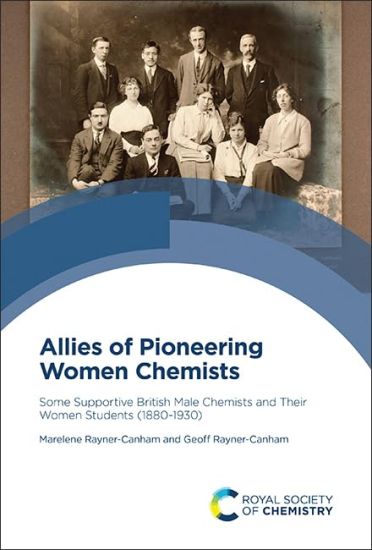
Allies of Pioneering Women Chemists

Allies of Pioneering Women Chemists

Marelene Rayner-Canham; Geoff Rayner-Canham

ROYAL SOCIETY OF CHEMISTRY
2024
sidottu
Continuing their research uncovering the lives of women chemists at the turn of the 20th Century, Geoff and Marelene Rayner-Canham have turned their attention to some of the male chemists who enabled women to thrive in chemistry. This book provides an insight into the character of 14 male chemists and their female students. Using contemporary quotes, the authors build an interesting narrative, demonstrating how the support and encouragement of their students was reciprocated with significant contributions to their fame and research. Beyond the lives of individuals, readers will explore a period of social change in chemistry, not only the acceptance of co-educational teaching, but also the development of domestic chemistry as a subject. Significantly, this period also saw the acceptance of women into the Chemical Society, championed by several of the men featured.
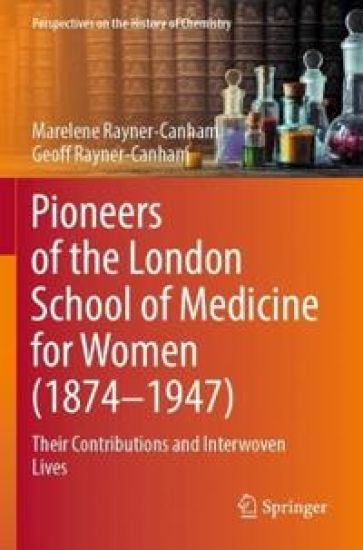
Pioneers of the London School of Medicine for Women (1874-1947)

Pioneers of the London School of Medicine for Women (1874-1947)

Marelene Rayner-Canham; Geoff Rayner-Canham

Springer Nature Switzerland AG
2023
nidottu
This book presents the pioneering role of the women chemists at the London School of Medicine for Women (LSMW). The account is placed within the framework of the long-forgotten background to the founding of this unique Institution, and the individuals whose lives came together to make it happen: Sophia Jex-Blake; Elizabeth Garrett Anderson; Edith Pechey; and Isabel Thorne. The London School of Medicine for Women (LSMW) was the first School in Britain to enable women to gain medical qualifications. Though its pioneering medical role is beginning to be recognized, the Chemistry Department at the School has been totally overlooked. All first-year students at the LSMW had to spend a significant portion of their time taking theoretical and practical chemistry, taught by dedicated women chemistry instructors. In this book, particular attention is given to each of these exceptionally-talented women chemists who found a haven at, and devoted their lives to, the LSMW. This book also covers theenthusiasm of the women medical students which becomes evident through the chemistry prose and poetry which they wrote. This book will appeal to a wide readership interested in the early role of women in science, and it is particularly relevant to those interested in the lives and contributions of pioneering women chemists.
Pioneers of the London School of Medicine for Women (1874-1947)

Pioneers of the London School of Medicine for Women (1874-1947)

Marelene Rayner-Canham; Geoff Rayner-Canham

Springer Nature Switzerland AG
2022
sidottu
This book presents the pioneering role of the women chemists at the London School of Medicine for Women (LSMW). The account is placed within the framework of the long-forgotten background to the founding of this unique Institution, and the individuals whose lives came together to make it happen: Sophia Jex-Blake; Elizabeth Garrett Anderson; Edith Pechey; and Isabel Thorne. The London School of Medicine for Women (LSMW) was the first School in Britain to enable women to gain medical qualifications. Though its pioneering medical role is beginning to be recognized, the Chemistry Department at the School has been totally overlooked. All first-year students at the LSMW had to spend a significant portion of their time taking theoretical and practical chemistry, taught by dedicated women chemistry instructors. In this book, particular attention is given to each of these exceptionally-talented women chemists who found a haven at, and devoted their lives to, the LSMW. This book also covers theenthusiasm of the women medical students which becomes evident through the chemistry prose and poetry which they wrote. This book will appeal to a wide readership interested in the early role of women in science, and it is particularly relevant to those interested in the lives and contributions of pioneering women chemists.
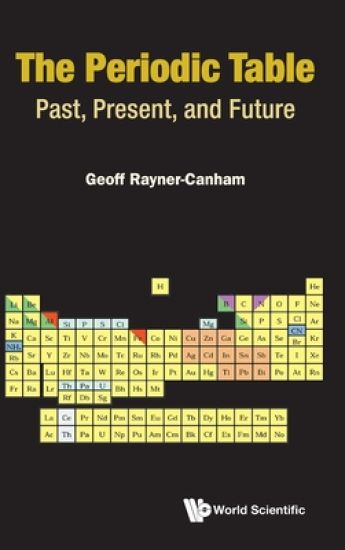
Periodic Table, The: Past, Present, And Future

Periodic Table, The: Past, Present, And Future

Geoff Rayner-canham

World Scientific Publishing Co Pte Ltd
2020
sidottu
'This is an an absolutely wonderful book that is full of gems about the elements and the periodic table … All in all, the book is highly recommended to philosophers of chemistry. As philosophers we have a natural tendency to concentrate on generalities and not to get too involved in the specifics and the details. Above all else, this new book reminds us that such an approach needs to be tempered by a detailed knowledge of the exceptions and features that go against the simplified generalities which we so cherish.' [Read Full Review]Eric ScerriFoundations of Chemistry'Many questions are dealt with in a clearly written way in this stimulating and innovative book. The reader will quickly become interested in the subject and will be taken on tour through this Periodic Table in a very readable way, both for students and teachers … The number of illustrations is good, and clear. This book is indeed unique and quite thought-provoking … This book is highly recommended for students, teachers, researchers and not only chemists! Geologists, biochemist and also physicists will find it very interesting to read.' [Read Full Review]Chemistry InternationalThat fossilized chart on every classroom wall — isn't that The Periodic Table? Isn't that what Mendeléev devised about a century ago? No and No. There are many ways of organizing the chemical elements, some of which are thought-provoking, and which reveal philosophical challenges. Where does hydrogen 'belong'? Can an element occupy more than one location on the chart? Which are the Group 3 elements? Is aluminum in the wrong place? Why is silver(I) like thallium(I)? Why is vanadium like molybdenum? Why does gold form an auride ion like a halide ion? Does an atom 'know' if it is a non-metal or metal? Which elements are the 'metalloids'? Which are the triels? So many questions! In this stimulating and innovative book, the Reader will be taken on a voyage from the past to the present to the future of the Periodic Table. This book is unique. This book is readable. This book is thought-provoking. It is a multi-dimensional examination of patterns and trends among the chemical elements. Every reader will discover something about the chemical elements which will provoke thought and a new appreciation as to how the elements relate together.
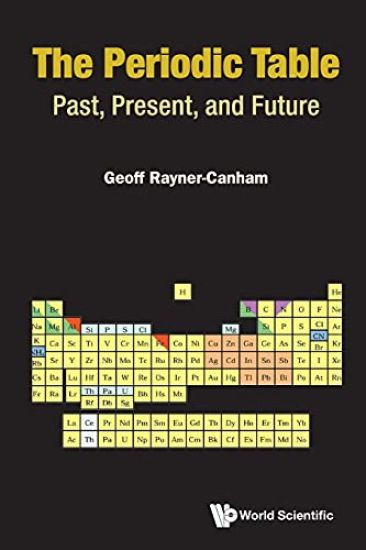
Periodic Table, The: Past, Present, And Future

Periodic Table, The: Past, Present, And Future

Geoff Rayner-canham

WORLD SCIENTIFIC PUBLISHING CO PTE LTD
2020
nidottu
'This is an an absolutely wonderful book that is full of gems about the elements and the periodic table … All in all, the book is highly recommended to philosophers of chemistry. As philosophers we have a natural tendency to concentrate on generalities and not to get too involved in the specifics and the details. Above all else, this new book reminds us that such an approach needs to be tempered by a detailed knowledge of the exceptions and features that go against the simplified generalities which we so cherish.' [Read Full Review]Eric ScerriFoundations of Chemistry'Many questions are dealt with in a clearly written way in this stimulating and innovative book. The reader will quickly become interested in the subject and will be taken on tour through this Periodic Table in a very readable way, both for students and teachers … The number of illustrations is good, and clear. This book is indeed unique and quite thought-provoking … This book is highly recommended for students, teachers, researchers and not only chemists! Geologists, biochemist and also physicists will find it very interesting to read.' [Read Full Review]Chemistry InternationalThat fossilized chart on every classroom wall — isn't that The Periodic Table? Isn't that what Mendeléev devised about a century ago? No and No. There are many ways of organizing the chemical elements, some of which are thought-provoking, and which reveal philosophical challenges. Where does hydrogen 'belong'? Can an element occupy more than one location on the chart? Which are the Group 3 elements? Is aluminum in the wrong place? Why is silver(I) like thallium(I)? Why is vanadium like molybdenum? Why does gold form an auride ion like a halide ion? Does an atom 'know' if it is a non-metal or metal? Which elements are the 'metalloids'? Which are the triels? So many questions! In this stimulating and innovative book, the Reader will be taken on a voyage from the past to the present to the future of the Periodic Table. This book is unique. This book is readable. This book is thought-provoking. It is a multi-dimensional examination of patterns and trends among the chemical elements. Every reader will discover something about the chemical elements which will provoke thought and a new appreciation as to how the elements relate together.
Pioneering British Women Chemists: Their Lives And Contributions

Pioneering British Women Chemists: Their Lives And Contributions

Marelene Rayner-canham; Geoff Rayner-canham

World Scientific Europe Ltd
2020
sidottu
'The book neatly illuminates a forgotten history of female chemists — and this is not an overstatement. It contains a multitude of names, events and socio-economic interactions in the pursuit of women's education and professional emancipation that are guaranteed to contain stories that readers will not have heard before … It is easily a dip-in and dip-out type of read, allowing simple navigation to specific areas of Britain, disciplines and professions … Besides highlighting the women who fought against an inherently male-dominated system and celebrating their supporters, this book also examines the events and the history surrounding their lives and endeavours. It pays particular note to the nations of the British Isles and gives equal contribution to those lost in history as to those names we are all so familiar with. A fantastic resource that has been excellently researched, I am sure it will remain an ageless tribute and reference work.'Education in ChemistryHistorically, British chemistry has been perceived as a solely male endeavour. However, this perception is untrue: the allure of chemistry has attracted British women for centuries past. In this new book, the authors trace the story of women's fascination with chemistry back to the amateur women chemists of the late 1500s. From the 1880s, pioneering academic girls' schools provided the knowledge base and enthusiasm to enable their graduates to enter chemistry degree programs at university. The ensuing stream of women chemistry graduates made interesting and significant contributions to their fields, yet they have been absent from the historical record.In addition to the broad picture, the authors focus upon the life and contributions of some of the individual women chemists who were determined to survive and flourish in their chosen field. From secondary school to university to industry, some of the women chemists expressed their sentiments and enthusiasm in chemistry verse. Examples of their poetic efforts are sprinkled throughout to give a unifying theme from grade school to university and industrial employment. This book provides a well-researched glimpse into the forgotten world of British women in chemistry up to the 1930s and 1940s.
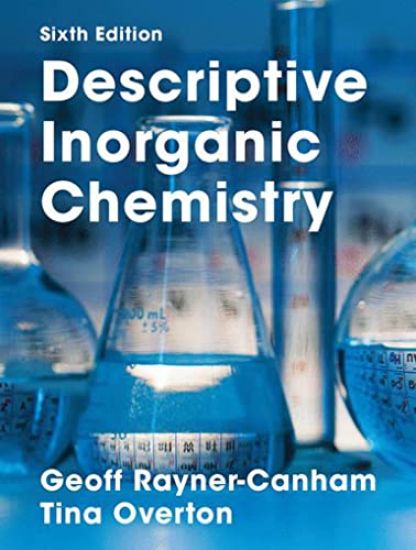
Descriptive Inorganic Chemistry

Descriptive Inorganic Chemistry

Geoff Rayner-Canham

Palgrave
2017
sidottu
Helping students make sense of evolutionThis bestselling text gives students a less rigorous, less mathematical way of learning inorganic chemistry, using the periodic table as a context for exploring chemical properties and uncovering relationships between elements in different groups.
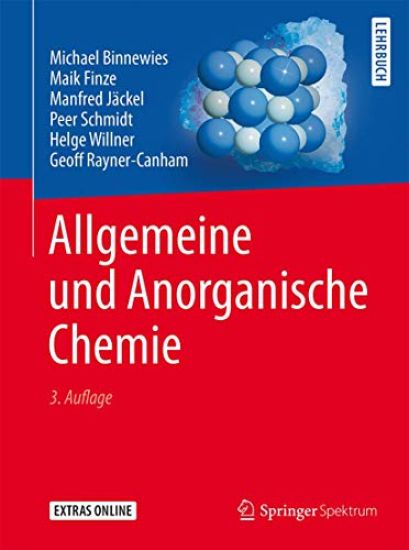
Allgemeine und Anorganische Chemie

Allgemeine und Anorganische Chemie

Michael Binnewies; Maik Finze; Manfred Jäckel; Peer Schmidt; Helge Willner; Geoff Rayner-Canham

Springer-Verlag Berlin and Heidelberg GmbH Co. KG
2016
sidottu
Das erfolgreiche Grundlagenlehrbuch jetzt in durchgehend überarbeiteter Neuauflage Die viel gelobte Einführung in die Allgemeine und Anorganische Chemie ist für die 3. Auflage vollständig überarbeitet und aktualisiert worden. Das erweiterte Autorenteam - Michael Binnewies, Maik Finze, Manfred Jäckel, Peer Schmidt und Helge Willner - hat zahlreiche neue Inhalte eingearbeitet und den Text an anderen Stellen gestrafft, um das Lehrbuch wieder optimal auf die Bedürfnisse der Chemiestudierenden im Haupt- und Nebenfach zuzuschneiden. Es besticht weiterhin durch die ausgewogene und klare Stoffdarstellung sowie die vielen Einblicke in hochaktuelle Themen und Anwendungen. Die Beschreibung großtechnischer Verfahren ist ebenso auf den neuesten Stand gebracht worden wie die Diskussion der zunhmend wichtiger werdenden seltenen Elemente. Rohstoffe für Zukunftstechnologien, Schweißen und Löten, Magnetwerkstoffe und Wärmespeicher sind Themen neuer Exkurse. Kurze Zusammenfassungenan den Kapitelenden werden den Lernenden die Prüfungsvorbereitungen erleichtern. Setzt neue Maßstäbe in der Grundausbildung angehender Chemiker. Wird sich für Studierende in Diplom- und Bachelor-Studiengängen rasch als unentbehrlicher Begleiter durch die ersten Semester erweisen – und vielfach auch darüber hinaus. Schweizerische Laboratoriums-Zeitschrift Vorteilhaft ist die gute Einbindung der Praktikumsinhalte des Grundstudiums. Angenehm lesen sich die Exkurse, welche die allgemeinen Lehrinhalte des Buches um Themen wie „Untersuchungsmethoden“ oder „Chemie in Natur, Alltag und Technik“ geschickt ergänzen. Hilfreich sind die eingebundenen Übungsaufgaben am Ende der Kapitel. Nachrichten aus der Chemie Abgerundete Darstellung der Allgemeinen und Anorganischen Chemie mit vielen aktuellen Beispielen. Prof. Dr. Peter Volgnandt, Technische Hochschule Nürnberg Hervorragendes Buch, ideal zur Einführung, zeitgemäße Aufmachung. Prof. Dr. Oliver Tepner, Universität Regensburg Ich habe noch nie ein Lehrbuch mit mehr Vergnügen gelesen. In Verständlichkeit / Didaktik und in den Bezügen zur Chemie im Alltag unschlagbar. Prof. i. R. Dr. W. Kläui, Universität Düsseldorf
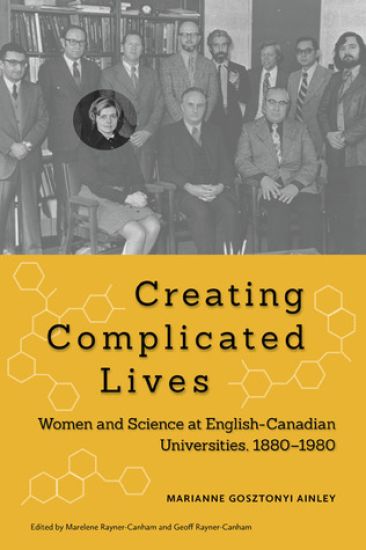
Creating Complicated Lives

Creating Complicated Lives

Marianne Gosztonyi Ainley; Marelene Rayner-Canham; Geoff Rayner-Canham

McGill-Queen's University Press
2012
sidottu
Why have Canadian women scientists been written out of the historical record? Who were they? What did they accomplish? What were their life paths? These are some of the questions answered in this authoritative work. Over decades of research, Marianne Ainley identified, tracked down, and interviewed surviving scientists. Creating Complicated Lives weaves the lives and work of these pioneers with the author's own experiences as an immigrant scientific technician and later a feminist historian. Ainley argues that we must look at the lives of women scientists through a new historical lens that takes into account both the advances of science and concurrent debates about the advancement of women. Rather than having linear career trajectories, many women shifted fields, coped with discrimination, and endeavoured to find niches in which they could make significant contributions. Never before has there been a survey of the lives and work of early Canadian women scientists. This nuanced study brings their stories to light, comparing, contrasting, and interpreting their very complicated lives.
Creating Complicated Lives

Creating Complicated Lives

Marianne Gosztonyi Ainley; Marelene Rayner-Canham; Geoff Rayner-Canham

McGill-Queen's University Press
2012
nidottu
Why have Canadian women scientists been written out of the historical record? Who were they? What did they accomplish? What were their life paths? These are some of the questions answered in this authoritative work. Over decades of research, Marianne Ainley identified, tracked down, and interviewed surviving scientists. Creating Complicated Lives weaves the lives and work of these pioneers with the author's own experiences as an immigrant scientific technician and later a feminist historian. Ainley argues that we must look at the lives of women scientists through a new historical lens that takes into account both the advances of science and concurrent debates about the advancement of women. Rather than having linear career trajectories, many women shifted fields, coped with discrimination, and endeavoured to find niches in which they could make significant contributions. Never before has there been a survey of the lives and work of early Canadian women scientists. This nuanced study brings their stories to light, comparing, contrasting, and interpreting their very complicated lives.
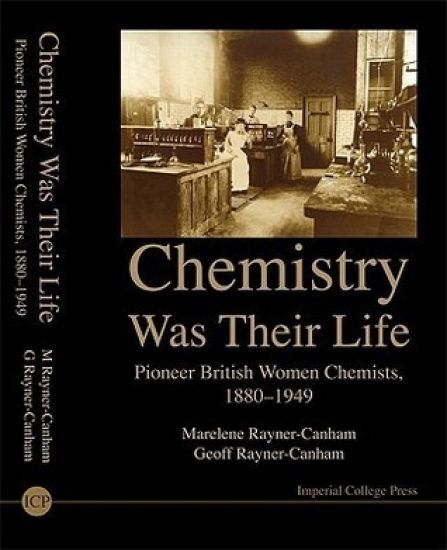
Chemistry Was Their Life: Pioneering British Women Chemists, 1880-1949

Chemistry Was Their Life: Pioneering British Women Chemists, 1880-1949

Marelene Rayner-canham; Geoff Rayner-canham

Imperial College Press
2008
sidottu
British chemistry has traditionally been depicted as a solely male endeavour. However, this perspective is untrue: the allure of chemistry has attracted women since the earliest times. Despite the barriers placed in their path, women studied academic chemistry from the 1880s onwards and made interesting or significant contributions to their fields, yet they are virtually absent from historical records.Comprising a unique set of biographies of 141 of the 896 known women chemists from 1880 to 1949, this work attempts to address the imbalance by showcasing the determination of these women to survive and flourish in an environment dominated by men. Individual biographical accounts interspersed with contemporary quotes describe how women overcame the barriers of secondary and tertiary education, and of admission to professional societies. Although these women are lost to historical records, they are brought together here for the first time to show that a vibrant culture of female chemists did indeed exist in Britain during the late 19th and early 20th centuries.