Kirjojen hintavertailu. Mukana 12 207 481 kirjaa ja 12 kauppaa.

Kirjailija

Geoffrey E. Wood

Kirjat ja teokset yhdessä paikassa: 7 kirjaa, julkaisuja vuosilta 1981-2014, suosituimpien joukossa Economic Fallacies Exposed. Vertaile teosten hintoja ja tarkista saatavuus suomalaisista kirjakaupoista.

7 kirjaa

Kirjojen julkaisuhaarukka 1981-2014.

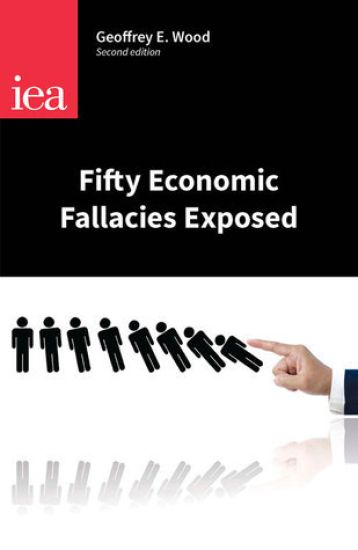
Fifty Economic Fallacies Exposed

Fifty Economic Fallacies Exposed

Geoffrey E. Wood

Institute of Economic Affairs
2014
nidottu
Whilst it is impossible to argue that the earth is flat without fearing ridicule, fallacies in economics are widespread. Such fallacies pervade the intellectual sphere and even influence policy. Professor Geoffrey Wood of the University of Buckingham exposes such popular economic fallacies in this revised edition of Fifty Economic Fallacies Exposed. Professor Wood looks at, for example, the supposed dangers of free trade, the abilities of governments to control the economy, the effects of government regulation and whether millions of jobs depend on our continued membership of the European Union. These lucid and stimulating articles are invaluable to students struggling to master some of the complexities of economic theory and its applications, who often find that the most effective way to learn economic analysis is to see such fallacies exposed. It is a text particularly suitable for first-year economics students, complementing existing textbooks as it does, and clarifying basic concepts in economics while demonstrating the practical uses of economic theory

Economic Fallacies Exposed

Economic Fallacies Exposed

Geoffrey E. Wood

Institute of Economic Affairs
1997
nidottu
Since 1988, Professor Geoffrey Wood of City University Business School has written a regular column in the Institute's Journal, Economic Affairs, in which he exposes popular economic fallacies. occasional Paper 102 is a collection of these columns which includes many of the fallacies in common circulation - for example, about the supposed dangers of free trade, about the abilities of governments to control economies, about the significance of current account deficits, about the use of fiscal policy to control inflation and about the effects of government regulation of markets. These lucid and stimulating columns are invaluable to students, struggling to master some of the complexities of economic theory and its applications, who often find that the most effective way of learning economic analysis is to see such fallacies exposed. It is a text particularly suitable for first year University students of economics which complements existing textbook by using examples to clarify fundamental concepts in economics and to demonstrate the practical uses of economic theory.