Kirjojen hintavertailu. Mukana 12 550 699 kirjaa ja 12 kauppaa.
Kirjailija
Geoffrey Higges
Kirjat ja teokset yhdessä paikassa: 8 kirjaa, julkaisuja vuosilta 2014-2023, suosituimpien joukossa Peter Likes Sports. Vertaile teosten hintoja ja tarkista saatavuus suomalaisista kirjakaupoista.
Tomorrow is Friday-it is School Sports Afternoon.Peter is looking forward to it because he is good at sports.He especially likes running and jumping.Last year, in his eight-year-old age group, he won the 70-meter race, the long jump, and the scissors high jump.Peter was so excited because on Friday morning he expected to be a winner again. He announced to his parents and friends, "I hope you will all watch me win the three events again this year "But will he?
I have listed police, car mechanics, salesmen, equipment repairers, bathroom designers, doctors, civil service institutions, estate agents, travel agents, internet scams and other scams that I have experienced who I thought had not acted professionally. Some recent media reports of similar events are also included.
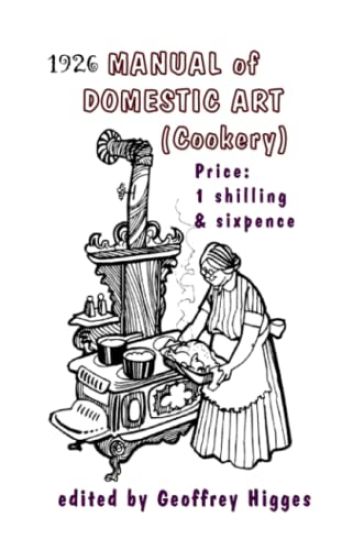
Extracts from the textbook "Manual of Domestic Art (Cookery)" that was a manual of cooking rules and recipes compiled in 1926 by Miss Ellie Campbell Dip. Dom. Ec. Inspector of Domestic Arts in the South Australian Education Department. Contents: Basic Rules and Definitions Buying and Storing Food Food Classes Vegetables General Rules for Cooking Vegetables How to Cook Potatoes How to Cook Carrots, Turnips and Cabbage How to use Toast in Vegetable Cooking How to Cook Peas and Beans Soup Classes, Definitions and Rules for Making Selected Recipes Meat Properties, and Methods of Cooking Selected Recipes Fish Properties, and How to Choose Fish Methods of Cooking How to Scale and Fillet Selected Recipes Puddings Classes, and Rules for Making Selected Recipes Cakes Methods and Rules of Cake Making Selected Recipes Pastry Classes, and Rules for Making Selected Recipes Cooking for Invalids Selected Recipes
George will never forget the time his father took him birding, and tells the story how he helped his father look for a special bird. George's father is a birder. He spends all his spare time, on his own, or with other birders in a club, looking for birds he hasn't seen before. He marks them down in his bird book, and whenever possible takes a photograph. George often asks his father the names of the colourful birds in his photo book. Sometimes George asks his father to take him along, but there is always a reason he can't go. Then one weekend his father said, "Tomorrow you must get up early and I will take you with me to see if we can find a very special bird." George was so excited he could hardly sleep that night. On the trek George gets so excited every time he sees a bird that he calls out "There it is ". His father is very patient with George's enthusiasm, but does tell him quietly not no make so much noise because that frightens the birds away. The birding gets serious when George and his father settle in a bird-hide. After a while George is getting tired and is nearly falling asleep when suddenly he is aware is father is jumping with subdued excitement, and struggling with his note book and camera. George looks up and sees a bird in the nearby bushes. Forgetting to be quiet, he calls out "There it is " and claps loudly. The frightened bird flies off just before his father can get a photo.
By Chance or by Choice?Which of your life-changing moments have happened by chance, and which by choice, by destiny or by desire? Like millions of others, I had nothing to do with starting World War Two in 1939 which nevertheless was responsible for completely changing my life; on the other hand, in 1957 I did choose to change direction by emigrating to Australia from England. Sometimes it is a combination of both chance and choice, such as when an unexpected opportunity arises, do you make the most of it? I had never been interested in airplanes, but when the opportunity to become a pilot came out of the blue, I chose to take it - but were the fatalities with the jet fighter which I piloted caused by pure accident, or was the inherent design of the airplane the problem? Again events can happen in reverse, for example when I chose to join a computer dating service in 1971, serendipity gave me my wife of 40 years.This book covers the author's early life, work experiences and retirement. At 18 years of age he was trained as a fighter pilot during National Service in the Royal Air Force. This was followed by 6 years with Nos. 616 and 501 fighter squadrons in the Royal Auxiliary Air Force, then 6 years as an airline pilot with Trans Australia Airlines and Swissair. Particular attention is paid to his experiences flying the Gloster Meteor, the Allies first jet fighter, and the saga of the well-kept secret of the many lives lost flying this airplane. The author's other occupations described here are his job with the Bristol Aero Engines Company as engineer responsible for the flight testing of the Olympus engine in the Avro Vulcan, and Orpheus engine in the Folland Gnat and 3 European Light Fighters, his extensive experience teaching engineering at the South Australian Institute of Technology and University, together with continuing practical experience consulting to industry and the national Defence and Research Organisation, and some post-retirement business activities. The author's private life is also mentioned in some detail, especially his evacuation as a 9 year old from England to Australia in World War II, resulting in 5 1/2 years away from his family. Also included are comments on his first marriage, divorce and second marriage, his studies for various qualifications, a brief medical history, and interests in sport, music, video, and the internet. Finally there is a large section on travelling, with many photos covering more than 60 countries (see below). The book is intended to fill the gaps in the life of the author left by two previous books - "How Meteors Hit the Ground", and "Out of the Frying Pan". The author has always been interested in movie making, starting with Pathe 9.5 mm film in the 1950s, but since retiring in 1991, video and photography have become more serious with the evolution of digital cameras and the power of the internet to display, share and sell photos, together with the time for more holidays So it seems appropriate that Appendix 9 should be included as acknowledgement of the part that travelling and photography have become in the lives of the author and his wife, Carole-Anne Fooks (see livingtravel.com). Similarly, to give some recognition to the author's love of crosswords and quizzes, (evident in previous publications), some chapters end with questions which could be like standard cryptic crossword clues, but with no crossword Since retiring in 1992, travel videos have been created (many becoming available on Create Space & Amazon ) and photographs taken in the following countries: Australia, UK, Italy, USA, Antarctica, Southern Ocean Islands, South Africa, Botswana, Namibia, Zimbabwe, Madagascar, Mauritius, Russia, Iceland, Malaysia, Thailand, Bhutan, Brazil, Canada, Tanzania, Kenya, Rwanda, Turkey, Greece, Croatia, Singapore, Mongolia, South Korea, Cambodia, South Atlantic Islands, Hong Kong, Vietnam, Netherlands, Denmark, Lithuania, Latvia, Estonia, Finland, Sweden, Norway, India.
This book covers the author's early life, work experiences and retirement. At 18 years of age he was trained as a fighter pilot during National Service in the Royal Air Force. This was followed by 6 years with Nos. 616 and 501 fighter squadrons in the Royal Auxiliary Air Force, then 6 years as an airline pilot with Trans Australia Airlines and Swissair. Particular attention is paid to his experiences flying the Gloster Meteor, the Allies first jet fighter, and the saga of the well-kept secret of the many lives lost flying this airplane. The author's other occupations described here are his job with the Bristol Aero Engines Company as engineer responsible for the flight testing of the Olympus engine in the Avro Vulcan, and Orpheus engine in the Folland Gnat and 3 European Light Fighters, his extensive experience teaching engineering at the South Australian Institute of Technology and University, together with continuing practical experience consulting to industry and the national Defence and Research Organisation, and some post-retirement business activities. The author's private life is also mentioned in some detail, especially his evacuation as a 9 year old from England to Australia in World War II, resulting in 5 1/2 years away from his family. Also included are comments on his first marriage, divorce and second marriage, his studies for various qualifications, a brief medical history, and interests in sport, music, video, and the internet. Finally there is a large section on travelling, with many photos covering more than 60 countries (see below). The book is intended to fill the gaps in the life of the author left by two previous books - "How Meteors Hit the Ground", and "Out of the Frying Pan". Much of the content of those previous books is included in this publication to complete the story, but if you have already read those books, you can skip these chapters The book is written in reverse chronological order - you can read it backwards if you prefer, or of course just pick out the odd chapter. The author has always been interested in movie making, starting with Pathe 9.5 mm film in the 1950s, but since retiring in 1991, video and photography have become more serious with the evolution of digital cameras and the power of the internet to display, share and sell photos, together with the time for more holidays So it seems appropriate that this autobiography should include Appendix 9 as acknowledgement of the part that travelling and photography have become in the lives of the author and his wife, Carole-Anne Fooks (see livingtravel.com). Similarly, to give some recognition to the author's love of crosswords and quizzes, (evident in previous publications), some chapters end with questions which could be like standard cryptic crossword clues, but with no crossword Since retiring in 1992, travel videos have been created (many becoming available on Create Space & Amazon ) and photographs taken in the following countries: Australia, UK, Italy, USA, Antarctica, Southern Ocean Islands, South Africa, Botswana, Namibia, Zimbabwe, Madagascar, Mauritius, Russia, Iceland, Malaysia, Thailand, Bhutan, Brazil, Canada, Tanzania, Kenya, Rwanda, Turkey, Greece, Croatia, Singapore, Mongolia, South Korea, Cambodia, South Atlantic Islands, Hong Kong, Vietnam, Netherlands, Denmark, Lithuania, Latvia, Estonia, Finland, Sweden, Norway, India.
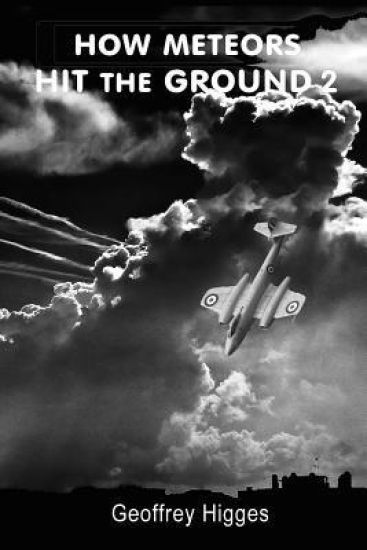
This is the 2nd edition of "How Meteors Hit the Ground". The only difference from the first book is that tables are added giving detailed information of each of 795 write-offs of Meteors that occurred after WWII between 1945 and 1957. This book uses the author's 6 years experience flying the Gloster Meteor jet fighter to analyse the reasons for the many accidents that occurred with this aircraft. For example, on average during the year 1952, 3 Meteors were written off every week, and a Meteor pilot killed every 4 days. In 1945, Number 616 Squadron of the British Royal Air Force was equipped with the Gloster Meteor fighter which was the first and only jet aircraft to be used by the Allies in World War II. In 1951 the author became a fighter pilot with 616 Squadron flying the latest version of the Meteor, and during his 6 years flying this aircraft, the author also qualified and gained experience as a Flight Test Engineer. So he is well qualified to comment on the qualities of this historic aircraft, and discuss the various characteristics which contributed to so many accidents during its lifetime.