Kirjojen hintavertailu. Mukana 12 595 353 kirjaa ja 12 kauppaa.

Kirjailija

Geoffrey Madell

Kirjat ja teokset yhdessä paikassa: 4 kirjaa, julkaisuja vuosilta 1992-2018, suosituimpien joukossa Understanding Hume. Vertaile teosten hintoja ja tarkista saatavuus suomalaisista kirjakaupoista.

4 kirjaa

Kirjojen julkaisuhaarukka 1992-2018.

The Essence of the Self

The Essence of the Self

Geoffrey Madell

Routledge
2018
nidottu
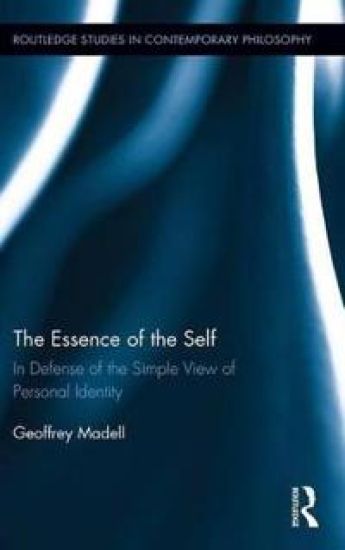
In this volume, Geoffrey Madell develops a revised account of the self, making a compelling case for why the "simple" or "anti-criterial" view of personal identity warrants a robust defense. Madell critiques recent discussions of the self for focusing on features which are common to all selves, and which therefore fail to capture the uniqueness of each self. In establishing his own view of personal identity, Madell proposes (a) that there is always a gap between ‘A is f and g’ and ‘I am f and g’; (b), that a complete description of the world offered without recourse to indexicals will fail to account for the contingent truth that I am one of the persons described; and (c), that an account of conscious perspectives on the world must take into account what it means for an apparently arbitrary one of these perspectives to be mine. Engaging with contemporary positions on the first person, embodiment, psychological continuity, and other ongoing arguments, Madell contends that there can be no such thing as a criterion of personal identity through time, that no bodily or psychological continuity approach to the issue can succeed, and that personal identity through time must be absolute, not a matter of degree. Madell’s view that the nature of the self is substantively different from that of objects in the world will generate significant discussion and debate among philosophers of mind.
The Essence of the Self

The Essence of the Self

Geoffrey Madell

Routledge
2014
sidottu
In this volume, Geoffrey Madell develops a revised account of the self, making a compelling case for why the "simple" or "anti-criterial" view of personal identity warrants a robust defense. Madell critiques recent discussions of the self for focusing on features which are common to all selves, and which therefore fail to capture the uniqueness of each self. In establishing his own view of personal identity, Madell proposes (a) that there is always a gap between ‘A is f and g’ and ‘I am f and g’; (b), that a complete description of the world offered without recourse to indexicals will fail to account for the contingent truth that I am one of the persons described; and (c), that an account of conscious perspectives on the world must take into account what it means for an apparently arbitrary one of these perspectives to be mine. Engaging with contemporary positions on the first person, embodiment, psychological continuity, and other ongoing arguments, Madell contends that there can be no such thing as a criterion of personal identity through time, that no bodily or psychological continuity approach to the issue can succeed, and that personal identity through time must be absolute, not a matter of degree. Madell’s view that the nature of the self is substantively different from that of objects in the world will generate significant discussion and debate among philosophers of mind.
Philosophy, Music and Emotion

Philosophy, Music and Emotion

Geoffrey Madell

Edinburgh University Press
2002
sidottu
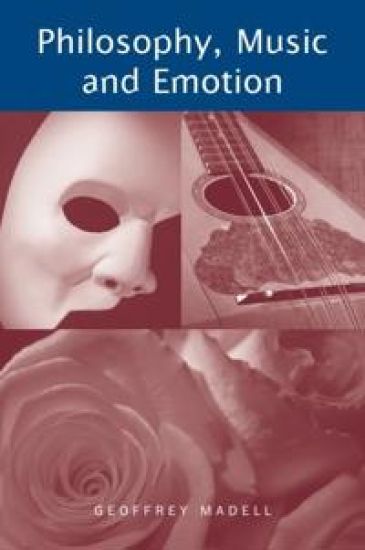
Philosophy, Music and Emotion explores two issues which have been intensively debated in contemporary philosophy: the nature of music's power to express emotion, and the nature of emotion itself. It shows how closely the two topics are related and provides a radically new account of what it means to say that music 'expresses emotion'. Geoffrey Madell maintains that most current accounts of musical expressiveness are fundamentally misguided. He attributes this fact to the influence of a famous argument of the nineteenth-century critic Hanslick, and also to the dominant 'cognitivist' approach to the nature of emotion, which sees the essence of emotion to be the entertaining of evaluative judgements and beliefs of a certain sort, an account very much in accord with Hanslick's position. Such an approach results either in the unpersuasive view that musical expressiveness is somehow akin to human expressive gesture, or in the view that music arouses feelings which have no specific object and, unavoidably, no necessary connection with the music. The book argues that the 'cognitivist' account of the nature of emotion is quite false and that it needs to be replaced with a conception of emotions as states of feeling towards - states of intentional feeling - whose objects are often evaluatively characterised states of affairs; however, in the context of the emotions that are aroused by music these objects are always musical events or states. Central to this bold analysis of emotion is a new account of two closely connected mental states, those of desire and of pleasure, and of what role these states have in human motivation and value.
Understanding Hume

Understanding Hume

John J. Jenkins; Peter Lewis; Geoffrey Madell

Barnes Noble Books-Imports, Div of Rowman Littlefield Pubs., Inc
1992
sidottu
This is the first clear and non-technical introduction to philosophy through the works of the 18th century philosopher, David Hume. It covers every major philosophical issue commented upon by Hume, from epistemology, philosophy of mind, and metaphysics, to ethics and political philosophy, and the philosophy of religion. Looking first at Hume's discussion of each topic and clarifying his thoughts in jargon-free language, the book then relates his ideas to current contemporary thought. Readers are taken gently through both 18th century and contemporary philosophies and given lucid accounts of the key issues in each. Contents: Introduction; Where Does Thought Begin?; How Does Thought Proceed?; What Do We Mean by Cause and How Do We Reason from Experience?; What Do We Mean by Cause? II; Is It Rational to Be Guided by Experience?; What Is It to Believe that Something Is the Case?; Are Our Choices Free?; What Constitutes the Identity of a Person?; How Do Emotions Work?; The Mechanism of Sympathy; How to Make Moral Judgements; Is Religious Belief Rational?