Kirjojen hintavertailu. Mukana 12 095 673 kirjaa ja 12 kauppaa.

Kirjailija

Geoffrey Poitras

Kirjat ja teokset yhdessä paikassa: 8 kirjaa, julkaisuja vuosilta 2000-2020, suosituimpien joukossa Valuation Of Equity Securities: History, Theory And Application. Vertaile teosten hintoja ja tarkista saatavuus suomalaisista kirjakaupoista.

8 kirjaa

Kirjojen julkaisuhaarukka 2000-2020.

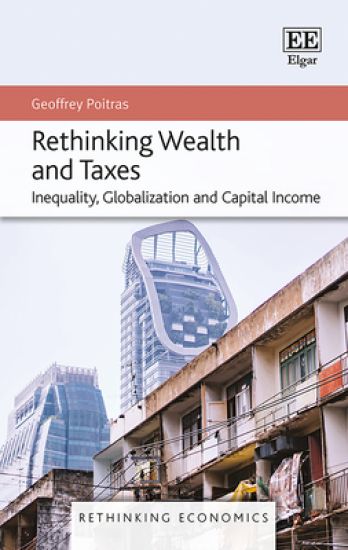
Rethinking Wealth and Taxes

Rethinking Wealth and Taxes

Geoffrey Poitras

Edward Elgar Publishing Ltd
2020
sidottu
Taxes on the wealthy are a topic sure to incite venomous rants from both right-wing and left-wing ideologues. The topic attracts conflicting interpretations and policy recommendations, and generates proposals for tax reform that consume political debate. All this activity takes place against an opaque backdrop of empirical evidence dealing with the distribution of wealth and income, and tax avoidance and tax evasion by corporations and wealthy individuals. Rethinking Wealth and Taxes explores these problems and considers the possibilities for increasing taxes on wealth to address the increasingly unequal distribution of wealth, and income. Concerned with exploring the implications of globalization for government revenue policy and increasing inequality in wealth and income, it identifies the connection between ongoing inequality and the ability of the wealthy to avoid income taxes by exploiting differential treatment of capital income and wage income. The author explores the various ways in which the emergence of globalization has impacted the traditional national model of raising income tax revenue. He then offers policy recommendations that shift government revenue sources to taxes that are difficult for the wealthy to avoid and that better capture the goals of vertical and horizontal tax equity. This book will appeal to those directly involved in industry and public policy and may be used in university courses at all levels in public finance, financial economics, actuarial science and management. It will also be of interest to research libraries, individuals working in government and readers in the general public curious about topics such as 'the one percent'.
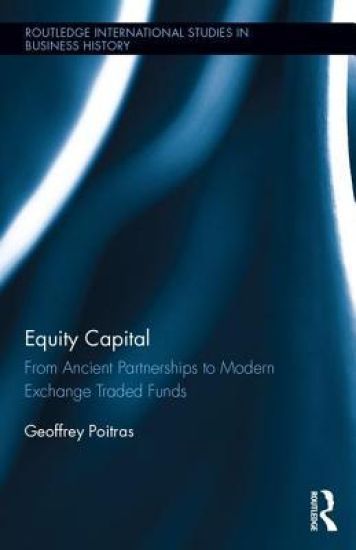
Equity Capital

Equity Capital

Geoffrey Poitras

Routledge
2018
nidottu
Capitalism is historically pervasive. Despite attempts through the centuries to suppress or control the private ownership of commercial assets, production and trade for profit has survived and, ultimately, flourished. Against this backdrop, accounting provides a fundamental insight: the ‘value’ of physical and intangible capital assets that are used in production is identically equal to the sum of the debt liabilities and equity capital that are used to finance those assets. In modern times, this appears as the balance sheet relationship. In determining the ‘value’ of items on the balance sheet, equity capital appears as a residual calculated as the difference between the ‘value’ of assets and liabilities. Through the centuries, the organization of capitalist activities has changed considerably, dramatically impacting the methods used to value, trade and organize equity capital. To reflect these changes, this book is divided into four parts that roughly correspond to major historical changes in equity capital organization.The first part of this book examines the rudimentary commercial ventures that characterized trading for profit from ancient times until the contributions of the medieval scholastics that affirmed the moral value of equity capital. The second part deals with the evolution of equity capital organization used in seaborne trade of the medieval and Renaissance Italian city states and in the early colonization ventures of western European powers and ends with the emergence in the market for tradeable equity capital shares during the 17th century. The third part begins with the 1719-1720 Mississippi scheme and South Sea bubbles in northern Europe and continues to cover the transition from joint stock companies to limited liability corporations with autonomous shares in England, America and France during the 19th century. This part ends with a fundamental transition in the social conception of equity capital from a concern with equity capital organization to the problem of determining value. The final part is concerned with the evolving valuation and management of equity capital from the 1920s to the present. This period includes the improvement corporate accounting for publicly traded shares engendered by the Great Depression that has facilitated the use of ‘value investing’ techniques and the conflicting emergence of portfolio management methods of modern Finance.Equity Capital is aimed at providing material relevant for academic presentations of equity valuation history and methods, and is targeted at researchers, academics, students and professionals alike.
Equity Capital

Equity Capital

Geoffrey Poitras

Routledge
2016
sidottu
Capitalism is historically pervasive. Despite attempts through the centuries to suppress or control the private ownership of commercial assets, production and trade for profit has survived and, ultimately, flourished. Against this backdrop, accounting provides a fundamental insight: the ‘value’ of physical and intangible capital assets that are used in production is identically equal to the sum of the debt liabilities and equity capital that are used to finance those assets. In modern times, this appears as the balance sheet relationship. In determining the ‘value’ of items on the balance sheet, equity capital appears as a residual calculated as the difference between the ‘value’ of assets and liabilities. Through the centuries, the organization of capitalist activities has changed considerably, dramatically impacting the methods used to value, trade and organize equity capital. To reflect these changes, this book is divided into four parts that roughly correspond to major historical changes in equity capital organization.The first part of this book examines the rudimentary commercial ventures that characterized trading for profit from ancient times until the contributions of the medieval scholastics that affirmed the moral value of equity capital. The second part deals with the evolution of equity capital organization used in seaborne trade of the medieval and Renaissance Italian city states and in the early colonization ventures of western European powers and ends with the emergence in the market for tradeable equity capital shares during the 17th century. The third part begins with the 1719-1720 Mississippi scheme and South Sea bubbles in northern Europe and continues to cover the transition from joint stock companies to limited liability corporations with autonomous shares in England, America and France during the 19th century. This part ends with a fundamental transition in the social conception of equity capital from a concern with equity capital organization to the problem of determining value. The final part is concerned with the evolving valuation and management of equity capital from the 1920s to the present. This period includes the improvement corporate accounting for publicly traded shares engendered by the Great Depression that has facilitated the use of ‘value investing’ techniques and the conflicting emergence of portfolio management methods of modern Finance.Equity Capital is aimed at providing material relevant for academic presentations of equity valuation history and methods, and is targeted at researchers, academics, students and professionals alike.
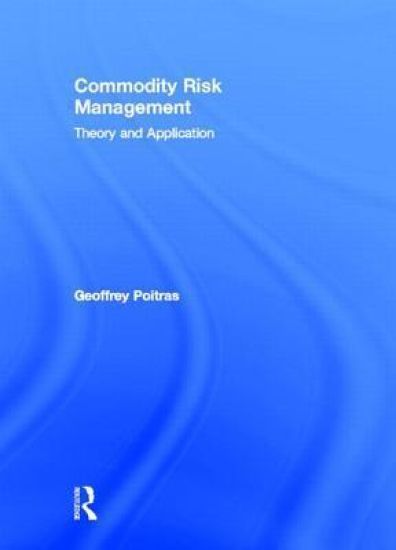
Commodity Risk Management

Commodity Risk Management

Geoffrey Poitras

Routledge
2013
nidottu
Commodity Risk Management goes beyond just an introductory treatment of derivative securities, dealing with more advanced topics and approaching the subject matter from a unique perspective. At its core lies the concept that commodity risk management decisions require an in-depth understanding of speculative strategies, and vice versa. The book offers readers a unified treatment of important concepts and techniques that are useful in applying derivative securities in the management of risk in commodity markets. While some of these techniques are well known and fairly common, Poitras offers applications to specific situations and links to speculative trading strategies - extensions of the material that not only are hard to come by, but helpful to both the academic and the practitioner.The book is divided into three parts. The first part deals with the general framework for commodity risk management, the second part focuses on the use of derivative security contracts in commodity risk management, and the third part deals with applications to three specific situations. As a textbook, this book is designed to appeal to classes at a senior undergraduate/MBA/MA levelof training in Finance, financial economics, actuarial science, management science, agriculturaleconomics and accounting. There will also be interest for the book as: a monograph for research libraries, a handbook for individuals working in the commodity risk management industry, and a guidebook for those in the general public interested in topics like farm risk management or the assessment of hedging practices of publicly-traded commodity producers.
Commodity Risk Management

Commodity Risk Management

Geoffrey Poitras

Routledge
2013
sidottu
Commodity Risk Management goes beyond just an introductory treatment of derivative securities, dealing with more advanced topics and approaching the subject matter from a unique perspective. At its core lies the concept that commodity risk management decisions require an in-depth understanding of speculative strategies, and vice versa. The book offers readers a unified treatment of important concepts and techniques that are useful in applying derivative securities in the management of risk in commodity markets. While some of these techniques are well known and fairly common, Poitras offers applications to specific situations and links to speculative trading strategies - extensions of the material that not only are hard to come by, but helpful to both the academic and the practitioner.The book is divided into three parts. The first part deals with the general framework for commodity risk management, the second part focuses on the use of derivative security contracts in commodity risk management, and the third part deals with applications to three specific situations. As a textbook, this book is designed to appeal to classes at a senior undergraduate/MBA/MA levelof training in Finance, financial economics, actuarial science, management science, agriculturaleconomics and accounting. There will also be interest for the book as: a monograph for research libraries, a handbook for individuals working in the commodity risk management industry, and a guidebook for those in the general public interested in topics like farm risk management or the assessment of hedging practices of publicly-traded commodity producers.
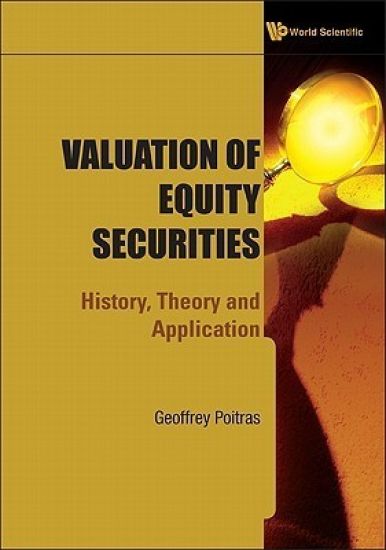
Valuation Of Equity Securities: History, Theory And Application

Valuation Of Equity Securities: History, Theory And Application

Geoffrey Poitras

World Scientific Publishing Co Pte Ltd
2010
sidottu
This book provides a comprehensive and rigorous treatment of academic and practitioner approaches to equity security valuation. Guided by historical and philosophical insights, conventional academic wisdom surrounding the ergodic properties of stochastic processes is challenged. In addition, the implications of a general stochastic interpretation of equity security valuation are provided. Valuation of Equity Securities will also be a good reference source for students and professionals interested in the theoretical and practical applications of equity securities.
Security Analysis and Investment Strategy

Security Analysis and Investment Strategy

Geoffrey Poitras

Wiley-Blackwell (an imprint of John Wiley Sons Ltd)
2004
sidottu
This innovative text presents the theoretical foundations of security analysis and investment strategy, and explores the practical applications of these theories. After establishing an historical foundation, the book examines fixed income securities, equity analysis and investment strategy. Assesses a range of approaches to investment analysis and strategy Develops an advanced treatment of the subject throughout, while remaining focused on the practical concerns of security analysts Features end-of-chapter questions, case studies and references Integrates history, theory, technique, and application This text is an indispensable resource for any serious student of finance. Online material to accompany this book can be found at www.blackwellpublishing.com/poitras
The Early History of Financial Economics, 1478–1776

The Early History of Financial Economics, 1478–1776

Geoffrey Poitras

Edward Elgar Publishing Ltd
2000
sidottu
Despite being an integral part of modern economic science, the subject of financial economics has deep historical roots. Geoffrey Poitras provides an exhaustive account of the early development of the subject and, in so doing, provides a sound basis for the study of modern financial economics.By the time The Wealth of Nations had appeared, financial economics featured a well developed body of scientific knowledge, covering subjects such as fixed income evaluation, life insurance and derivative securities. From beginnings which are traced back to the commercial arithmetic of the Renaissance reckoning schools, by the latter part of the 18th century financial economics had witnessed contributions by the likes of Abraham de Moivre, Edmond Halley and Simon Stevin. This book chronicles the development of early financial economics, from the appearance of the first printed commercial arithmetic in 1478 to the publication of The Wealth of Nations in 1776.This book will prove invaluable to scholars of financial economics and the history of economic thought.