Kirjojen hintavertailu. Mukana 12 595 353 kirjaa ja 12 kauppaa.

Kirjailija

Geoffrey Raymond

Kirjat ja teokset yhdessä paikassa: 5 kirjaa, julkaisuja vuosilta 2006-2024, suosituimpien joukossa Project Risk Management Guidelines. Vertaile teosten hintoja ja tarkista saatavuus suomalaisista kirjakaupoista.

5 kirjaa

Kirjojen julkaisuhaarukka 2006-2024.

Project Risk Management Guidelines

Project Risk Management Guidelines

Dale Cooper; Pauline Bosnich; Stephen Grey; Grant Purdy; Geoffrey Raymond; Phil Walker; Mike Wood

John Wiley Sons Inc
2014
nidottu
Risk runs through the fabric of any project. It is so intimately bound up in forecasting and decision making that it cannot be isolated or handled separately from other project management activities. Success can only be achieved if risk management is integrated closely with project management. Over the past decade, developments in risk management methods and standards have addressed the need to manage risk in a project in an integrated manner. This is a more natural way of working than past practices have been. It has beneficial effects on the practice of risk management and the way it is implemented in projects. This new edition of Project Risk Management Guidelines has been fully updated to include the new international standards that embody this principle, ISO 31000 Risk management and IEC 62198 Managing risk in projects. The book explains the standards and how they can be applied. It provides a clear introduction to basic project risk management, introduces the reader to specialized areas of projects and procurement, and shows how quantitative risk analysis methods can be used in large projects. Chapter by chapter, the authors present simple, practical steps and illustrate them with examples drawn from their extensive experience from around the world, in many different industry sectors and cultures and at all stages of projects from conception through development and into execution. Qualitative and quantitative approaches are covered. Traditional structures and processes are discussed as well as developments in the way projects are conducted, such as outsourcing arrangements and risk-sharing structures like public–private partnerships. Improved outcomes can be achieved when sound risk management is used to capture opportunities and reduce threats. Its unique focus and wealth of checklists, tables and other resources make this book an essential and enduring tool for anyone involved with project work.

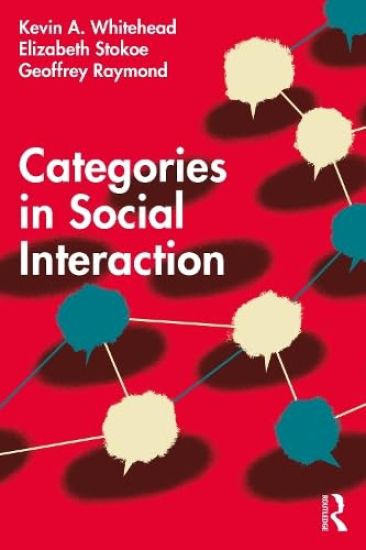
Categories in Social Interaction

Categories in Social Interaction

Kevin A. Whitehead; Elizabeth Stokoe; Geoffrey Raymond

TAYLOR FRANCIS LTD
2024
sidottu
This book investigates the situated (re)production of categories, from the most mundane and unremarkable to those most strongly associated with power and privilege. By examining the reciprocal relationships between categorial phenomena and the basic structures and practices of social interaction, the book provides a new framework for integrating conversation analysis and membership categorization analysis.Across its ten chapters, the book describes a conversation analytic approach to studying categories and categorization, charts the development and history of membership categorization analysis, and addresses core methodological challenges and practices associated with using this approach. After mapping out the new framework developed in the book, each chapter describes intersections between categorial phenomena and the domains that comprise the infrastructure of social interaction. The book concludes by exploring applications, interventions, and impacts of understanding categories in ways examined across the preceding chapters, and by considering future avenues for excavating categorial practices in the ordinary, institutional, and technological settings of human social life.Categories in Social Interaction is essential reading for social scientists with an interest in categories of people and categorizing practices, and especially for practitioners and students of conversation analysis, membership categorization, ethnomethodology, and discursive psychology.
Categories in Social Interaction

Categories in Social Interaction

Kevin A. Whitehead; Elizabeth Stokoe; Geoffrey Raymond

TAYLOR FRANCIS LTD
2024
nidottu
This book investigates the situated (re)production of categories, from the most mundane and unremarkable to those most strongly associated with power and privilege. By examining the reciprocal relationships between categorial phenomena and the basic structures and practices of social interaction, the book provides a new framework for integrating conversation analysis and membership categorization analysis.Across its ten chapters, the book describes a conversation analytic approach to studying categories and categorization, charts the development and history of membership categorization analysis, and addresses core methodological challenges and practices associated with using this approach. After mapping out the new framework developed in the book, each chapter describes intersections between categorial phenomena and the domains that comprise the infrastructure of social interaction. The book concludes by exploring applications, interventions, and impacts of understanding categories in ways examined across the preceding chapters, and by considering future avenues for excavating categorial practices in the ordinary, institutional, and technological settings of human social life.Categories in Social Interaction is essential reading for social scientists with an interest in categories of people and categorizing practices, and especially for practitioners and students of conversation analysis, membership categorization, ethnomethodology, and discursive psychology.
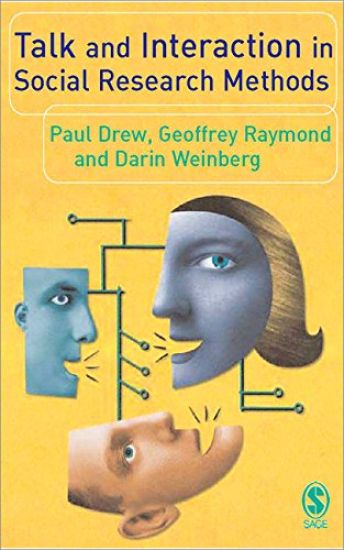
Talk and Interaction in Social Research Methods

Talk and Interaction in Social Research Methods

Paul Drew; Geoffrey Raymond; Darin Weinberg

SAGE Publications Inc
2006
sidottu
'This book admirably fulfils its stated objective of describing social research methods in action and exploring, from a range of perspectives, the linguistic shaping of social context. Overall, this is a balanced, well-edited and coherent collection of papers, bringing together high quality work from recognized authorities in the analysis of talk-in-interaction. It is also highly accessible; it would certainly make an excellent resource book for undergraduate, graduate (and practising!) social scientists ' - Rebecca Clift, University of Essex 'Talk and Interaction in Social Research Methodologies is a much-needed methods text. Focusing on research methods in action, the volume offers a new way of viewing the realities of social research. By taking language use seriously, the text reveals the details and depths of a wide range of research projects as they have seldom been presented before. This is the first book of its kind to offer such a powerful and insightful depiction of the role of talk-in-interaction in relation to social research methods. The book's plan is creative and unparalleled. There's nothing else like it. The editors—Paul Drew, Geoffrey Raymond and Darin Weinberg—represent the very best from multiple traditions of researching talk-in-interaction—from both sides of the Atlantic. The chapters are written by a sterling collection of researchers—a virtual honor roll of conversation analysts and kindred spirits. This book is a "must read" for social researchers of all disciplines who are interested in social interaction. It should be assigned reading for all graduate students being introduced to qualitative methods. It should be on every qualitative researcher's book shelf. It is a tour de force in demonstrating the absolutely fundamental position that language use holds in social science methodology' - James A Holstein, Marquette University This is a methodology text with a difference. It demonstrates the importance of talk in a variety of social research methodologies. Even documents, the seemingly least interactional form of social data, are shown to have important interactional dimensions. The book focuses systematically on how sociological methods are essentially conducted through forms of spoken interaction, and how these interactions shape the results that emerge in research. The book demonstrates: " How spoken interactions shape the outcomes of core research methodologies " The role which talk-in-interaction plays in key substantive areas of sociology notably race, crime, gender and media " Reveals the interactional underpinnings of research methodologies This is the first text aimed at an undergraduate and Master's audience in Sociology and Social Research, which shows the crucial part that spoken interaction plays in the conduct and products of conventional sociological methodologies.
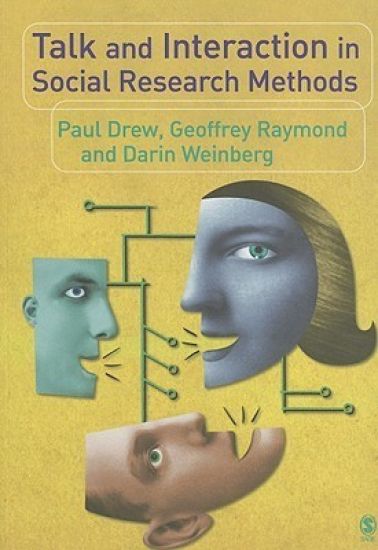
Talk and Interaction in Social Research Methods

Talk and Interaction in Social Research Methods

Paul Drew; Geoffrey Raymond; Darin Weinberg

SAGE Publications Inc
2006
nidottu
'This book admirably fulfils its stated objective of describing social research methods in action and exploring, from a range of perspectives, the linguistic shaping of social context. Overall, this is a balanced, well-edited and coherent collection of papers, bringing together high quality work from recognized authorities in the analysis of talk-in-interaction. It is also highly accessible; it would certainly make an excellent resource book for undergraduate, graduate (and practising!) social scientists ' - Rebecca Clift, University of Essex 'Talk and Interaction in Social Research Methodologies is a much-needed methods text. Focusing on research methods in action, the volume offers a new way of viewing the realities of social research. By taking language use seriously, the text reveals the details and depths of a wide range of research projects as they have seldom been presented before. This is the first book of its kind to offer such a powerful and insightful depiction of the role of talk-in-interaction in relation to social research methods. The book's plan is creative and unparalleled. There's nothing else like it. The editors—Paul Drew, Geoffrey Raymond and Darin Weinberg—represent the very best from multiple traditions of researching talk-in-interaction—from both sides of the Atlantic. The chapters are written by a sterling collection of researchers—a virtual honor roll of conversation analysts and kindred spirits. This book is a "must read" for social researchers of all disciplines who are interested in social interaction. It should be assigned reading for all graduate students being introduced to qualitative methods. It should be on every qualitative researcher's book shelf. It is a tour de force in demonstrating the absolutely fundamental position that language use holds in social science methodology' - James A Holstein, Marquette University This is a methodology text with a difference. It demonstrates the importance of talk in a variety of social research methodologies. Even documents, the seemingly least interactional form of social data, are shown to have important interactional dimensions. The book focuses systematically on how sociological methods are essentially conducted through forms of spoken interaction, and how these interactions shape the results that emerge in research. The book demonstrates: " How spoken interactions shape the outcomes of core research methodologies " The role which talk-in-interaction plays in key substantive areas of sociology notably race, crime, gender and media " Reveals the interactional underpinnings of research methodologies This is the first text aimed at an undergraduate and Master's audience in Sociology and Social Research, which shows the crucial part that spoken interaction plays in the conduct and products of conventional sociological methodologies.