Kirjojen hintavertailu. Mukana 12 102 808 kirjaa ja 12 kauppaa.

Kirjailija

Geoffrey Sampson

Kirjat ja teokset yhdessä paikassa: 16 kirjaa, julkaisuja vuosilta 1970-2024, suosituimpien joukossa Voices from Early China. Vertaile teosten hintoja ja tarkista saatavuus suomalaisista kirjakaupoista.

16 kirjaa

Kirjojen julkaisuhaarukka 1970-2024.

Structural Linguistics in the 21st Century

Structural Linguistics in the 21st Century

Geoffrey Sampson

CAMBRIDGE SCHOLARS PUBLISHING
2024
sidottu
This book is a sequel to Geoffrey Sampson's well-received textbook Schools of Linguistics. Linguistics changed around the millennium; the advent of cheap air travel and the internet meant that geographical distance ceased to be a barrier to scholarly interaction, so new developments are no longer grouped into separate "schools" located in different places. Consequently, the best way to show how linguistics is flowering in our time is through a sampler displaying individual examples of recent advances. Sampson offers such a sampler, describing two dozen of the most interesting innovations in the subject to have emerged in the present century. And he includes a few looks back at how the approaches described in Schools of Linguistics panned out in the closing years of the old century, before they evolved into—or made way for—today's more realistic and more diverse linguistics.
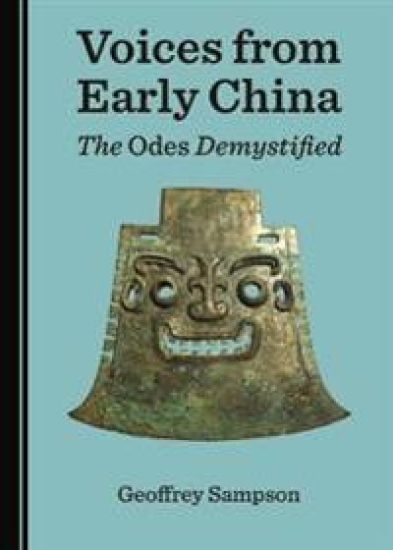
Voices from Early China

Voices from Early China

Geoffrey Sampson

Cambridge Scholars Publishing
2020
nidottu
The Chinese "Book of Odes" (Shijing) is a collection of 305 poems dating from between 1000 and 600 B.C., and, thus, is one of the earliest literary works in any living language. It offers vignettes of life in an almost unimaginably remote society; many of the poems have great charm, for instance, some are authored by women about their love problems. (For such early literature it is remarkable how many poems are by women.) Over the centuries the content of the Odes has become obscured by developments in the Chinese language, by prudishness and pomposity on the part of commentators, and because earlier translators were often more interested in philological technicalities than in the poems' human significance. This book cuts through these obscurities to present a new translation into straightforward, down-to-earth English.The Odes are the earliest rhyming poetry in any language, and they make use of alliteration and assonance to achieve their poetic effects, but changes in the sounds of modern Chinese have destroyed all this speech-music. This book restores it: alongside the author's translations, it spells the Chinese wording out in the sounds used by the original poets—something which has only recently become possible through advances in the reconstruction of Old Chinese speech.
The The Linguistics Delusion

The The Linguistics Delusion

Geoffrey Sampson

Equinox Publishing Ltd
2017
pokkari
Linguistics is a subject which came to the fore only in the 1960s. It is founded on a fallacy. Linguistics claims to be 'the scientific study of language', but language behaviour is too open-ended and creative to be treated by the methods of science. In consequence, linguistic theories systematically distort the nature of language, and present a misleading picture of our human nature. Geoffrey Sampson shows how various traditions of linguistics, and their accounts of different aspects of language, are all infected by the delusion of scientism. And he offers positive examples of how language can be studied insightfully, once the scientistic delusion is given up.
The The Linguistics Delusion

The The Linguistics Delusion

Geoffrey Sampson

Equinox Publishing Ltd
2017
sidottu
Linguistics is a subject which came to the fore only in the 1960s. It is founded on a fallacy. Linguistics claims to be 'the scientific study of language', but language behaviour is too open-ended and creative to be treated by the methods of science. In consequence, linguistic theories systematically distort the nature of language, and present a misleading picture of our human nature. Geoffrey Sampson shows how various traditions of linguistics, and their accounts of different aspects of language, are all infected by the delusion of scientism. And he offers positive examples of how language can be studied insightfully, once the scientistic delusion is given up.
Grammar Without Grammaticality

Grammar Without Grammaticality

Geoffrey Sampson; Anna Babarczy

De Gruyter Mouton
2016
isokokoinen pokkari
Linguists have standardly assumed that grammar is about identifying all and only the 'good' sentences of a language, which implies that there must be other, 'bad' sentences- but in practice most linguists know that it is hard to pin those down. The standard assumption is no more than an assumption. A century ago, grammarians did not think about their subject that way, and our book shows that the older idea was right: linguists can and should dispense with the concept 'starred sentence'. We draw on corpus data in order to support a different model of grammar, in which individuals refine positive grammatical habits to greater or lesser extents in diverse and unpredictable directions, but nothing is ever ruled out. Languages are not merely alternative methods of verbalizing universal logical forms. We use empirical evidence to shed light on the routes by which school-age children gradually expand their battery of grammatical resources, which turn out to be sometimes counter-intuitive. Our rejection of the 'starred sentence' concept has attracted considerable discussion, and we summarize the reactions and respond to our critics. The contrasting models of grammar described in this book entail contrasting pictures of human nature; our closing chapter shows that grammatical theory is not value-neutral but has an ethical dimension.
Evolutionary Language Understanding

Evolutionary Language Understanding

Geoffrey Sampson

Bloomsbury Academic
2015
sidottu
This book records a unique attempt over a ten-year period to use stochastic optimization in the natural language processing domain. Setting the work against the background of the logical rule-based approach, the author provides a context for understanding the differences in assumptions about the nature of language and cognition.
Writing Systems

Writing Systems

Geoffrey Sampson

Equinox Publishing Ltd
2015
sidottu
The cultures of the world have chosen different ways to make spoken language visible and permanent. The original edition of Writing Systems represented the first time that modern linguistic principles were brought to bear on a study of this. Now this new edition brings the story up to date; it incorporates topics which have emerged since the first edition (such as electronic techniques for encoding the world's scripts), together with new findings about established topics, including the ultimate historical origin of our alphabet. Featuring a series of detailed case studies of scripts of diverse types, and giving due attention to the psychology of reading and learning to read, the book is written so as to be accessible to those with no prior knowledge of any writing systems other than our own.
Writing Systems

Writing Systems

Geoffrey Sampson

Equinox Publishing Ltd
2015
pokkari
The cultures of the world have chosen different ways to make spoken language visible and permanent. The original edition of Writing Systems represented the first time that modern linguistic principles were brought to bear on a study of this. Now this new edition brings the story up to date; it incorporates topics which have emerged since the first edition (such as electronic techniques for encoding the world's scripts), together with new findings about established topics, including the ultimate historical origin of our alphabet. Featuring a series of detailed case studies of scripts of diverse types, and giving due attention to the psychology of reading and learning to read, the book is written so as to be accessible to those with no prior knowledge of any writing systems other than our own.
Grammar Without Grammaticality

Grammar Without Grammaticality

Geoffrey Sampson; Anna Babarczy

De Gruyter Mouton
2013
sidottu
Linguists have standardly assumed that grammar is about identifying all and only the 'good' sentences of a language, which implies that there must be other, 'bad' sentences - but in practice most linguists know that it is hard to pin those down. The standard assumption is no more than an assumption. A century ago, grammarians did not think about their subject that way, and our book shows that the older idea was right: linguists can and should dispense with the concept 'starred sentence'. We draw on corpus data in order to support a different model of grammar, in which individuals refine positive grammatical habits to greater or lesser extents in diverse and unpredictable directions, but nothing is ever ruled out. Languages are not merely alternative methods of verbalizing universal logical forms. We use empirical evidence to shed light on the routes by which school-age children gradually expand their battery of grammatical resources, which turn out to be sometimes counter-intuitive. Our rejection of the 'starred sentence' concept has attracted considerable discussion, and we summarize the reactions and respond to our critics. The contrasting models of grammar described in this book entail contrasting pictures of human nature; our closing chapter shows that grammatical theory is not value-neutral but has an ethical dimension.
Corpus Linguistics

Corpus Linguistics

Geoffrey Sampson; Diana McCarthy

Continuum International Publishing Group Ltd.
2005
nidottu
Corpus Linguistics seeks to provide a comprehensive sampling of real-life usage in a given language, and to use these empirical data to test language hypotheses. Modern corpus linguistics began fifty years ago, but the subject has seen explosive growth since the early 1990s. These days corpora are being used to advance virtually every aspect of language study, from computer processing techniques such as machine translation, to literary stylistics, social aspects of language use, and improved language-teaching methods. Because corpus linguistics has grown fast from small beginnings, newcomers to the field often find it hard to get their bearings. Important papers can be difficult to track down. This volume reprints forty-two articles on corpus linguistics by an international selection of authors, which comprehensively illustrate the directions in which the subject is developing. It includes articles that are already recognized as classics, and others which deserve to become so, supplemented with editorial introductions relating the individual contributions to the field as a whole. This collection of readings will be useful to students of corpus linguistics at both undergraduate and postgraduate level, as well as academics researching this fascinating area of linguistics.
The 'Language Instinct' Debate

The 'Language Instinct' Debate

Geoffrey Sampson

BLOOMSBURY PUBLISHING PLC
2005
sidottu
When it was first published in 1997, Geoffrey Sampson's Educating Eve was described as the definitive response to Steven Pinker's The Language Instinct and Noam Chomsky's nativism. In this revised and expanded new edition, Sampson revisits his original arguments in the light of fresh evidence that has emerged since the original publication. Since Chomsky revolutionized the study of language in the 1960s, it has increasingly come to be accepted that language and other knowledge structures are hard-wired in our genes. According to this view, human beings are born with a rich structure of cognition already in place. But people do not realize how thin the evidence for that idea is. The 'Language Instinct' Debate examines the various arguments for instinctive knowledge, and finds that each one rests on false premisses or embodies logical fallacies. The structures of language are shown to be purely cultural creations. With a new chapter entitled 'How People Really Speak' which uses corpus data to analyse how language is used in spontaneous English conversation, responses to critics, extensive revisions throughout, and a new preface by Paul Postal of New York University, this new edition will be an essential purchase for students, academics, and general readers interested in the debate about the 'language instinct'.
The 'Language Instinct' Debate

The 'Language Instinct' Debate

Geoffrey Sampson

Continuum International Publishing Group Ltd.
2005
nidottu
When it was first published in 1997, Geoffrey Sampson's Educating Eve was described as the definitive response to Steven Pinker's The Language Instinct and Noam Chomsky's nativism. In this revised and expanded new edition, Sampson revisits his original arguments in the light of fresh evidence that has emerged since the original publication. Since Chomsky revolutionized the study of language in the 1960s, it has increasingly come to be accepted that language and other knowledge structures are hard-wired in our genes. According to this view, human beings are born with a rich structure of cognition already in place. But people do not realize how thin the evidence for that idea is. The 'Language Instinct' Debate examines the various arguments for instinctive knowledge, and finds that each one rests on false premisses or embodies logical fallacies. The structures of language are shown to be purely cultural creations. With a new chapter entitled 'How People Really Speak' which uses corpus data to analyse how language is used in spontaneous English conversation, responses to critics, extensive revisions throughout, and a new preface by Paul Postal of New York University, this new edition will be an essential purchase for students, academics, and general readers interested in the debate about the 'language instinct'.
Empirical Linguistics

Empirical Linguistics

Geoffrey Sampson

Continuum International Publishing Group Ltd.
2002
nidottu
Linguistics has become an empirical science again after several decades when it was preoccupied with speakers' hazy "intuitions" about language structure. With a mixture of English-language case studies and more theoretical analyses, Geoffrey Sampson gives an overview of some of the new findings and insights about the nature of language which are emerging from investigations of real-life speech and writing, often (although not always) using computers and electronic language samples ("corpora"). Concrete evidence is brought to bear to resolve long-standing questions such as "Is there one English language or many Englishes?" and "Do different social groups use characteristically elaborated or restricted language codes?" Sampson shows readers how to use some of the new techniques for themselves, giving a step-by-step "recipe-book" method for applying a quantitative technique that was invented by Alan Turing in the World War II code-breaking work at Bletchley Park and has been rediscovered and widely applied in linguistics fifty years later.
English for the Computer

English for the Computer

Geoffrey Sampson

Clarendon Press
1995
sidottu
Computer processing of natural language is a burgeoning field, but until now there has been no agreement on a standardized classification of the diverse structural elements that occur in real-life language material. This book attempts to define a "Linnaean taxonomy" for the English language: an annotation scheme, the SUSANNE scheme, which yields a labelled constituency structure for any string of English, comprehensively identifying all of its surface and logical structural properties. The structure is specified with sufficient rigour that analysts working independently must produce identical annotations for a given example. The scheme is based on large sample of real-life use of British and American written and spoken English. The book also describes the SUSANNE electronic corpus of English which is annotated in accordance with the scheme. It is freely available as a research resource to anyone working at a computer conected to Internet, and since 1992 has come into widespread use in academic and commerical research environments on four continents.