Kirjojen hintavertailu. Mukana 12 595 353 kirjaa ja 12 kauppaa.
Kirjailija
Geoffrey Scarre
Kirjat ja teokset yhdessä paikassa: 17 kirjaa, julkaisuja vuosilta 1996-2024, suosituimpien joukossa Judging the Past. Vertaile teosten hintoja ja tarkista saatavuus suomalaisista kirjakaupoista.
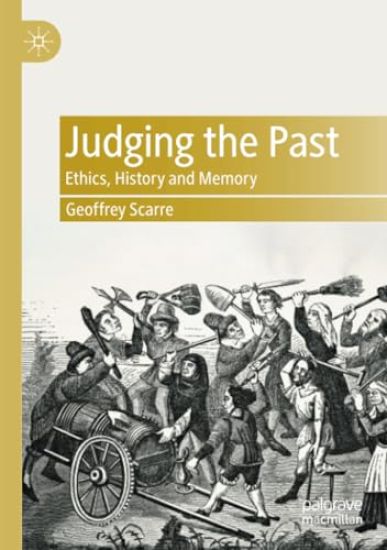
This book presents an extended argument for the thesis that people of the present day are not debarred in principle from passing moral judgement on people who lived in former days, notwithstanding the inevitable differences in social and cultural circumstances that separate us.
This book presents an extended argument for the thesis that people of the present day are not debarred in principle from passing moral judgement on people who lived in former days, notwithstanding the inevitable differences in social and cultural circumstances that separate us. Some philosophers argue that because we can see things only from our own peculiar historical situation, we lack a sufficiently objective vantage point from which to appraise past people and their acts. If they are correct, then the judgements passed by twenty-first-century people must inevitably be biased and irrelevant, grounded on moral standards that would have seemed alien in that 'foreign country' of the past. This book challenges this relativistic position, contending that it seriously underestimates our ability to engage imaginatively with people who, however much their lifestyles may have differed from our own, were our fellow human beings, endowed with the samebasic instincts, aversions, desires and aspirations. Taking a stand on a naturalistic theory of human beings, coupled with a Kantian conception of the equal worth of all human members of the Kingdom of Ends, Scarre argues that historical moral judgements can be sensitive to circumstances, fitting and fair, and untainted by anachronism. The discussion ends by examining the implications of this position for the practice of historians and for the ethics of memory and commemoration.
Evils, both large and small, are a constant feature of human life. This book is about responding to them and in particular about responding to moral evils, that is, those produced by the deliberate acts of human beings. Prominent in our repertoire of responses to moral evil are forgiveness and punishment, and these, with the numerous conceptual and moral problems they raise, are at the heart of the study in this book. After discussing the idea of evil, Scarre turns to the meaning of forgiveness and the conditions for granting it. He defends a broadly utilitarian approach that stresses the role of forgiveness in repairing the damage that has been caused by injurious or offensive behaviour. Scarre then considers the controversial virtue of mercy and the propriety of revengeful behaviour and resentful attitudes. Finally, he deals with the purpose and justification of judicial punishment, paying particular regard to the appropriate treatment of war criminals. In this timely and sensitively written book, Scarre pays close attention to the existing literature and appraises both contemporary and classical contributions to the debate. This book makes an original contribution to an area of ethical thought that has been attracting an increasing amount of attention from philosophers, jurists and political thinkers.
Surveying the historical development and the present condition of utilitarian ethics, Geoffrey Scarre examines the major philosophers from Lao Tzu in the fifth century BC to Richard Hare in the twentieth.Utilitarianism traces the 'doctrine of utility' from the moralists of the ancient world, through the Enlightenment and Victorian utilitarianism up to the lively debate of the present day. Utilitarianism today faces challenges on several fronts: it cannot warrant the drawing of adequate protective boundaries around the essential interests of individuals, and it does not allow them the space to pursue the personal concerns which give meaning to their lives. Geoffrey Scarre considers these and other charges, and concludes that whilst utilitarianism may not be a faultless moral doctrine, its positions are relevant, and significant today. Written with undergraduates in mind, this is an ideal course book for those studying and those teaching moral philosophy.
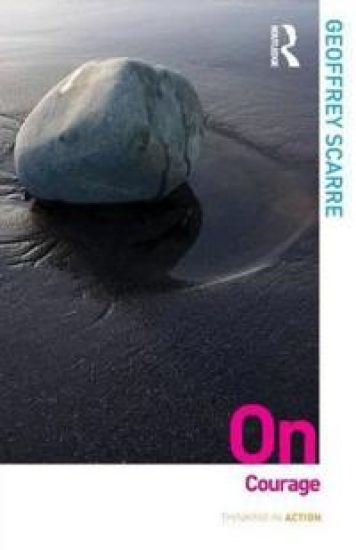
What is courage and why is it one of the oldest and most universally admired virtues? How is it relevant in the world today, and what contemporary forms does it take? In this insightful and crisply written book, Geoffrey Scarre examines these questions and many more. He begins by defining courage, asking how it differs from fearlessness, recklessness and fortitude, and why people are often more willing to ascribe it to others than to avow it for themselves. He also asks whether courage can serve bad ends as well as good, and whether it can sometimes promote confrontation over compromise and dialogue.On Courage explores the ideas of Aristotle, Aquinas and many later philosophers who have written about courage, as well as drawing on classic and recent examples of courage in politics and fiction, including the German anti-Nazi "White Rose Movement", the modern phenomenon of "whistle-blowing", and Stephen Crane’s The Red Badge of Courage.
What is courage and why is it one of the oldest and most universally admired virtues? How is it relevant in the world today, and what contemporary forms does it take? In this insightful and crisply written book, Geoffrey Scarre examines these questions and many more. He begins by defining courage, asking how it differs from fearlessness, recklessness and fortitude, and why people are often more willing to ascribe it to others than to avow it for themselves. He also asks whether courage can serve bad ends as well as good, and whether it can sometimes promote confrontation over compromise and dialogue.On Courage explores the ideas of Aristotle, Aquinas and many later philosophers who have written about courage, as well as drawing on classic and recent examples of courage in politics and fiction, including the German anti-Nazi "White Rose Movement", the modern phenomenon of "whistle-blowing", and Stephen Crane’s The Red Badge of Courage.
Continuum's "Reader's Guides" are clear, concise and accessible introductions to classic works of philosophy. Each book explores the major themes, historical and philosophical context and key passages of a major philosophical text, guiding the reader toward a thorough understanding of often demanding material. Ideal for undergraduate students, the guides provide an essential resource for anyone who needs to get to grips with a philosophical text. First published in 1859, John Stuart Mill's "On Liberty" has exerted an enormous influence on philosophical and political thought ever since. Mill, also famous for his writings on utilitarianism, argues that individual liberty is of paramount importance and that any infringements of it must be kept to an absolute minimum. Mill himself described his brief but brilliant book as asserting 'one very simple principle...that the sole end for which mankind are warranted, individually or collectively, in interfering in the liberty of any of their number, is self-protection.' Of course, drawing out the implications of this principle have proved to be anything but simple, and the various interpretations of Mill's doctrine have spawned countless debates and mountains of secondary literature. Numerous moral and political theorists have drawn on Mill's work, including Berlin, Rawls and Raz, and his ideas remain as relevant as ever today.
Continuum's Reader's Guides are clear, concise and accessible introductions to classic works of philosophy. Each book explores the major themes, historical and philosophical context and key passages of a major philosophical text, guiding the reader toward a thorough understanding of often demanding material. Ideal for undergraduate students, the guides provide an essential resource for anyone who needs to get to grips with a philosophical text. First published in 1859, John Stuart Mill's On Liberty has exerted an enormous influence on philosophical and political thought ever since. Mill, also famous for his writings on utilitarianism, argues that individual liberty is of paramount importance and that any infringements of it must be kept to an absolute minimum. Mill himself described his brief but brilliant book as asserting 'one very simple principle ...that the sole end for which mankind are warranted, individually or collectively, in interfering in the liberty of any of their number, is self-protection.' Of course, drawing out the implications of this principle has proved to be anything but simple, and the various interpretations of Mill's doctrine have spawned countless debates and mountains of secondary literature. Numerous moral and political theorists have drawn on Mill's work, including Berlin, Rawls and Raz, and his ideas remain as relevant as ever today.
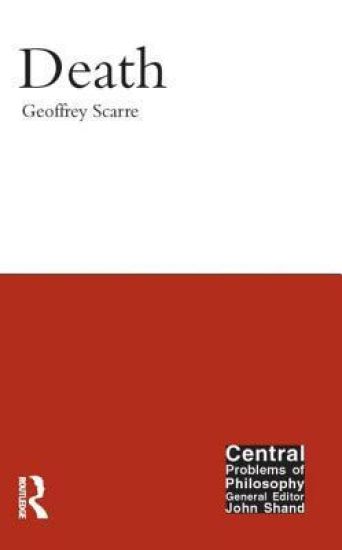
What is death? How should the knowledge of our finitude affect the living of our lives and what are the virtues suitable to mortal beings? Does death destroy the meaningfulness of life or would life that never ended be eternally and absurdly tedious? Can death really be an evil if, after death, we no longer exist as subjects of goods or evils? How should we respond to the deaths of others and do we have any duties towards the dead? Geoffrey Scarre addresses these important questions and many others in his introduction to the philosophy of death. Drawing from a wide variety of philosophical and literary sources, Death offers a highly readable study of some of the major ethical and metaphysical riddles concerning death and dying. Scarre shows that, far from being a morbid subject, reflecting on death and its significance is an illuminating way of reflecting on life.
What is death? How should the knowledge of our finitude affect the living of our lives and what are the virtues suitable to mortal beings? Does death destroy the meaningfulness of life or would life that never ended be eternally and absurdly tedious? Can death really be an evil if, after death, we no longer exist as subjects of goods or evils? How should we respond to the deaths of others and do we have any duties towards the dead? Geoffrey Scarre addresses these important questions and many others in his introduction to the philosophy of death. Drawing from a wide variety of philosophical and literary sources, Death offers a highly readable study of some of the major ethical and metaphysical riddles concerning death and dying. Scarre shows that, far from being a morbid subject, reflecting on death and its significance is an illuminating way of reflecting on life.
What is death and why does it matter to us? How should the knowledge of our finitude affect the living of our lives and what are the virtues suitable to mortal beings? Does death destroy the meaningfulness of lives, or would lives that never ended be eternally and absurdly tedious? Should we reconcile ourselves to the fact of our forthcoming death, or refuse to "go gently into that good night"? Can death really be an evil if, after death, we no longer exist as subjects of goods or evils? How should we respond to the deaths of others and do we have any duties towards the dead? These, and many other, questions are addressed in Geoffrey Scarre's book, which draws upon a wide variety of philosophical and literary sources to offer an up-to-date and highly readable study of some major ethical and metaphysical riddles concerning death and dying.
What is death and why does it matter to us? How should the knowledge of our finitude affect the living of our lives and what are the virtues suitable to mortal beings? Does death destroy the meaningfulness of lives, or would lives that never ended be eternally and absurdly tedious? Should we reconcile ourselves to the fact of our forthcoming death, or refuse to "go gently into that good night"? Can death really be an evil if, after death, we no longer exist as subjects of goods or evils? How should we respond to the deaths of others and do we have any duties towards the dead? These, and many other, questions are addressed in Geoffrey Scarre's book, which draws upon a wide variety of philosophical and literary sources to offer an up-to-date and highly readable study of some major ethical and metaphysical riddles concerning death and dying.
Evils, both large and small, are a constant feature of human life. This book is about responding to them and in particular about responding to moral evils, that is, those produced by the deliberate acts of human beings. Prominent in our repertoire of responses to moral evil are forgiveness and punishment, and these, with the numerous conceptual and moral problems they raise, are at the heart of the study in this book. After discussing the idea of evil, Scarre turns to the meaning of forgiveness and the conditions for granting it. He defends a broadly utilitarian approach that stresses the role of forgiveness in repairing the damage that has been caused by injurious or offensive behaviour. Scarre then considers the controversial virtue of mercy and the propriety of revengeful behaviour and resentful attitudes. Finally, he deals with the purpose and justification of judicial punishment, paying particular regard to the appropriate treatment of war criminals. In this timely and sensitively written book, Scarre pays close attention to the existing literature and appraises both contemporary and classical contributions to the debate. This book makes an original contribution to an area of ethical thought that has been attracting an increasing amount of attention from philosophers, jurists and political thinkers.
How far can we ever hope to understand the Holocaust? What can we reasonably say about right and wrong, moral responsibility, praise and blame, in a world where ordinary reasons seem to be excluded? In the century of Nazism, ethical writing in English had much more to say about the meaning of the word `good` than about the material reality of evil. This book seeks to redress the balance at the start of a new century. Despite intense interest in the Holocaust, there has been relatively little exploration of it by philosophers in the analytic tradition. Although ethical writers often refer to Nazism as a touchstone example of evil, and use it as a case by which moral theorising can be tested, they rarely analyse what evil amounts to, or address the substantive moral questions raised by the Holocaust itself. This book draws together new work by leading moral philosophers to present a wide range of perspectives on the Holocaust. Contributors focus on particular themes of central importance, including: moral responsibility for genocide; the moral uniqueness of the Holocaust; responding to extreme evil; the role of ideology; the moral psychology of perpetrators and victims of genocide; forgiveness and the Holocaust; and the impact of the `Final Solution` on subsequent culture. Topics are treated with the precision and rigour characteristic of analytic philosophy. Scholars, teachers and students with an interest in moral theory, applied ethics, genocide and Holocaust studies will find this book of particular value, as will all those seeking greater insight into ethical issues surrounding Nazism, race-hatred and intolerance.
How far can we ever hope to understand the Holocaust? What can we reasonably say about right and wrong, moral responsibility, praise and blame, in a world where ordinary reasons seem to be excluded? In the century of Nazism, ethical writing in English had much more to say about the meaning of the word `good` than about the material reality of evil. This book seeks to redress the balance at the start of a new century. Despite intense interest in the Holocaust, there has been relatively little exploration of it by philosophers in the analytic tradition. Although ethical writers often refer to Nazism as a touchstone example of evil, and use it as a case by which moral theorising can be tested, they rarely analyse what evil amounts to, or address the substantive moral questions raised by the Holocaust itself. This book draws together new work by leading moral philosophers to present a wide range of perspectives on the Holocaust. Contributors focus on particular themes of central importance, including: moral responsibility for genocide; the moral uniqueness of the Holocaust; responding to extreme evil; the role of ideology; the moral psychology of perpetrators and victims of genocide; forgiveness and the Holocaust; and the impact of the `Final Solution` on subsequent culture. Topics are treated with the precision and rigour characteristic of analytic philosophy. Scholars, teachers and students with an interest in moral theory, applied ethics, genocide and Holocaust studies will find this book of particular value, as will all those seeking greater insight into ethical issues surrounding Nazism, race-hatred and intolerance.
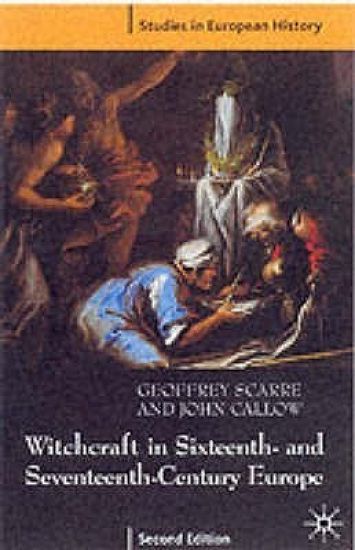
The figure of the witch still has the ability to exert a powerful fascination on the modern mind. The vision of the elderly crone begging for charity at the crossroads, an object of fear and revulsion for her local community, has combined with the memory of prolonged judicial persecution and oppression to inspire contemporary movements as far removed from each other as Wiccans and women's liberation. In tackling such an emotive issue, where misogyny and violence combine with superstition and the basest of human instincts, Scarre and Callow chart a clear and refreshingly level-headed approach to the subject. Distinguishing between fact and fiction, they set the witch trials firnly back within the context of their own times and, without seeking to exonerate those responsible, demonstrate how it was possible for judiciaries and social elites to believe wholeheartedly in the reality and efficacy of witchcraft as a valid system of belief and as a dangerous threat to the fabric of society in which they lived.This new edition has been comprehensively updated to take account of the vast expansion in interest and scholarly research that has taken place in the field since the publication of the first edition. This work provides a provocative thesis for those seeking to understand the basis for the politics of persecution and a firm interpretative basis around which further exploratory research may be conducted.
Surveying the historical development and the present condition of utilitarian ethics, Geoffrey Scarre examines the major philosophers from Lao Tzu in the fifth century BC to Richard Hare in the twentieth.Utilitarianism traces the 'doctrine of utility' from the moralists of the ancient world, through the Enlightenment and Victorian utilitarianism up to the lively debate of the present day. Utilitarianism today faces challenges on several fronts: it cannot warrant the drawing of adequate protective boundaries around the essential interests of individuals, and it does not allow them the space to pursue the personal concerns which give meaning to their lives. Geoffrey Scarre considers these and other charges, and concludes that whilst utilitarianism may not be a faultless moral doctrine, its positions are relevant, and significant today. Written with undergraduates in mind, this is an ideal course book for those studying and those teaching moral philosophy.