Kirjojen hintavertailu. Mukana 12 569 493 kirjaa ja 12 kauppaa.

Kirjailija

Georg Grabherr

Kirjat ja teokset yhdessä paikassa: 4 kirjaa, julkaisuja vuosilta 1997-2019, suosituimpien joukossa A 21st Century Garden. Vertaile teosten hintoja ja tarkista saatavuus suomalaisista kirjakaupoista.

4 kirjaa

Kirjojen julkaisuhaarukka 1997-2019.

A 21st Century Garden

A 21st Century Garden

Georg Grabherr; Traudl Grabherr; Lois Lammerhuber

Edition Lammerhuber
2019
sidottu
Drowning in flowers - with perceptive pictures and quirky texts this award-winning book wants to plant in its readers a longing for beauty, harmony, for the joy of recognition through knowledge. Georg Grabherr, one of the most influential conservation biologists, has created a domestic garden and incorporated key biosphere reserve concepts. Over time, his garden has developed into an ecological gem where the idea of "nature in the garden" has been realised in exemplary manner. He guides us through the phenological seasons that divide the year by the arrival of key species, covers themes dear to the gardener's heart and engages in a dialogue with nature, thoughtfully accepting and using what is wild and spontaneous. He is asking whether the thousands of private gardens can become a Noah's Ark, suitable for rescuing threatened species. Award-winning photographer Lois Lammerhuber has captured this amazing space throughout a whole gardening year and introduces us to an unusual but convincing garden aesthetic. Text in English and German.
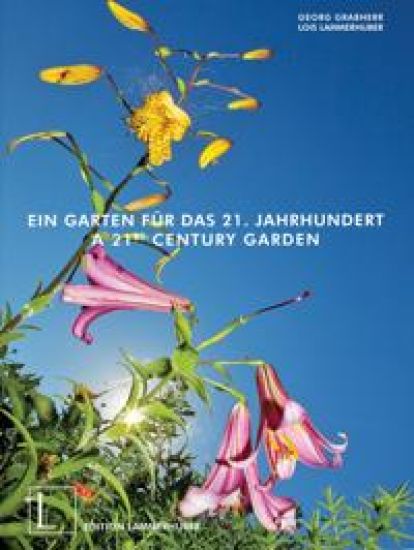
21st Century Garden

21st Century Garden

Georg Grabherr; Traudl Grabherr; Lois Lammerhuber

Edition Lammerhuber
2015
sidottu
Drowning in flowers - with perceptive pictures and quirky texts this award-winning book wants to plant in its readers a longing for beauty, harmony, for the joy of recognition through knowledge. Georg Grabherr, one of the most influential conservation biologists, has created a domestic garden and incorporated key biosphere reserve concepts. Over time, his garden has developed into an ecological gem where the idea of "nature in the garden" has been realised in exemplary manner. He guides us through the phenological seasons that divide the year by the arrival of key species, covers themes dear to the gardener's heart and engages in a dialogue with nature, thoughtfully accepting and using what is wild and spontaneous. He is asking whether the thousands of private gardens can become a Noah's Ark, suitable for rescuing threatened species. Award-winning photographer Lois Lammerhuber has captured this amazing space throughout a whole gardening year and introduces us to an unusual but convincing garden aesthetic.
The Biology of Alpine Habitats

The Biology of Alpine Habitats

Laszlo Nagy; Georg Grabherr

Oxford University Press
2009
nidottu
This book is unique in providing a global overview of alpine (high mountain) habitats that occur above the natural (cold-limited) tree line, describing the factors that have shaped them over both ecological and evolutionary timescales. The broad geographic coverage helps synthesise common features whilst revealing differences in the world's major alpine systems from the Arctic to the Tropics. The words "barren" and "wasteland" have often been applied to describe landscapes beyond the treeline. However, a closer look reveals a large diversity of habitats, assemblages and individual taxa, largely connected to topographic diversity within individual alpine regions. The book considers habitat-forming factors (landforms, energy and climate, hydrology, soils, and vegetation) individually, as well as their composite impacts on habitat characteristics. Evolution and population processes are examined in the context of the responsiveness / resilience of alpine habitats to global change. Finally, a critical assessment of the potential impacts of climate change, atmospheric pollutants and land use is made and related to the management and conservation options available for these unique habitats.
Farbatlas Ökosysteme der Erde

Farbatlas Ökosysteme der Erde

Georg Grabherr

Ulmer Eugen Verlag
1997
sidottu
Anhand von über 400 Farbbildern werden die Grosslebensräume der Erde mit ihren typischen natürlichen Ökosystemen und Kulturlandschaften dargestellt, von tropischen Regenwaldgebieten bis zur Arktis. Dabei stehen die jeweils besonders prägenden ökologischen Voraussetzungen und Eigenheiten (z.B. Feuer als ökologischer Faktor, menschliche Nutzung natürlicher Ressourcen, physiologische Anpassungen) im Vordergrund. Ziel des Buches ist es, ein kausales Verständnis für die einzelnen Lebensräume zu entwickeln. Die Natur- und Kulturökosysteme unserer Erde werden so gezeigt, wie sie der Betrachter wirklich sieht. Dazu kommt die Erklärung, warum diese "Bilder" so und nicht anders sind.