

Kirjailija
George A Birmingham
Kirjat ja teokset yhdessä paikassa: 115 kirjaa, julkaisuja vuosilta 2007-2026, suosituimpien joukossa The Grand Duchess. Vertaile teosten hintoja ja tarkista saatavuus suomalaisista kirjakaupoista.
Mukana myös kirjoitusasut: George A. Birmingham
115 kirjaa
Kirjojen julkaisuhaarukka 2007-2026.


This book "" From Dublin to Chicago: Some Notes on a Tour in America "", has been considered important throughout the human history, and so that this work is never forgotten we have made efforts in its preservation by republishing this book in a modern format for present and future generations. This whole book has been reformatted, retyped and designed. These books are not made of scanned copies and hence the text is clear and readable.

The book "" Gossamer "" has been considered important throughout the human history, and so that this work is never forgotten we have made efforts in its preservation by republishing this book in a modern format for present and future generations. This whole book has been reformatted, retyped and designed. These books are not made of scanned copies and hence the text is clear and readable.

The book "" General John Regan, has been considered important throughout the human history, and so that this work is never forgotten we have made efforts in its preservation by republishing this book in a modern format for present and future generations. This whole book has been reformatted, retyped and designed. These books are not made of scanned copies and hence the text is clear and readable.
I had, I suppose, some reason for calling on Canon Beresford, but I have totally forgotten what it was. In all probability my mother sent me to discuss some matter connected with the management of the parish or the maintenance of the fabric of the church. I was then, and still am, a church warden. The office is hereditary in my family. My son-Miss Pettigrew recommended my having several sons-will hold it when I am gone. My mother has always kept me up to the mark in the performance of my duties. Without her at my elbow I should, I am afraid, be inclined to neglect them. I am bored, not interested as a churchwarden should be, when the wall of the graveyard crumbles unexpectedly. I fail to find either pleasure or excitement in appointing a new sexton. Canon Beresford, our rector, is no more enthusiastic about such things than I am. He and I are very good friends, but when he suspects me of paying him a business visit he goes out to fish.


From Dublin to Chicago
George A. Birmingham
Createspace Independent Publishing Platform
2018
nidottu

In 1914 there were not twenty men in England who had ever heard of the island of Salissa. Even now-I am writing in the spring of 1917-the public is very badly informed about the events which gave the island a certain importance in the history of the war. A couple of months ago I asked a well-known press-cutting agency to supply me with a complete collection of all references to Salissa which had appeared in our newspapers. I received a single short paragraph from a second-rate society weekly. It ran thus: "Is it true that our new Minister for Balkan Problems has a curious story to tell about a certain island in the Mediterranean, and is there a lady in the case?" The Minister referred to is, of course, Sir Bartholomew Bland-Potterton. The island must be Salissa. It is a clear proof, if proof is required, of the efficiency of our press censorship that this should be the only reference to the island in any newspaper in the course of three years. We have blundered a good deal during the war; but it cannot be said of us that we have allowed our press to supply the enemy or any one else with information likely to be of value.
This work has been selected by scholars as being culturally important, and is part of the knowledge base of civilization as we know it. This work was reproduced from the original artifact, and remains as true to the original work as possible. Therefore, you will see the original copyright references, library stamps (as most of these works have been housed in our most important libraries around the world), and other notations in the work. This work is in the public domain in the United States of America, and possibly other nations. Within the United States, you may freely copy and distribute this work, as no entity (individual or corporate) has a copyright on the body of the work. As a reproduction of a historical artifact, this work may contain missing or blurred pages, poor pictures, errant marks, etc. Scholars believe, and we concur, that this work is important enough to be preserved, reproduced, and made generally available to the public. We appreciate your support of the preservation process, and thank you for being an important part of keeping this knowledge alive and relevant.

Dr. Lucius OG rady, was the medical officer of the Poor Law Union of Clonmore, which is in Western Connacht. The office is not like that of resident magistrate or bank manager. It does not necessarily confer on its holder the right of entry to the highest society. Therefore, Dr. OG rady was not invited to dinner, luncheon, or even afternoon tea by Lord Manton at that season of the year when Clonmore Castle was full of visitors. Lady Flavia Canning, Lord Manton sdaughter, who was married to a London barrister of some distinction, and moved in smart society, did not appreciate Dr. OG rady. Nor did those nephews and nieces of the deceased Lady Manton who found it convenient to spend a part of each summer at Clonmore Castle. They were not the sort of people who would associate with a dispensary doctor, unless, indeed, he had possessed a motor car. And Dr. OG rady, for reasons which became obvious later on, did not keep a motor car. On the other hand, he was a frequent guest at the Castle during those early summer months when Lord Manton was alone. In A pril and May, for instance, and in June, Dr. OG rady dined once, twice, or even three times a week at Clonmore Castle. The old earl liked him because he found him amusing; and Dr.

The Red Hand of Ulster
George A. Birmingham
Createspace Independent Publishing Platform
2017
nidottu
This work has been selected by scholars as being culturally important, and is part of the knowledge base of civilization as we know it. This work was reproduced from the original artifact, and remains as true to the original work as possible. Therefore, you will see the original copyright references, library stamps (as most of these works have been housed in our most important libraries around the world), and other notations in the work.This work is in the public domain in the United States of America, and possibly other nations. Within the United States, you may freely copy and distribute this work, as no entity (individual or corporate) has a copyright on the body of the work.As a reproduction of a historical artifact, this work may contain missing or blurred pages, poor pictures, errant marks, etc. Scholars believe, and we concur, that this work is important enough to be preserved, reproduced, and made generally available to the public. We appreciate your support of the preservation process, and thank you for being an important part of keeping this knowledge alive and relevant.

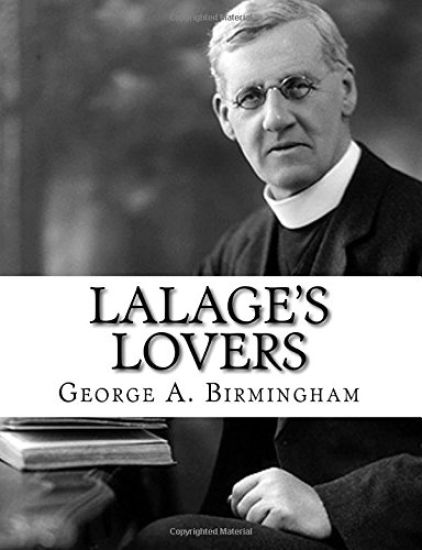
In 1914 there were not twenty men in England who had ever heard of the island of Salissa. Even now-I am writing in the spring of 1917-the public is very badly informed about the events which gave the island a certain importance in the history of the war. George A. Birmingham was the pen name of James Owen Hannay (16 July 1865 - 2 February 1950), Irish clergyman and prolific novelist. He was born in Belfast, ordained in 1889, as a Church of Ireland (Anglican) minister and served as rector of Holy Trinity Church, Westport in County Mayo. His early writings raised the ire of nationalist Catholics, and he withdrew from the Gaelic League in the wake of ongoing protests about the tour of his successful play General John Regan. He became rector of Kildare Parish from 1918 to 1920, and after serving as chaplain to Viceroy, he joined the British ambassadorial team in Budapest in 1922. He returned to officiate at Mells, Somerset from 1924 to 1934, after which he was appointed vicar of Holy Trinity Church in Kensington near London. He served there from 1934 to his death in 1950.
This work has been selected by scholars as being culturally important, and is part of the knowledge base of civilization as we know it. This work was reproduced from the original artifact, and remains as true to the original work as possible. Therefore, you will see the original copyright references, library stamps (as most of these works have been housed in our most important libraries around the world), and other notations in the work.This work is in the public domain in the United States of America, and possibly other nations. Within the United States, you may freely copy and distribute this work, as no entity (individual or corporate) has a copyright on the body of the work.As a reproduction of a historical artifact, this work may contain missing or blurred pages, poor pictures, errant marks, etc. Scholars believe, and we concur, that this work is important enough to be preserved, reproduced, and made generally available to the public. We appreciate your support of the preservation process, and thank you for being an important part of keeping this knowledge alive and relevant.

George A. Birmingham was the pen name of Irish clergyman James Hannay. Hannay was a prolific writer who wrote dozens of novels, including classics like The Seething Pot.

This collection of literature attempts to compile many of the classic works that have stood the test of time and offer them at a reduced, affordable price, in an attractive volume so that everyone can enjoy them.

The Simpkins Plot is presented here in a high quality paperback edition. This popular classic work by George A. Birmingham is in the English language, and may not include graphics or images from the original edition. If you enjoy the works of George A. Birmingham then we highly recommend this publication for your book collection.

George A. Birmingham was the pen name of Irish clergyman James Hannay. Hannay was a prolific writer who wrote dozens of novels, including classics like The Seething Pot.

After his marriage Mr. Conneally's missionary enthusiasm began to flag. His contact with womanhood humanized him. The sternness of the reformer died in him, and his neighbours, who never could comprehend his religion, came to understand the man. They learned to look upon him as a friend, to seek his sympathy and help. In time they learnt to love him. Two years passed, and a son was born. The village people crowded upon him with congratulations, and mothers of wide experience praised the boy till Mrs. Conneally's heart swelled in her with pride. He was christened Hyacinth, after a great pioneer and leader of the mission work.