Kirjojen hintavertailu. Mukana 12 390 323 kirjaa ja 12 kauppaa.

Kirjailija

George C. Daughan

Kirjat ja teokset yhdessä paikassa: 4 kirjaa, julkaisuja vuosilta 2016-2019, suosituimpien joukossa Revolution on the Hudson. Vertaile teosten hintoja ja tarkista saatavuus suomalaisista kirjakaupoista.

4 kirjaa

Kirjojen julkaisuhaarukka 2016-2019.

Lexington and Concord

Lexington and Concord

George C. Daughan

WW Norton Co
2019
nidottu
George C. Daughan’s magnificently detailed account of the battle of Lexington and Concord challenges the prevailing narrative of the American War of Independence. It was, Daughan argues, based as much on economic concerns as political ones. When Massachusetts militiamen turned out in overwhelming numbers to fight the British, they believed they were fighting for their farms and livelihoods, as well as for liberty. In the eyes of many American colonists, Britain’s repressive measures were not simply an effort to reestablish political control of the colonies, but also a means to reduce the prosperous colonists to the serfdom Benjamin Franklin witnessed on his tour of Ireland and Scotland. Authoritative and thoroughly researched, Lexington and Concord is a “worthy resource for history buffs seeking a closer look at what drove the start of the American Revolution” (Booklist).
Lexington and Concord

Lexington and Concord

George C. Daughan

WW Norton Co
2018
sidottu
George C. Daughan’s magnificently detailed account of the Battle of Lexington and Concord challenges the prevailing narrative of the American War of Independence. It was, Daughan argues, based as much in economic concerns as political ones. When Massachusetts militiamen turned out in overwhelming numbers to fight the British, they believed they were fighting for their farms and livelihoods, as well as for liberty. Benjamin Franklin was not surprised by this widespread belief. In the years prior to the Revolution, Franklin had toured Great Britain and witnessed the wretched living conditions of the king’s subjects. They wore rags for clothes, went barefoot, and had little to eat. They were not citizens, but serfs. Franklin described the appalling situation in a number of letters home. In the eyes of many American colonists, Britain’s repressive measures were not seen simply as an effort to reestablish political control of the colonies, but also as a means to reduce the prosperous colonists themselves to the serfdom described in the Franklin letters. Another key factor in the outcome of this historic battle, according to Daughan, was the scorn British officers had for colonial fighters. Although the British officers had fought alongside colonial Americans in the ferocious French and Indian War, they failed to anticipate the skill, organization, and sheer numbers of the colonial militias. Daughan explains how British arrogance led them to defeat at the hands of motivated, experienced patriot fighters determined to protect their way of life. Authoritative and immersive, Lexington and Concord gives us a new understanding of a battle that became a template for colonial uprisings in later centuries.
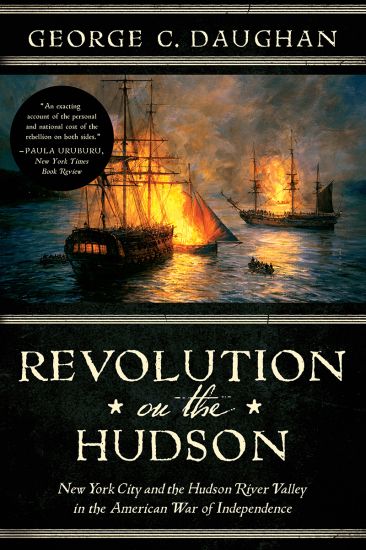
Revolution on the Hudson

Revolution on the Hudson

George C. Daughan

WW Norton Co
2017
nidottu
No part of the country was more contested during the American Revolution than New York City and its surroundings. Military leaders of the time—and generations of scholars since—believed that the Hudson River Valley was America’s geographic jugular, which, if cut, would quickly bleed the rebellion to death. In Revolution on the Hudson, prize-winning historian George C. Daughan makes the daring new argument that this strategy would never have worked, and that dogged pursuit of dominance over the Hudson ultimately cost Britain the war. This groundbreaking naval history offers a thrilling response to one of our most vexing historical questions: How could a fledgling nation have defeated the most powerful war machine of the era?
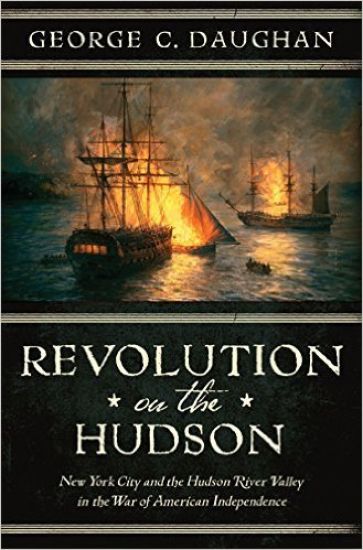
Revolution on the Hudson

Revolution on the Hudson

George C. Daughan

WW Norton Co
2016
sidottu
No part of the country was more contested during the American Revolution than New York City, the Hudson River, and the surrounding counties. Political and military leaders on both sides viewed the Hudson River Valley as the American jugular, which, if cut, would quickly bleed the rebellion to death. So in 1776, King George III sent the largest amphibious force ever assembled to seize Manhattan and use it as a base from which to push up the Hudson River Valley for a grand rendezvous at Albany with an impressive army driving down from Canada. George Washington and every other patriot leader shared the king’s fixation with the Hudson. Generations of American and British historians have held the same view. In fact, one of the few things that scholars have agreed upon is that the British strategy, though disastrously executed, should have been swift and effective. Until now, no one has argued that this plan of action was lunacy from the beginning. Revolution on the Hudson makes the bold new argument that Britain’s attempt to cut off New England never would have worked, and that doggedly pursuing dominance of the Hudson ultimately cost the crown her colonies. It unpacks intricate military maneuvers on land and sea, introduces the personalities presiding over each side’s strategy, and reinterprets the vagaries of colonial politics to offer a thrilling response to one of our most vexing historical questions: How could a fledgling nation have defeated the most powerful war machine of the era? George C. Daughan—winner of the prestigious Samuel Eliot Morrison Award for Naval Literature—integrates the war’s naval elements with its political, military, economic, and social dimensions to create a major new study of the American Revolution. Revolution on the Hudson offers a much clearer understanding of our founding conflict, and how it transformed a rebellion that Britain should have crushed into a war they could never win.