Kirjojen hintavertailu. Mukana 12 657 676 kirjaa ja 12 kauppaa.
Kirjailija
George Casella
Kirjat ja teokset yhdessä paikassa: 13 kirjaa, julkaisuja vuosilta 1998-2024, suosituimpien joukossa Making Sense of Complexity. Vertaile teosten hintoja ja tarkista saatavuus suomalaisista kirjakaupoista.
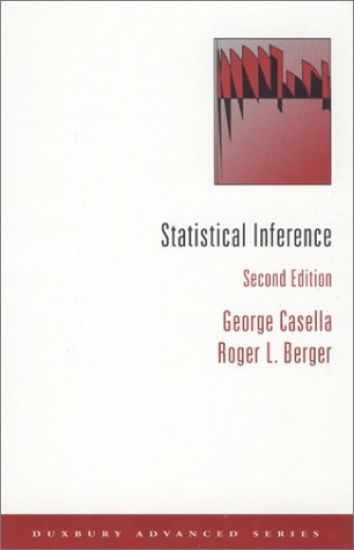
This classic textbook builds theoretical statistics from the first principles of probability theory. Starting from the basics of probability, the authors develop the theory of statistical inference using techniques, definitions, and concepts that are statistical and natural extensions, and consequences, of previous concepts. It covers all topics from a standard inference course including: distributions, random variables, data reduction, point estimation, hypothesis testing, and interval estimation.Features The classic graduate-level textbook on statistical inferenceDevelops elements of statistical theory from first principles of probabilityWritten in a lucid style accessible to anyone with some background in calculusCovers all key topics of a standard course in inferenceHundreds of examples throughout to aid understandingEach chapter includes an extensive set of graduated exercisesStatistical Inference, Second Edition is primarily aimed at graduate students of statistics, but can be used by advanced undergraduate students majoring in statistics who have a solid mathematics background. It also stresses the more practical uses of statistical theory, being more concerned with understanding basic statistical concepts and deriving reasonable statistical procedures, while less focused on formal optimality considerations.This is a reprint of the second edition originally published by Cengage Learning, Inc. in 2001.
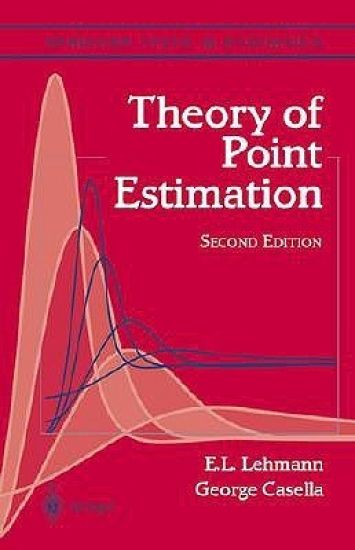
Since the publication in 1983 of Theory of Point Estimation, much new work has made it desirable to bring out a second edition. The inclusion of the new material has increased the length of the book from 500 to 600 pages; of the approximately 1000 references about 25% have appeared since 1983. The greatest change has been the addition to the sparse treatment of Bayesian inference in the first edition. This includes the addition of new sections on Equivariant, Hierarchical, and Empirical Bayes, and on their comparisons. Other major additions deal with new developments concerning the information in equality and simultaneous and shrinkage estimation. The Notes at the end of each chapter now provide not only bibliographic and historical material but also introductions to recent development in point estimation and other related topics which, for space reasons, it was not possible to include in the main text. The problem sections also have been greatly expanded. On the other hand, to save space most of the discussion in the first edition on robust estimation (in particu lar L, M, and R estimators) has been deleted. This topic is the subject of two excellent books by Hampel et al (1986) and Staudte and Sheather (1990). Other than subject matter changes, there have been some minor modifications in the presentation.
Monte Carlo statistical methods, particularly those based on Markov chains, are now an essential component of the standard set of techniques used by statisticians. This new edition has been revised towards a coherent and flowing coverage of these simulation techniques, with incorporation of the most recent developments in the field. In particular, the introductory coverage of random variable generation has been totally revised, with many concepts being unified through a fundamental theorem of simulation There are five completely new chapters that cover Monte Carlo control, reversible jump, slice sampling, sequential Monte Carlo, and perfect sampling. There is a more in-depth coverage of Gibbs sampling, which is now contained in three consecutive chapters. The development of Gibbs sampling starts with slice sampling and its connection with the fundamental theorem of simulation, and builds up to two-stage Gibbs sampling and its theoretical properties. A third chapter covers the multi-stage Gibbs sampler and its variety of applications. Lastly, chapters from the previous edition have been revised towards easier access, with the examples getting more detailed coverage. This textbook is intended for a second year graduate course, but will also be useful to someone who either wants to apply simulation techniques for the resolution of practical problems or wishes to grasp the fundamental principles behind those methods. The authors do not assume familiarity with Monte Carlo techniques (such as random variable generation), with computer programming, or with any Markov chain theory (the necessary concepts are developed in Chapter 6). A solutions manual, which covers approximately 40% of the problems, is available for instructors who require the book for a course. Christian P. Robert is Professor of Statistics in the Applied Mathematics Department at Université Paris Dauphine, France. He is also Head of the Statistics Laboratoryat the Center for Research in Economics and Statistics (CREST) of the National Institute for Statistics and Economic Studies (INSEE) in Paris, and Adjunct Professor at Ecole Polytechnique. He has written three other books and won the 2004 DeGroot Prize for The Bayesian Choice, Second Edition, Springer 2001. He also edited Discretization and MCMC Convergence Assessment, Springer 1998. He has served as associate editor for the Annals of Statistics, Statistical Science and the Journal of the American Statistical Association. He is a fellow of the Institute of Mathematical Statistics, and a winner of the Young Statistician Award of the Société de Statistique de Paris in 1995. George Casella is Distinguished Professor and Chair, Department of Statistics, University of Florida. He has served as the Theory and Methods Editor of the Journal of the American Statistical Association and Executive Editor of Statistical Science. He has authored three other textbooks: Statistical Inference, Second Edition, 2001, with Roger L. Berger; Theory of Point Estimation, 1998, with Erich Lehmann; and Variance Components, 1992, with Shayle R. Searle and Charles E. McCulloch. He is a fellow of the Institute of Mathematical Statistics and the American Statistical Association, and an elected fellow of the International Statistical Institute.
Most traits in nature and of importance to agriculture are quantitatively inherited. These traits are di?cult to study due to the complex nature of their inheritance. However, recent developments of genomic technologies provide a revolutionary means for unraveling the secrets of genetic variation in quantitative traits. Genomic te- nologies allow the molecular characterization of polymorphic markers throughout the entire genome that are then used to identify and map the genes or quantitative trait loci (QTLs) underlying a quantitative trait based on linkage analysis. Statistical analysis is a crucial tool for analyzing genome data, which are now becoming increasingly available for a variety of species, and for giving precise exp- nations regarding genetic variation in quantitative traits occurring among species, populations, families, and individuals. In 1989, Lander and Botstein published a ha- mark methodological paper for interval mapping that enables geneticists to detect and estimate individual QTL that control the phenotype of a trait. Today, interval mappingisanimportantstatisticaltoolforstudyingthegeneticsofquantitativetraits at the molecular level, and has led to the discovery of thousands of QTLs responsible for a variety of traits in plants, animals, and humans. In a recent study published in Science, Li, Zhou, and Sang (2006, 311, 1936–1939) were able to characterize the molecular basis of the reduction of grain shattering – a fundamental selection process for rice domestication – at the detected QTL by interval mapping.
Statistical design is one of the fundamentals of our subject, being at the core of the growth of statistics during the previous century. Design played a key role in agricultural statistics and set down principles of good practic, principles that still apply today. Statistical design is all about understanding where the variance comes from, and making sure that is where the replication is. Indeed, it is probably correct to say that these principles are even more important today.
Computational techniques based on simulation have now become an essential part of the statistician's toolbox. It is thus crucial to provide statisticians with a practical understanding of those methods, and there is no better way to develop intuition and skills for simulation than to use simulation to solve statistical problems. Introducing Monte Carlo Methods with R covers the main tools used in statistical simulation from a programmer's point of view, explaining the R implementation of each simulation technique and providing the output for better understanding and comparison. While this book constitutes a comprehensive treatment of simulation methods, the theoretical justification of those methods has been considerably reduced, compared with Robert and Casella (2004). Similarly, the more exploratory and less stable solutions are not covered here. This book does not require a preliminary exposure to the R programming language or to Monte Carlo methods, nor an advanced mathematical background. While many examples are set within a Bayesian framework, advanced expertise in Bayesian statistics is not required. The book covers basic random generation algorithms, Monte Carlo techniques for integration and optimization, convergence diagnoses, Markov chain Monte Carlo methods, including Metropolis {Hastings and Gibbs algorithms, and adaptive algorithms. All chapters include exercises and all R programs are available as an R package called mcsm. The book appeals to anyone with a practical interest in simulation methods but no previous exposure. It is meant to be useful for students and practitioners in areas such as statistics, signal processing, communications engineering, control theory, econometrics, finance and more. The programming parts are introduced progressively to be accessible to any reader.
Statistical design is one of the fundamentals of our subject, being at the core of the growth of statistics during the previous century. Design played a key role in agricultural statistics and set down principles of good practic, principles that still apply today. Statistical design is all about understanding where the variance comes from, and making sure that is where the replication is. Indeed, it is probably correct to say that these principles are even more important today.
Most traits in nature and of importance to agriculture are quantitatively inherited. These traits are di?cult to study due to the complex nature of their inheritance. However, recent developments of genomic technologies provide a revolutionary means for unraveling the secrets of genetic variation in quantitative traits. Genomic te- nologies allow the molecular characterization of polymorphic markers throughout the entire genome that are then used to identify and map the genes or quantitative trait loci (QTLs) underlying a quantitative trait based on linkage analysis. Statistical analysis is a crucial tool for analyzing genome data, which are now becoming increasingly available for a variety of species, and for giving precise exp- nations regarding genetic variation in quantitative traits occurring among species, populations, families, and individuals. In 1989, Lander and Botstein published a ha- mark methodological paper for interval mapping that enables geneticists to detect and estimate individual QTL that control the phenotype of a trait. Today, interval mappingisanimportantstatisticaltoolforstudyingthegeneticsofquantitativetraits at the molecular level, and has led to the discovery of thousands of QTLs responsible for a variety of traits in plants, animals, and humans. In a recent study published in Science, Li, Zhou, and Sang (2006, 311, 1936–1939) were able to characterize the molecular basis of the reduction of grain shattering – a fundamental selection process for rice domestication – at the detected QTL by interval mapping.
WILEY-INTERSCIENCE PAPERBACK SERIES The Wiley-Interscience Paperback Series consists of selected books that have been made more accessible to consumers in an effort to increase global appeal and general circulation. With these new unabridged softcover volumes, Wiley hopes to extend the lives of these works by making them available to future generations of statisticians, mathematicians, and scientists. ". . .Variance Components is an excellent book. It is organized and well written, and provides many references to a variety of topics. I recommend it to anyone with interest in linear models." —Journal of the American Statistical Association "This book provides a broad coverage of methods for estimating variance components which appeal to students and research workers . . . The authors make an outstanding contribution to teaching and research in the field of variance component estimation." —Mathematical Reviews "The authors have done an excellent job in collecting materials on a broad range of topics. Readers will indeed gain from using this book . . . I must say that the authors have done a commendable job in their scholarly presentation." —Technometrics This book focuses on summarizing the variability of statistical data known as the analysis of variance table. Penned in a readable style, it provides an up-to-date treatment of research in the area. The book begins with the history of analysis of variance and continues with discussions of balanced data, analysis of variance for unbalanced data, predictions of random variables, hierarchical models and Bayesian estimation, binary and discrete data, and the dispersion mean model.
Monte Carlo statistical methods, particularly those based on Markov chains, are now an essential component of the standard set of techniques used by statisticians. This new edition has been revised towards a coherent and flowing coverage of these simulation techniques, with incorporation of the most recent developments in the field. In particular, the introductory coverage of random variable generation has been totally revised, with many concepts being unified through a fundamental theorem of simulation There are five completely new chapters that cover Monte Carlo control, reversible jump, slice sampling, sequential Monte Carlo, and perfect sampling. There is a more in-depth coverage of Gibbs sampling, which is now contained in three consecutive chapters. The development of Gibbs sampling starts with slice sampling and its connection with the fundamental theorem of simulation, and builds up to two-stage Gibbs sampling and its theoretical properties. A third chapter covers the multi-stage Gibbs sampler and its variety of applications. Lastly, chapters from the previous edition have been revised towards easier access, with the examples getting more detailed coverage. This textbook is intended for a second year graduate course, but will also be useful to someone who either wants to apply simulation techniques for the resolution of practical problems or wishes to grasp the fundamental principles behind those methods. The authors do not assume familiarity with Monte Carlo techniques (such as random variable generation), with computer programming, or with any Markov chain theory (the necessary concepts are developed in Chapter 6). A solutions manual, which covers approximately 40% of the problems, is available for instructors who require the book for a course. Christian P. Robert is Professor of Statistics in the Applied Mathematics Department at Université Paris Dauphine, France. He is also Head of the Statistics Laboratoryat the Center for Research in Economics and Statistics (CREST) of the National Institute for Statistics and Economic Studies (INSEE) in Paris, and Adjunct Professor at Ecole Polytechnique. He has written three other books and won the 2004 DeGroot Prize for The Bayesian Choice, Second Edition, Springer 2001. He also edited Discretization and MCMC Convergence Assessment, Springer 1998. He has served as associate editor for the Annals of Statistics, Statistical Science and the Journal of the American Statistical Association. He is a fellow of the Institute of Mathematical Statistics, and a winner of the Young Statistician Award of the Société de Statistique de Paris in 1995. George Casella is Distinguished Professor and Chair, Department of Statistics, University of Florida. He has served as the Theory and Methods Editor of the Journal of the American Statistical Association and Executive Editor of Statistical Science. He has authored three other textbooks: Statistical Inference, Second Edition, 2001, with Roger L. Berger; Theory of Point Estimation, 1998, with Erich Lehmann; and Variance Components, 1992, with Shayle R. Searle and Charles E. McCulloch. He is a fellow of the Institute of Mathematical Statistics and the American Statistical Association, and an elected fellow of the International Statistical Institute.
On April 26-28, 2001, the Board on Mathematical Sciences and Their Applications (BMSA) and the Board on Life Sciences of the National Research Council cosponsored a workshop on the dynamical modeling of complex biomedical systems. The workshop's goal was to identify some open research questions in the mathematical sciences whose solution would contribute to important unsolved problems in three general areas of the biomedical sciences: disease states, cellular processes, and neuroscience. The workshop drew a diverse group of over 80 researchers, who engaged in lively discussions. To convey the workshop's excitement more broadly, and to help more mathematical scientists become familiar with these very fertile interface areas, the BMSA appointed one of its members, George Casella, of the University of Florida, as rapporteur. He developed this summary with the help of two colleagues from his university, Rongling Wu and Sam S. Wu, assisted by Scott Weidman, BMSA director. This summary represents the viewpoint of its authors only and should not be taken as a consensus report of the BMSA or of the National Research Council. Table of Contents Front Matter 1 Introduction 2 Modeling Processes within the Cell 3 Probabilistic Models that Represent Biological Observations 4 Modeling with Compartments 5 From the Compartment to the Fluid 6 Gene Transfer as a Biomedical Tool 7 The Data Flood: Analysis of Massive and Complex Genomic Data Sets 8 Summary References Appendix: Workshop Program and Attendees Color Plates
This book builds theoretical statistics from the first principles of probability theory. Starting from the basics of probability, the authors develop the theory of statistical inference using techniques, definitions, and concepts that are statistical and are natural extensions and consequences of previous concepts. Intended for first-year graduate students, this book can be used for students majoring in statistics who have a solid mathematics background. It can also be used in a way that stresses the more practical uses of statistical theory, being more concerned with understanding basic statistical concepts and deriving reasonable statistical procedures for a variety of situations, and less concerned with formal optimality investigations.
The second edition of this classic book will serve as a reference on mathematical statistics for graduate students and researchers in mathematical statistics. Many topics are presented which have been available only in journal form.