Kirjojen hintavertailu. Mukana 12 390 323 kirjaa ja 12 kauppaa.
Kirjailija
George Cattermole
Kirjat ja teokset yhdessä paikassa: 14 kirjaa, julkaisuja vuosilta 2010-2025, suosituimpien joukossa Master Humphrey's Clock. Vertaile teosten hintoja ja tarkista saatavuus suomalaisista kirjakaupoista.
The Great Civil War Of The Times Of Charles I. And Cromwell has been considered by academicians and scholars of great significance and value to literature. This forms a part of the knowledge base for future generations. So that the book is never forgotten we have represented this book in a print format as the same form as it was originally first published. Hence any marks or annotations seen are left intentionally to preserve its true nature.
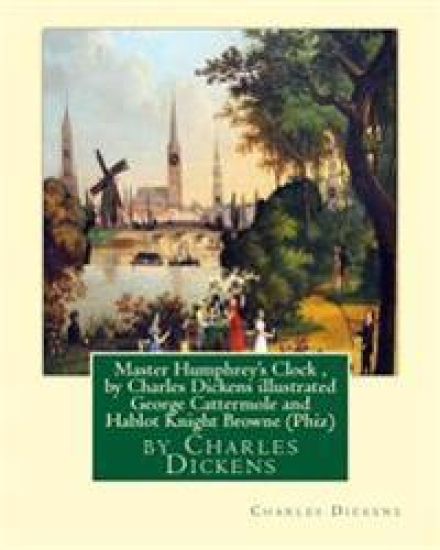
Master Humphrey's Clock was a weekly periodical edited and written entirely by Charles Dickens and published from 4 April 1840 to 4 December 1841. It began with a frame story in which Master Humphrey tells about himself and his small circle of friends (which includes Mr. Pickwick), and their penchant for telling stories. Several short stories were included, followed by the novels The Old Curiosity Shop and Barnaby Rudge. It is generally thought that Dickens originally intended The Old Curiosity Shop as a short story like the others that had appeared in Master Humphrey's Clock, but after a few chapters decided to extend it into a novel. Master Humphrey appears as the first-person narrator in the first three chapters of The Old Curiosity Shop but then disappears, stating, "And now that I have carried this history so far in my own character and introduced these personages to the reader, I shall for the convenience of the narrative detach myself from its further course, and leave those who have prominent and necessary parts in it to speak and act for themselves." Master Humphrey is a lonely man who lives in London. He keeps old manuscripts in an antique longcase clock by the chimney-corner. One day, he decides that he would start a little club, called Master Humphrey's Clock, where the members would read out their manuscripts to the others. The members include Master Humphrey; a deaf gentleman, Jack Redburn; retired merchant Owen Miles; and Mr. Pickwick from The Pickwick Papers. A mirror club in the kitchen, Mr. Weller's Watch, run by Mr. Weller, has members including Humphrey's maid, the barber and Sam Weller. Master Humphrey's Clock appeared after The Old Curiosity Shop, to introduce Barnaby Rudge. After Barnaby Rudge, Master Humphrey is left by himself by the chimney corner in a train of thoughts. Here, the deaf gentleman continues the narration. Later, the deaf gentleman and his friends return to Humphrey's house to find him dead. Humphrey has left money for the barber and the maid (no doubt by traces of love that they would be married). Redburn and the deaf gentleman look after the house and the club closes for good. In the portion of Master Humphrey's Clock which succeeds The Old Curiosity Shop, Master Humphrey reveals to his friends that he is the character referred to as the 'single gentleman' in that story....... Charles John Huffam Dickens ( 7 February 1812 - 9 June 1870) was an English writer and social critic. He created some of the world's best-known fictional characters and is regarded by many as the greatest novelist of the Victorian era. His works enjoyed unprecedented popularity during his lifetime, and by the 20th century critics and scholars had recognised him as a literary genius. His novels and short stories enjoy lasting popularity. Born in Portsmouth, Dickens left school to work in a factory when his father was incarcerated in a debtors' prison. Despite his lack of formal education, he edited a weekly journal for 20 years, wrote 15 novels, five novellas, hundreds of short stories and non-fiction articles, lectured and performed extensively, was an indefatigable letter writer, and campaigned vigorously for children's rights, education, and other social reforms......... George Cattermole (10 August 1800 - 24 July 1868) was an English painter and illustrator, chiefly in watercolours. He was a friend of Charles Dickens and many other literary and artistic figures.... Hablot Knight Browne (10 July 1815 - 8 July 1882) was an English artist and illustrator. Well-known by his pen name, Phiz, he illustrated books by Charles Dickens, Charles Lever, and Harrison Ainsworth................
Master Humphrey's Clock was a weekly periodical edited and written entirely by Charles Dickens and published from 4 April 1840 to 4 December 1841. It began with a frame story in which Master Humphrey tells about himself and his small circle of friends (which includes Mr. Pickwick), and their penchant for telling stories. Several short stories were included, followed by the novels The Old Curiosity Shop and Barnaby Rudge. It is generally thought that Dickens originally intended The Old Curiosity Shop as a short story like the others that had appeared in Master Humphrey's Clock, but after a few chapters decided to extend it into a novel. Master Humphrey appears as the first-person narrator in the first three chapters of The Old Curiosity Shop but then disappears, stating, "And now that I have carried this history so far in my own character and introduced these personages to the reader, I shall for the convenience of the narrative detach myself from its further course, and leave those who have prominent and necessary parts in it to speak and act for themselves." Master Humphrey is a lonely man who lives in London. He keeps old manuscripts in an antique longcase clock by the chimney-corner. One day, he decides that he would start a little club, called Master Humphrey's Clock, where the members would read out their manuscripts to the others. The members include Master Humphrey; a deaf gentleman, Jack Redburn; retired merchant Owen Miles; and Mr. Pickwick from The Pickwick Papers. A mirror club in the kitchen, Mr. Weller's Watch, run by Mr. Weller, has members including Humphrey's maid, the barber and Sam Weller. Master Humphrey's Clock appeared after The Old Curiosity Shop, to introduce Barnaby Rudge. After Barnaby Rudge, Master Humphrey is left by himself by the chimney corner in a train of thoughts. Here, the deaf gentleman continues the narration. Later, the deaf gentleman and his friends return to Humphrey's house to find him dead. Humphrey has left money for the barber and the maid (no doubt by traces of love that they would be married). Redburn and the deaf gentleman look after the house and the club closes for good. In the portion of Master Humphrey's Clock which succeeds The Old Curiosity Shop, Master Humphrey reveals to his friends that he is the character referred to as the 'single gentleman' in that story....... Charles John Huffam Dickens ( 7 February 1812 - 9 June 1870) was an English writer and social critic. He created some of the world's best-known fictional characters and is regarded by many as the greatest novelist of the Victorian era. His works enjoyed unprecedented popularity during his lifetime, and by the 20th century critics and scholars had recognised him as a literary genius. His novels and short stories enjoy lasting popularity. Born in Portsmouth, Dickens left school to work in a factory when his father was incarcerated in a debtors' prison. Despite his lack of formal education, he edited a weekly journal for 20 years, wrote 15 novels, five novellas, hundreds of short stories and non-fiction articles, lectured and performed extensively, was an indefatigable letter writer, and campaigned vigorously for children's rights, education, and other social reforms......... George Cattermole (10 August 1800 - 24 July 1868) was an English painter and illustrator, chiefly in watercolours. He was a friend of Charles Dickens and many other literary and artistic figures.... Hablot Knight Browne (10 July 1815 - 8 July 1882) was an English artist and illustrator. Well-known by his pen name, Phiz, he illustrated books by Charles Dickens, Charles Lever, and Harrison Ainsworth................
The Old Curiosity Shop is a novel by Charles Dickens. The plot follows the life of Nell Trent and her grandfather, both residents of The Old Curiosity Shop in London. The Old Curiosity Shop was one of two novels which Dickens published along with short stories in his weekly serial Master Humphrey's Clock, which lasted from 1840 to 1841. It was so popular that New York readers stormed the wharf when the ship bearing the final instalment arrived in 1841. Queen Victoria read the novel in 1841, finding it "very interesting and cleverly written."The Old Curiosity Shop tells the story of Nell Trent, a beautiful and virtuous young girl of "not quite fourteen". An orphan, she lives with her maternal grandfather in his shop of odds and ends. Her grandfather loves her dearly, and Nell does not complain, but she lives a lonely existence with almost no friends her own age. Her only friend is Kit, an honest boy employed at the shop, whom she is teaching to write. Secretly obsessed with ensuring that Nell does not die in poverty as her parents did, her grandfather attempts to provide Nell with a good inheritance through gambling at cards. He keeps his nocturnal games a secret, but borrows heavily from the evil Daniel Quilp, a malicious, grotesquely deformed, hunchbacked dwarf moneylender. In the end, he gambles away what little money they have, and Quilp seizes the opportunity to take possession of the shop and evict Nell and her grandfather. Her grandfather suffers a breakdown that leaves him bereft of his wits, and Nell takes him away to the Midlands of England, to live as beggars. Convinced that the old man has stored up a large and prosperous fortune for Nell, her wastrel older brother, Frederick, convinces the good-natured but easily led Dick Swiveller to help him track Nell down, so that Swiveller can marry Nell and share her supposed inheritance with Frederick. To this end, they join forces with Quilp, who knows full well that there is no fortune, but sadistically chooses to 'help' them to enjoy the misery it will inflict on all concerned. Quilp begins to try to track Nell down, but the fugitives are not easily discovered. To keep Dick Swiveller under his eye, Quilp arranges for him to be taken as a clerk by Quilp's lawyer, Mr. Brass. At the Brass firm, Dick befriends the mistreated maidservant and nicknames her 'the Marchioness'. Nell, having fallen in with a number of characters, some villainous and some kind, succeeds in leading her grandfather to safety in a far-off village (identified by Dickens as Tong, Shropshire), but this comes at a considerable cost to Nell's health.Meanwhile, Kit, having lost his job at the curiosity shop, has found new employment with the kind Mr and Mrs Garland. Here he is contacted by a mysterious 'single gentleman' who is looking for news of Nell and her grandfather. The 'single gentleman' and Kit's mother go after them unsuccessfully, and encounter Quilp, who is also hunting for the runaways. Quilp forms a grudge against Kit and has him framed as a thief. Kit is sentenced to transportation. However, Dick Swiveller proves Kit's innocence with the help of his friend the Marchioness. Quilp is hunted down and dies trying to escape his pursuers. At the same time, a coincidence leads Mr Garland to knowledge of Nell's whereabouts, and he, Kit, and the single gentleman (who turns out to be the younger brother of Nell's grandfather) go to find her. Sadly, by the time they arrive, Nell has died as a result of her arduous journey. Her grandfather, already mentally infirm, refuses to admit she is dead and sits every day by her grave waiting for her to come back until, a few months later, he dies himself. Charles John Huffam Dickens ( 7 February 1812 - 9 June 1870) was an English writer and social critic. Samuel Rogers (30 July 1763 - 18 December 1855) was an English poet.George Cattermole (10 August 1800 - 24 July 1868) was an English painter and illustrator, chiefly in watercolours...............
Master Humphrey's Clock was a weekly periodical edited and written entirely by Charles Dickens and published from April 4, 1840 to December 4, 1841. It began with a frame story in which Master Humphrey tells about himself and his small circle of friends (which includes Mr. Pickwick), and their penchant for telling stories. Several short stories were included, followed by the novels The Old Curiosity Shop and Barnaby Rudge. Master Humphrey's Clock was a weekly serial that contained both short stories and two novels (The Old Curiosity Shop and Barnaby Rudge). Some of the short stories act as frame stories to the novels so the ordering of publication is important. Although Dickens' original artistic intent was to keep the short stories and the novels together, he himself cancelled Master Humphrey's Clock before 1848, and described in a preface to The Old Curiosity Shop that he wished the story to not be tied down to the miscellany it began within. 1] Most later anthologies published the short stories and the novels separately. However, the short stories and the novels were published in 1840 in three bound volumes under the title Master Humphrey's Clock, which retains the full and correct ordering of texts as they originally appeared. The illustrations in these volumes were by George Cattermole and Hablot Browne, better known as "Phiz".
The Old Curiosity Shop is a novel by Charles Dickens. The plot follows the life of Nell Trent and her grandfather, both residents of The Old Curiosity Shop in London. The Old Curiosity Shop was one of two novels which Dickens published along with short stories in his weekly serial Master Humphrey's Clock, which lasted from 1840 to 1841. It was so popular that New York readers stormed the wharf when the ship bearing the final instalment arrived in 1841. Queen Victoria read the novel in 1841, finding it "very interesting and cleverly written."The Old Curiosity Shop tells the story of Nell Trent, a beautiful and virtuous young girl of "not quite fourteen". An orphan, she lives with her maternal grandfather in his shop of odds and ends. Her grandfather loves her dearly, and Nell does not complain, but she lives a lonely existence with almost no friends her own age. Her only friend is Kit, an honest boy employed at the shop, whom she is teaching to write. Secretly obsessed with ensuring that Nell does not die in poverty as her parents did, her grandfather attempts to provide Nell with a good inheritance through gambling at cards. He keeps his nocturnal games a secret, but borrows heavily from the evil Daniel Quilp, a malicious, grotesquely deformed, hunchbacked dwarf moneylender. In the end, he gambles away what little money they have, and Quilp seizes the opportunity to take possession of the shop and evict Nell and her grandfather. Her grandfather suffers a breakdown that leaves him bereft of his wits, and Nell takes him away to the Midlands of England, to live as beggars. Convinced that the old man has stored up a large and prosperous fortune for Nell, her wastrel older brother, Frederick, convinces the good-natured but easily led Dick Swiveller to help him track Nell down, so that Swiveller can marry Nell and share her supposed inheritance with Frederick. To this end, they join forces with Quilp, who knows full well that there is no fortune, but sadistically chooses to 'help' them to enjoy the misery it will inflict on all concerned. Quilp begins to try to track Nell down, but the fugitives are not easily discovered. To keep Dick Swiveller under his eye, Quilp arranges for him to be taken as a clerk by Quilp's lawyer, Mr. Brass. At the Brass firm, Dick befriends the mistreated maidservant and nicknames her 'the Marchioness'. Nell, having fallen in with a number of characters, some villainous and some kind, succeeds in leading her grandfather to safety in a far-off village (identified by Dickens as Tong, Shropshire), but this comes at a considerable cost to Nell's health.Meanwhile, Kit, having lost his job at the curiosity shop, has found new employment with the kind Mr and Mrs Garland. Here he is contacted by a mysterious 'single gentleman' who is looking for news of Nell and her grandfather. The 'single gentleman' and Kit's mother go after them unsuccessfully, and encounter Quilp, who is also hunting for the runaways. Quilp forms a grudge against Kit and has him framed as a thief. Kit is sentenced to transportation. However, Dick Swiveller proves Kit's innocence with the help of his friend the Marchioness. Quilp is hunted down and dies trying to escape his pursuers. At the same time, a coincidence leads Mr Garland to knowledge of Nell's whereabouts, and he, Kit, and the single gentleman (who turns out to be the younger brother of Nell's grandfather) go to find her. Sadly, by the time they arrive, Nell has died as a result of her arduous journey. Her grandfather, already mentally infirm, refuses to admit she is dead and sits every day by her grave waiting for her to come back until, a few months later, he dies himself. Charles John Huffam Dickens ( 7 February 1812 - 9 June 1870) was an English writer and social critic. Samuel Rogers (30 July 1763 - 18 December 1855) was an English poet.George Cattermole (10 August 1800 - 24 July 1868) was an English painter and illustrator, chiefly in watercolours
Title: The History and Antiquities of H. H.: illustrated by lithographs from drawings by G. Cattermole, with an account of the Hall in its present state.Publisher: British Library, Historical Print EditionsThe British Library is the national library of the United Kingdom. It is one of the world's largest research libraries holding over 150 million items in all known languages and formats: books, journals, newspapers, sound recordings, patents, maps, stamps, prints and much more. Its collections include around 14 million books, along with substantial additional collections of manuscripts and historical items dating back as far as 300 BC.The HISTORY OF BRITAIN & IRELAND collection includes books from the British Library digitised by Microsoft. As well as historical works, this collection includes geographies, travelogues, and titles covering periods of competition and cooperation among the people of Great Britain and Ireland. Works also explore the countries' relations with France, Germany, the Low Countries, Denmark, and Scandinavia. ++++The below data was compiled from various identification fields in the bibliographic record of this title. This data is provided as an additional tool in helping to insure edition identification: ++++ British Library Anonymous; Cattermole, George; 1867. 4 . 10358.h.10.